
I said 3 years ago if anybody thought in his fight with the Deep State Trump and Co. were being completely frozen out of using LEO/Intelligence apparatus and so he's been flying all this time absolutely blind...
You're about to find out how very wrong you are about that.
More from Brian The Great
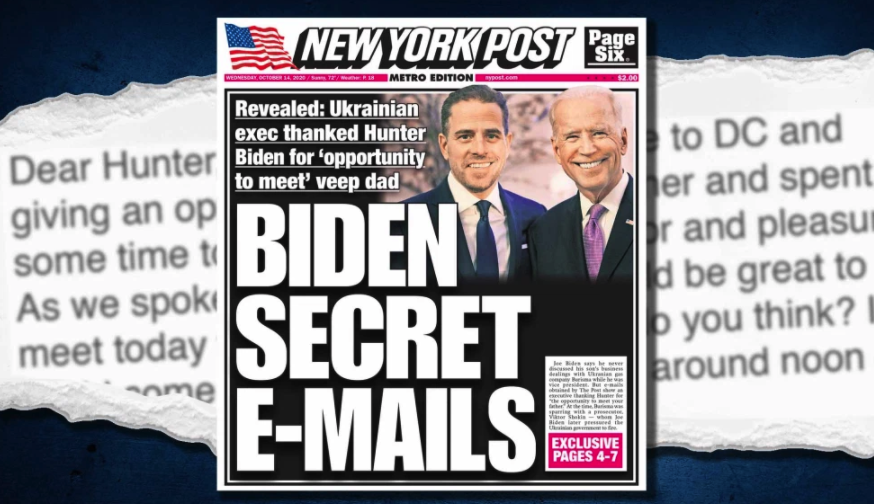
Including election fraud.
@JoshJPhilipp of @EpochTimes
Sometimes they tell us . . but we fail to listen carefully . .\U0001f914pic.twitter.com/VpJbZQwhsj
— Lawyerforlaws (@lawyer4laws) December 16, 2020
More from Trump


Looks like the CDC Guidelines say Trump should be in the category that needs to isolate for 20 days after symptom onset.👇
Plus ...
Severe COVID Pneumonia defined as low oxygen sats <94 % as confirmed by the President\u2019s chief of staff, in addition to other clinically consistent information: shortness of breath to name one.
— Vin Gupta \u201c\U0001f637!\u201d MD (@VinGuptaMD) October 9, 2020
That buys 20 days of isolation. At 74 with co-morbidities, \u2066@CDCgov\u2069 is right pic.twitter.com/fR3jc9jYQI
2. Fauci on Thursday used a (test-based) approach, in which case, per Fauci:
Trump needs to isolate for 10 days after symptoms RESOLVE (not symptoms onset) and then two negative tests.
Note: based on his coughing on Hannity last night, Trump’s symptoms haven’t resolved yet.
Dr. Fauci: "If the President goes 10 days w/o symptoms & they do the tests-then you could make the assumption, based on good science, that he is not infected. But you have to make sure you go through those particular benchmarks delineated in the CDC guidelines." #AMRstaff
— Andrea Mitchell (@mitchellreports) October 8, 2020
3. Here’s a longer quote from Fauci (via @MarionRenault):
https://t.co/oRdrtxQe80

4. Also noteworthy: on Hannity last night, Trump wouldn’t say he’s tested negative.👇
Thus failing one of the conditions required by Fauci for Trump to be considered no longer contagious.
Mark the date, we have reached the point where even Sean Hannity is asking Trump simple questions that the president can\u2019t or won\u2019t answer https://t.co/HgMpIsOCJn
— Mehdi Hasan (@mehdirhasan) October 9, 2020
5/5. This resource on coronavirus (UpToDate) has been specially made available to the public. It describes the test-based and non-test-based approaches.


PRESIDENT TRUMP: THIS MAY BE, THE MOST IMPORTANT SPEECH I'VE EVER MADE. 12/02/2020
— GEORGE NEWS (@GeorgenewsOrg) December 3, 2020
(Use English/French Subtitles and READ every single word) #GodWins https://t.co/ZJ9racUF6o


You May Also Like


Like company moats, your personal moat should be a competitive advantage that is not only durable—it should also compound over time.
Characteristics of a personal moat below:
I'm increasingly interested in the idea of "personal moats" in the context of careers.
— Erik Torenberg (@eriktorenberg) November 22, 2018
Moats should be:
- Hard to learn and hard to do (but perhaps easier for you)
- Skills that are rare and valuable
- Legible
- Compounding over time
- Unique to your own talents & interests https://t.co/bB3k1YcH5b
2/ Like a company moat, you want to build career capital while you sleep.
As Andrew Chen noted:
People talk about \u201cpassive income\u201d a lot but not about \u201cpassive social capital\u201d or \u201cpassive networking\u201d or \u201cpassive knowledge gaining\u201d but that\u2019s what you can architect if you have a thing and it grows over time without intensive constant effort to sustain it
— Andrew Chen (@andrewchen) November 22, 2018
3/ You don’t want to build a competitive advantage that is fleeting or that will get commoditized
Things that might get commoditized over time (some longer than
Things that look like moats but likely aren\u2019t or may fade:
— Erik Torenberg (@eriktorenberg) November 22, 2018
- Proprietary networks
- Being something other than one of the best at any tournament style-game
- Many "awards"
- Twitter followers or general reach without "respect"
- Anything that depends on information asymmetry https://t.co/abjxesVIh9
4/ Before the arrival of recorded music, what used to be scarce was the actual music itself — required an in-person artist.
After recorded music, the music itself became abundant and what became scarce was curation, distribution, and self space.
5/ Similarly, in careers, what used to be (more) scarce were things like ideas, money, and exclusive relationships.
In the internet economy, what has become scarce are things like specific knowledge, rare & valuable skills, and great reputations.


