Here's what we have...
More than 1.3M acres of wholly owned SA farmland (beef, corn, soy, sugarcane
62.4% stake in a truly impressive real estate portfolio - 15 malls, 4 skyscrapers, 3 luxury hotels, nearly 1000 acres of land in Buenos Aires and Montevideo, the Buenos Aires fairground, 2 convention centers, a consumer bank, a commercial bank, and an arena, and a US REIT.
A 50% stake in Argentina's biggest ag exchange, and a 22.5% stake in an Ag fintech platform that just raised more money than any Latin American agtech startup in history from Bay Area VCs.
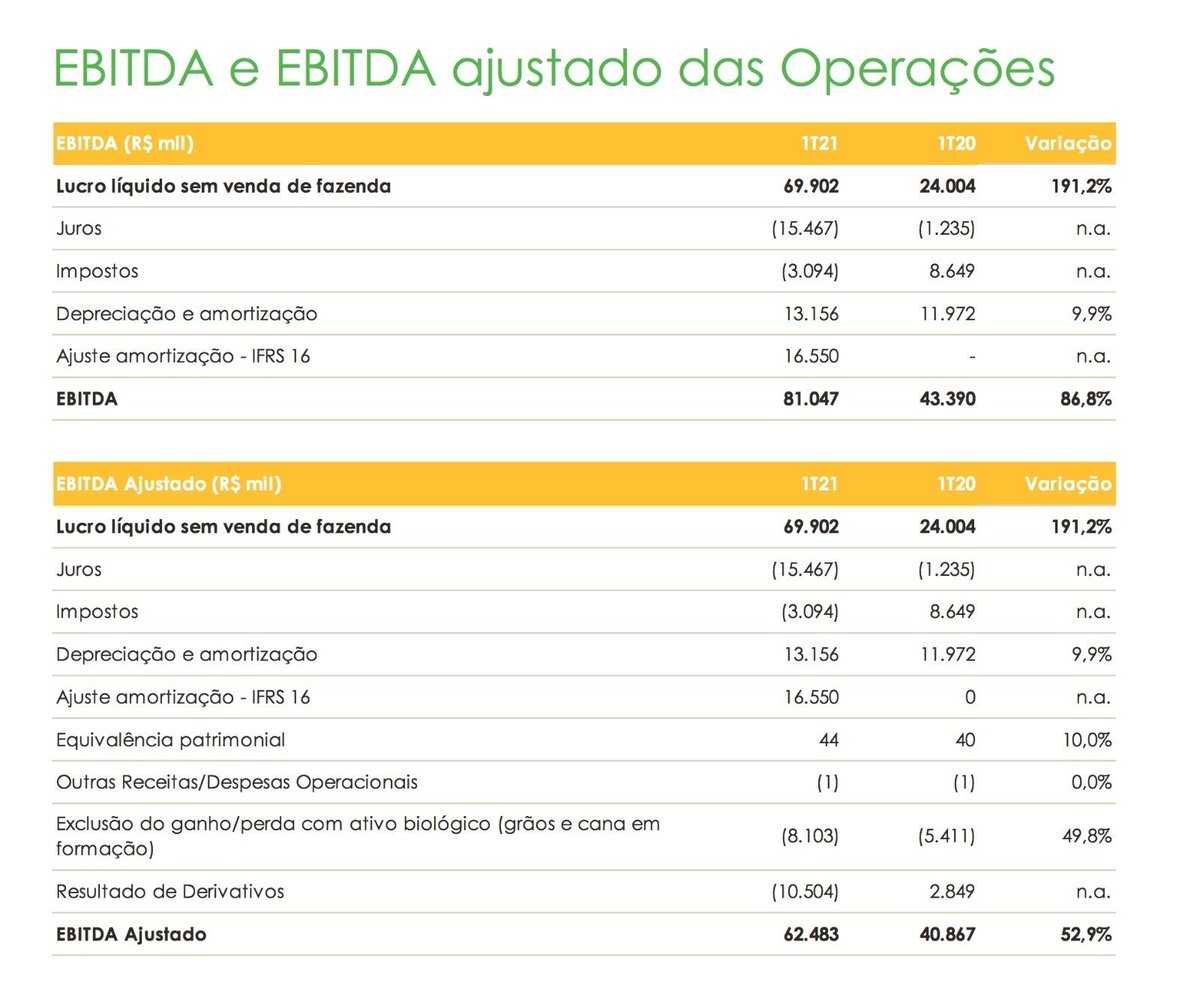
The farming segment itself is profitable, and with the prices of all the commodities they produce skyrocketing, despite more than doubling since the March lows, CRESY is still trading lower YoY and seriously lagging its fundamentals.
Earnings are set to explode.
The land $CRESY possesses is worth perhaps billions.
According to one analysis by
@ristic_nick, Los Pozos alone is worth $600M alone. $CRESY has assessed one farm at $10k/hectare.
If we assume a $2k average per hectare (~$800/acre), we arrive at around 1.1B in value.
Farms run by BrasilAgro, which $CRESY owns 33.6% of, add more than 200 additional hectares to the mix. Their BrasilAgro stake is worth ~100M in the open market, and the stake in the land itself is worth ~150M at $2k/hectare. Not to mention BrasilAgro is highly profitable.
The real estate segment is currently trading at just 161M USD (62.4% stake in 257M in capitalization via $IRS). Just two years ago the cap was over a billion. Given most of properties are located in Argentina, valuation likely due to the fact Argentina has been a basket case.
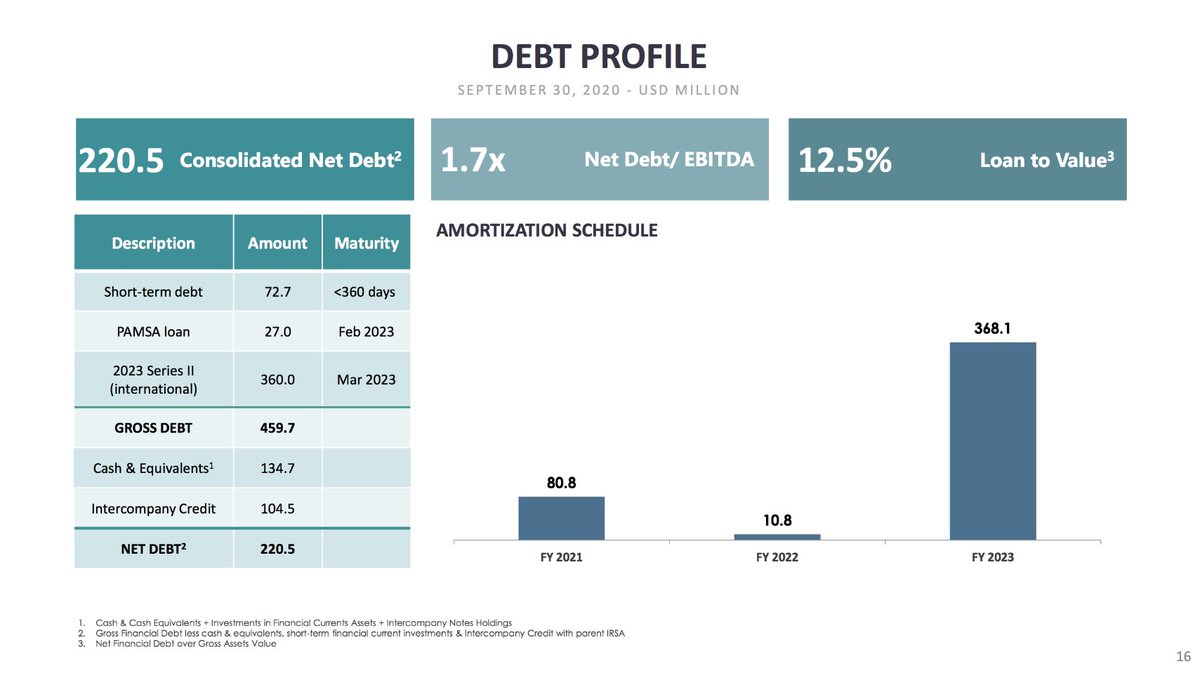
After shedding a number of non core assets, however, like the Lipstick building in New York and an Israeli portfolio, leverage is remarkably low from a loan to value ratio.
If we assume the valuation the loans are based on to be correct, $IRS assets are worth > $4B today.
I don't think it's hard to imagine the assets are worth that much. I mean, these guys own 15 malls, 3 luxury hotels, 4 skyscrapers, 2 capital city convention centers, a fairground, and nearly 1000 acres in core urban real estate. $4B may be trough Argentine disaster pricing.
There's a saying, "In Argentina, we buy our land with cash and our sneakers with credit cards". It's almost unimaginable to see a real estate company with such low leverage and such quality assets, and no history of dilution, trading at such extreme lows.
Blame Argentina!
The real estate segment also owns a 30% stake in a healthy publicly traded consumer bank, and a 37.7% stake in a commercial bank. The commercial bank is losing money, but has a reasonably healthy balance sheet. The consumer bank is profitable.
Next, we have a 50% stake in fyo. FYO started as an ag tech startup in 2000 and evolved into one of the most important brick and mortar commodity exchanges in Latin America. They do futures, options, brokering and trading.
Next, we have a 22.5% stake in Agrofy. Agrofy recently raised 23M in series B money from SP Ventures. This was the largest LatAm agtech deal ever done. Agrofy has 2.6M in annual revenue, which has increased 50% YoY.
They are building Amazon for LatAm ag tech - farms and land.
$CRESY is undervalued by at least 30% upside, sum of parts trading value. Price in ~30% rises since their Q3 report in all the commodities they produce, a normalization in the Argentine economy, and possible unicorn status for Agrofy.
What's $CRESY worth? A hell of a lot more.
Disclosure, I bought some shares last week as well as sold $5 strike puts. After spending a few days reviewing the pieces, I'll be buying more shares, not only in $CRESY, but perhaps in $IRS as well.
#BUY