
Suppose that for a given setup, price hits target before it reaches invalidation 70% of the time. Great, right? But getting filled is not guaranteed.
The more right you are about your trade setup, the less likely you are to get filled
By extension, getting filled actually lowers the Bayesian probability that you are right
Should I sacrifice some RRR to get filled more often?
The eternal dilemma of contrarian trading
Suppose that for a given setup, price hits target before it reaches invalidation 70% of the time. Great, right? But getting filled is not guaranteed.
Scenario 2: If only 40 out of 100 limits get filled, expected hit rate is 25%
Both scenarios have 30 losses in expectation, but the hit rate in the first is >2x better simply because more trades were taken
EV = hitrate * avg_win_R + (1-hitrate) * avg_loss_R
So we want argmax(EV), and we can compute this by seeing how hitrate and avg_win_R affect the EV of the setup.
Here's a real example where I completed this optimization.
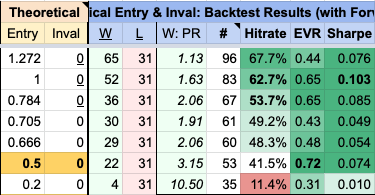
- the average win R tends to increase ("W:PR")
- the number of losses ("L") stays constant at 31
- but the number of trades taken decreases ("#")
- so the hit rate decreases, from a max of 67.7% to a min of 11.4%.
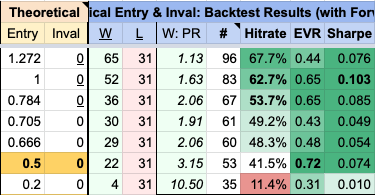
- Understand the tradeoff between RRR and hit rate. I talked about limit orders in this thread but a similar relationship applies to market entries too
- There are no easy answers here. Only the prospect of hard work collecting good data and learning from it.
💪
@Captain_Kole1 @melodyofrhythm @ape_rture @realadamli @7ommyZero @voicelessFvoice
More from Trading


FREE MINI STOCK MBA
If you wish to learn abt trading,psychology,options,business etc
You can go through this thread.
Other than this I do post videos on my YT channel : -Abhishek Kar & Tradiostation
-Intraday views on FREE telegram : Abhishek Kar Official
RT will be appreciated
1. Threads to learn Options
https://t.co/wabkek43I8
2. https://t.co/OIDenHKdWN
3. Some core rules to investing
https://t.co/37d1pygp7P
4.Summing up 2020 Trading lessons
https://t.co/jSUb1lSGbQ
5.Effects of margin change on
6. Exciting story about a trader who destroyed a Bank
https://t.co/CsEEhIsD3q
7. Some Thought Provoking facts about stock markets
https://t.co/IjxpX5Wx24
8. A dose on Trading and investing
9. Top 5 resources to learn everything about stocks
https://t.co/6KnIySBGIG
10. Some Pro Tips on Trading
https://t.co/EiSGikt7jv
11. Wisdom on stuffs you should not do
https://t.co/bI2dH0XTSS
12. Reasons why you are losing the
13. The DARK side of stock market
https://t.co/qsteGcbquI
14. Stocks where you should NOT invest
https://t.co/2tD5q0K3UQ
15. Lessons from MILLIONAIRE trader
https://t.co/Pec6LmUtGa
16. Lessons from my
If you wish to learn abt trading,psychology,options,business etc
You can go through this thread.
Other than this I do post videos on my YT channel : -Abhishek Kar & Tradiostation
-Intraday views on FREE telegram : Abhishek Kar Official
RT will be appreciated
1. Threads to learn Options
https://t.co/wabkek43I8
2. https://t.co/OIDenHKdWN
3. Some core rules to investing
https://t.co/37d1pygp7P
4.Summing up 2020 Trading lessons
https://t.co/jSUb1lSGbQ
5.Effects of margin change on
\U0001d413\U0001d421\U0001d42b\U0001d41e\U0001d41a\U0001d41d \U0001d41f\U0001d428\U0001d42b \U0001d40e\U0001d429\U0001d42d\U0001d422\U0001d428\U0001d427\U0001d42c
— Abhishek Kar (@Abhishekkar_) December 29, 2020
The entire thread will have some quick pointers on options trading. These bullet points are based on experience and learning and even if you are completely new,will help you to build some perspective. So,lets go :
6. Exciting story about a trader who destroyed a Bank
https://t.co/CsEEhIsD3q
7. Some Thought Provoking facts about stock markets
https://t.co/IjxpX5Wx24
8. A dose on Trading and investing
\U0001d413\U0001d42b\U0001d41a\U0001d41d\U0001d41e\U0001d42b \U0001d430\U0001d421\U0001d428 \U0001d41d\U0001d41e\U0001d42c\U0001d42d\U0001d42b\U0001d428\U0001d432\U0001d41e\U0001d41d \U0001d401\U0001d41a\U0001d42b\U0001d422\U0001d427\U0001d420\U0001d42c \U0001d401\U0001d41a\U0001d427\U0001d424
— Abhishek Kar (@Abhishekkar_) October 11, 2020
This thread is about the trader who with his reckless trading destroyed the entire Barings bank. In case you would like to read more such informative threads,do not forget to retweet and share as acts as encouragement
9. Top 5 resources to learn everything about stocks
https://t.co/6KnIySBGIG
10. Some Pro Tips on Trading
https://t.co/EiSGikt7jv
11. Wisdom on stuffs you should not do
https://t.co/bI2dH0XTSS
12. Reasons why you are losing the
\U0001d5e7\U0001d5db\U0001d5d8 \U0001d5e7\U0001d5e2\U0001d5e3 \U0001d7f1 \U0001d5e7\U0001d5db\U0001d5e5\U0001d5d8\U0001d5d4\U0001d5d7
— Abhishek Kar (@Abhishekkar_) July 21, 2020
The following thread will have top 5 for everything you need in the world of stock market and as learner who wants to REALLY grow. Make sure you #retweet the thread and let it reach the maximum number of people as sharing is caring.
13. The DARK side of stock market
https://t.co/qsteGcbquI
14. Stocks where you should NOT invest
https://t.co/2tD5q0K3UQ
15. Lessons from MILLIONAIRE trader
https://t.co/Pec6LmUtGa
16. Lessons from my
\U0001d5e7\U0001d5db\U0001d5d8 \U0001d5d7\U0001d5d4\U0001d5e5\U0001d5de \U0001d5e6\U0001d5dc\U0001d5d7\U0001d5d8 \U0001d5e2\U0001d5d9 \U0001d5e6\U0001d5e7\U0001d5e2\U0001d5d6\U0001d5de \U0001d5e7\U0001d5e5\U0001d5d4\U0001d5d7\U0001d5dc\U0001d5e1\U0001d5da
— Abhishek Kar (@Abhishekkar_) July 6, 2020
In the following thread you will understand a few dark truths about stock trading as a profession.
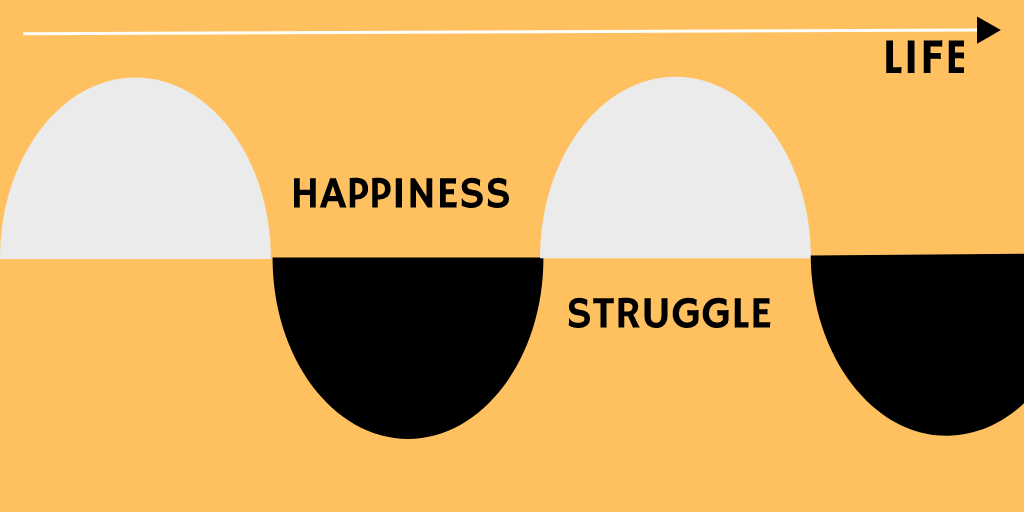
Sadly everyone touches the only green side but there has to be a balance. Don't forget to #retweet for wider reach.



You May Also Like


fascinated by this man, mario cortellucci, and his outsized influence on ontario and GTA politics. cortellucci, who lives in vaughan and ran as a far-right candidate for the italian senate back in 2018 - is a major ford donor...
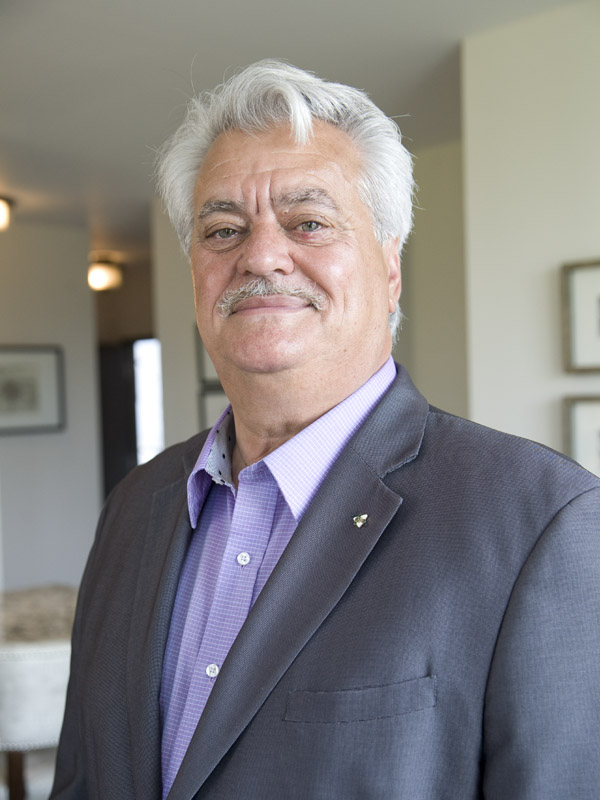
his name might sound familiar because the new cortellucci vaughan hospital at mackenzie health, the one doug ford has been touting lately as a covid-centric facility, is named after him and his family
but his name also pops up in a LOT of other ford projects. for instance - he controls the long term lease on big parts of toronto's portlands... where doug ford once proposed building an nfl stadium and monorail... https://t.co/weOMJ51bVF
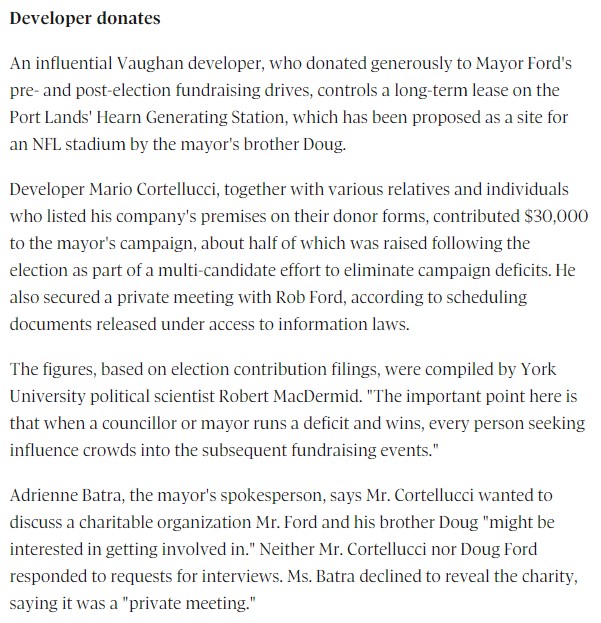
cortellucci, who is a developer, also owns a large chunk of the greenbelt. doug ford's desire to develop the greenbelt has been
and late last year he rolled back the mandate of conservation authorities there, prompting the resignations of several members of the greenbelt advisory
his name might sound familiar because the new cortellucci vaughan hospital at mackenzie health, the one doug ford has been touting lately as a covid-centric facility, is named after him and his family
but his name also pops up in a LOT of other ford projects. for instance - he controls the long term lease on big parts of toronto's portlands... where doug ford once proposed building an nfl stadium and monorail... https://t.co/weOMJ51bVF
cortellucci, who is a developer, also owns a large chunk of the greenbelt. doug ford's desire to develop the greenbelt has been
and late last year he rolled back the mandate of conservation authorities there, prompting the resignations of several members of the greenbelt advisory