How to manage risk in Option Selling?

10 frameworks to improve your risk management in 1 month:

Collaborated with @niki_poojary

In this thread you'll how to manage risk with:

1. Directional markets
2. Range-bound markets
3. Mtm stop loss
4. Booking profits
5. Overnight hedging
6. Event Risk
7. Position Sizing
8. No leverage
9. Reducing positions when wrong
10. Calculating risk upfront

Let's go ↓
Directional markets:

There is no point in the market being directional and you adjusting a non-directional trade.

As a general rule, you should only adjust once or maximum twice and then give up on firefighting.

Then you should side with a directional move.
Mistake of a non-directional trader:

Non-directional traders face heavy losses in directional markets.

If you are able to limit your losses in such scenarios, your risk management will improve.

The "I can adjust any move" mindset has to vanish for this to improve.
Big Range:

Moves in a big range are usually violent, and this is where non-directional traders lose money despite the fact that they are correct in assuming that the market is range bound.

Level-based stops work best in such an environment with reduced quantities.
Mtm Stop losses:

In addition to level-based stops, you should also have an mtm based stop loss.

Don't fight with the market just because you have a "view".

Your view can always go wrong & when it does, usually traders lose a lot of money and most blunders happen.
2% Rule:

You should lose a maximum of 2% of your capital on any day, including whenever your view goes wrong.

Limiting yourself to a 2% loss ensures that you never take a big enough dent to impact you psychologically.

If you're a beginner start out risking 0.25% per trade.
Booking Profits:

Controlling Risk is important but so is booking profits.

Once you have booked your profits, if premiums increase or if the market goes against your initial trade then you don't lose profits already made.

This is a very healthy habit in trading.
For example:

So many times markets close at day high, Option sellers sell puts, and they get crushed the next morning.

Option sellers don't exit as they are in profit and then the market falls one way down taking away all the profits made.

Sometimes you come into loss.
If you have sold an option for 60-70 rs and it has come to 20rs in a gap, just book it and trade fresh for that day.

Or can skip intraday trades altogether and just trade post-3 pm again for the next day.

This way you won't get trapped in intraday volatility and premium spikes.
Overnight Hedged:

Overnight hedging should be done by those traders who keep fearing a black swan.

Whatever option you sell in bank nifty if you buy an option 1000 points away from it you have limited your losses to 25000 per lot.
Assuming you haven't taken leverage the max loss you will have will be between 20-25% of your capital, regardless if we open at a circuit.

I personally don't hedge and neither do I recommend hedging, but if this kind of risk bothers you, you can hedge.
Event Risk:

New option sellers should stay away from event trading.

For example, budget day, inflation data, RBI policy, etc. are all days where, unless you are used to exiting early, risk management can go for a toss fairly quickly.
As a beginner, you should try trading with 10% of your capital or avoid trading altogether.

Small quantities should be deployed just for you to get a sense of how these events and premium movements work.

With 10% qty only, you cannot lose a lot.
Know Risk upfront:

Risk should always be known before entering into a trade. You should also be comfortable with the risk you are taking.

It is preferable to risk profits rather than capital. You can make a rule of losing a maximum of 2 weeks profit in a week.
This way you never waste a month and even in a bad month you can still end up making 1-2% returns rather than it being a loss-making month.

If you're not comfortable with losing 2 weeks profit, just risk the previous weeks profit.
Position Sizing:

Position Sizing should always be in check to have good risk management.

Learn to play on 2 lots per 10 lakhs at first and then slowly scale to 4 lots and finally 6 lots per 10 lakhs once the profit cushion is there.
With a small size of 2 lots per 10 lakhs, you will learn to handle the capital and manage gaps and losses.

If profitable, can risk the profit and take higher quantities.

I have scaled up this exact the same way. Now I fearlessly punch any quantity.
When unable to read the market:

There are some weeks or months where, whatever you do, you are unable to read the market at all.

Immediately reduce the quantity for the week/month so that even if you lose further, you don't lose money on your entire capital's quantity.
For many traders, this happens when the vix is rising, so it would be an ideal time to sit out or trade with lower quantities.

The past month has bee difficult for sellers, and they knew vix would rise before the budget.
No leverage:

It is critical not to use leverage as an option seller until you have at least doubled your capital. Leverage by itself isn't wrong—but how it impacts us is too dangerous if not handled well.
If you are someone who is trading with 10 lakhs capital and selling naked options, you would be used to selling either 150 to 200 quantities.

If you take advantage of leverage, you can even go up to 700 quantities on a 10 lakh account. ↓
Quantity Increase:

Regardless of how good a trader you are, this is a significant increase in MTM fluctuations.

There is a difference in trading with a 10 lakh capital quantity sizing and a 30 lakh capital position sizing.
Traders who don't follow or stick to trading within their quantity limits, find it difficult to be great at risk management.

If you lose on a big enough quantity, your psychology will go for a toss.
These are my experiences for tackling:

1. Directional market
2. Range-bound markets
3. Mtm stop loss
4. Booking profits
5. Overnight hedging
6. Event Risk
7. Position Sizing
8. No leverage
9. Reducing positions when wrong
10. Calculating risk upfront

Comment if you have a query
That's a wrap!

If you enjoyed this thread:

1. Follow us @Adityatodmal & @niki_poojary for more threads on Price action, Option Selling & Trading growth.

We've got you covered.

2. RT the first Tweet to share it with your audience.

I appreciate it!

More from Aditya Todmal

12 TRADING SETUPS used by professional traders:🧵

Collaborated with @niki_poojary

Here's what you'll learn in this thread:

1. Capture Overnight Theta Decay
2. Trading Opening Range Breakouts
3. Reversal Trading Setups
4. Selling strangles and straddles in Bank Nifty
6. NR4 + IB
7. NR 21-Vwap Strategy

Let's dive in ↓

1/ STBT option Selling (Positional Setup):

The setup uses price action to sell options for overnight theta decay.

Check Bank Nifty at 3:15 everyday.

Sell directional credit spreads with capped


@jigspatel1988 2/ Selling Strangles in Bank Nifty based on Open Interest Data

Don't trade till 9:45 Am.

Identify the highest OI on puts and calls.

Check combined premium and put a stop on individual


@jigspatel1988 3/ Open Drive (Intraday)

This is an opening range breakout setup with a few conditions.

To be used when the market opens above yesterday's day high

or Below yesterday's day's
I gathered the 38 best screeners from @YMehta_

Save 100+ hours researching.

A thread:

Collaborated with @niki_poojary
10 Free Candlestick Pattern


Top 9 Price Action-based


7 Strategies with their


4 Investment Strategies with their

More from Trading

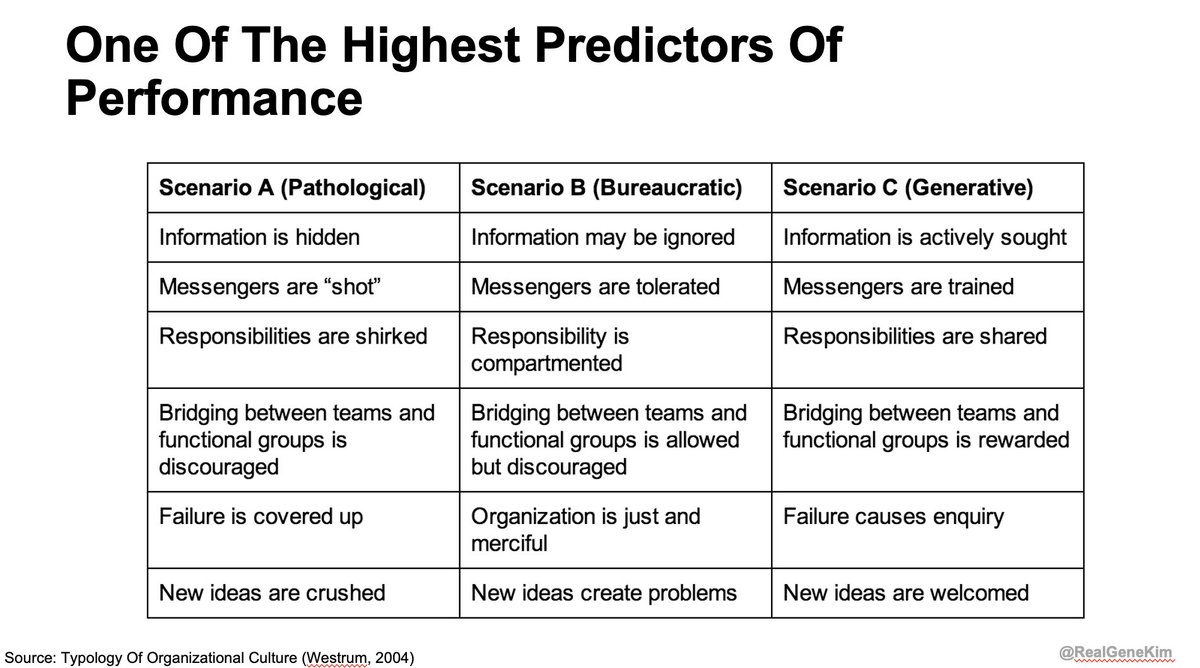
Many of you have seen the famous Westrum Organizational Typology model, so prominently featured in State of DevOps Research, Accelerate, DevOps Handbook, etc.

This model was created Dr. Ron Westrum, a widely-cited sociologist who studied the impact of culture on safety


Thanks to Dr. @nicolefv, I was able to interview him for an upcoming episode of the Idealcast! 🤯

It was a very heady experience, and while preparing to interview him, I was startled to discover how much work he's done in healthcare, aviation, spaceflight, but also innovation.

I've read 4+ of his papers, so I thought I was familiar with his work. (Here's one paper:
https://t.co/7X00O67VgS)

I was startled to learn he has also studied in depth what enables innovation. He wrote a wonderful book "Sidewinder: Creative Missile Development at China Lake"


Dr. Westrum writes about China Lake Research Labs: "its design and structure had one purpose: to foster technical creativity. It did; China Lake operated far outside the normal envelope... Sidewinder & others were "impossible" accomplishments,

I love this book because it describes traits of organizations that routinely create and maintain greatness: US space program (Mercury, Gemini, Apollo), US Naval Reactors, Toyota, Team of Teams, Tesla, the tech giants (Amazon, Google, Netflix, Google)

You May Also Like

THE MEANING, SIGNIFICANCE AND HISTORY OF SWASTIK

The Swastik is a geometrical figure and an ancient religious icon. Swastik has been Sanatan Dharma’s symbol of auspiciousness – mangalya since time immemorial.


The name swastika comes from Sanskrit (Devanagari: स्वस्तिक, pronounced: swastik) &denotes “conducive to wellbeing or auspicious”.
The word Swastik has a definite etymological origin in Sanskrit. It is derived from the roots su – meaning “well or auspicious” & as meaning “being”.


"सु अस्ति येन तत स्वस्तिकं"
Swastik is de symbol through which everything auspicios occurs

Scholars believe word’s origin in Vedas,known as Swasti mantra;

"🕉स्वस्ति ना इन्द्रो वृधश्रवाहा
स्वस्ति ना पूषा विश्ववेदाहा
स्वस्तिनास्तरक्ष्यो अरिश्तनेमिही
स्वस्तिनो बृहस्पतिर्दधातु"


It translates to," O famed Indra, redeem us. O Pusha, the beholder of all knowledge, redeem us. Redeem us O Garudji, of limitless speed and O Bruhaspati, redeem us".

SWASTIK’s COSMIC ORIGIN

The Swastika represents the living creation in the whole Cosmos.


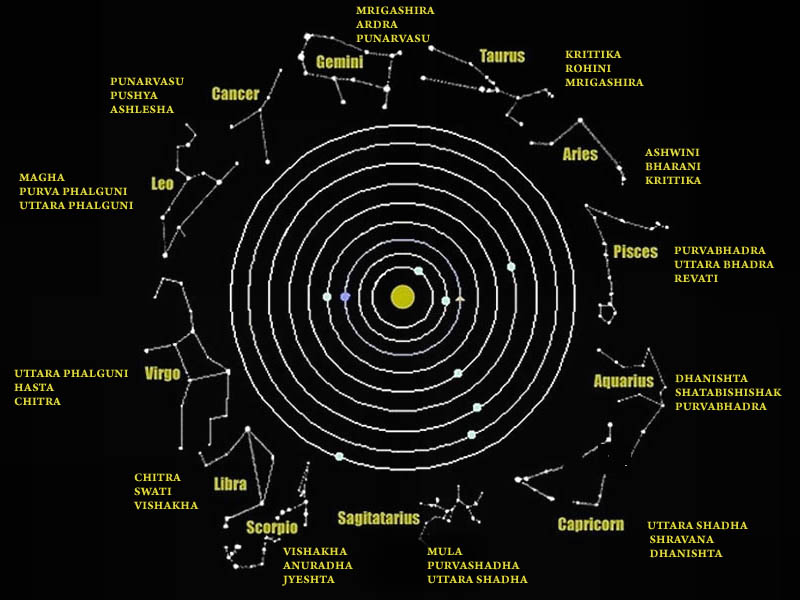
Hindu astronomers divide the ecliptic circle of cosmos in 27 divisions called
https://t.co/sLeuV1R2eQ this manner a cross forms in 4 directions in the celestial sky. At centre of this cross is Dhruva(Polestar). In a line from Dhruva, the stars known as Saptarishi can be observed.