A thread.

Earnings Trades Simplified.

Earnings announcements are public announcements that display a company’s earnings, or lack thereof. As the earnings announcement gets closer, implied volatility tends to increase. After earnings are announced,...

1/n

the uncertainty of what will happen diminishes, and usually we see a rapid decrease in implied volatility because of it. Because of this phenomena, we tend to stick to premium selling strategies when it comes to earnings plays. We can take advantage...

2/n
of the implied volatility crush by selling premium prior to the announcement, and buying it back after the announcement.

Earnings trades are not for everyone, as they involve high amounts of uncertainty and random movements.

3/n
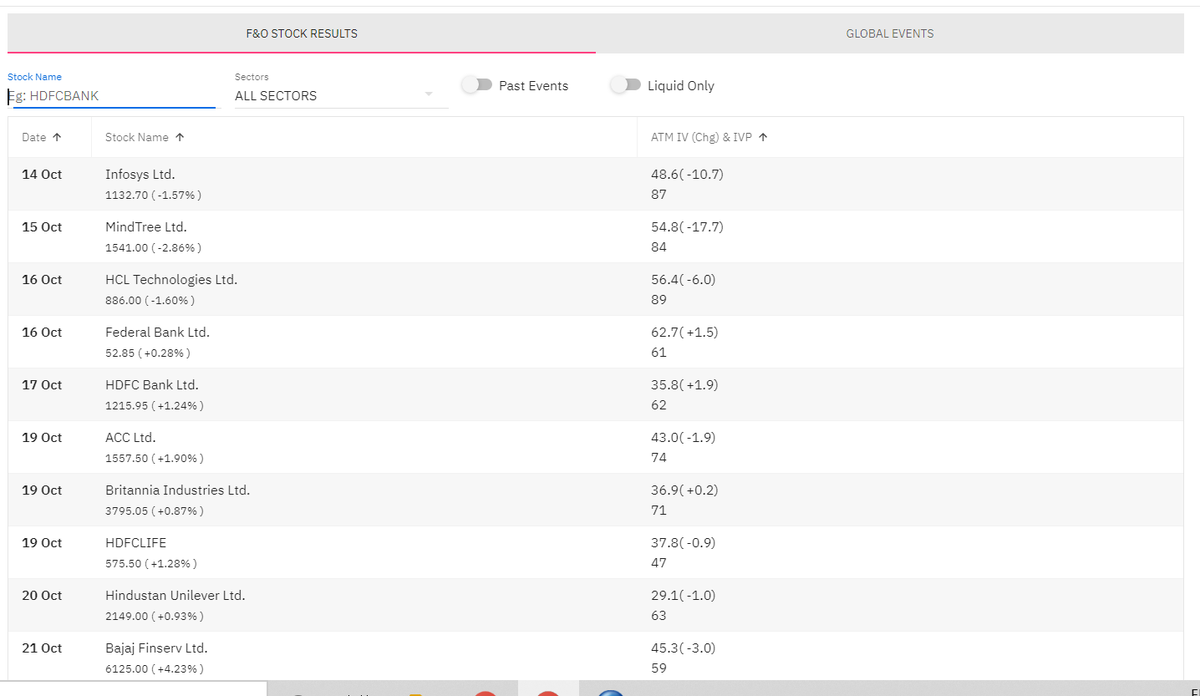
Why Trade Earnings -

-Increase number of occurrences, many trades available so increases of our probability of profit.

-High IV opportunities

-Short term Binary event leading to drastic volatility crush.

4/n
Factors to consider when placing earnings trade -

1. Expected Move
2. When to place trade
3. Historical Moves
4. Strategies based on market conditions

5/n
Expected move

Normally calculated by IV, stock price, expected move period(as no. of days) by formula

Price * IV * SQRT(days/365)

Market Makers expected move -

ATM Straddle * 0.85* =(both the sides from strike)

Both have some differences.

6/n
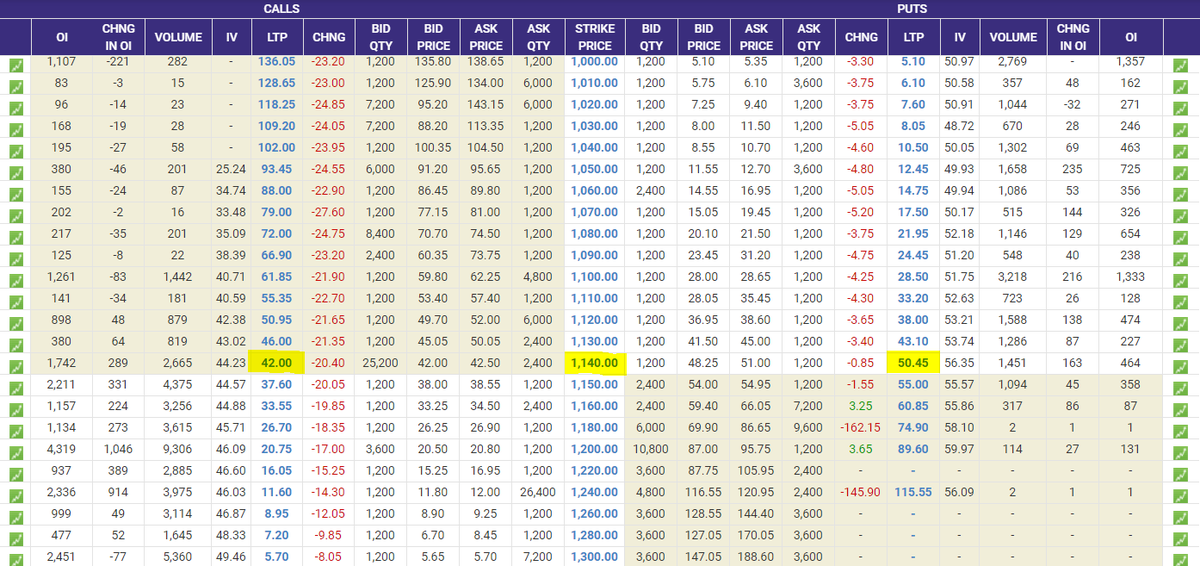
Example INFOSYS -

ATM (1140) Straddle = Rs.100 approx.
Days to expiration = 15 (29 October)
Stock Price - 1140
IV = 50%

Expected move till expiry - Rs.115 Either way from spot
Market Maker move - Rs.85 Either way from spot.

7/n
When to place trade -

If Earnings is overnight, say tomorrow, place the order at end of the day today for better delta position.

If Earnings is during market hours, at the start of the day as the timing of the earnings can be easily switched during the course of the day.

8/n
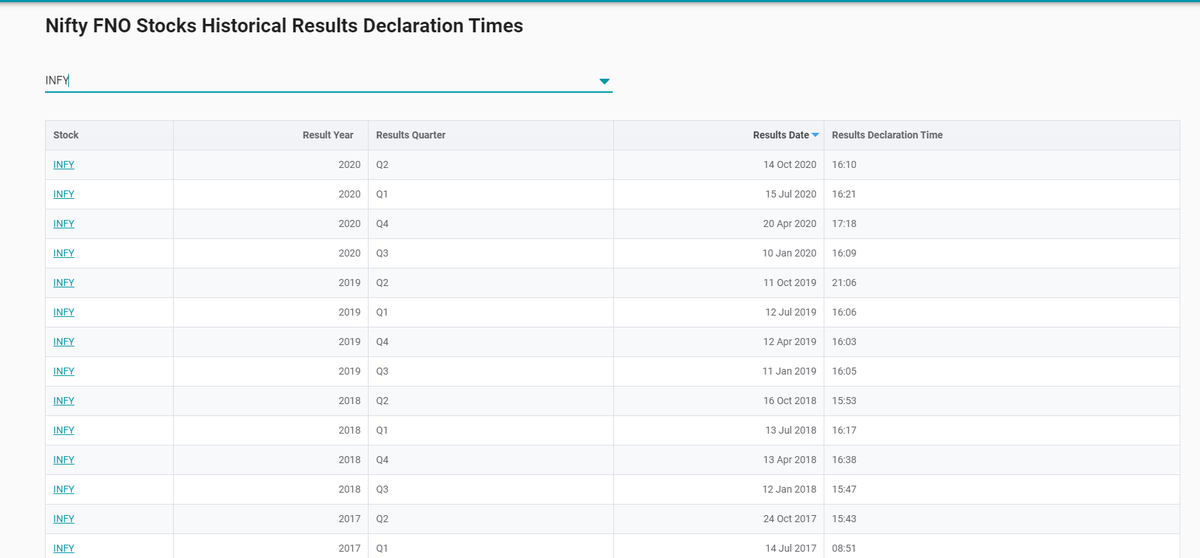
Historical Moves

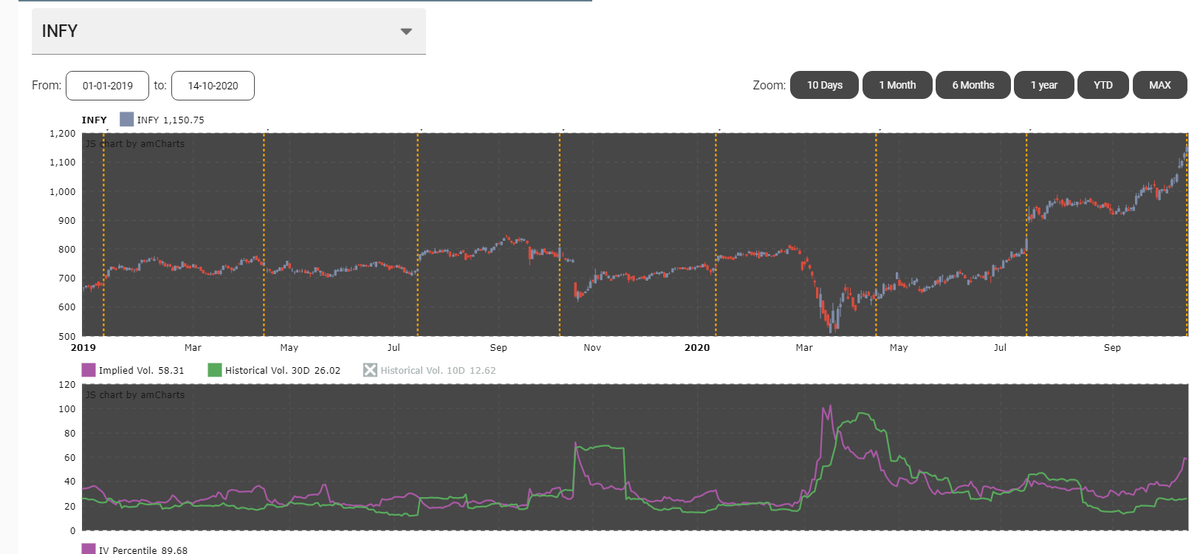
Did the underlying in which the trade is taken historically overstated IVs are understated, in case of INFY case shown below it has understated 5/7 times in last 7 quarters after earnings.

Yellow Dotted lines are earnings days.

9/n
Strategies to Use -

Only basic ones. Will explain three of them here.

1) Iron Condor - Beginner Strategy, can be used for any underlying. Basic Setup, example on INFY. Explained Iron Condor in y previous threads.

10/n
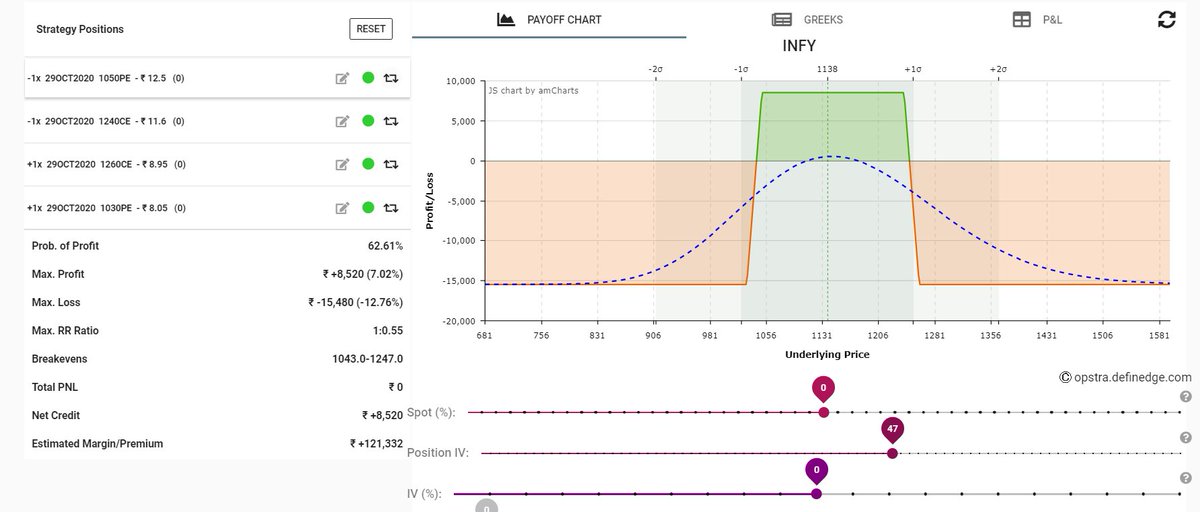
2) Chicken Iron Condor.

Can be used for large underlying or IV percentile > 90. Better Risk Reward than Iron Condor. Basic Setup as shown below. Sell closer strikes than Iron condor.

11/n
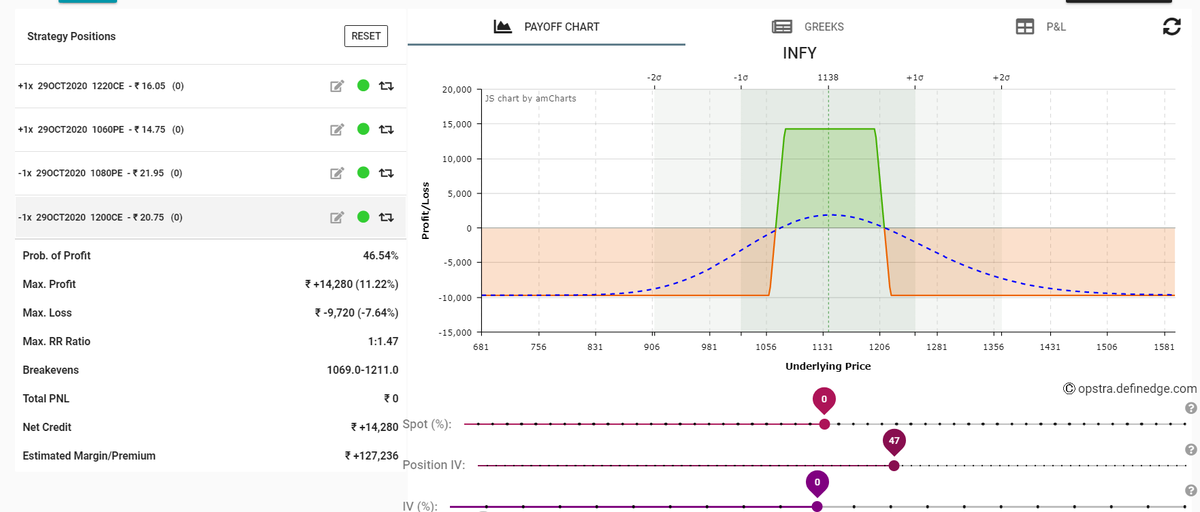
3) Jade Lizard. - For taking a direction. For long Side, the idea should be such that when a blow through move happens on your side happens you should collect some credit. Opposite of the same can be setup for bearish side also. This is unlimited risk strategy. Setup -

12/n
As this is a earnings season, hope most of you find this thread helpful. Just tryout basic risk defined strategies and learn. The purpose of the thread is to understand why we do what we do and just a bit of 'How'.

Retweet If you find it useful.

THE END.

More from Trading

12 TRADING SETUPS used by professional traders:🧵

Collaborated with @niki_poojary

Here's what you'll learn in this thread:

1. Capture Overnight Theta Decay
2. Trading Opening Range Breakouts
3. Reversal Trading Setups
4. Selling strangles and straddles in Bank Nifty
6. NR4 + IB
7. NR 21-Vwap Strategy

Let's dive in ↓

1/ STBT option Selling (Positional Setup):

The setup uses price action to sell options for overnight theta decay.

Check Bank Nifty at 3:15 everyday.

Sell directional credit spreads with capped


@jigspatel1988 2/ Selling Strangles in Bank Nifty based on Open Interest Data

Don't trade till 9:45 Am.

Identify the highest OI on puts and calls.

Check combined premium and put a stop on individual


@jigspatel1988 3/ Open Drive (Intraday)

This is an opening range breakout setup with a few conditions.

To be used when the market opens above yesterday's day high

or Below yesterday's day's

You May Also Like

A brief analysis and comparison of the CSS for Twitter's PWA vs Twitter's legacy desktop website. The difference is dramatic and I'll touch on some reasons why.

Legacy site *downloads* ~630 KB CSS per theme and writing direction.

6,769 rules
9,252 selectors
16.7k declarations
3,370 unique declarations
44 media queries
36 unique colors
50 unique background colors
46 unique font sizes
39 unique z-indices

https://t.co/qyl4Bt1i5x


PWA *incrementally generates* ~30 KB CSS that handles all themes and writing directions.

735 rules
740 selectors
757 declarations
730 unique declarations
0 media queries
11 unique colors
32 unique background colors
15 unique font sizes
7 unique z-indices

https://t.co/w7oNG5KUkJ


The legacy site's CSS is what happens when hundreds of people directly write CSS over many years. Specificity wars, redundancy, a house of cards that can't be fixed. The result is extremely inefficient and error-prone styling that punishes users and developers.

The PWA's CSS is generated on-demand by a JS framework that manages styles and outputs "atomic CSS". The framework can enforce strict constraints and perform optimisations, which is why the CSS is so much smaller and safer. Style conflicts and unbounded CSS growth are avoided.