Like humans , stocks too have different nature and if you are trading every stock the same way then this thread may be for you.

A thread on Nature of stocks and how it can help you to improve your trading results.

First start with what is the nature of stocks ?

I broadly categorize stocks in two categories-

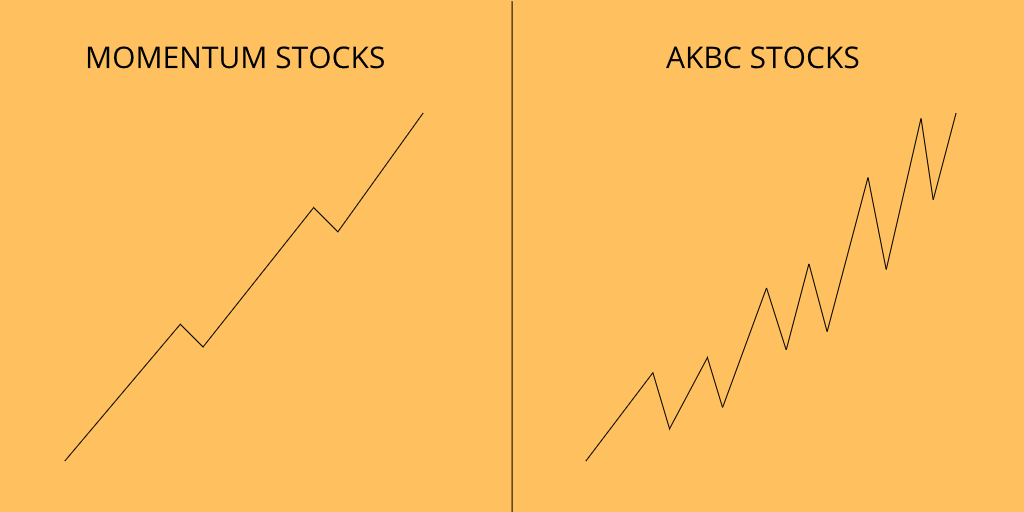
1. The momentum stocks-

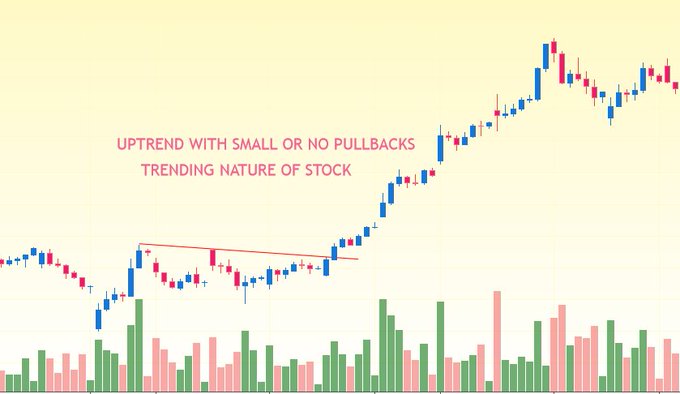
These are the stocks where most of the moves are swift in nature, or we can say that the pullbacks in a trend are smaller.

2. The AKBC stocks-

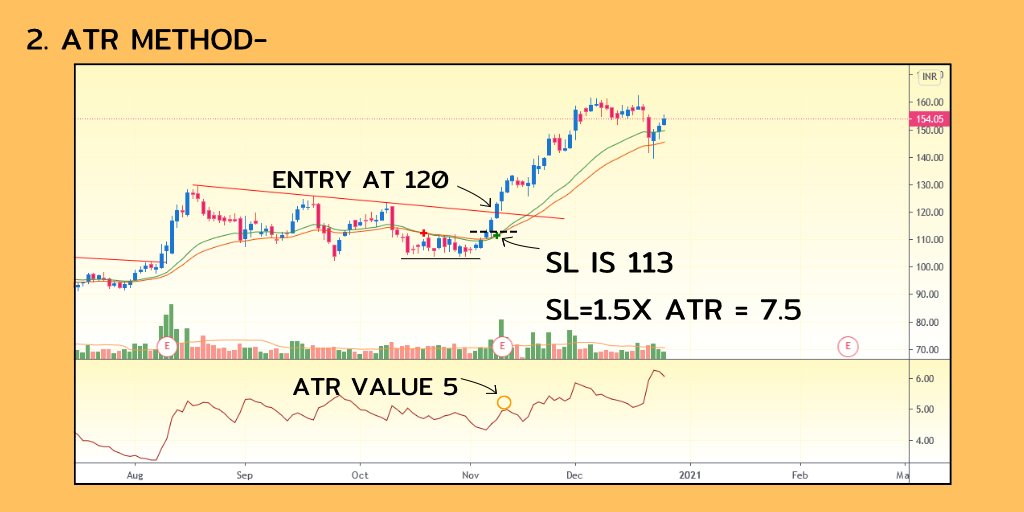
These are the stocks where most of the trending moves comes with deep pullbacks.
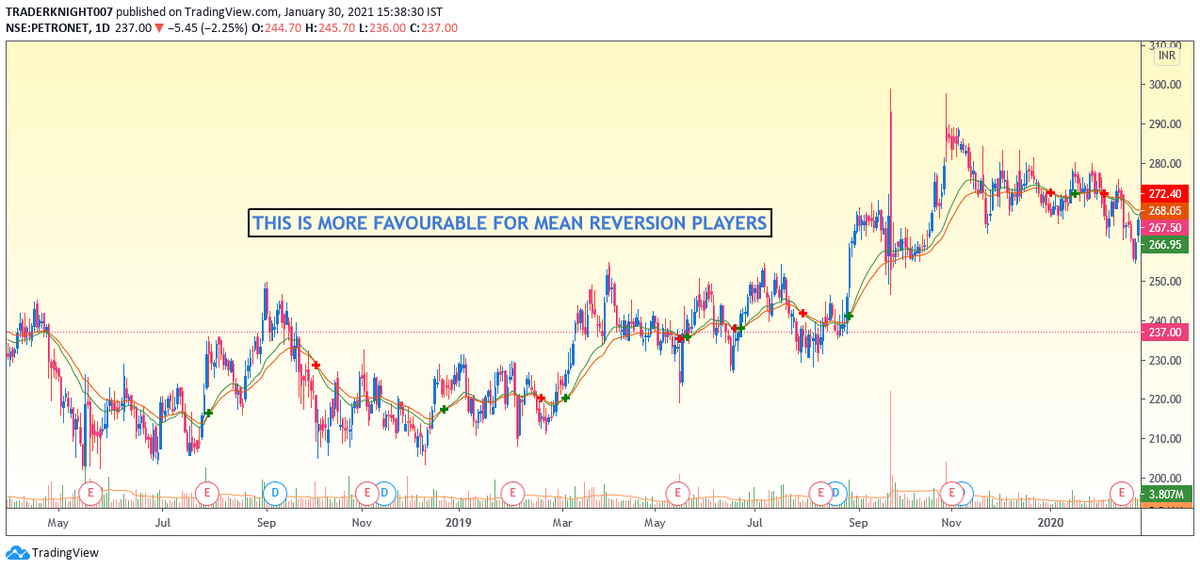
Examples-
So the purpose of categorizing these stocks, is that we Trade those stocks/instruments which are more suited to our style.

Say if you are a mean reversion player and you are trading in the momentum stocks category then you are more bound to lose over large number of trades.
But if you do the same in the AKBC stocks then you will have more winners then losers.

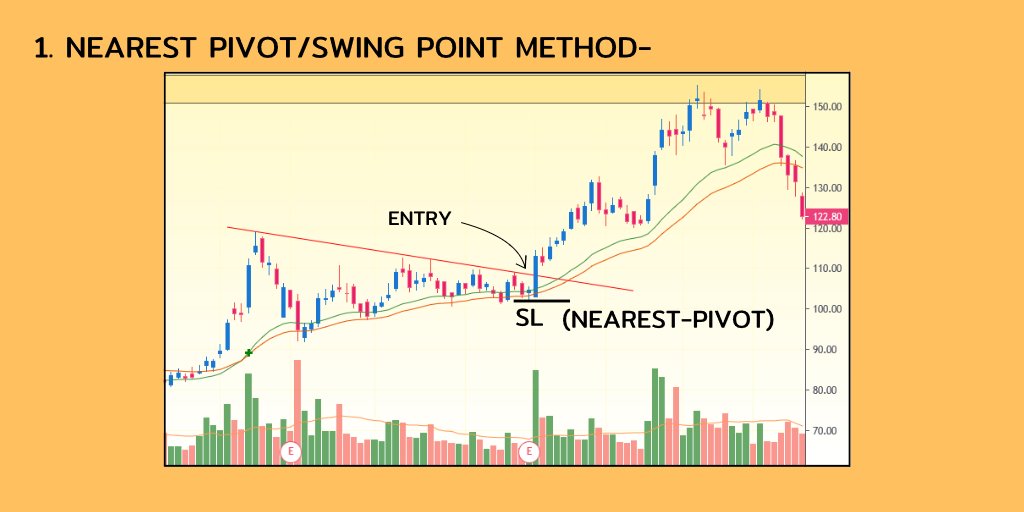
Likewise If you trade with Tight stop losses in AKBC stocks then your stops will hit more often even when you get the direction right.
So you got the point, that we have to trade those stocks which suits to our strategy.

// when you meet an unknown person for the first time you will not be able to know there nature , there habits fully, you will know these things over time.
Likewise, there are few qualities of stocks which you will only see if you observe closely.

For example-

1. The Metals pack, and specifically Tata steel is a stocks which has a tendency to go from top gainer to top loser intraday and vice versa.
2. Few stocks Perform when the market falls or when fear in markets.

3. Trend following works better in commodities then Stocks.

These are few examples and you will find many more when you track your stocks closely under different market conditions.
I got confidence in this idea of knowing nature of stocks from @Trendmyfriends though our trading style is different.

These are only my views and not necessarily be yours.

Cheers

Trader knight

More from Trader knight

More from Trading

TradingView isn't just charts

It's much more powerful than you think

9 things TradingView can do, you'll wish you knew yesterday: 🧵

Collaborated with @niki_poojary

1/ Free Multi Timeframe Analysis

Step 1. Download Vivaldi Browser

Step 2. Login to trading view

Step 3. Open bank nifty chart in 4 separate windows

Step 4. Click on the first tab and shift + click by mouse on the last tab.

Step 5. Select "Tile all 4 tabs"


What happens is you get 4 charts joint on one screen.

Refer to the attached picture.

The best part about this is this is absolutely free to do.

Also, do note:

I do not have the paid version of trading view.


2/ Free Multiple Watchlists

Go through this informative thread where @sarosijghosh teaches you how to create multiple free watchlists in the free


3/ Free Segregation into different headers/sectors

You can create multiple sections sector-wise for free.

1. Long tap on any index/stock and click on "Add section above."
2. Secgregate the stocks/indices based on where they belong.

Kinda like how I did in the picture below.

You May Also Like

1/ Some initial thoughts on personal moats:

Like company moats, your personal moat should be a competitive advantage that is not only durable—it should also compound over time.

Characteristics of a personal moat below:


2/ Like a company moat, you want to build career capital while you sleep.

As Andrew Chen noted:


3/ You don’t want to build a competitive advantage that is fleeting or that will get commoditized

Things that might get commoditized over time (some longer than


4/ Before the arrival of recorded music, what used to be scarce was the actual music itself — required an in-person artist.

After recorded music, the music itself became abundant and what became scarce was curation, distribution, and self space.

5/ Similarly, in careers, what used to be (more) scarce were things like ideas, money, and exclusive relationships.

In the internet economy, what has become scarce are things like specific knowledge, rare & valuable skills, and great reputations.
I just finished Eric Adler's The Battle of the Classics, and wanted to say something about Joel Christiansen's review linked below. I am not sure what motivates the review (I speculate a bit below), but it gives a very misleading impression of the book. 1/x


The meat of the criticism is that the history Adler gives is insufficiently critical. Adler describes a few figures who had a great influence on how the modern US university was formed. It's certainly critical: it focuses on the social Darwinism of these figures. 2/x

Other insinuations and suggestions in the review seem wildly off the mark, distorted, or inappropriate-- for example, that the book is clickbaity (it is scholarly) or conservative (hardly) or connected to the events at the Capitol (give me a break). 3/x

The core question: in what sense is classics inherently racist? Classics is old. On Adler's account, it begins in ancient Rome and is revived in the Renaissance. Slavery (Christiansen's primary concern) is also very old. Let's say classics is an education for slaveowners. 4/x

It's worth remembering that literacy itself is elite throughout most of this history. Literacy is, then, also the education of slaveowners. We can honor oral and musical traditions without denying that literacy is, generally, good. 5/x