
@Polkadot is a platform on which blockchain networks are built and connected into one unified network. These connected chains, called parachains, form a living organism of networks all in sync and secure. This forms the foundation on which Web3 will be built.
Polkadot is complicated as hell! This 24-tweet thread is a beginner's guide to @Polkadot $DOT and @KusamaNetwork $KSM in simple English.
What is Polkadot? Kusama? Parachains? Crowdloan and Parachain slot auction?
Comment with other questions and share if you learn something ⤵️

@Polkadot is a platform on which blockchain networks are built and connected into one unified network. These connected chains, called parachains, form a living organism of networks all in sync and secure. This forms the foundation on which Web3 will be built.
Think of it as drag-and-drop blockchain consensus, or even easier, like Music EQ with dials up & down on certain features.
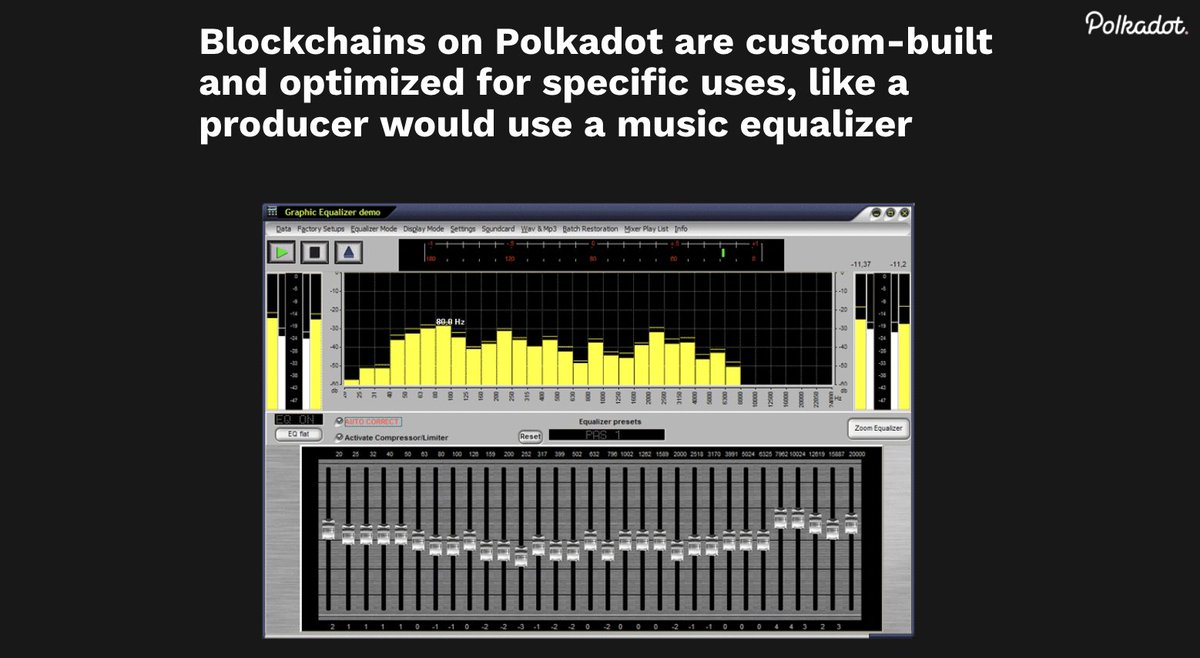
Dev teams use @Polkadot's Substrate framework to build custom chains for a specific use/vertical, such as @AcalaNetwork for DeFi, @PhalaNetwork for Privacy, @chainlink for Oracles, or @hydra_dx for liquidity.
Legacy networks like #Ethereum are called "layer 1" chains. These are single blockchains, operating in isolation. Parachains are also layer 1 chains. Polkadot is one level below, a "layer zero" multi-chain growing to 100+ networks.
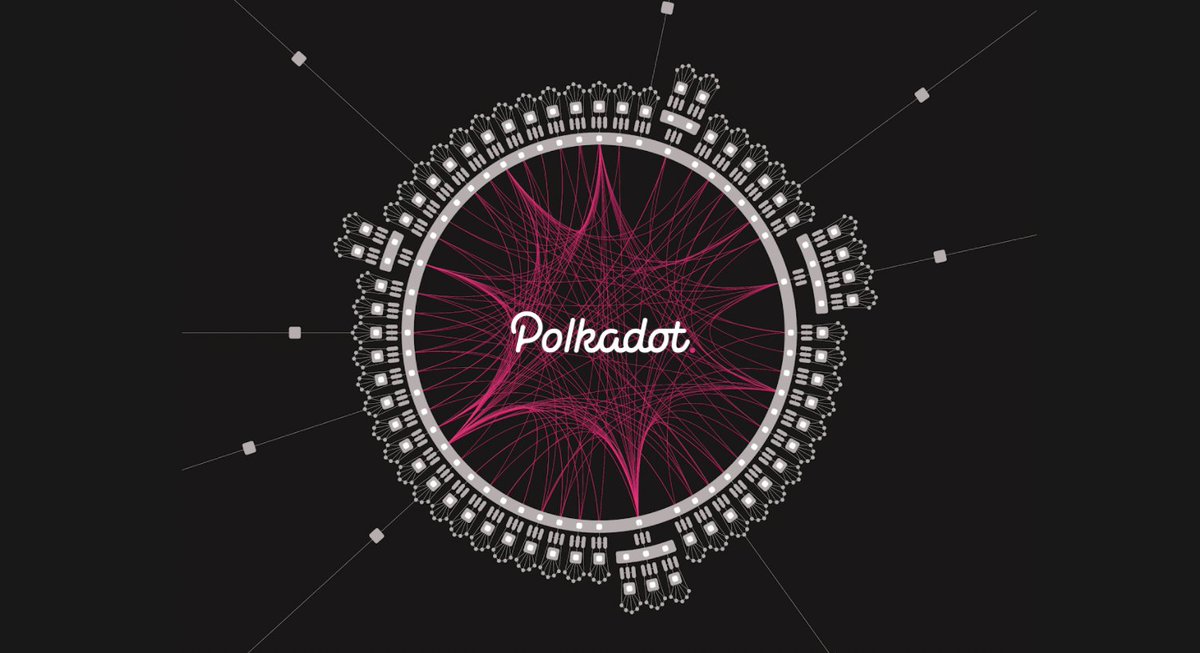
@Polkadot will be bridged to existing networks like @ethereum and #bitcoin via bridges built by teams like @InterlayHQ (BTC), @snowfork_inc (ETH), @ChainSafeth & @centrifuge (ETH), @chainx_org (BTC), and more.
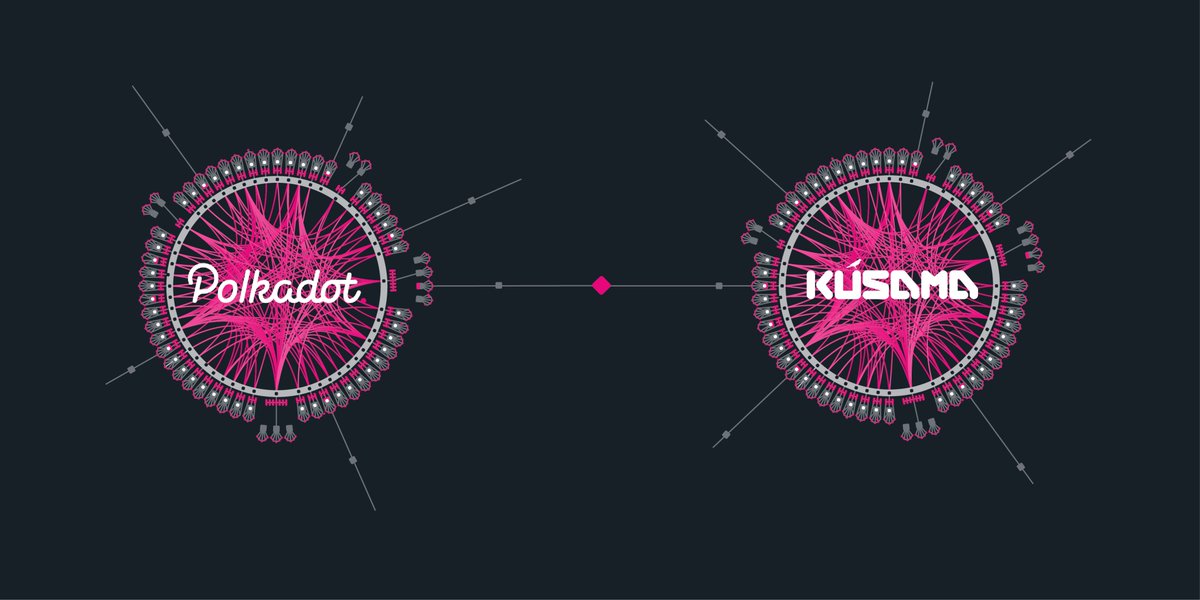
Kusama is essentially the exact same code/archtr as Polkadot, but its on-chain governance moves 4x faster (7 days) and there are lower barriers to entry for teams to get a slot on the network (more on this below).
The model is Testnet->Kusama mainnet->Polkadot mainnet.
This ensures code is as flawless as possible before going to @Polkadot
For the sim/difs between @Polkadot and Kusama, check out this post: https://t.co/3aYG3jWTgo
Teams like Acala are launching @AcalaNetwork on Polkadot and @KaruraNetwork on Kusama. @purestakeco is similarly launching Moonbeam (DOT) & Moonriver (KSM).
@Polkadot has 100+ parachain "slots" (see below) which must be 'leased' for access to Polkadot's security and ability to communicate with other chains.
In fact, no team is "built on Polkadot" until they win an auction!
Candle auction: https://t.co/6ZI6hwNux1
This will enable an meta-infrastructure running myriad blockchains and applications on those chains, all in sync and sharing security.
Just like the databases/protocols powering the apps we use every day, end users and consumers shouldn't even know Polkadot and Kusama are there: Web3 apps that operate as good or better than their Web2 counterpart.
More from Tech





You May Also Like






My top 10 tweets of the year
A thread 👇
https://t.co/xj4js6shhy
https://t.co/b81zoW6u1d
https://t.co/1147it02zs
https://t.co/A7XCU5fC2m
A thread 👇
https://t.co/xj4js6shhy
Entrepreneur\u2019s mind.
— James Clear (@JamesClear) August 22, 2020
Athlete\u2019s body.
Artist\u2019s soul.
https://t.co/b81zoW6u1d
When you choose who to follow on Twitter, you are choosing your future thoughts.
— James Clear (@JamesClear) October 3, 2020
https://t.co/1147it02zs
Working on a problem reduces the fear of it.
— James Clear (@JamesClear) August 30, 2020
It\u2019s hard to fear a problem when you are making progress on it\u2014even if progress is imperfect and slow.
Action relieves anxiety.
https://t.co/A7XCU5fC2m
We often avoid taking action because we think "I need to learn more," but the best way to learn is often by taking action.
— James Clear (@JamesClear) September 23, 2020