Thread – Dump the Legacy Media; Turn to These News Sources
A. We all need sources less tainted by the Big Tech/globalist narratives that are echoed repeatedly throughout the legacy media. My brother sent me a list of alternatives from the Noq report.
More from Resist the Hologram - Stu Cvrk
More from Tech





Next.js has taken the web dev world by storm
It’s the @reactjs framework devs rave about praising its power, flexibility, and dev experience
Don't feel like you're missing out!
Here's everything you need to know in 10 tweets
Let’s dive in 🧵
Next.js is a @reactjs framework from @vercel
It couples a great dev experience with an opinionated feature set to make it easy to spin up new performant, dynamic web apps
It's used by many high-profile teams like @hulu, @apple, @Nike, & more
https://t.co/whCdm5ytuk
@vercel @hulu @Apple @Nike The team at @vercel, formerly Zeit, originally and launched v1 of the framework on Oct 26, 2016 in the pursuit of universal JavaScript apps
Since then, the team & community has grown expotentially, including contributions from giants like @Google
https://t.co/xPPTOtHoKW
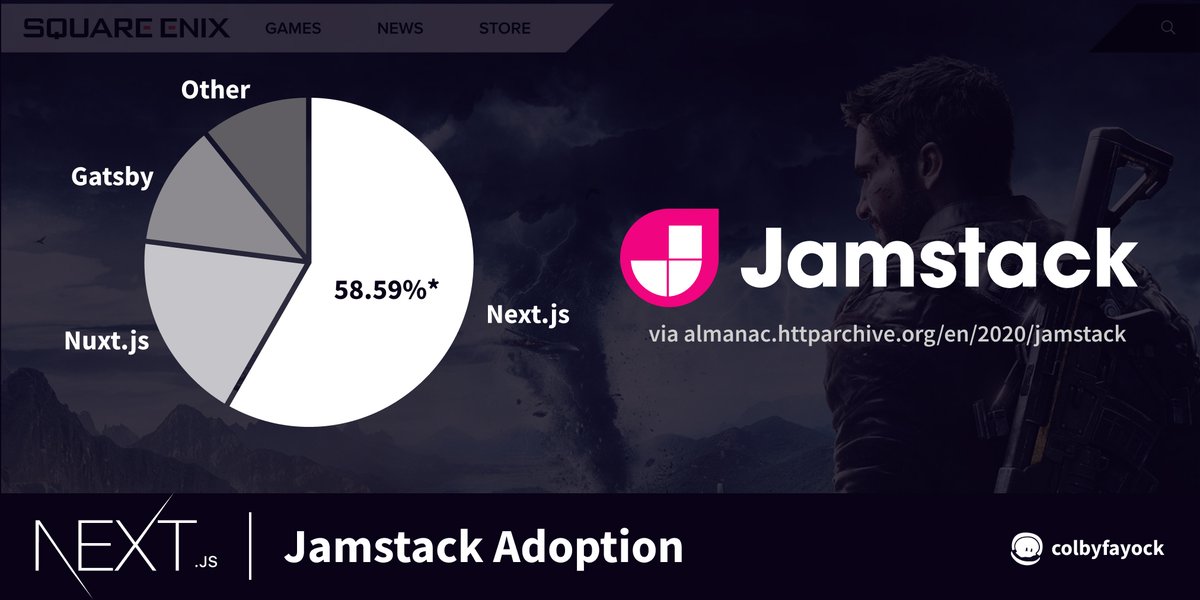
@vercel @hulu @Apple @Nike @Google In the #jamstack world, Next.js pulled a hefty 58.6% share of framework adoption in 2020
Compared to other popular @reactjs frameworks like Gatsby, which pulled in 12%
*The Next.js stats likely include some SSR, arguably not Jamstack
https://t.co/acNawfcM4z
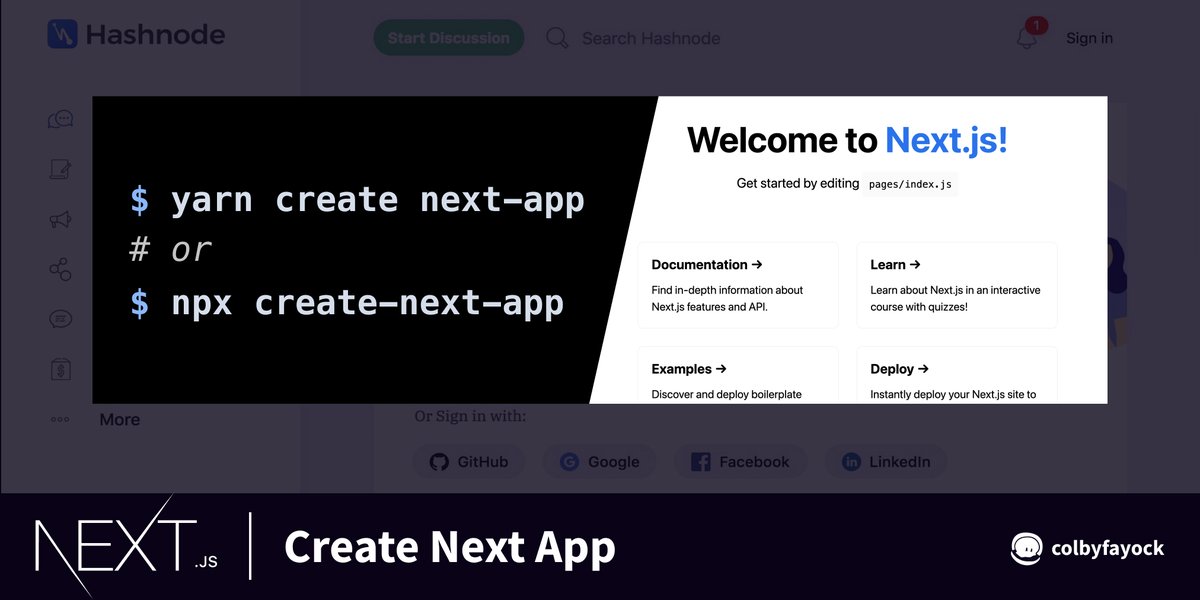
@vercel @hulu @Apple @Nike @Google The easiest way to get started with a new Next.js app is with Create Next App
Simply run:
yarn create next-app
or
npx create-next-app
You can even start from a git-based template with the -e flag
yarn create next-app -e https://t.co/JMQ87gi1ue
https://t.co/rwKhp7zlys
It’s the @reactjs framework devs rave about praising its power, flexibility, and dev experience
Don't feel like you're missing out!
Here's everything you need to know in 10 tweets
Let’s dive in 🧵
Next.js is a @reactjs framework from @vercel
It couples a great dev experience with an opinionated feature set to make it easy to spin up new performant, dynamic web apps
It's used by many high-profile teams like @hulu, @apple, @Nike, & more
https://t.co/whCdm5ytuk
@vercel @hulu @Apple @Nike The team at @vercel, formerly Zeit, originally and launched v1 of the framework on Oct 26, 2016 in the pursuit of universal JavaScript apps
Since then, the team & community has grown expotentially, including contributions from giants like @Google
https://t.co/xPPTOtHoKW
@vercel @hulu @Apple @Nike @Google In the #jamstack world, Next.js pulled a hefty 58.6% share of framework adoption in 2020
Compared to other popular @reactjs frameworks like Gatsby, which pulled in 12%
*The Next.js stats likely include some SSR, arguably not Jamstack
https://t.co/acNawfcM4z
@vercel @hulu @Apple @Nike @Google The easiest way to get started with a new Next.js app is with Create Next App
Simply run:
yarn create next-app
or
npx create-next-app
You can even start from a git-based template with the -e flag
yarn create next-app -e https://t.co/JMQ87gi1ue
https://t.co/rwKhp7zlys

You May Also Like




First thread of the year because I have time during MCO. As requested, a thread on the gods and spirits of Malay folk religion. Some are indigenous, some are of Indian origin, some have Islamic
Before I begin, it might be worth explaining the Malay conception of the spirit world. At its deepest level, Malay religious belief is animist. All living beings and even certain objects are said to have a soul. Natural phenomena are either controlled by or personified as spirits
Although these beings had to be respected, not all of them were powerful enough to be considered gods. Offerings would be made to the spirits that had greater influence on human life. Spells and incantations would invoke their
Two known examples of such elemental spirits that had god-like status are Raja Angin (king of the wind) and Mambang Tali Arus (spirit of river currents). There were undoubtedly many more which have been lost to time
Contact with ancient India brought the influence of Hinduism and Buddhism to SEA. What we now call Hinduism similarly developed in India out of native animism and the more formal Vedic tradition. This can be seen in the multitude of sacred animals and location-specific Hindu gods
i wonder if you can make a thread bout witchcraft in malaysia.. or list of our own local gods/deites..
— r a y a \U0001f319 (@lcvelylilith) February 20, 2020
Before I begin, it might be worth explaining the Malay conception of the spirit world. At its deepest level, Malay religious belief is animist. All living beings and even certain objects are said to have a soul. Natural phenomena are either controlled by or personified as spirits
Although these beings had to be respected, not all of them were powerful enough to be considered gods. Offerings would be made to the spirits that had greater influence on human life. Spells and incantations would invoke their
Animist ceremonies of a religious or magical nature were normally held for the purpose of divination or making a request. This would either be done at a keramat or at a shrine similar to the Thai spirit houses or Chinese roadside shrines pic.twitter.com/I1hliyi0x3
— \u2745\u1710\u170b\u1713\u170e (@uglyluhan) June 16, 2019
Two known examples of such elemental spirits that had god-like status are Raja Angin (king of the wind) and Mambang Tali Arus (spirit of river currents). There were undoubtedly many more which have been lost to time
Contact with ancient India brought the influence of Hinduism and Buddhism to SEA. What we now call Hinduism similarly developed in India out of native animism and the more formal Vedic tradition. This can be seen in the multitude of sacred animals and location-specific Hindu gods