
Okay, here we go.
Neural Volume Rendering for Dynamic Scenes
NeRF has shown incredible view synthesis results, but it requires multi-view captures for STATIC scenes.
How can we achieve view synthesis for DYNAMIC scenes from a single video? Here is what I learned from several recent efforts.

Okay, here we go.
NeRF represents the scene as a 5D continuous volumetric scene function that maps the spatial position and viewing direction to color and density. It then projects the colors/densities to form an image with volume rendering.
Volumetric + Implicit -> Awesome!
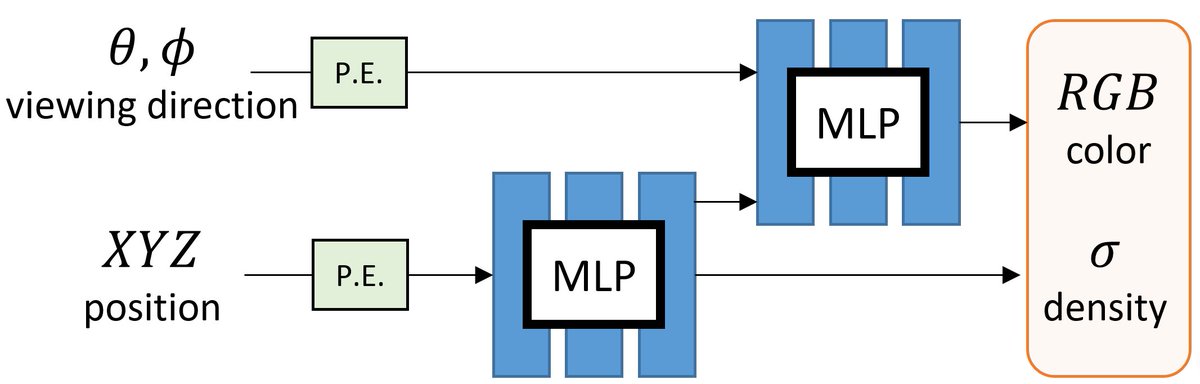
Building on NeRF, one can extend it for handling dynamic scenes with two types of approaches.
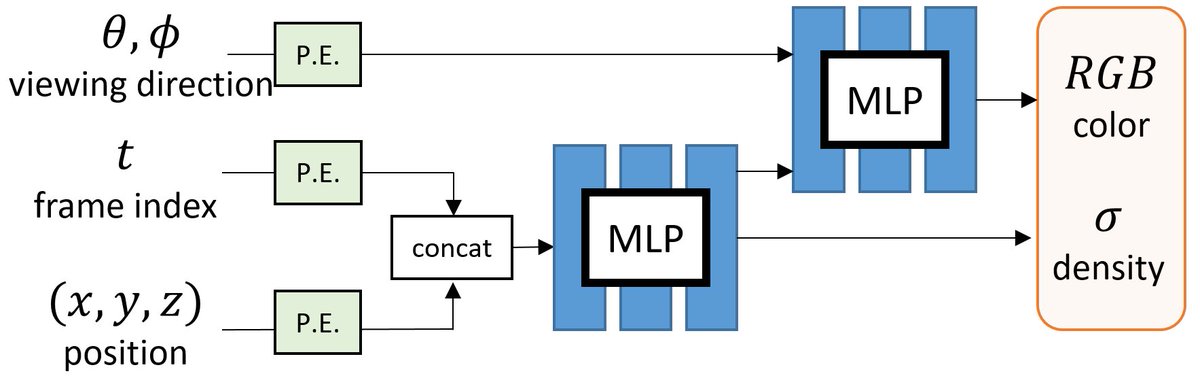
A) 4D (or 6D with views) function.
One direct approach is to include TIME as an additional input to learn a DYNAMIC radiance field.
e.g., Video-NeRF, NSFF, NeRFlow
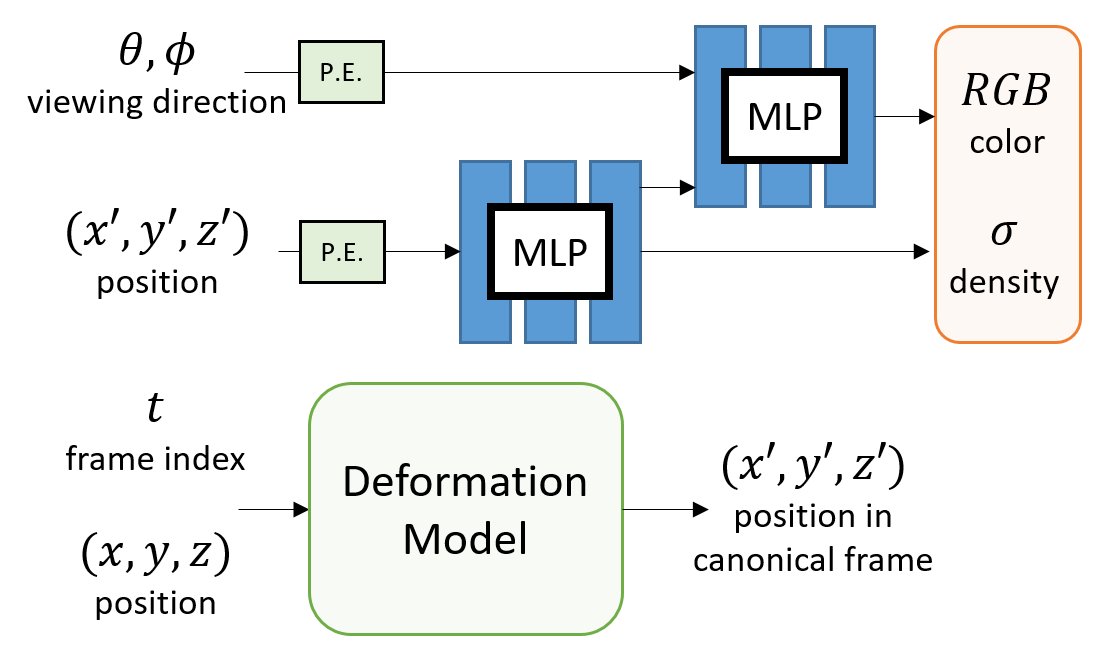
Inspired by non-rigid reconstruction methods, this type of approach learns a radiance field in a canonical frame (template) and predicts deformation for each frame to account for dynamics over time.
e.g., Nerfie, NR-NeRF, D-NeRF
All the methods use an MLP to encode the deformation field. But, how do they differ?
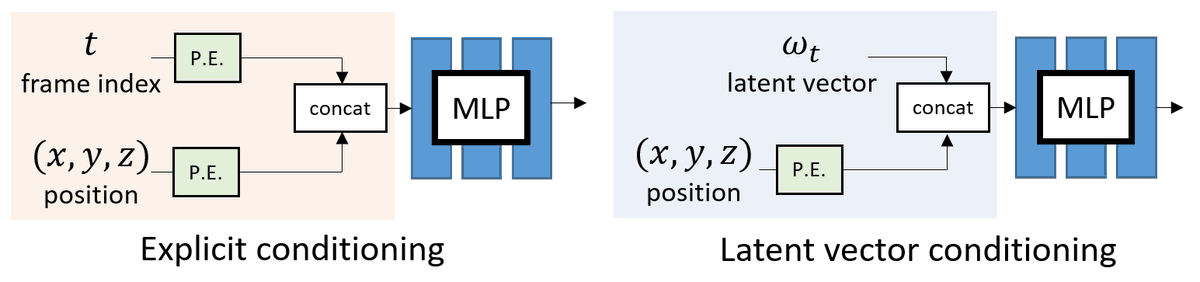
A) INPUT: How to encode the additional time dimension as input?
B) OUTPUT: How to parametrize the deformation field?
One can choose to use EXPLICIT conditioning by treating the frame index t as input.
Alternatively, one can use a learnable LATENT vector for each frame.
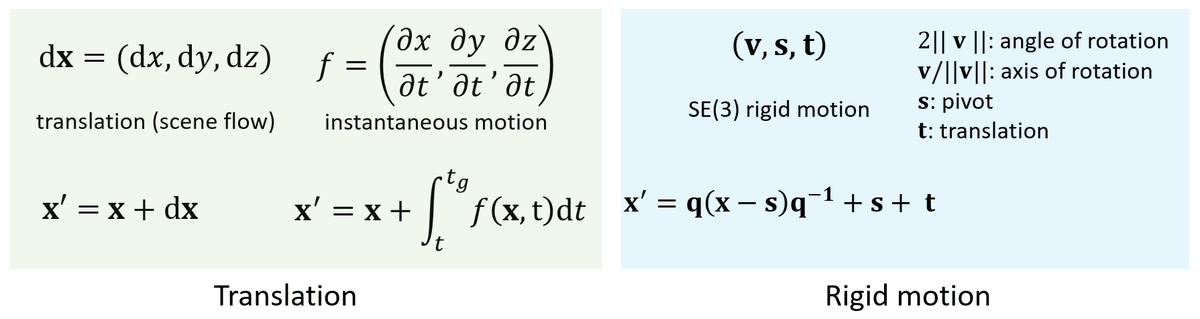
We can either use the MLP to predict
- dense 3D translation vectors (aka scene flow) or
- dense rigid motion field

More from Tech


On Wednesday, The New York Times published a blockbuster report on the failures of Facebook’s management team during the past three years. It's.... not flattering, to say the least. Here are six follow-up questions that merit more investigation. 1/
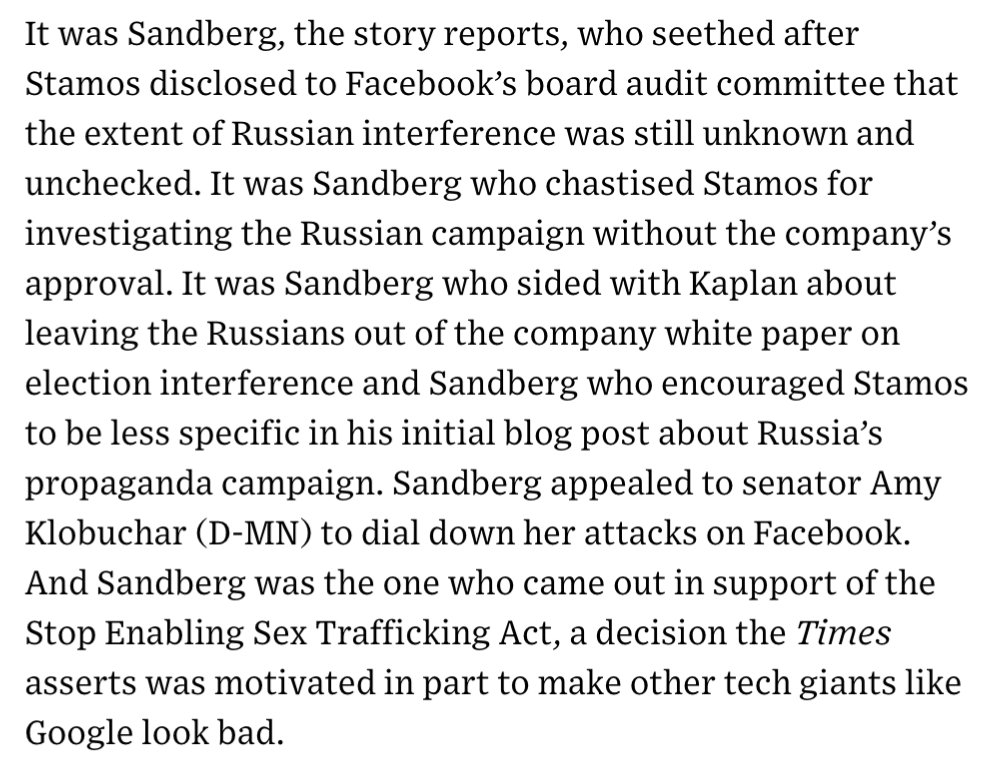
1) During the past year, most of the anger at Facebook has been directed at Mark Zuckerberg. The question now is whether Sheryl Sandberg, the executive charged with solving Facebook’s hardest problems, has caused a few too many of her own. 2/ https://t.co/DTsc3g0hQf
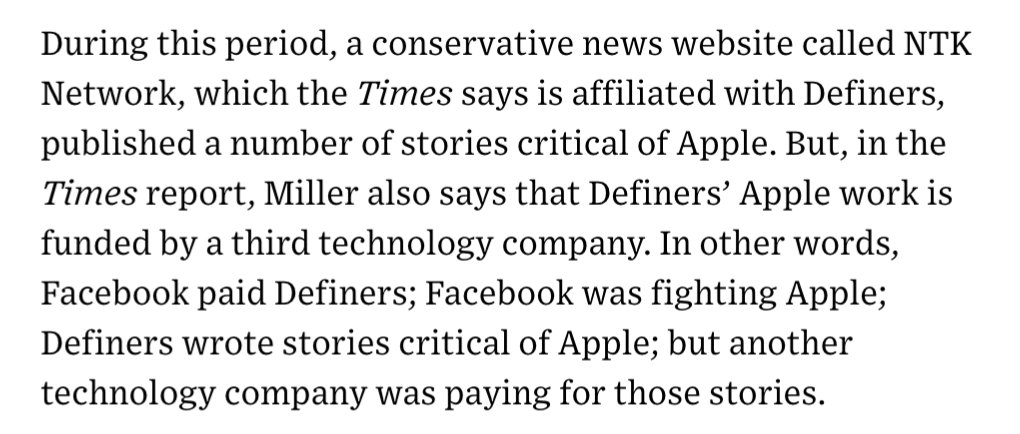
2) One of the juiciest sentences in @nytimes’ piece involves a research group called Definers Public Affairs, which Facebook hired to look into the funding of the company’s opposition. What other tech company was paying Definers to smear Apple? 3/ https://t.co/DTsc3g0hQf
3) The leadership of the Democratic Party has, generally, supported Facebook over the years. But as public opinion turns against the company, prominent Democrats have started to turn, too. What will that relationship look like now? 4/
4) According to the @nytimes, Facebook worked to paint its critics as anti-Semitic, while simultaneously working to spread the idea that George Soros was supporting its critics—a classic tactic of anti-Semitic conspiracy theorists. What exactly were they trying to do there? 5/
1) During the past year, most of the anger at Facebook has been directed at Mark Zuckerberg. The question now is whether Sheryl Sandberg, the executive charged with solving Facebook’s hardest problems, has caused a few too many of her own. 2/ https://t.co/DTsc3g0hQf
2) One of the juiciest sentences in @nytimes’ piece involves a research group called Definers Public Affairs, which Facebook hired to look into the funding of the company’s opposition. What other tech company was paying Definers to smear Apple? 3/ https://t.co/DTsc3g0hQf
3) The leadership of the Democratic Party has, generally, supported Facebook over the years. But as public opinion turns against the company, prominent Democrats have started to turn, too. What will that relationship look like now? 4/
4) According to the @nytimes, Facebook worked to paint its critics as anti-Semitic, while simultaneously working to spread the idea that George Soros was supporting its critics—a classic tactic of anti-Semitic conspiracy theorists. What exactly were they trying to do there? 5/


🙂 Hey - have you heard of @RevolutApp Business before?
🌐 Great international transfer and 🏦 foreign #exchange rates, and various tools to manage your #business.
👉 https://t.co/dkuBrYrfMq
#banking #fintech #revolut #growth #startups
1/10

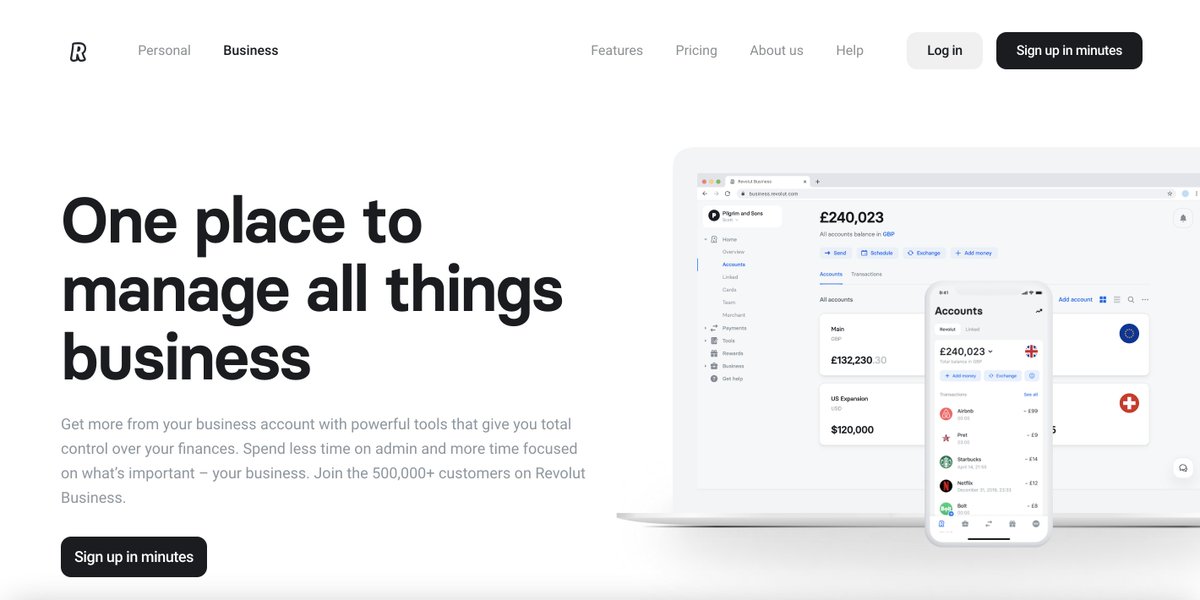
One place to manage all things business
Get more from your business account with powerful tools that give you total control over your finances.
👉 https://t.co/dkuBrYrfMq
2/10
Accept payments
online at great rates
Receive card payments from around the world with low fees and next-day settlement.
👉 https://t.co/dkuBrYrfMq
3/10

Send and receive international payments, with no hidden fees
Multi-currency accounts allow you to hold, exchange, send and receive funds in 28+ currencies - always at the real (interbank) exchange rate...
👉 https://t.co/dkuBrYrfMq
4/10

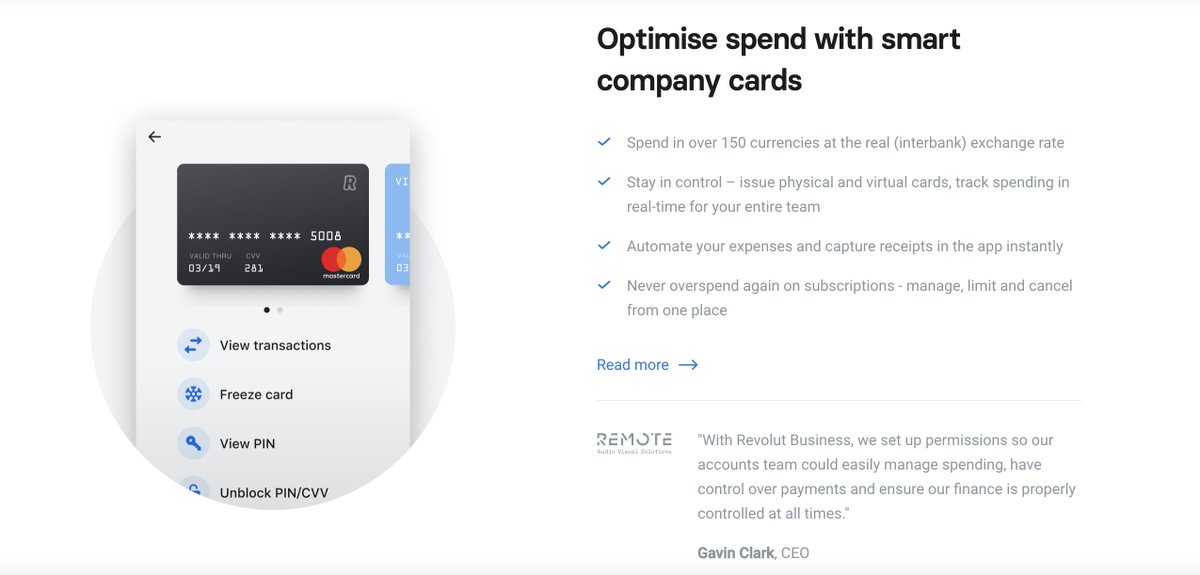
Optimise spend with smart company cards
Spend in over 150 currencies at the real (interbank) exchange rate
Stay in control – issue physical and virtual cards, track spending in real-time for your entire team...
👉 https://t.co/dkuBrYrfMq
5/10
🌐 Great international transfer and 🏦 foreign #exchange rates, and various tools to manage your #business.
👉 https://t.co/dkuBrYrfMq
#banking #fintech #revolut #growth #startups
1/10
One place to manage all things business
Get more from your business account with powerful tools that give you total control over your finances.
👉 https://t.co/dkuBrYrfMq
2/10
Accept payments
online at great rates
Receive card payments from around the world with low fees and next-day settlement.
👉 https://t.co/dkuBrYrfMq
3/10
Send and receive international payments, with no hidden fees
Multi-currency accounts allow you to hold, exchange, send and receive funds in 28+ currencies - always at the real (interbank) exchange rate...
👉 https://t.co/dkuBrYrfMq
4/10
Optimise spend with smart company cards
Spend in over 150 currencies at the real (interbank) exchange rate
Stay in control – issue physical and virtual cards, track spending in real-time for your entire team...
👉 https://t.co/dkuBrYrfMq
5/10


