Most commonly used AWS services:

🧵👇🏻

1. Elastic Compute Cloud (EC2):

EC2 instances are basically servers with an operating system which can be used to run your applications on the internet just like you run your applications on your laptop during development.
2. Relational Database Service (RDS):

RDS is a distributed relational database service.

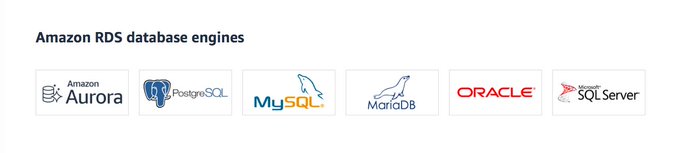
Amazon RDS is available on several database instance types - optimised for memory, performance or I/O - and provides six familiar database engines to choose from, including:
- Amazon Aurora
- PostgreSQL
- MySQL
- MariaDB
- Oracle Database
- SQL Server
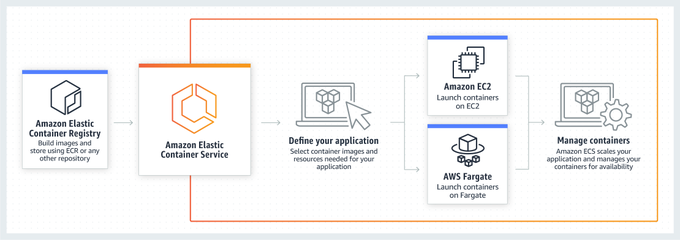
3. Elastic Container Service (ECS):

AWS ECS is a fully managed container orchestration service.

ECS has been a foundational pillar for key Amazon services and it can natively integrate with other services such as Amazon Route 53, Secrets Manager, AWS Identity and
...
...

Access Management (IAM), and Amazon CloudWatch providing you a familiar experience to deploy and scale your containers.
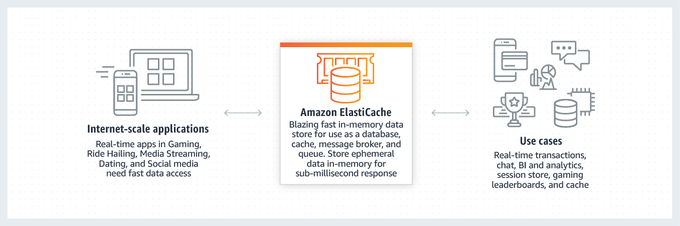
4. ElastiCache:

Amazon ElastiCache works as a high throughput and low latency in-memory data store and cache to support the most demanding applications requiring sub-millisecond response times.
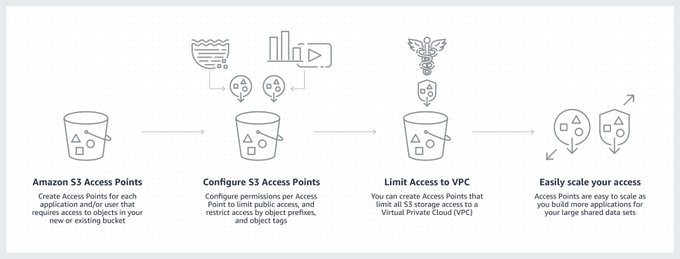
5. Simple Storage Service (S3):

As the name suggests S3 provides low cost object storage service with high scalability, data availability, security and performance.

S3 can be used to store files for use cases like websites, mobile apps, enterprise apps, backup & restore etc.
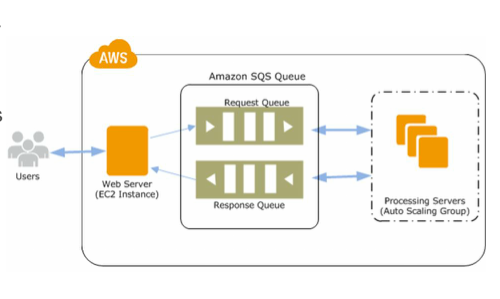
6. Simple Queuing Service (SQS):

SQS is a fully managed message queuing service that enables you to decouple and scale micro services independently. Using SQS you can send, store and receive messages between different components at any volume.
This helps you to build highly scalable and distributed applications.

SQS offers two types of message queues:
- Standard Queues
- FIFO Queues
7. Load Balancer:

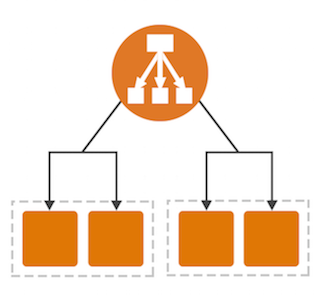
Load Balancer is a critical component in any distributed system which sits between a client and a server, accepts incoming requests, and routes them across a a cluster of servers to handle the load.
8. Route 53:

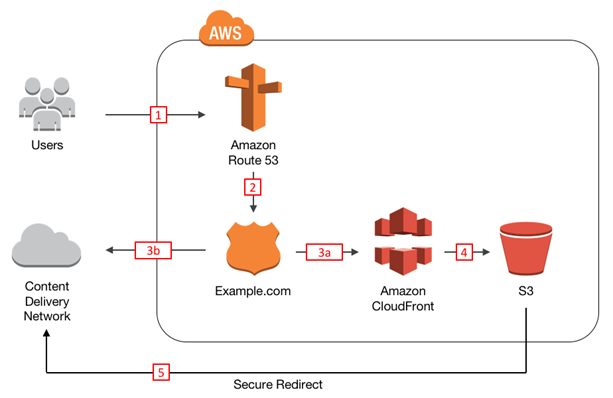
Route53 a highly available and scalable DNS service from AWS. If you don't know what a DNS service is, it's basically the service which routes end users to Internet applications by translating names into numeric IP addresses.
9. AWS Lambda:

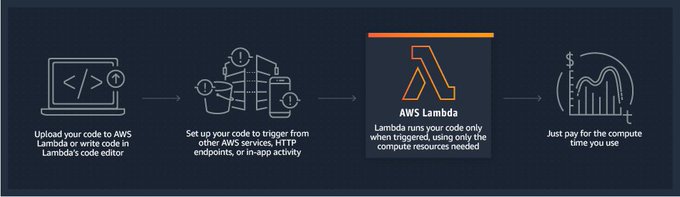
AWS Lambda allows you to run your services without provisioning or managing servers. You only pay for the compute time used, whereas in EC2 instances which are up 24/7 you need to pay for that whole time for which these servers are up.
10. Amazon Virtual Private Cloud (VPC):

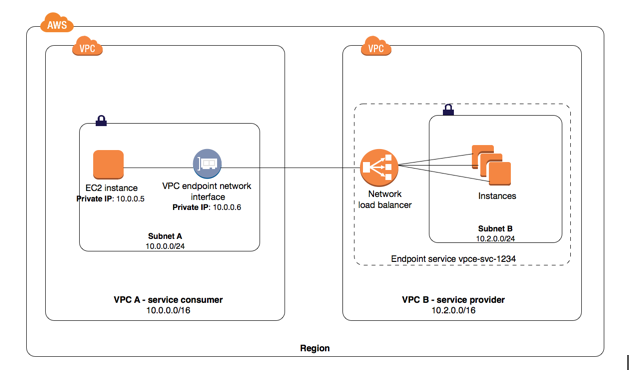
AWS VPC is one of the core components within AWS which works with multiple other components to secure applications, logically isolate section of AWS Cloud where you can launch resources within a virtual network.

More from Sunil Kumar

More from Software

buffalo uses dominion scoreboard software so not really


DEAD PEOPLE SCORED FOR BUFFALO!

A truck delivered off a suitcase full of points at halftime from Canada for Buffalo.

#StopTheSteel !!!!

I’ll be submitting sworn affidavits from Steelers fans than they saw the Buffalo rigging the game but I want to emphasize that I’m not under oath.
How Silicon Valley, in a Show of Monopolistic Force, Destroyed

In the last three months, tech giants have censored political speech and journalism to manipulate U.S. politics -- banning reporting on the Bidens, removing the President, destroying a new competitor -- while US liberals, with virtual unanimity, have cheered.

The ACLU said the unity of Silicon Valley monopoly power to destroy Parler was deeply troubling. Leaders from Germany, France and Mexico protested. Only US liberals support it, because the dominant strain of US liberalism is not economic socialism but political authoritarianism.

https://t.co/qD9OdwlPbV


Just three months ago, a Dem-led House Committee issued a major report warning of the dangers of the anti-trust power of Apple, Amazon, Google and Facebook. Left-wing scholars have been sounding the alarm for years. Now it's here, and liberals
Kubernetes vs Serverless offerings

Why would you need Kubernetes when there are offerings like Vercel, Netlify, or AWS Lambda/Amplify that basically manage everything for you and offer even more?

Well, let's try to look at both approaches and draw our own conclusions!

🧵⏬

1️⃣ A quick look at Kubernetes

Kubernetes is a container orchestrator and thus needs containers to begin with. It's a paradigm shift to more traditional software development, where components are developed, and then deployed to bare metal machines or VMs.

There are additional steps now: Making sure your application is suited to be containerized (12-factor apps, I look at you:
https://t.co/nuH4dmpUmf), containerizing the application, following some pretty well-proven standards, and then pushing the image to a registry.

After all that, you need to write specs which instruct Kubernetes what the desired state of your application is, and finally let Kubernetes do its work. It's certainly not a NoOps platform, as you'll still need people knowing what they do and how to handle Kubernetes.


2️⃣ A quick look at (some!) serverless offerings

The offer is pretty simple: You write the code, the platform handles everything else for you. It's basically leaning far to the NoOps side. There is not much to manage anymore.

Take your Next.js / Nuxt.js app, point the ...

You May Also Like