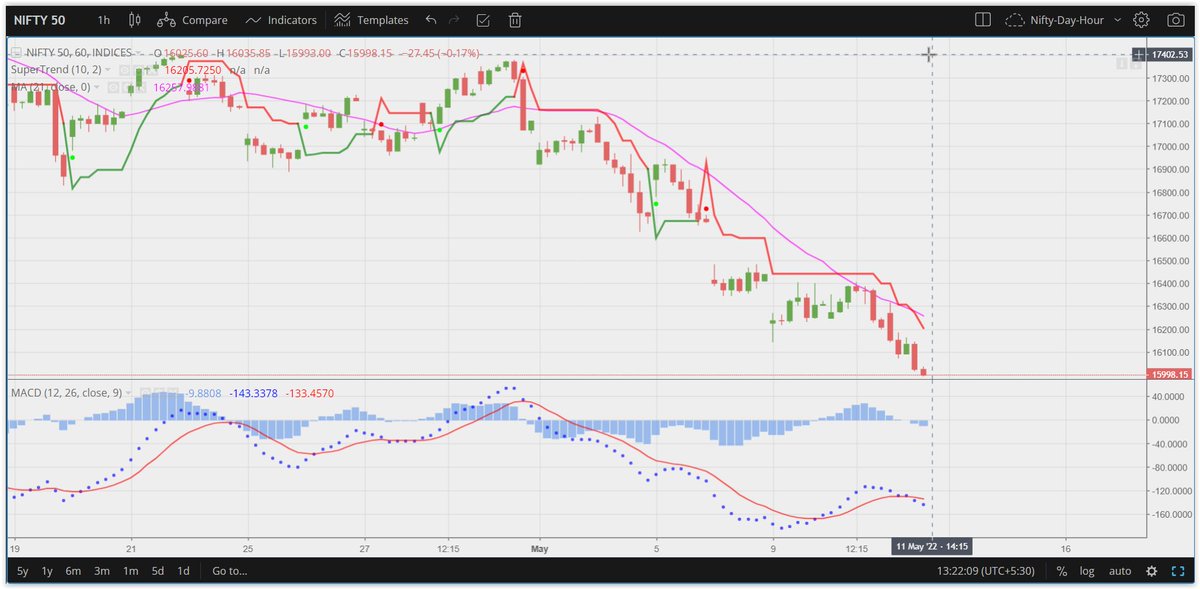
Till you see a "Bullish pin bar" or "Bullish engulfing" pattern in Hour t/f
OR
prices close above 21 Sma
OR
close above Super trend (10,2),
remain with -ve bias.
However, do book profits partly or lock it with TSL
More from Van Ilango (JustNifty)
#Elliottwave puts #PriceAction in it's context
— Van Ilango (JustNifty) (@JustNifty) December 2, 2021
You're 1 undisputed expert on prime source of everything, #PriceAction
Let beginner start with #PriceAction & then step up to 12345 & ABC
Baby steps alone will take to maturity
Read this book months ago - "Rich Experience shared"\U0001f64f https://t.co/VUbG6F5Ems pic.twitter.com/PProaFsMsV
You ask me or any other persons, they'll tell you their subjective view however unbiased they attempt to be.
It is their view and not necessarily the market's.
My subjective view is labelled in the charts.
Follow #Priceaction https://t.co/37iXFtWPzU
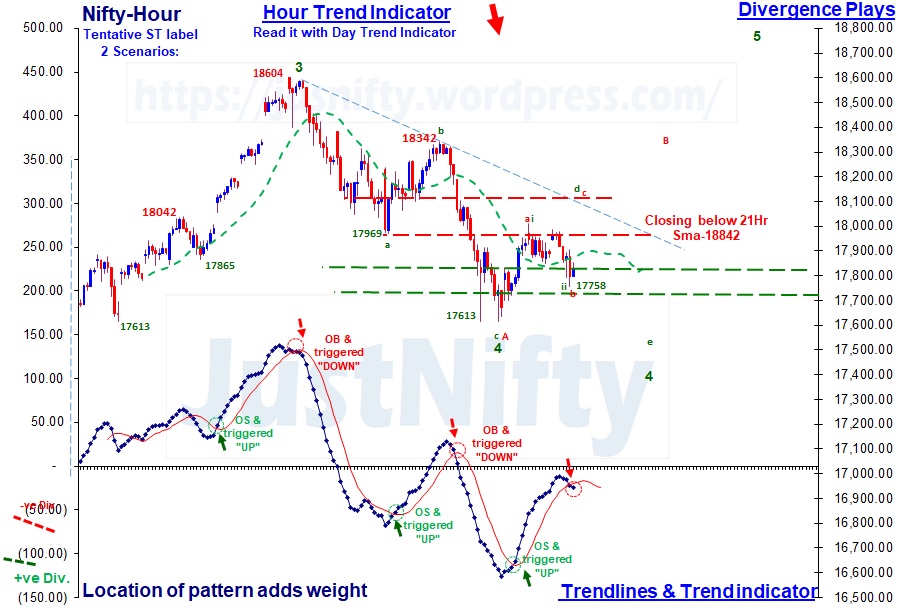
Currently reading the book you put on your website. Also, from this if we consider 18600 as 5 th wave end of Nifty ideally it's doing the 1st 12345 of downtrend, of which do e already 1234, currently going towards 5 which I believe should go below 100% of 4th retracement wave
— de soloist \U0001f1ee\U0001f1f3 (@ChakiArijit) November 4, 2021
His simple mechanical system of MACD multi t/f with 4 Hour setting seems to remove whipsaws & is producing amazing result with #Nifty
Experience speaks - you listen and adopt
Develop patience to wait for such good set up. Now trail your SL once price has gains https://t.co/jC8tcrZ0Cv
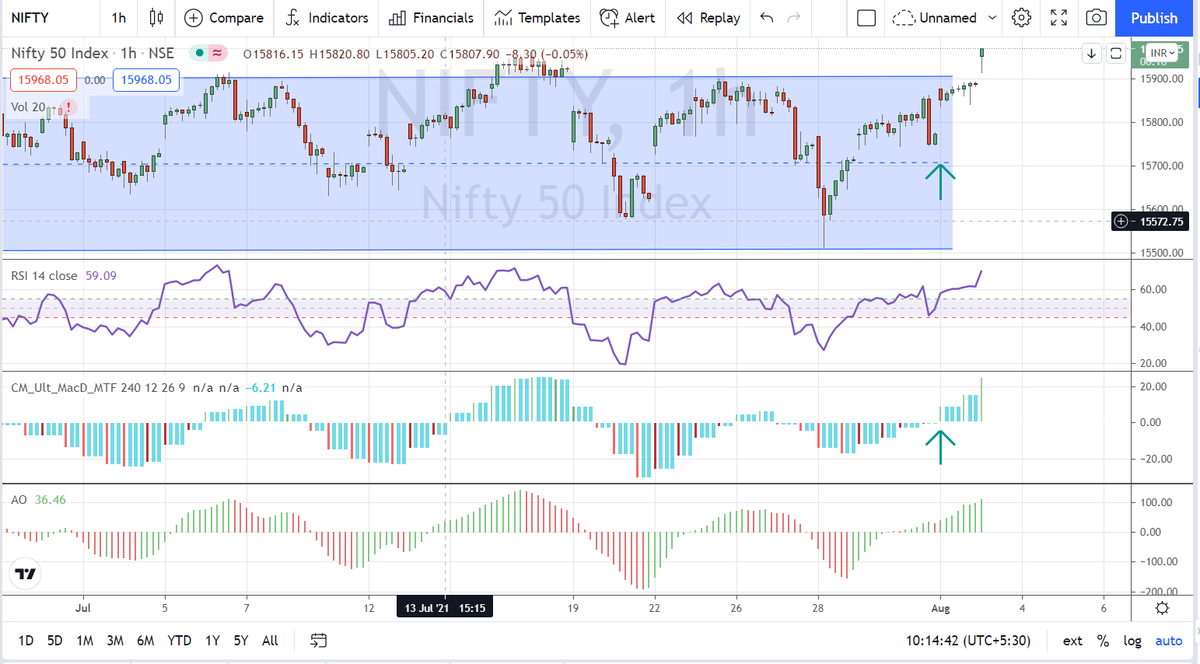
Book mark this and revisit every day or every week till you get it right as a trader. Coming from an experienced trader like @MaverickAmit01 , it's priceless.
— Van Ilango (JustNifty) (@JustNifty) July 31, 2021
Wish we had it when we started out.\U0001f64f https://t.co/0NYKqedy9w
OR, it just moves between 13 & 21 & move higher
Channel bottom comes around "17300"- no guarantee that every time it touches the channel bottom
Patience pays
IF you miss a trade, wait for the next
They always come🙂🙏 https://t.co/CfVFhgbFxl
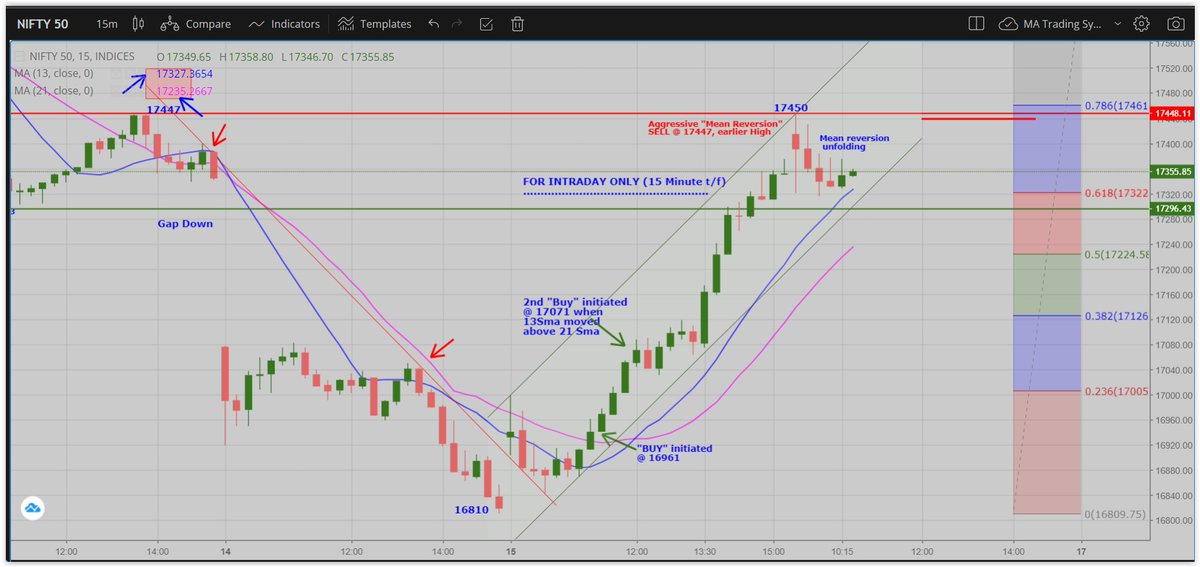
Is it better to buy when price below ema 21 ?\u2026 as SL will be less
— TaksJ (@TaksJoh) February 16, 2022
I'll go with 5th is getting done soon.
There is one more possibility that 3rd wave is sub-dividing !!
IF so it must hold last rise #retracement https://t.co/a6BBHIWrZk
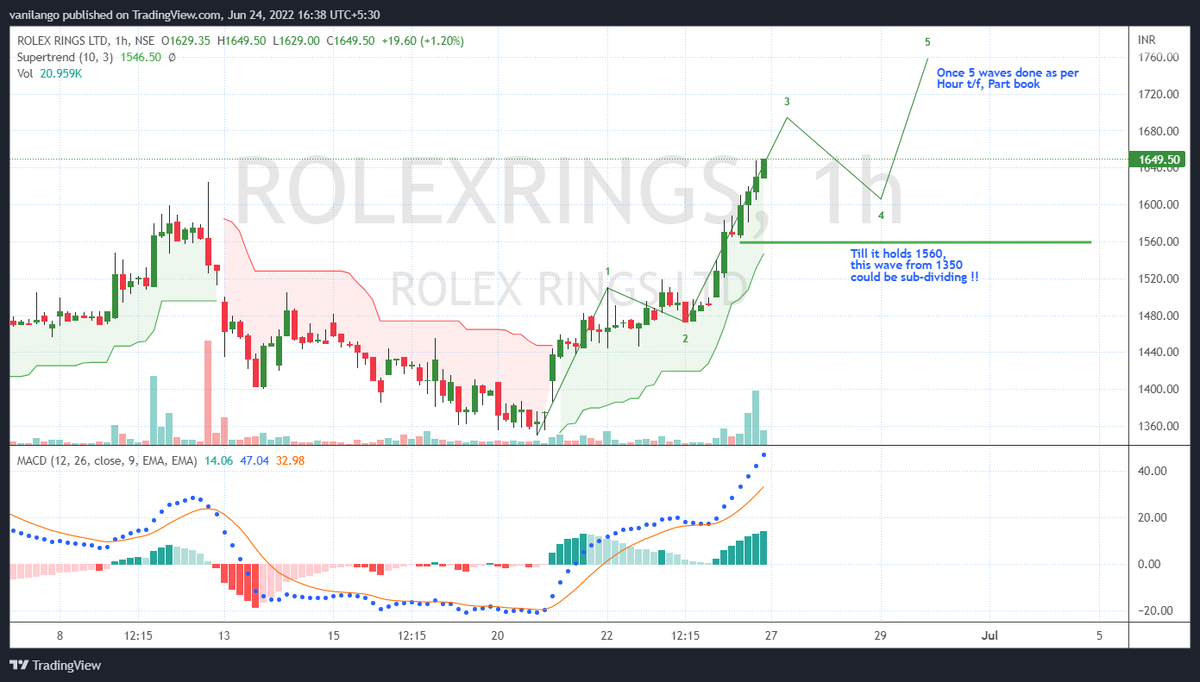
ROLEX RINGS
— manav (@manav1418) June 24, 2022
Elliot counts (possible scenario's)
Which wave count is correct as per you\U0001f64f
please guide....!!@nakulvibhor @nishkumar1977 @JustNifty @piyushchaudhry @KrunallThakkar pic.twitter.com/h97J8Ycuf5
More from Screeners



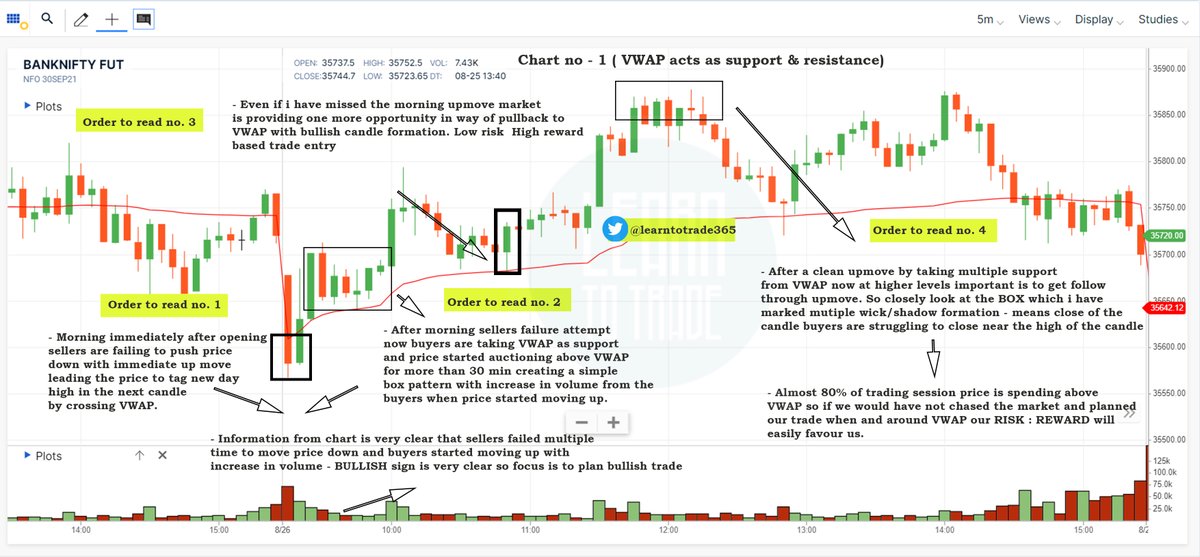
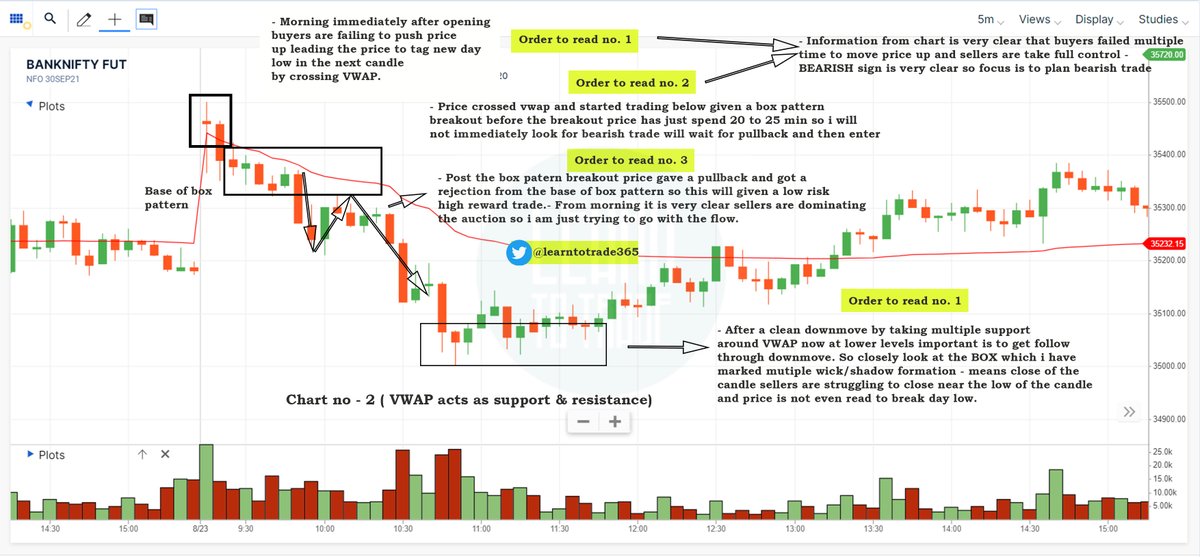


Do read it completely to understand the stance and the plan.
This thread will present a highly probable scenario of markets for the upcoming months. Will update the scenario too if there is a significant change in view in between.
— Aakash Gangwar (@akashgngwr823) May 15, 2022
1/n https://t.co/jfWOyEgZyd
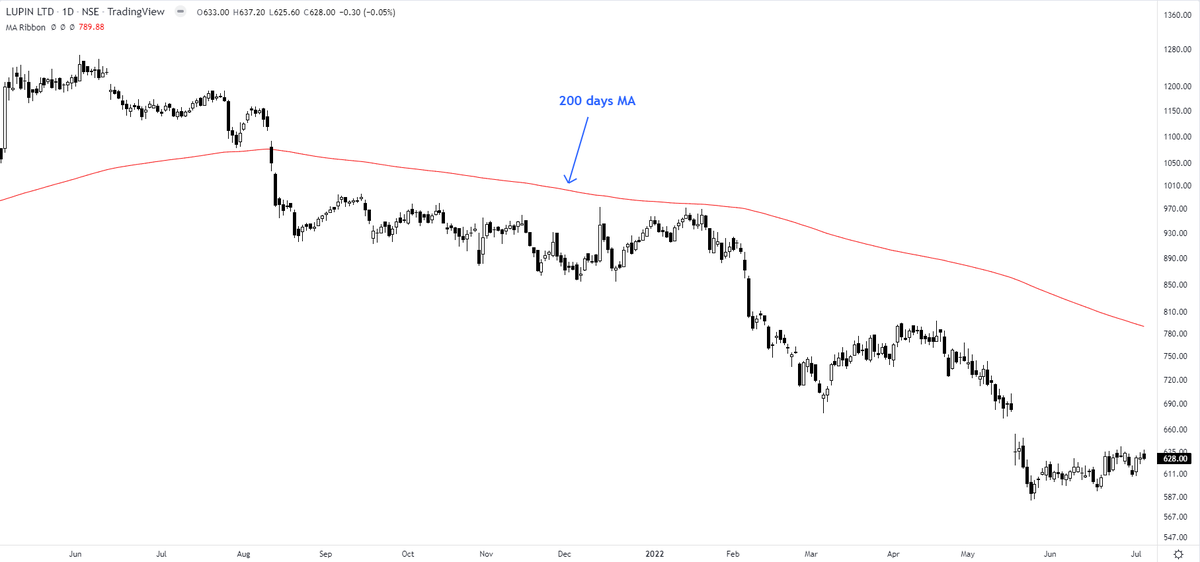
1. The moving average structure - Many traders just look at the 200 ma test or closing above/below it regardless of its slope. Let's look at all the interactions with 200 ma where price met it for the first time after the trend change but with 200 ma slope against it
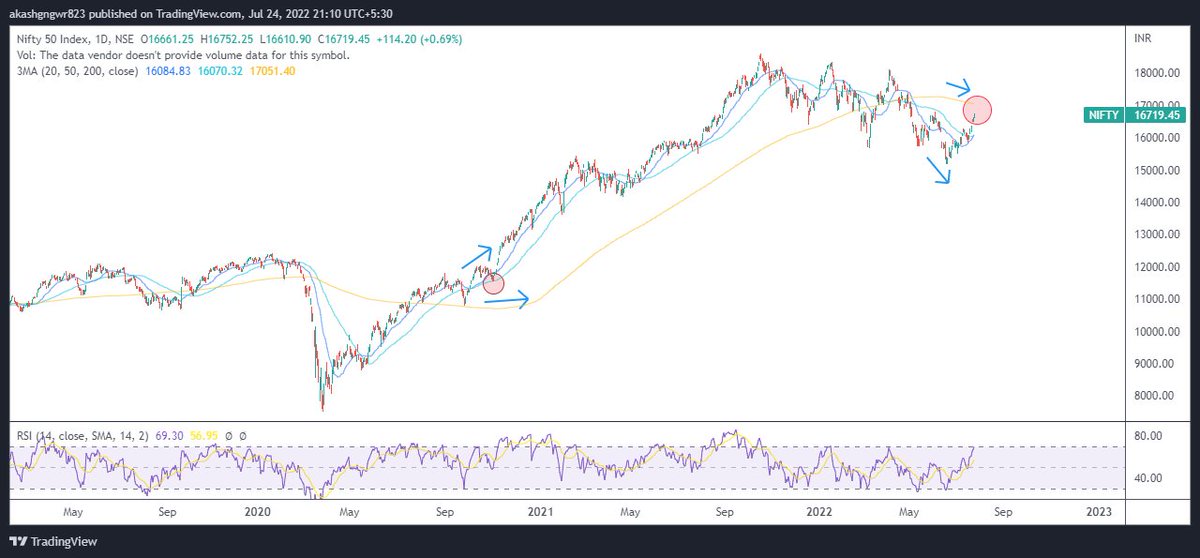
One can clearly sense that currently it is one of those scenarios only. I understand that I might get trolled for this, but an unbiased mind suggests that odds are highly against the bulls for making fresh investments.
But markets are good at giving surprises. What should be our stance if price kept on rising? Let's understand that through charts. The concept is still the same. Divergent 200 ma and price move results in 200 ma test atleast once which gives good investment opportunities.
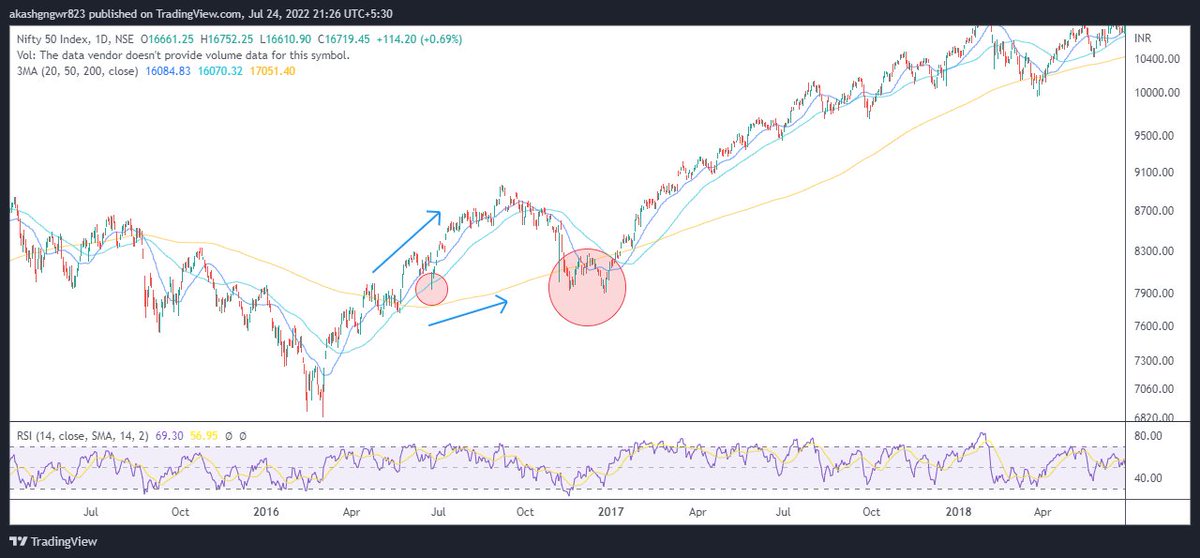
2. Zig-Zag bear market- There are two types of fall in a bear market, the first one is vertical fall which usually ends with ending diagonals (falling wedges) and the second one is zig zag one which usually ends with parabolic down moves.