
60 CHARACTERISTICS OF THE BEARERS & WOMEN OF QURAN
A THREAD 🧵
3. She concentrates on her own situation, having the aspiration to reform whatever is corrupt in her affairs, guarding her tongue and choosing her words.
5. If she remains silent, she remains silent with knowledge when she sees silence to be correct.
6. She rarely delves into that which does not conern her.
8. She imprisons her tongue the way she imprisons her enemy, so that she may be safe from its evil and bad consequences.
10. If she is pleased by something in accordance with the truth, she smiles.
11. She dislikes joking, fearing frivolity; if she jokes, she speaks the truth.
13. She does not allow herself to be praised for qualities she has, how then for qualities she does not have?
15. She does not backbite anyone.
16. She does not look down upon anyone.
17. She does not abuse anyone.
18. She is not happy at the affliction of others.
20. She does not think the worst about anyone, except fo one who deserves it.
21. She loves with knowledge, and hates with knowledge.
23. She made the Qur'an, Sunnah and Fiqh her guide to every good and beautiful quality, guarding all her limbs from what has been forbidden.
25. If she sists, she sists with knowledge.
26. She strives hard so that people may be safe from her tongue and hands.
💎 27. She does not behave ignorantly: if someone behaves ignorantly towards her, she is forbearing.
29. She does not trangress: if she is trangressed upon, she has patience.
30. She restrains her fury to please her Lord and enrage her enemy.
💎 32. She seeks status from Allah, not from the creatures.
33. She despises arrogance, fearing for her self from it.
35. She follows the obligations of the Quran and the sunnah:
☆ she eats food with knowledge
☆ she drinks with knowledge
☆ she dresses with knowledge
☆ she sleeps with knowledge
☆ she accompanies his brothers with knowledge
☆ visiting them with knowledge
☆ seeking permission to enter upon them with knowledge,
☆ greeting them with knowledge
☆ she treats her neighbour with knowledge
☆ she lowers her wings to them
☆ she lowers her voice before their voices
☆ she expends her wealth for them
☆ she looks upon them with the eye of respect and mercy
☆ she is thankful for them in old age
☆ she is not irritated by them
☆ she does not look down upon them
☆ if they ask for her help in a matter of obedience, she helps them
☆ she is gentle with them in her disobedience of them
☆ she shows beautiful etiquette such that they may return from the ugly matter they intended that is does befit them to do.
38. If someone breaks off relations with her, she does not break off relations with them.
💎 39. If someone disobeys Allah regarding her, she obeys Allah regarding them.
41. She benefits those who accompany her, being an excellent companion for those whom she sits with.
42. If she teaches another, she is gentle with them.
💎 44. She is gentle in all her matters, extremely patient in teaching goodness.
45. The learner finds comfort in her, and the one sitting with her is joyous at her company.
47. She educates her companions with the etiquettes of the Quran and the Sunnah.
48. If she is afflicted with a difficulty, the Qur'an and the Sunnah are two educators for her.
49. She grieves with knowledge.
51. She has patience with knowledge.
52. She purifies herself with knowledge.
53. She prays with knowledge.
54. She gives Zakah and charity with knowledge.
55. She fasts with knowledge.
56. She performs pilgrimage with knowledge.
More from Religion






You May Also Like



✨📱 iOS 12.1 📱✨
🗓 Release date: October 30, 2018
📝 New Emojis: 158
https://t.co/bx8XjhiCiB
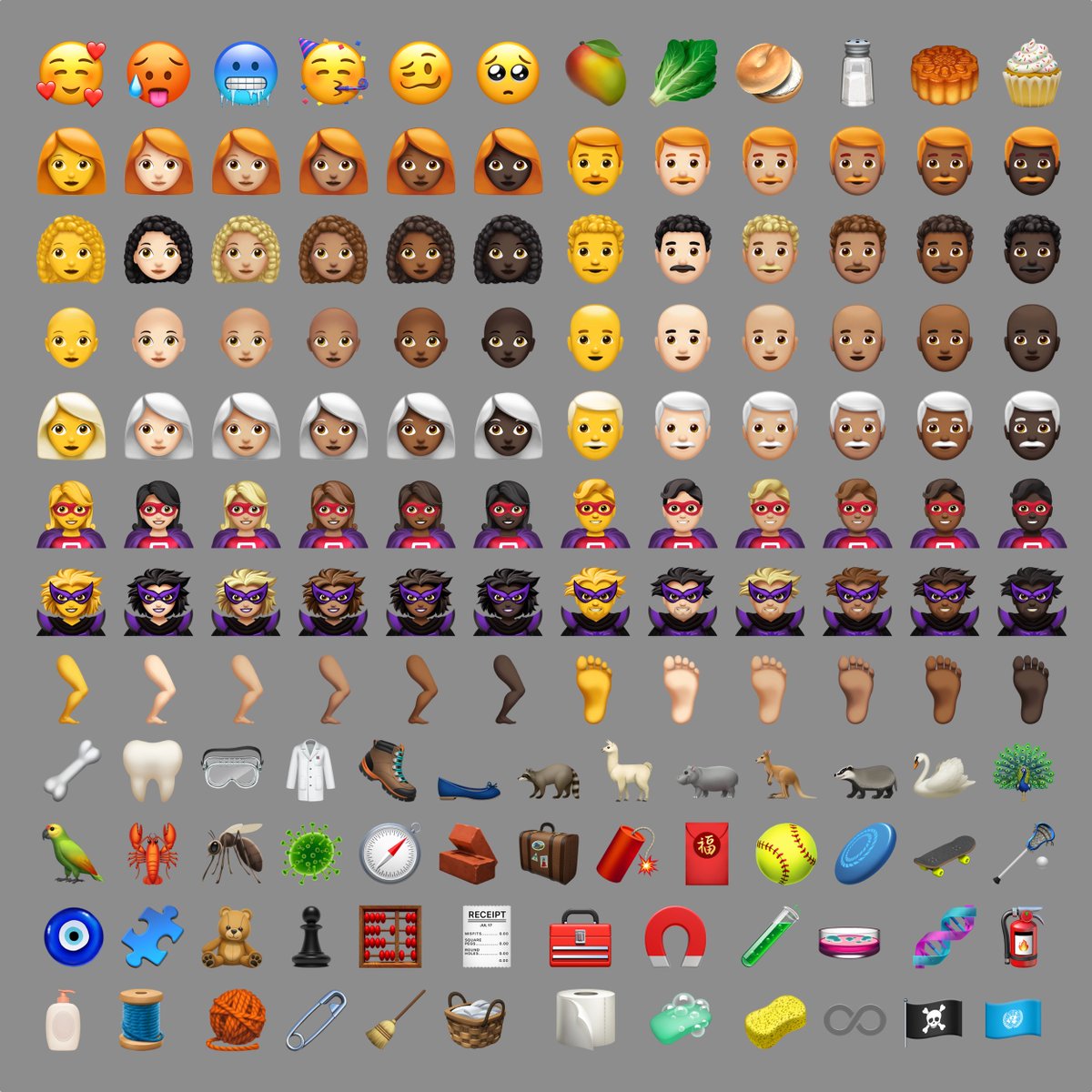
New in iOS 12.1: 🥰 Smiling Face With 3 Hearts https://t.co/6eajdvueip

New in iOS 12.1: 🥵 Hot Face https://t.co/jhTv1elltB

New in iOS 12.1: 🥶 Cold Face https://t.co/EIjyl6yZrF

New in iOS 12.1: 🥳 Partying Face https://t.co/p8FDNEQ3LJ

🗓 Release date: October 30, 2018
📝 New Emojis: 158
https://t.co/bx8XjhiCiB
New in iOS 12.1: 🥰 Smiling Face With 3 Hearts https://t.co/6eajdvueip
New in iOS 12.1: 🥵 Hot Face https://t.co/jhTv1elltB
New in iOS 12.1: 🥶 Cold Face https://t.co/EIjyl6yZrF
New in iOS 12.1: 🥳 Partying Face https://t.co/p8FDNEQ3LJ

Krugman is, of course, right about this. BUT, note that universities can do a lot to revitalize declining and rural regions.
See this thing that @lymanstoneky wrote:
And see this thing that I wrote:
And see this book that @JamesFallows wrote:
And see this other thing that I wrote:
One thing I've been noticing about responses to today's column is that many people still don't get how strong the forces behind regional divergence are, and how hard to reverse 1/ https://t.co/Ft2aH1NcQt
— Paul Krugman (@paulkrugman) November 20, 2018
See this thing that @lymanstoneky wrote:
And see this thing that I wrote:
And see this book that @JamesFallows wrote:
And see this other thing that I wrote:


