He was planning to go to ANDAL Sannidhi later for MangaLAsAsanam.
Origin of the GodhA Sthuthi
******************************
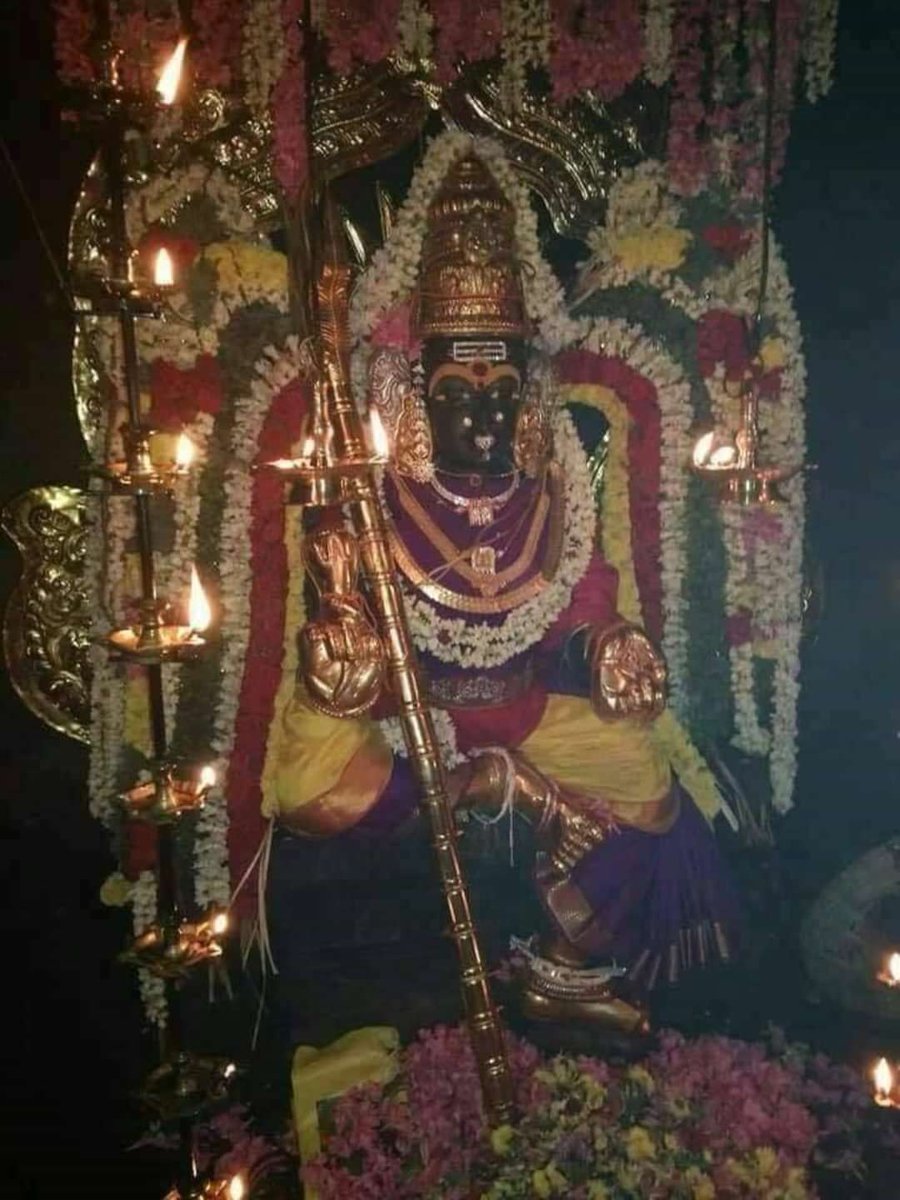
The first slOkam of GodhA sthuthi arose from Swami Desikan spontaneously as he stood on a side street at SrivilliputthUr on a PradhOsham evening to find out the origin of fast approaching sounds of the mangaLa vaadhyams.
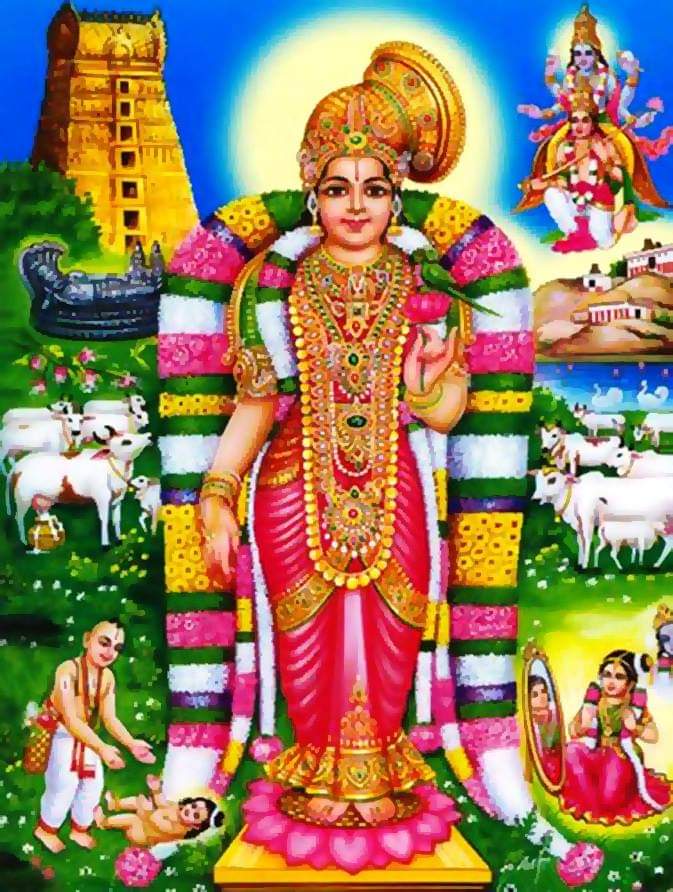
He was planning to go to ANDAL Sannidhi later for MangaLAsAsanam.
ANDAL's normal processional route did not include the street , where Swami Desikan was staying.
**************************************************
Sri VishNu chittha kula nandhana kalpavallIm
Sri RangarAja harichandhana yOga dhrusyAm
SaakshAth KshamAm karuNayA KamalAmivAnyAm
GodhAm ananyasaraNa; SaraNam prapadhyE ll 1 ll
Oh GodhE! adiyEn performs prapatthi at Your sacred feet as one, who has no other recourse!
adiyEn has no one else for my protection.
In Your limitless patience with the aparAdhis, who transgress Your Lord's commands,
You appear verily like BhUmi Devi;
AdiyEn offers my prapatthi at Your sacred feet as the one, who has no other means.
Thus Swamy Desikan offers his prayers like this:
She is most beautiful as She gives us Her darsanam as the Karpaka creeper united with Her Lord Sri Rangarajan standing majestically as the Harichandana tree in that Nanda vanam
indeed ,Godhai is the embodiment of forbearance;
When it comes to the quality of Her Mercy, Godhai is a veritable MahA Lakshmi (KamalA).
More from sriram



More from Religion




You May Also Like

A brief analysis and comparison of the CSS for Twitter's PWA vs Twitter's legacy desktop website. The difference is dramatic and I'll touch on some reasons why.
Legacy site *downloads* ~630 KB CSS per theme and writing direction.
6,769 rules
9,252 selectors
16.7k declarations
3,370 unique declarations
44 media queries
36 unique colors
50 unique background colors
46 unique font sizes
39 unique z-indices
https://t.co/qyl4Bt1i5x

PWA *incrementally generates* ~30 KB CSS that handles all themes and writing directions.
735 rules
740 selectors
757 declarations
730 unique declarations
0 media queries
11 unique colors
32 unique background colors
15 unique font sizes
7 unique z-indices
https://t.co/w7oNG5KUkJ

The legacy site's CSS is what happens when hundreds of people directly write CSS over many years. Specificity wars, redundancy, a house of cards that can't be fixed. The result is extremely inefficient and error-prone styling that punishes users and developers.
The PWA's CSS is generated on-demand by a JS framework that manages styles and outputs "atomic CSS". The framework can enforce strict constraints and perform optimisations, which is why the CSS is so much smaller and safer. Style conflicts and unbounded CSS growth are avoided.
Legacy site *downloads* ~630 KB CSS per theme and writing direction.
6,769 rules
9,252 selectors
16.7k declarations
3,370 unique declarations
44 media queries
36 unique colors
50 unique background colors
46 unique font sizes
39 unique z-indices
https://t.co/qyl4Bt1i5x
PWA *incrementally generates* ~30 KB CSS that handles all themes and writing directions.
735 rules
740 selectors
757 declarations
730 unique declarations
0 media queries
11 unique colors
32 unique background colors
15 unique font sizes
7 unique z-indices
https://t.co/w7oNG5KUkJ
The legacy site's CSS is what happens when hundreds of people directly write CSS over many years. Specificity wars, redundancy, a house of cards that can't be fixed. The result is extremely inefficient and error-prone styling that punishes users and developers.
The PWA's CSS is generated on-demand by a JS framework that manages styles and outputs "atomic CSS". The framework can enforce strict constraints and perform optimisations, which is why the CSS is so much smaller and safer. Style conflicts and unbounded CSS growth are avoided.