1. God should not possess faculties. Faculties imply other, alike to how sight implies there is light for it to see. Any faculty possessed by God must be perfected, and so the perfect faculty must actualise its perfect end.
SHORT THREAD CRITIQUE OF ST. THOMAS AQUINAS | SUMMA THEOLOGIAE | AGAINST LOVE & WILL IN GOD
--------
Article 1. Whether love exists in God?
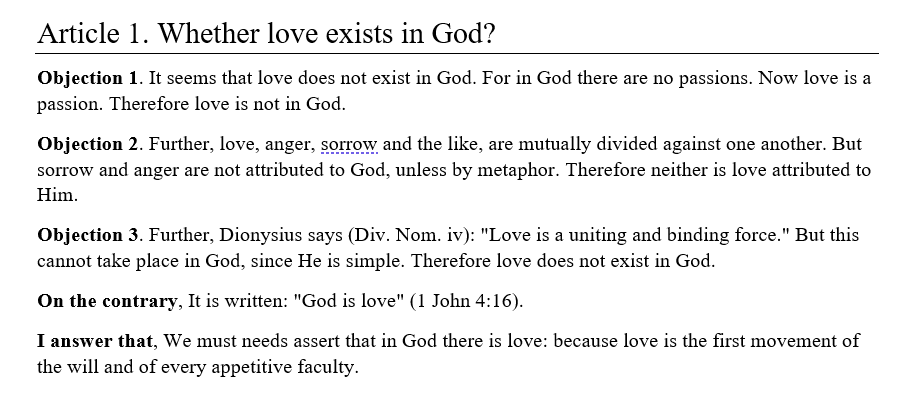
1. God should not possess faculties. Faculties imply other, alike to how sight implies there is light for it to see. Any faculty possessed by God must be perfected, and so the perfect faculty must actualise its perfect end.

1.We read “the acts of the will tend towards good and evil”, and that “good is essentially and especially the object of the will and the appetite”, evil being “only the object secondarily and indirectly”.
More from Religion

Tripundra Dhaaran - Paapa Vimukti
Our generations are fascinated about Tripundram being just a religious symbol. There are in depth meanings of such a Tilak on a Seeker's Forehead
The very first mistake is the way it is applied.
Tripund isn't applied with dry Bhasm, it should be made wet and then applied in a prescribed manner with proper use of fingers and direction of application. Bhasm is collected from various sources
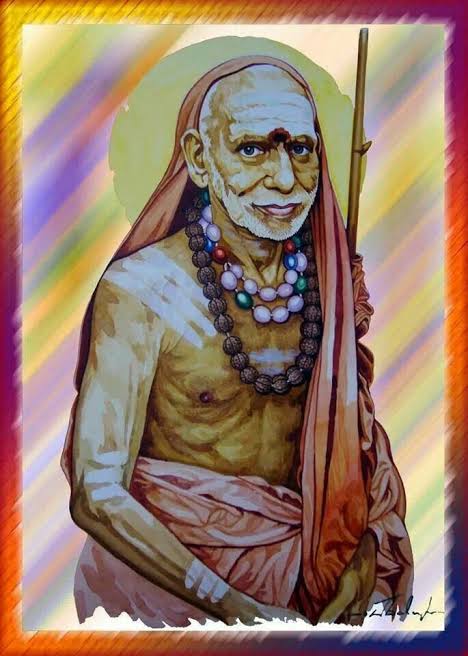
The most important ones mentioned in upanishats are 1. Yagnya Kund Bhasm 2. Bhasm made from Cow's Dung alone. A special agnihotram was perform to save the Bhasma after that for Dhaarana. A major mantra while applying bhasm is Mrutyunjaya Mantra
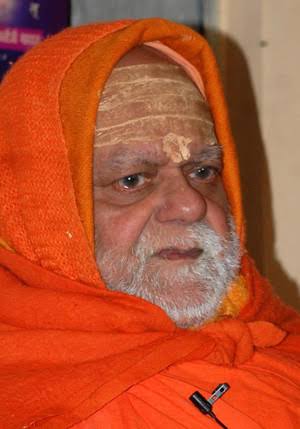
Dwijas have a very long process of applying the Tripundram along with their Sandhyavandanam. For commoners there are some basic rules people have to follow while applying Bhasm
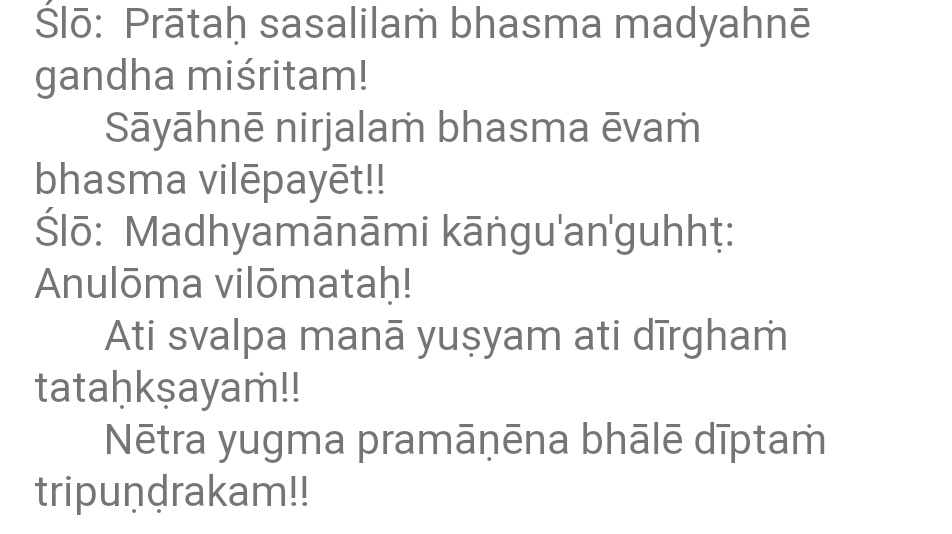
Bhasm Applied in Morning - Should be mixed with water and applied
Bhasm Applied during Afternoon - Should be mixed with Chandan and Applied
Bhasm Applied during and after Pradosh - Should be applied Dry as such
Our generations are fascinated about Tripundram being just a religious symbol. There are in depth meanings of such a Tilak on a Seeker's Forehead
" No Tilak symbolizes Shree Viheen"
— Hindu Media Wiki (@HinduMediaWiki) December 21, 2020
Tilak Dharan on forehead is having deep science than one can ever imagine. It is not just a symbol of Sanatan but also builds a lot of confidence of human actually. It is related to Tejas & Varchasv of a human. pic.twitter.com/vM46BqU3f7
The very first mistake is the way it is applied.
Tripund isn't applied with dry Bhasm, it should be made wet and then applied in a prescribed manner with proper use of fingers and direction of application. Bhasm is collected from various sources
The most important ones mentioned in upanishats are 1. Yagnya Kund Bhasm 2. Bhasm made from Cow's Dung alone. A special agnihotram was perform to save the Bhasma after that for Dhaarana. A major mantra while applying bhasm is Mrutyunjaya Mantra
Dwijas have a very long process of applying the Tripundram along with their Sandhyavandanam. For commoners there are some basic rules people have to follow while applying Bhasm
Bhasm Applied in Morning - Should be mixed with water and applied
Bhasm Applied during Afternoon - Should be mixed with Chandan and Applied
Bhasm Applied during and after Pradosh - Should be applied Dry as such


Assalam Alaiki dear Sister in Islam. I hope this meets you well. Hope you are keeping safe in this pandemic. May Allah preserve you and your beloved family. I would like to address the misconception and misinterpretation in your thread. Please peruse the THREAD below.
1. First off, a disclaimer. Should you feel hurt by my words in the course of the thread, then forgive me. It’s from me and not from Islam. And I probably have to improve on my delivery. And I may not quote you verbatim, but the intended meaning would be there. Thank You!
2. Standing on Imam Shafii’s quote: “And I never debated anyone but that I did not mind whether Allah clarified the truth on my tongue or his tongue” or “I never once debated anyone hoping to win the debate; rather I always wished that the truth would come from his side.”
3. Okay, into the meat (my love for meat is showing. Lol) of the thread. Even though you didn’t mention the verse that permitted polygamy, everyone knows the verse you were talking about (Q4:3).

4. Your reasons for the revelation of the verse are strange. The first time I came across such. I had to quickly consult the books on the exegeses or tafsir of the Quran written by renowned specialists!
A lot of things Muslims do now and claim as Islamic rule is actually a culture that Islam curtailed or tried to perfect.
— Sule Nana (@izesule) January 2, 2021
Let's talk polygamy.
Islam didn't come and say, "oh men, marry four wives"
No.
Polygamy was in existence, long before the coming of Islam.
1. First off, a disclaimer. Should you feel hurt by my words in the course of the thread, then forgive me. It’s from me and not from Islam. And I probably have to improve on my delivery. And I may not quote you verbatim, but the intended meaning would be there. Thank You!
2. Standing on Imam Shafii’s quote: “And I never debated anyone but that I did not mind whether Allah clarified the truth on my tongue or his tongue” or “I never once debated anyone hoping to win the debate; rather I always wished that the truth would come from his side.”
3. Okay, into the meat (my love for meat is showing. Lol) of the thread. Even though you didn’t mention the verse that permitted polygamy, everyone knows the verse you were talking about (Q4:3).
4. Your reasons for the revelation of the verse are strange. The first time I came across such. I had to quickly consult the books on the exegeses or tafsir of the Quran written by renowned specialists!

#Bookmark this
The full story of || Dhruv ||
We’ll see How Dhruv occupied a fixed position in the northern sky?
I repeat “Untold Unsung now Unearthed”
Go through entire thread carefully.
OM NAMO BHAGWATE VAASUDEVAAY
RT & spread the knowledge.
Any questions use #AskPratz

.... continuing from previous thread/story
O prince! Thus concentrate on that omnipotent eternal Lord with the mantra - ‘OM NAMO BHAGWATE VAASUDEVAAY’ .
https://t.co/H62ehDT3ix
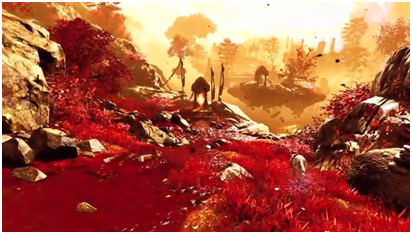
The prince Dhruv greeted the sages and continued on his journey. At last, he reached a beautiful forest Madhuvan on the bank of the river Yamuna. It was the same forest, which was later occupied by a demon Madhu.

Shatrughana, the youngest brother of Sri Rama had killed demon Lavan, son of Madhu in the same forest & founded the township of Mathura. In the same forest, prince Dhruv decided to carry out his penance. As per the dictate of the sages, he began to recite the mantra continuously
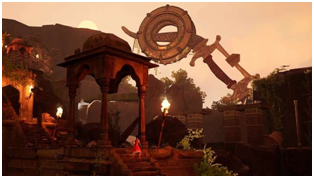
Very soon, the earth began to move because of Dhruv’s severe penance. Even the seat of Indra could not remain stable. A stampede resulted among the gods. The gods then hatched a conspiracy to disturb the penance.
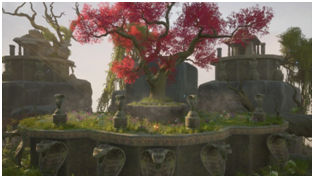
The full story of || Dhruv ||
We’ll see How Dhruv occupied a fixed position in the northern sky?
I repeat “Untold Unsung now Unearthed”
Go through entire thread carefully.
OM NAMO BHAGWATE VAASUDEVAAY
RT & spread the knowledge.
Any questions use #AskPratz
.... continuing from previous thread/story
O prince! Thus concentrate on that omnipotent eternal Lord with the mantra - ‘OM NAMO BHAGWATE VAASUDEVAAY’ .
https://t.co/H62ehDT3ix
So you too go and recite the same mantra in order to please Lord Vishnu.
— Prateechi \U0001f6eb\u2708\ufe0f\U0001f6e9\ufe0f (@BahuRaani) February 6, 2021
\u2026To be continued
It\u2019s a beautiful long story. Read it to your loved ones.
(Next Weekly Thread)
We\u2019ll see How Dhruv occupied a fixed position in the northern sky?
Stay Tuned
Jai Maa
_/\\_ pic.twitter.com/7TxdNsoZes
The prince Dhruv greeted the sages and continued on his journey. At last, he reached a beautiful forest Madhuvan on the bank of the river Yamuna. It was the same forest, which was later occupied by a demon Madhu.
Shatrughana, the youngest brother of Sri Rama had killed demon Lavan, son of Madhu in the same forest & founded the township of Mathura. In the same forest, prince Dhruv decided to carry out his penance. As per the dictate of the sages, he began to recite the mantra continuously
Very soon, the earth began to move because of Dhruv’s severe penance. Even the seat of Indra could not remain stable. A stampede resulted among the gods. The gods then hatched a conspiracy to disturb the penance.


You May Also Like




The YouTube algorithm that I helped build in 2011 still recommends the flat earth theory by the *hundreds of millions*. This investigation by @RawStory shows some of the real-life consequences of this badly designed AI.
This spring at SxSW, @SusanWojcicki promised "Wikipedia snippets" on debated videos. But they didn't put them on flat earth videos, and instead @YouTube is promoting merchandising such as "NASA lies - Never Trust a Snake". 2/

A few example of flat earth videos that were promoted by YouTube #today:
https://t.co/TumQiX2tlj 3/
https://t.co/uAORIJ5BYX 4/
https://t.co/yOGZ0pLfHG 5/
Flat Earth conference attendees explain how they have been brainwashed by YouTube and Infowarshttps://t.co/gqZwGXPOoc
— Raw Story (@RawStory) November 18, 2018
This spring at SxSW, @SusanWojcicki promised "Wikipedia snippets" on debated videos. But they didn't put them on flat earth videos, and instead @YouTube is promoting merchandising such as "NASA lies - Never Trust a Snake". 2/
A few example of flat earth videos that were promoted by YouTube #today:
https://t.co/TumQiX2tlj 3/
https://t.co/uAORIJ5BYX 4/
https://t.co/yOGZ0pLfHG 5/