

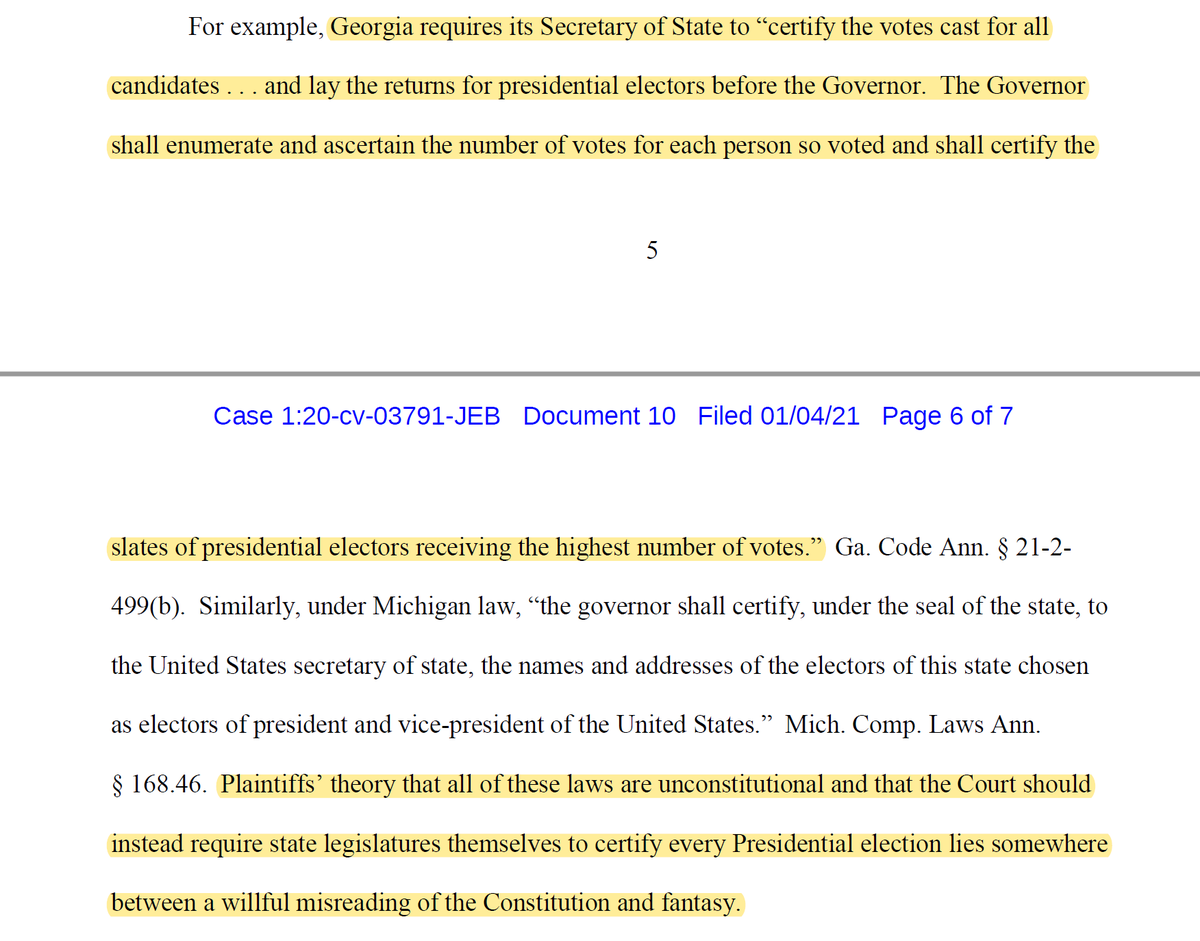
Election Litigation Update: DC - the "let's sue the Electoral College" case.
This is a bit surprising, given that as of last time I checked nobody had been served and no appearance had been entered. I suspect it's an effort to make sure the case isn't "pending" on the 6th.
Link: https://t.co/oOJZD1F4x2
— Brad Heath (@bradheath) January 4, 2021


If I was plaintiffs counsel, I'd definitely be clearing under my desk right now, and possibly also my underwear.
Judge calling out the length of your filing by both page count and number of footnotes is very much the same energy as your mother using your full name, middle name included, at you. At volume.




Honestly, I don't know. They can, of course, run to the DC Circuit right now if they want - denial of injunctive relief is immediately appealable.
But that would be EXCEPTIONALLY stupid.
More from Mike Dunford
This is an excellent question, and it's something that I've thought about some over the last couple of months.
Honestly, I think the answer is that the rationales for these rulings are not likely to unreasonably harm meritorious progressive OR conservative challenges.
The first thing to keep in mind is that, by design, challenges to the outcomes of elections are supposed to be heard by state courts, through the process set out in state law.
That happened this year, and the majority of those challenges were heard on the merits.
The couple of cases where laches determined the outcome of state election challenges were ones where it was pretty clear that the challenges were brought in bad faith - where ballots cast in good faith in reliance on laws that had been in force for some time were challenged.
The PA challenge to Act 77 is one example. The challengers, some of whom had voted for passage of the bill, didn't make use of the initial, direct-to-PA-SCt challenge built into the law or sue pre-election; they waited until post-election.
The WI case is another. That one had a challenge to ballots cast using a form that had been in use for a literal decade.
Those are cases where laches is clear - particularly the prejudice element.
Honestly, I think the answer is that the rationales for these rulings are not likely to unreasonably harm meritorious progressive OR conservative challenges.
Any merit to the notion that the rationales for some of these rulings will harm progressive challenges in future elections?
— Andrew Broering (@AndrewBroering) January 3, 2021
One says laches, another moot, another standing, sometimes with almost the same type of plaintiff.
The first thing to keep in mind is that, by design, challenges to the outcomes of elections are supposed to be heard by state courts, through the process set out in state law.
That happened this year, and the majority of those challenges were heard on the merits.
The couple of cases where laches determined the outcome of state election challenges were ones where it was pretty clear that the challenges were brought in bad faith - where ballots cast in good faith in reliance on laws that had been in force for some time were challenged.
The PA challenge to Act 77 is one example. The challengers, some of whom had voted for passage of the bill, didn't make use of the initial, direct-to-PA-SCt challenge built into the law or sue pre-election; they waited until post-election.
The WI case is another. That one had a challenge to ballots cast using a form that had been in use for a literal decade.
Those are cases where laches is clear - particularly the prejudice element.
Election Litigation Thread - Georgia:
OK, so since my attempt to sit back while Akiva does all the work of going through the latest proof that not only the pro se have fools for lawyers has backfired, let's take a stroll through the motion for injunctive relief.
At the start, I'd note that the motion does not appear to be going anywhere fast - despite the request that they made over 80 hours ago to have the motion heard within 48 hours.
The most recent docket entries are all routine start-of-case stuff.

Why isn't it going anywhere quickly? Allow me to direct your attention to something that my learned colleague Mr. Cohen said
Now I'm not a litigator, but if I had an emergency thing that absolutely had to be heard over a holiday weekend, I'd start by reading the relevant part of the local rules for the specific court in which I am filing my case.
In this case, this bit, in particular, seems relevant:

My next step, if I had any uncertainty at all, would be to find and use the court's after-hours emergency contact info. I might have to work some to find it, but it'll be there. Emergencies happen; there are procedures for them.
And then I'd do exactly what they tell me to do.
OK, so since my attempt to sit back while Akiva does all the work of going through the latest proof that not only the pro se have fools for lawyers has backfired, let's take a stroll through the motion for injunctive relief.
They've also got a brief in support of their injunction motion, but I've got client work that needs doing. Hopefully @questauthority has you covered
— Akiva Cohen (@AkivaMCohen) January 4, 2021
At the start, I'd note that the motion does not appear to be going anywhere fast - despite the request that they made over 80 hours ago to have the motion heard within 48 hours.
The most recent docket entries are all routine start-of-case stuff.
Why isn't it going anywhere quickly? Allow me to direct your attention to something that my learned colleague Mr. Cohen said
Folks, judges DO NOT read complaints or petitions when they are filed, and they DO NOT just up and act on the "requests for relief". If you want something, you need to actually ask the court for it by a motion, not just put it in your "here's what we want if we win" section
— Akiva Cohen (@AkivaMCohen) January 4, 2021
Now I'm not a litigator, but if I had an emergency thing that absolutely had to be heard over a holiday weekend, I'd start by reading the relevant part of the local rules for the specific court in which I am filing my case.
In this case, this bit, in particular, seems relevant:
My next step, if I had any uncertainty at all, would be to find and use the court's after-hours emergency contact info. I might have to work some to find it, but it'll be there. Emergencies happen; there are procedures for them.
And then I'd do exactly what they tell me to do.
I went over the dismissal on my stream, but a few thoughts on where things are at:
1: The Notice of Appeal doesn't shock me; I figured Louie would be this dumb.
2: As was the case with the case at the District Court, it doesn't really matter how vigorously Pence defends this.
3: The lack of standing is so spectacularly, glaringly obvious that it doesn't really matter whether Pence raised certain arguments; they will get noticed by the court.
4: That's because federal courts have an independent duty to ensure they have jurisdiction.
5: Standing is a jurisdictional requirement; no standing means no case.
6: The rules for standing are clear and nothing in the opinion dismissing the case was the least bit controversial in any universe except the alternate one inhabited by Louie and the Arizonan cosplayers.
7: "But it's the 5th Circuit" will be raised both by Trumpistians and those who are exceptionally nervous. There is exactly as much reason to be concerned about the 5th as there was the trial court: ie none at all.
So - my expectations:
Given the timeline, I suspect that Louie will be granted an expedited appeal and will lose on an expedited basis. I also expect that he will appeal to SCOTUS and the appeal there will not be expedited.
1: The Notice of Appeal doesn't shock me; I figured Louie would be this dumb.
2: As was the case with the case at the District Court, it doesn't really matter how vigorously Pence defends this.
And the appeal has been noticed. pic.twitter.com/o4g4ES1wrU
— Kyle Cheney (@kyledcheney) January 2, 2021
3: The lack of standing is so spectacularly, glaringly obvious that it doesn't really matter whether Pence raised certain arguments; they will get noticed by the court.
4: That's because federal courts have an independent duty to ensure they have jurisdiction.
5: Standing is a jurisdictional requirement; no standing means no case.
6: The rules for standing are clear and nothing in the opinion dismissing the case was the least bit controversial in any universe except the alternate one inhabited by Louie and the Arizonan cosplayers.
7: "But it's the 5th Circuit" will be raised both by Trumpistians and those who are exceptionally nervous. There is exactly as much reason to be concerned about the 5th as there was the trial court: ie none at all.
So - my expectations:
Given the timeline, I suspect that Louie will be granted an expedited appeal and will lose on an expedited basis. I also expect that he will appeal to SCOTUS and the appeal there will not be expedited.


More from Politics

We’ve been getting calls and outreach from Queens residents all day about this.
The community’s response? Outrage.
Amazon is a billion-dollar company. The idea that it will receive hundreds of millions of dollars in tax breaks at a time when our subway is crumbling and our communities need MORE investment, not less, is extremely concerning to residents here.
When we talk about bringing jobs to the community, we need to dig deep:
- Has the company promised to hire in the existing community?
- What’s the quality of jobs + how many are promised? Are these jobs low-wage or high wage? Are there benefits? Can people collectively bargain?
Displacement is not community development. Investing in luxury condos is not the same thing as investing in people and families.
Shuffling working class people out of a community does not improve their quality of life.
We need to focus on good healthcare, living wages, affordable rent. Corporations that offer none of those things should be met w/ skepticism.
It’s possible to establish economic partnerships w/ real opportunities for working families, instead of a race-to-the-bottom competition.
The community’s response? Outrage.
Amazon will divide its second headquarters evenly between New York's Long Island City and Arlington County's Crystal City neighborhoods. Other cities may also receive major sites. https://t.co/c1lKmeQinX
— The Wall Street Journal (@WSJ) November 13, 2018
Amazon is a billion-dollar company. The idea that it will receive hundreds of millions of dollars in tax breaks at a time when our subway is crumbling and our communities need MORE investment, not less, is extremely concerning to residents here.
When we talk about bringing jobs to the community, we need to dig deep:
- Has the company promised to hire in the existing community?
- What’s the quality of jobs + how many are promised? Are these jobs low-wage or high wage? Are there benefits? Can people collectively bargain?
Displacement is not community development. Investing in luxury condos is not the same thing as investing in people and families.
Shuffling working class people out of a community does not improve their quality of life.
We need to focus on good healthcare, living wages, affordable rent. Corporations that offer none of those things should be met w/ skepticism.
It’s possible to establish economic partnerships w/ real opportunities for working families, instead of a race-to-the-bottom competition.


My piece in the NY Times today: "the Trump administration is denying applications submitted to the United States Citizenship and Immigration Services at a rate 37 percent higher than the Obama administration did in 2016."
Based on this analysis: "Denials for immigration benefits—travel documents, work permits, green cards, worker petitions, etc.—increased 37 percent since FY 2016. On an absolute basis, FY 2018 will see more than about 155,000 more denials than FY 2016." https://t.co/Bl0naOO0sh
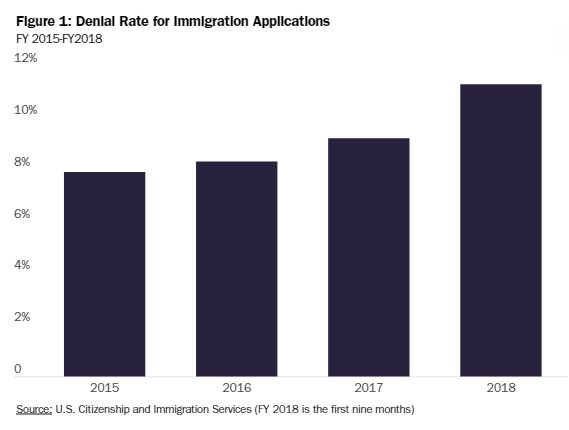
"This increase in denials cannot be credited to an overall rise in applications. In fact, the total number of applications so far this year is 2 percent lower than in 2016. It could be that the higher denial rate is also discouraging some people from applying at all.."
Thanks to @gsiskind for his insightful comments. The increase in denials, he said, is “significant enough to make one think that Congress must have passed legislation changing the requirements. But we know they have not.”
My conclusion:
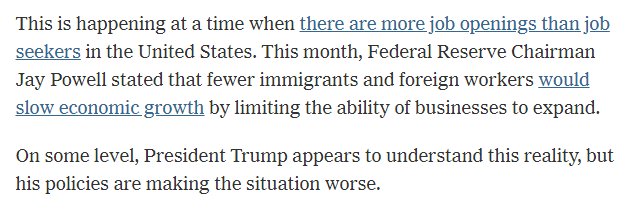
Based on this analysis: "Denials for immigration benefits—travel documents, work permits, green cards, worker petitions, etc.—increased 37 percent since FY 2016. On an absolute basis, FY 2018 will see more than about 155,000 more denials than FY 2016." https://t.co/Bl0naOO0sh
"This increase in denials cannot be credited to an overall rise in applications. In fact, the total number of applications so far this year is 2 percent lower than in 2016. It could be that the higher denial rate is also discouraging some people from applying at all.."
Thanks to @gsiskind for his insightful comments. The increase in denials, he said, is “significant enough to make one think that Congress must have passed legislation changing the requirements. But we know they have not.”
My conclusion:


You May Also Like


Krugman is, of course, right about this. BUT, note that universities can do a lot to revitalize declining and rural regions.
See this thing that @lymanstoneky wrote:
And see this thing that I wrote:
And see this book that @JamesFallows wrote:
And see this other thing that I wrote:
One thing I've been noticing about responses to today's column is that many people still don't get how strong the forces behind regional divergence are, and how hard to reverse 1/ https://t.co/Ft2aH1NcQt
— Paul Krugman (@paulkrugman) November 20, 2018
See this thing that @lymanstoneky wrote:
And see this thing that I wrote:
And see this book that @JamesFallows wrote:
And see this other thing that I wrote:

1/x Fort Detrick History
Mr. Patrick, one of the chief scientists at the Army Biological Warfare Laboratories at Fort Detrick in Frederick, Md., held five classified US patents for the process of weaponizing anthrax.
2/x
Under Mr. Patrick’s direction, scientists at Fort Detrick developed a tularemia agent that, if disseminated by airplane, could cause casualties & sickness over 1000s mi². In a 10,000 mi² range, it had 90% casualty rate & 50% fatality rate
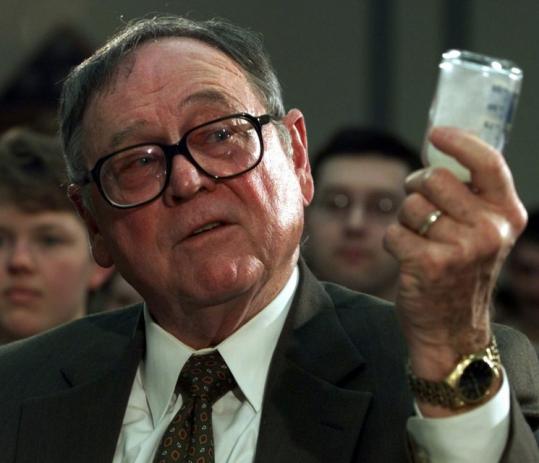
3/x His team explored Q fever, plague, & Venezuelan equine encephalitis, testing more than 20 anthrax strains to discern most lethal variety. Fort Detrick scientists used aerosol spray systems inside fountain pens, walking sticks, light bulbs, & even in 1953 Mercury exhaust pipes
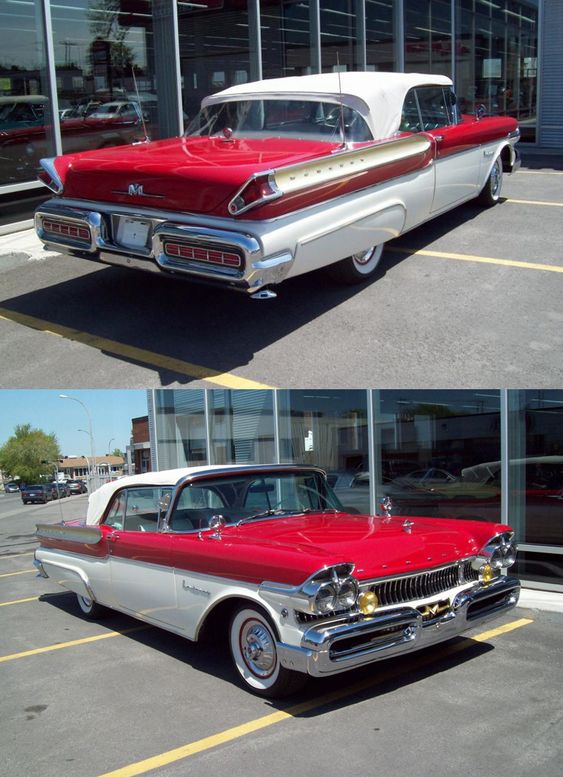
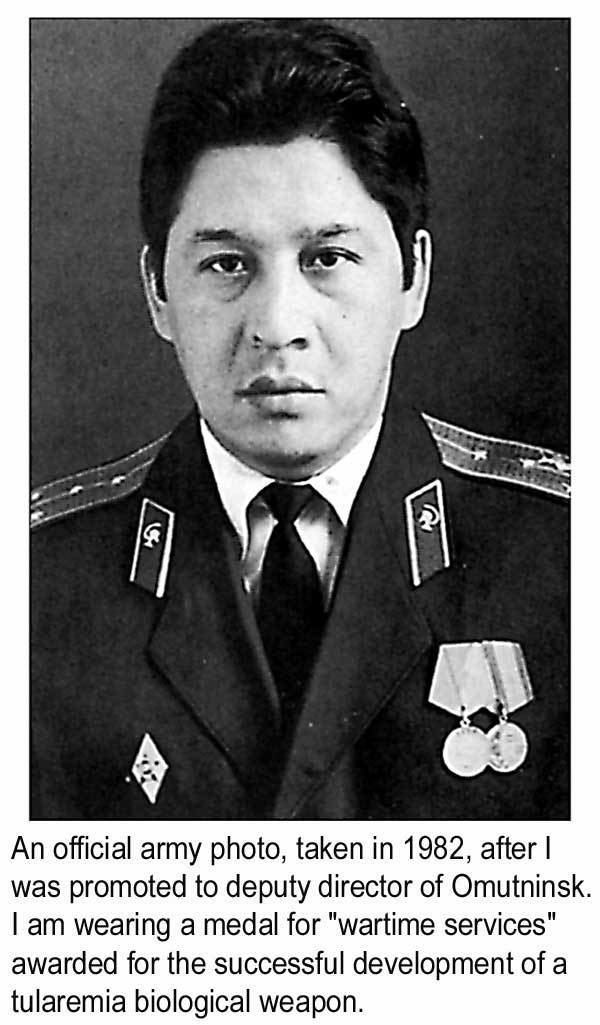
4/x After retiring in 1986, Mr. Patrick remained one of the world’s foremost specialists on biological warfare & was a consultant to the CIA, FBI, & US military. He debriefed Soviet defector Ken Alibek, the deputy chief of the Soviet biowarfare program
https://t.co/sHqSaTSqtB
5/x Back in Time
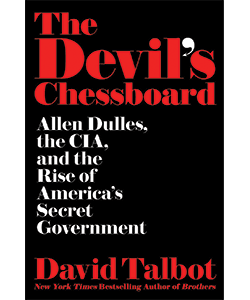
In 1949 the Army created a small team of chemists at "Camp Detrick" called Special Operations Division. Its assignment was to find military uses for toxic bacteria. The coercive use of toxins was a new field, which fascinated Allen Dulles, later head of the CIA
Mr. Patrick, one of the chief scientists at the Army Biological Warfare Laboratories at Fort Detrick in Frederick, Md., held five classified US patents for the process of weaponizing anthrax.
2/x
Under Mr. Patrick’s direction, scientists at Fort Detrick developed a tularemia agent that, if disseminated by airplane, could cause casualties & sickness over 1000s mi². In a 10,000 mi² range, it had 90% casualty rate & 50% fatality rate
3/x His team explored Q fever, plague, & Venezuelan equine encephalitis, testing more than 20 anthrax strains to discern most lethal variety. Fort Detrick scientists used aerosol spray systems inside fountain pens, walking sticks, light bulbs, & even in 1953 Mercury exhaust pipes
4/x After retiring in 1986, Mr. Patrick remained one of the world’s foremost specialists on biological warfare & was a consultant to the CIA, FBI, & US military. He debriefed Soviet defector Ken Alibek, the deputy chief of the Soviet biowarfare program
https://t.co/sHqSaTSqtB
5/x Back in Time
In 1949 the Army created a small team of chemists at "Camp Detrick" called Special Operations Division. Its assignment was to find military uses for toxic bacteria. The coercive use of toxins was a new field, which fascinated Allen Dulles, later head of the CIA


