
That happened this year, and the majority of those challenges were heard on the merits.
This is an excellent question, and it's something that I've thought about some over the last couple of months.
Honestly, I think the answer is that the rationales for these rulings are not likely to unreasonably harm meritorious progressive OR conservative challenges.
Any merit to the notion that the rationales for some of these rulings will harm progressive challenges in future elections?
— Andrew Broering (@AndrewBroering) January 3, 2021
One says laches, another moot, another standing, sometimes with almost the same type of plaintiff.
That happened this year, and the majority of those challenges were heard on the merits.
Those are cases where laches is clear - particularly the prejudice element.
The theory Trump was advancing was that any deviation from state election law could be litigated in federal courts.
More from Mike Dunford


Election Litigation Thread - Georgia:
OK, so since my attempt to sit back while Akiva does all the work of going through the latest proof that not only the pro se have fools for lawyers has backfired, let's take a stroll through the motion for injunctive relief.
At the start, I'd note that the motion does not appear to be going anywhere fast - despite the request that they made over 80 hours ago to have the motion heard within 48 hours.
The most recent docket entries are all routine start-of-case stuff.

Why isn't it going anywhere quickly? Allow me to direct your attention to something that my learned colleague Mr. Cohen said
Now I'm not a litigator, but if I had an emergency thing that absolutely had to be heard over a holiday weekend, I'd start by reading the relevant part of the local rules for the specific court in which I am filing my case.
In this case, this bit, in particular, seems relevant:

My next step, if I had any uncertainty at all, would be to find and use the court's after-hours emergency contact info. I might have to work some to find it, but it'll be there. Emergencies happen; there are procedures for them.
And then I'd do exactly what they tell me to do.
OK, so since my attempt to sit back while Akiva does all the work of going through the latest proof that not only the pro se have fools for lawyers has backfired, let's take a stroll through the motion for injunctive relief.
They've also got a brief in support of their injunction motion, but I've got client work that needs doing. Hopefully @questauthority has you covered
— Akiva Cohen (@AkivaMCohen) January 4, 2021
At the start, I'd note that the motion does not appear to be going anywhere fast - despite the request that they made over 80 hours ago to have the motion heard within 48 hours.
The most recent docket entries are all routine start-of-case stuff.
Why isn't it going anywhere quickly? Allow me to direct your attention to something that my learned colleague Mr. Cohen said
Folks, judges DO NOT read complaints or petitions when they are filed, and they DO NOT just up and act on the "requests for relief". If you want something, you need to actually ask the court for it by a motion, not just put it in your "here's what we want if we win" section
— Akiva Cohen (@AkivaMCohen) January 4, 2021
Now I'm not a litigator, but if I had an emergency thing that absolutely had to be heard over a holiday weekend, I'd start by reading the relevant part of the local rules for the specific court in which I am filing my case.
In this case, this bit, in particular, seems relevant:
My next step, if I had any uncertainty at all, would be to find and use the court's after-hours emergency contact info. I might have to work some to find it, but it'll be there. Emergencies happen; there are procedures for them.
And then I'd do exactly what they tell me to do.
I went over the dismissal on my stream, but a few thoughts on where things are at:
1: The Notice of Appeal doesn't shock me; I figured Louie would be this dumb.
2: As was the case with the case at the District Court, it doesn't really matter how vigorously Pence defends this.
3: The lack of standing is so spectacularly, glaringly obvious that it doesn't really matter whether Pence raised certain arguments; they will get noticed by the court.
4: That's because federal courts have an independent duty to ensure they have jurisdiction.
5: Standing is a jurisdictional requirement; no standing means no case.
6: The rules for standing are clear and nothing in the opinion dismissing the case was the least bit controversial in any universe except the alternate one inhabited by Louie and the Arizonan cosplayers.
7: "But it's the 5th Circuit" will be raised both by Trumpistians and those who are exceptionally nervous. There is exactly as much reason to be concerned about the 5th as there was the trial court: ie none at all.
So - my expectations:
Given the timeline, I suspect that Louie will be granted an expedited appeal and will lose on an expedited basis. I also expect that he will appeal to SCOTUS and the appeal there will not be expedited.
1: The Notice of Appeal doesn't shock me; I figured Louie would be this dumb.
2: As was the case with the case at the District Court, it doesn't really matter how vigorously Pence defends this.
And the appeal has been noticed. pic.twitter.com/o4g4ES1wrU
— Kyle Cheney (@kyledcheney) January 2, 2021
3: The lack of standing is so spectacularly, glaringly obvious that it doesn't really matter whether Pence raised certain arguments; they will get noticed by the court.
4: That's because federal courts have an independent duty to ensure they have jurisdiction.
5: Standing is a jurisdictional requirement; no standing means no case.
6: The rules for standing are clear and nothing in the opinion dismissing the case was the least bit controversial in any universe except the alternate one inhabited by Louie and the Arizonan cosplayers.
7: "But it's the 5th Circuit" will be raised both by Trumpistians and those who are exceptionally nervous. There is exactly as much reason to be concerned about the 5th as there was the trial court: ie none at all.
So - my expectations:
Given the timeline, I suspect that Louie will be granted an expedited appeal and will lose on an expedited basis. I also expect that he will appeal to SCOTUS and the appeal there will not be expedited.


More from Government


The Manatee-Sarasota area has many connections to the horrific scene of insurrection in Washington DC yesterday. Want to see? Buckle up for this thread: /1
The Manatee GOP expressed support for Josh Hawley’s objections to certification of the electoral college vote. /2
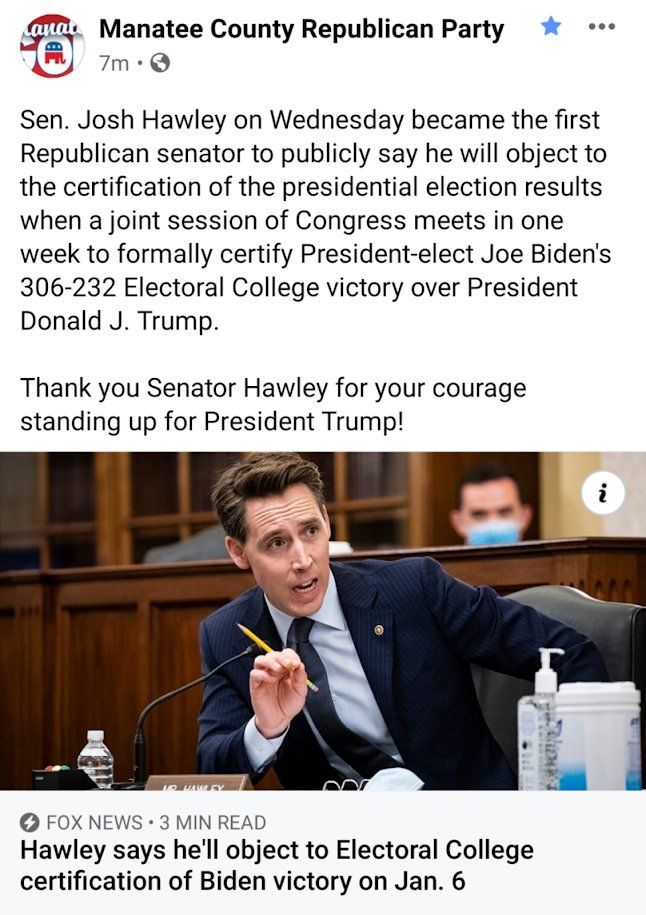
Josh Hawley’s home-state newspaper says Hawley has blood on his hands for a “Capitol coup attempt.” This is who the Manatee GOP cheered on.
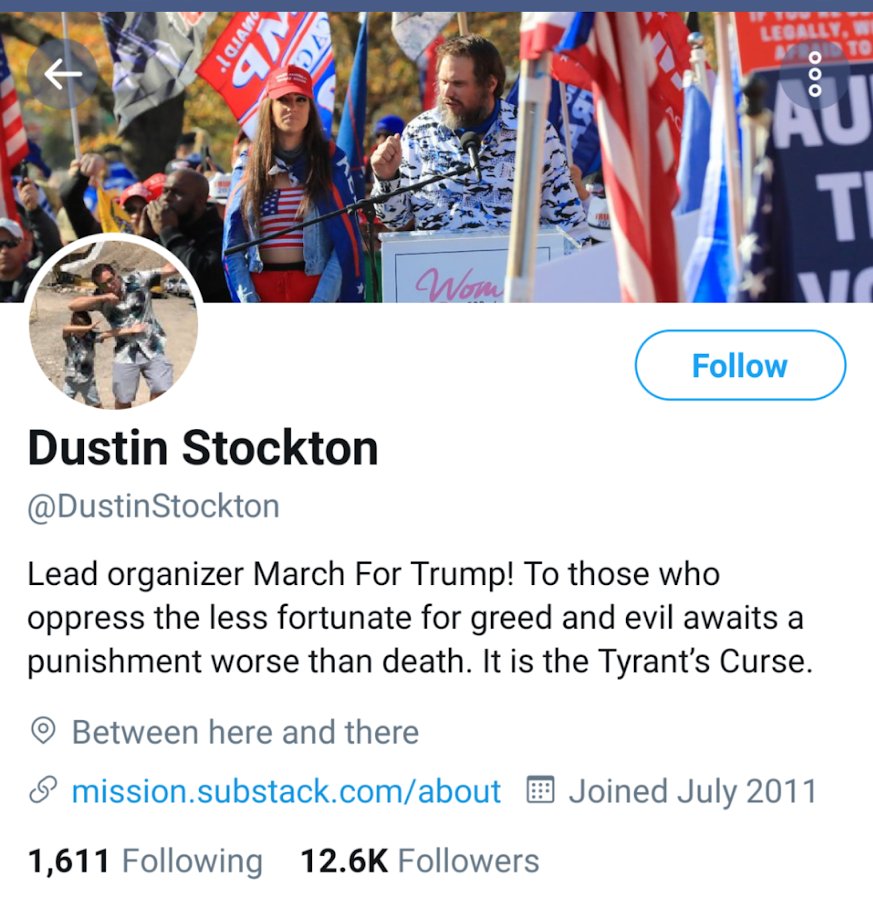
Florida GOP Vice Chair & Sarasota County Commissioner Christian Ziegler was at the protest, as described in this @HeraldTribune article.
The protest was led by the same people connected to Ziegler who were filming outside the Vern Buchanan town hall at the Van Wezel in Sarasota in 2017, namely Dustin Stockton. Stockton was also part of Steve Bannon's border wall group. /5
https://t.co/NbOxVqbtO4
The Manatee GOP expressed support for Josh Hawley’s objections to certification of the electoral college vote. /2
Josh Hawley’s home-state newspaper says Hawley has blood on his hands for a “Capitol coup attempt.” This is who the Manatee GOP cheered on.
Florida GOP Vice Chair & Sarasota County Commissioner Christian Ziegler was at the protest, as described in this @HeraldTribune article.
The protest was led by the same people connected to Ziegler who were filming outside the Vern Buchanan town hall at the Van Wezel in Sarasota in 2017, namely Dustin Stockton. Stockton was also part of Steve Bannon's border wall group. /5
https://t.co/NbOxVqbtO4


This article by Jim Spellar for @LabourList misses the point about why Labour needs to think seriously about constitutional reform - and have a programme for it ready for government.
The state of our constitution is a bit like the state of the neglected electric wiring in an old house. If you are moving into the house, sorting it out is a bit tedious. Couldn’t you spend the time and money on a new sound system?
But if you ignore the wiring, you’ll find that you can’t safely install the new sound system. And your house may well catch fire.
Any programme for social democratic government requires a state with capacity, and a state that has clear mechanisms of accountability, for all the big and all the small decisions that in takes, in which people have confidence.
That is not a description of the modern UK state.
"Voters don\u2019t care about how the D\u2019Hondt system works or about how you\u2019d geographically carve up a regional assembly... They want results.\u2070"@spellar on why Labour should stop obsessing over constitutional issues: https://t.co/W0zsire5xI
— LabourList (@LabourList) February 11, 2021
The state of our constitution is a bit like the state of the neglected electric wiring in an old house. If you are moving into the house, sorting it out is a bit tedious. Couldn’t you spend the time and money on a new sound system?
But if you ignore the wiring, you’ll find that you can’t safely install the new sound system. And your house may well catch fire.
Any programme for social democratic government requires a state with capacity, and a state that has clear mechanisms of accountability, for all the big and all the small decisions that in takes, in which people have confidence.
That is not a description of the modern UK state.

You May Also Like

🌿𝑻𝒉𝒆 𝒔𝒕𝒐𝒓𝒚 𝒐𝒇 𝒂 𝑺𝒕𝒂𝒓 : 𝑫𝒉𝒓𝒖𝒗𝒂 & 𝑽𝒊𝒔𝒉𝒏𝒖
Once upon a time there was a Raja named Uttānapāda born of Svayambhuva Manu,1st man on earth.He had 2 beautiful wives - Suniti & Suruchi & two sons were born of them Dhruva & Uttama respectively.
#talesofkrishna https://t.co/E85MTPkF9W
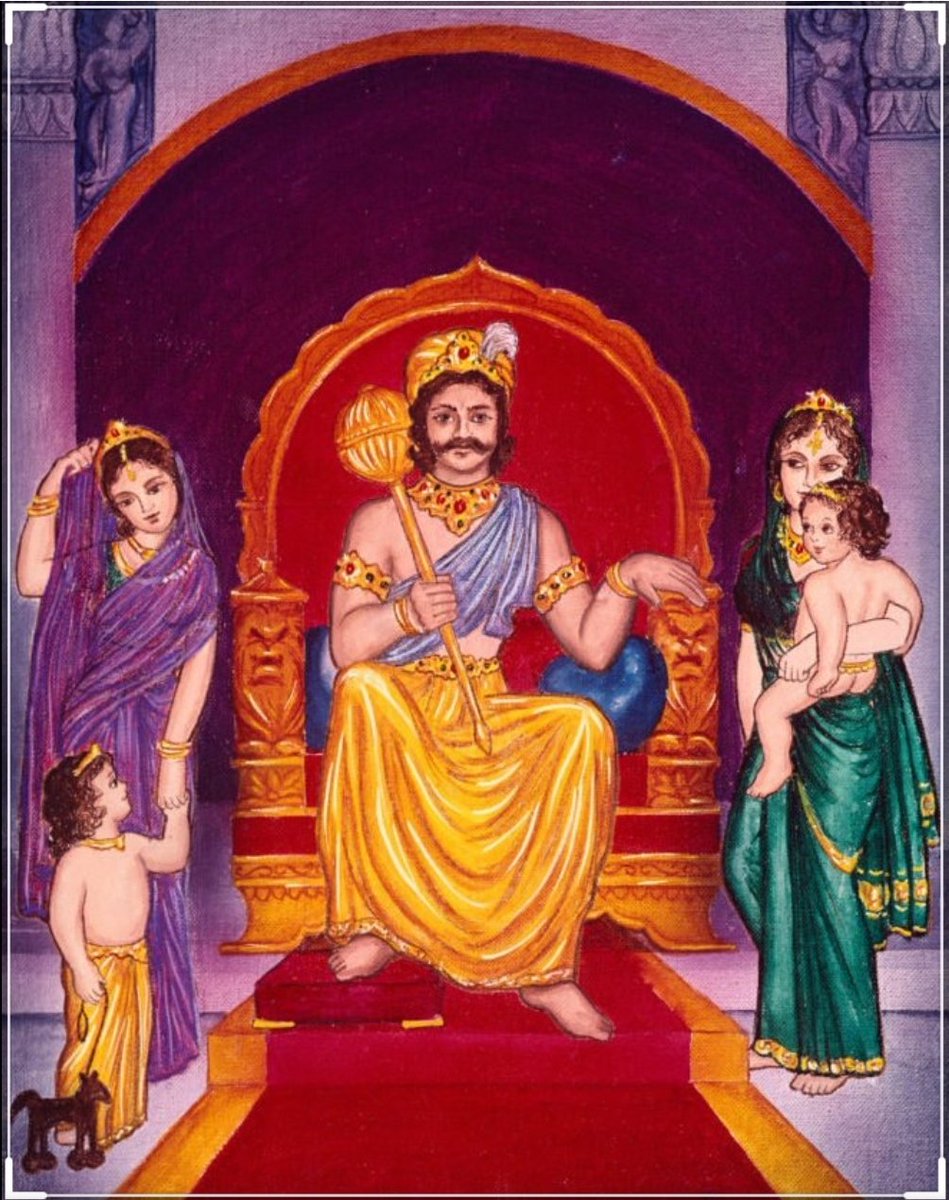
Now Suniti was the daughter of a tribal chief while Suruchi was the daughter of a rich king. Hence Suruchi was always favored the most by Raja while Suniti was ignored. But while Suniti was gentle & kind hearted by nature Suruchi was venomous inside.
#KrishnaLeela
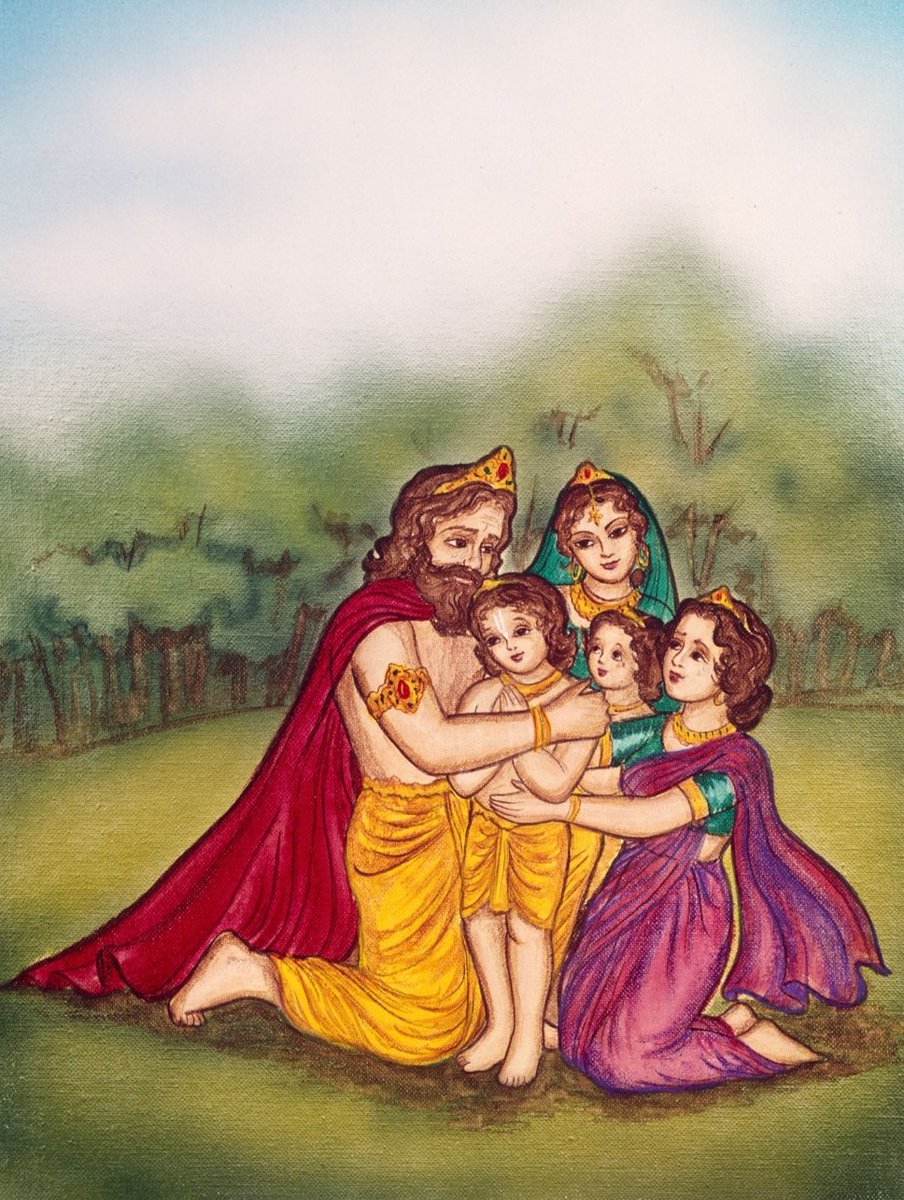
The story is of a time when ideally the eldest son of the king becomes the heir to the throne. Hence the sinhasan of the Raja belonged to Dhruva.This is why Suruchi who was the 2nd wife nourished poison in her heart for Dhruva as she knew her son will never get the throne.
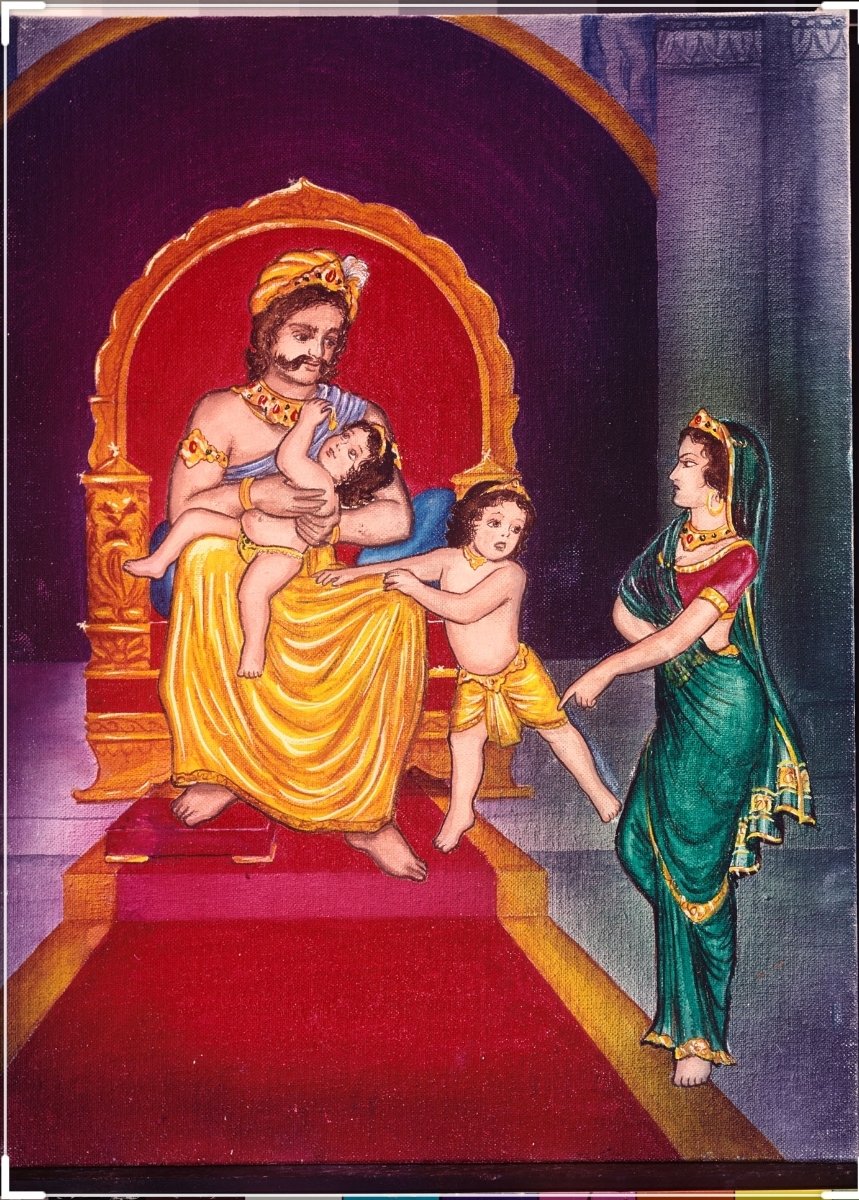
One day when Dhruva was just 5 years old he went on to sit on his father's lap. Suruchi, the jealous queen, got enraged and shoved him away from Raja as she never wanted Raja to shower Dhruva with his fatherly affection.
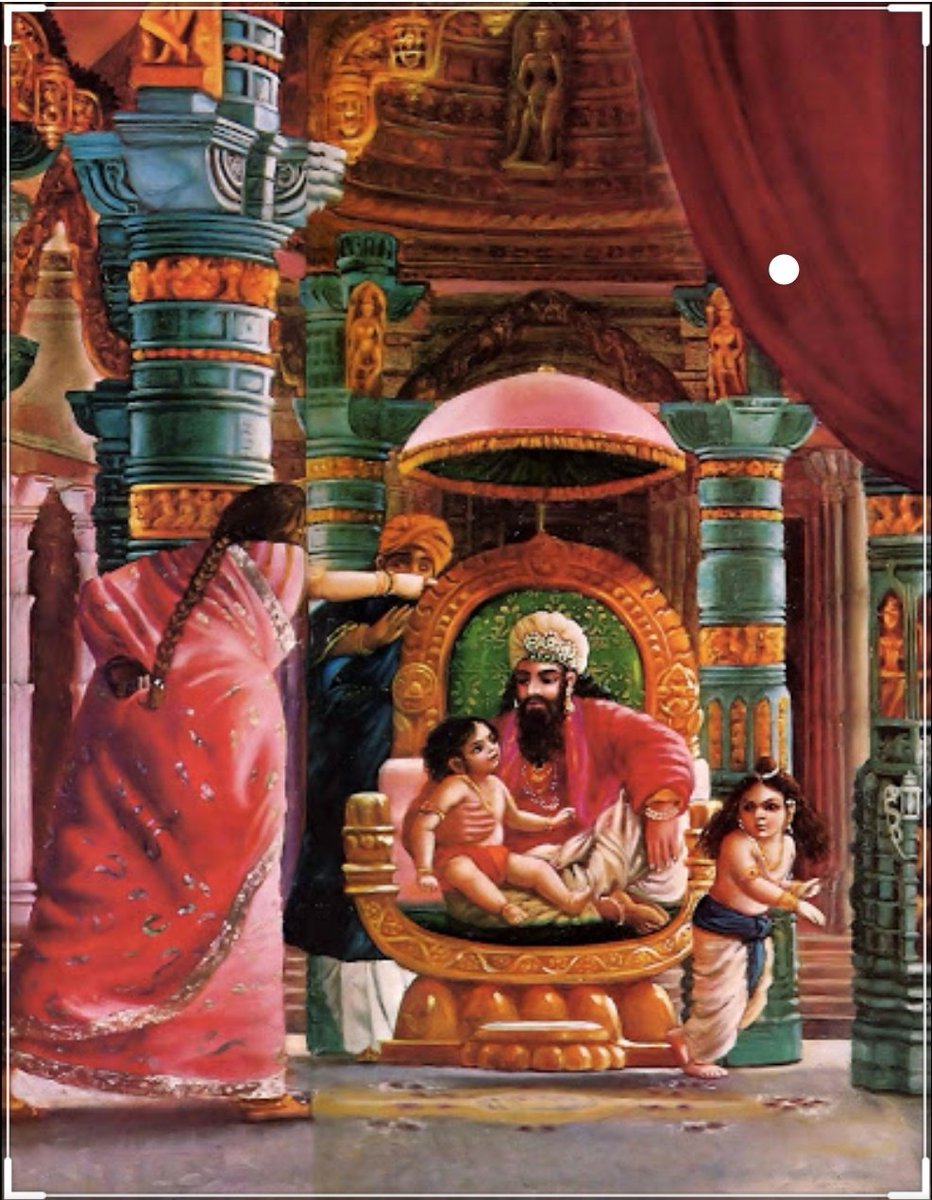
Dhruva protested questioning his step mother "why can't i sit on my own father's lap?" A furious Suruchi berated him saying "only God can allow him that privilege. Go ask him"
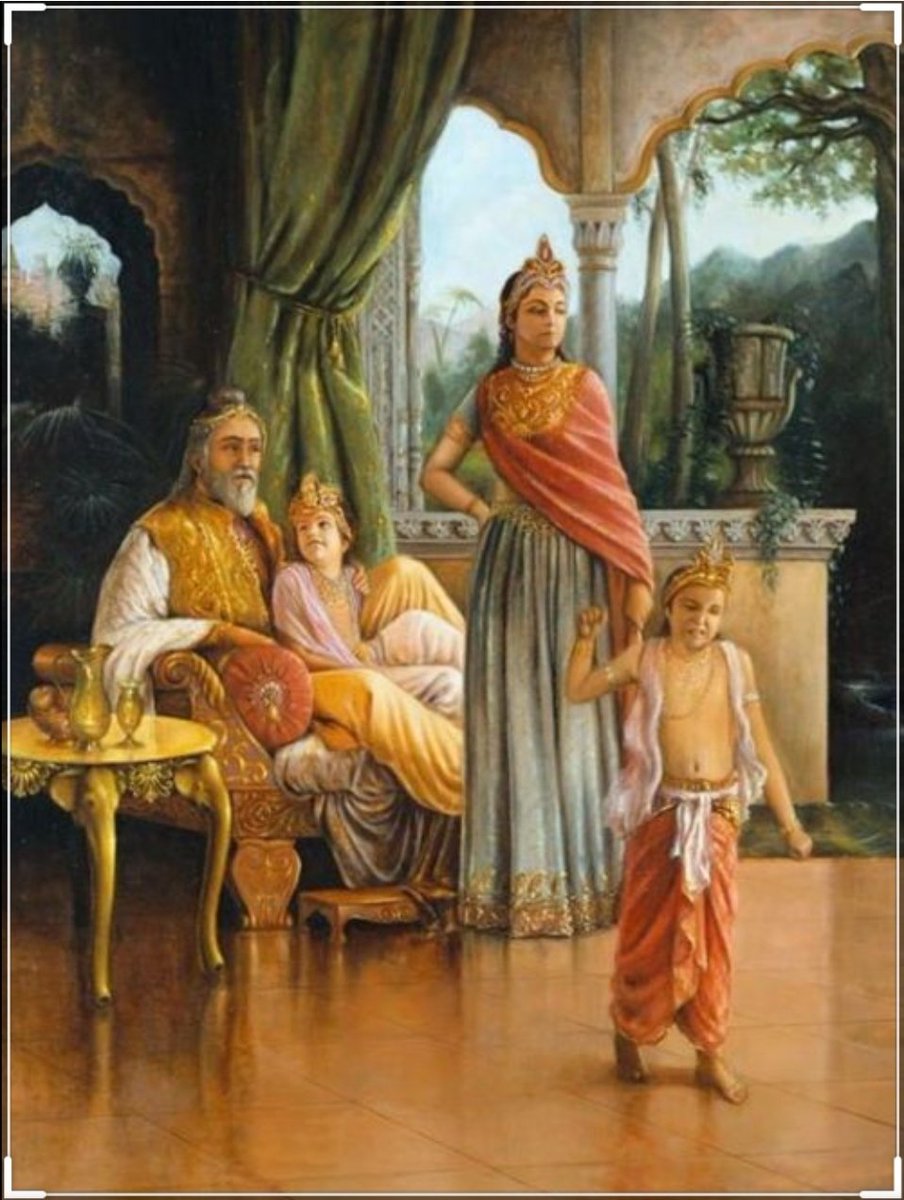
Once upon a time there was a Raja named Uttānapāda born of Svayambhuva Manu,1st man on earth.He had 2 beautiful wives - Suniti & Suruchi & two sons were born of them Dhruva & Uttama respectively.
#talesofkrishna https://t.co/E85MTPkF9W
Prabhu says i reside in the heart of my bhakt.
— Right Singh (@rightwingchora) December 21, 2020
Guess the event. pic.twitter.com/yFUmbfe5KL
Now Suniti was the daughter of a tribal chief while Suruchi was the daughter of a rich king. Hence Suruchi was always favored the most by Raja while Suniti was ignored. But while Suniti was gentle & kind hearted by nature Suruchi was venomous inside.
#KrishnaLeela
The story is of a time when ideally the eldest son of the king becomes the heir to the throne. Hence the sinhasan of the Raja belonged to Dhruva.This is why Suruchi who was the 2nd wife nourished poison in her heart for Dhruva as she knew her son will never get the throne.
One day when Dhruva was just 5 years old he went on to sit on his father's lap. Suruchi, the jealous queen, got enraged and shoved him away from Raja as she never wanted Raja to shower Dhruva with his fatherly affection.
Dhruva protested questioning his step mother "why can't i sit on my own father's lap?" A furious Suruchi berated him saying "only God can allow him that privilege. Go ask him"

First thread of the year because I have time during MCO. As requested, a thread on the gods and spirits of Malay folk religion. Some are indigenous, some are of Indian origin, some have Islamic
Before I begin, it might be worth explaining the Malay conception of the spirit world. At its deepest level, Malay religious belief is animist. All living beings and even certain objects are said to have a soul. Natural phenomena are either controlled by or personified as spirits
Although these beings had to be respected, not all of them were powerful enough to be considered gods. Offerings would be made to the spirits that had greater influence on human life. Spells and incantations would invoke their
Two known examples of such elemental spirits that had god-like status are Raja Angin (king of the wind) and Mambang Tali Arus (spirit of river currents). There were undoubtedly many more which have been lost to time
Contact with ancient India brought the influence of Hinduism and Buddhism to SEA. What we now call Hinduism similarly developed in India out of native animism and the more formal Vedic tradition. This can be seen in the multitude of sacred animals and location-specific Hindu gods
i wonder if you can make a thread bout witchcraft in malaysia.. or list of our own local gods/deites..
— r a y a \U0001f319 (@lcvelylilith) February 20, 2020
Before I begin, it might be worth explaining the Malay conception of the spirit world. At its deepest level, Malay religious belief is animist. All living beings and even certain objects are said to have a soul. Natural phenomena are either controlled by or personified as spirits
Although these beings had to be respected, not all of them were powerful enough to be considered gods. Offerings would be made to the spirits that had greater influence on human life. Spells and incantations would invoke their
Animist ceremonies of a religious or magical nature were normally held for the purpose of divination or making a request. This would either be done at a keramat or at a shrine similar to the Thai spirit houses or Chinese roadside shrines pic.twitter.com/I1hliyi0x3
— \u2745\u1710\u170b\u1713\u170e (@uglyluhan) June 16, 2019
Two known examples of such elemental spirits that had god-like status are Raja Angin (king of the wind) and Mambang Tali Arus (spirit of river currents). There were undoubtedly many more which have been lost to time
Contact with ancient India brought the influence of Hinduism and Buddhism to SEA. What we now call Hinduism similarly developed in India out of native animism and the more formal Vedic tradition. This can be seen in the multitude of sacred animals and location-specific Hindu gods

