Irish foreign min Simon Coveney says he is "more optimistic" about progress in the EU UK Joint Committee over implementing the Northern Ireland Protocol.
\U0001f1ea\U0001f1fa\U0001f1ec\U0001f1e7 I will meet @michaelgove today in Brussels to discuss the implementation of the Withdrawal Agreement, including the Protocol on Ireland and Northern Ireland. We are working hard to make sure it is fully operational as of 1 January 2021.
— Maro\u0161 \u0160ef\u010dovi\u010d\U0001f1ea\U0001f1fa (@MarosSefcovic) December 7, 2020
More from Tony Connelly
More from Politics


My piece in the NY Times today: "the Trump administration is denying applications submitted to the United States Citizenship and Immigration Services at a rate 37 percent higher than the Obama administration did in 2016."
Based on this analysis: "Denials for immigration benefits—travel documents, work permits, green cards, worker petitions, etc.—increased 37 percent since FY 2016. On an absolute basis, FY 2018 will see more than about 155,000 more denials than FY 2016." https://t.co/Bl0naOO0sh
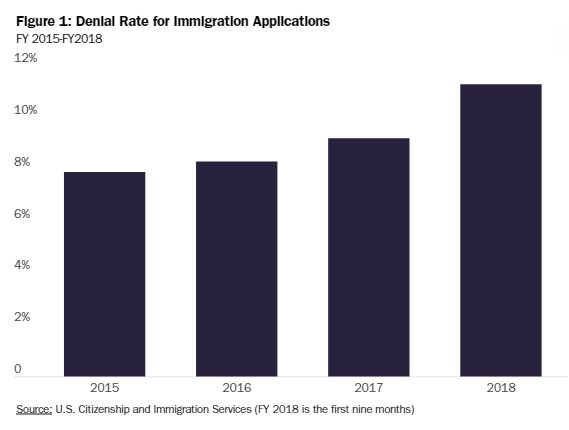
"This increase in denials cannot be credited to an overall rise in applications. In fact, the total number of applications so far this year is 2 percent lower than in 2016. It could be that the higher denial rate is also discouraging some people from applying at all.."
Thanks to @gsiskind for his insightful comments. The increase in denials, he said, is “significant enough to make one think that Congress must have passed legislation changing the requirements. But we know they have not.”
My conclusion:
Based on this analysis: "Denials for immigration benefits—travel documents, work permits, green cards, worker petitions, etc.—increased 37 percent since FY 2016. On an absolute basis, FY 2018 will see more than about 155,000 more denials than FY 2016." https://t.co/Bl0naOO0sh
"This increase in denials cannot be credited to an overall rise in applications. In fact, the total number of applications so far this year is 2 percent lower than in 2016. It could be that the higher denial rate is also discouraging some people from applying at all.."
Thanks to @gsiskind for his insightful comments. The increase in denials, he said, is “significant enough to make one think that Congress must have passed legislation changing the requirements. But we know they have not.”
My conclusion:


You May Also Like



Stan Lee’s fictional superheroes lived in the real New York. Here’s where they lived, and why. https://t.co/oV1IGGN8R6
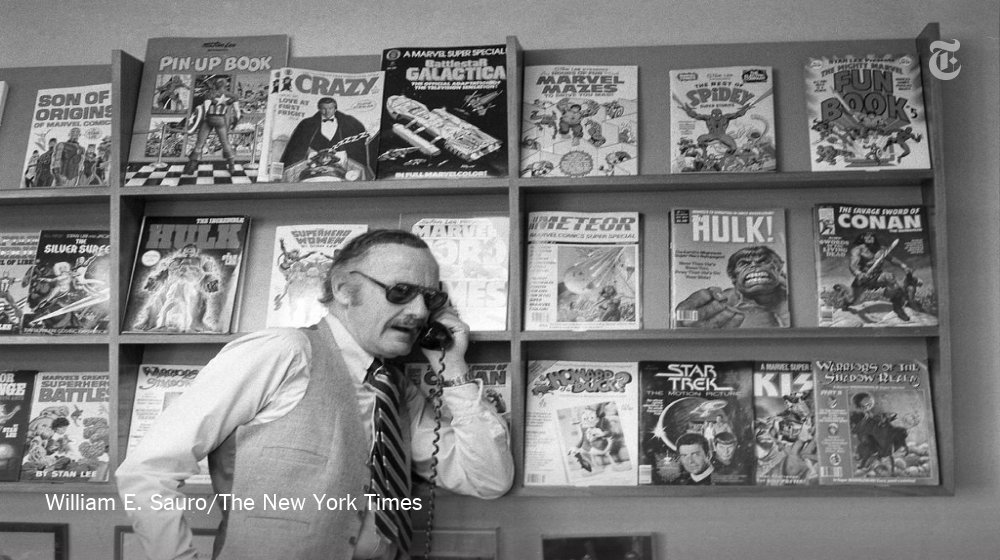
Stan Lee, who died Monday at 95, was born in Manhattan and graduated from DeWitt Clinton High School in the Bronx. His pulp-fiction heroes have come to define much of popular culture in the early 21st century.
Tying Marvel’s stable of pulp-fiction heroes to a real place — New York — served a counterbalance to the sometimes gravity-challenged action and the improbability of the stories. That was just what Stan Lee wanted. https://t.co/rDosqzpP8i

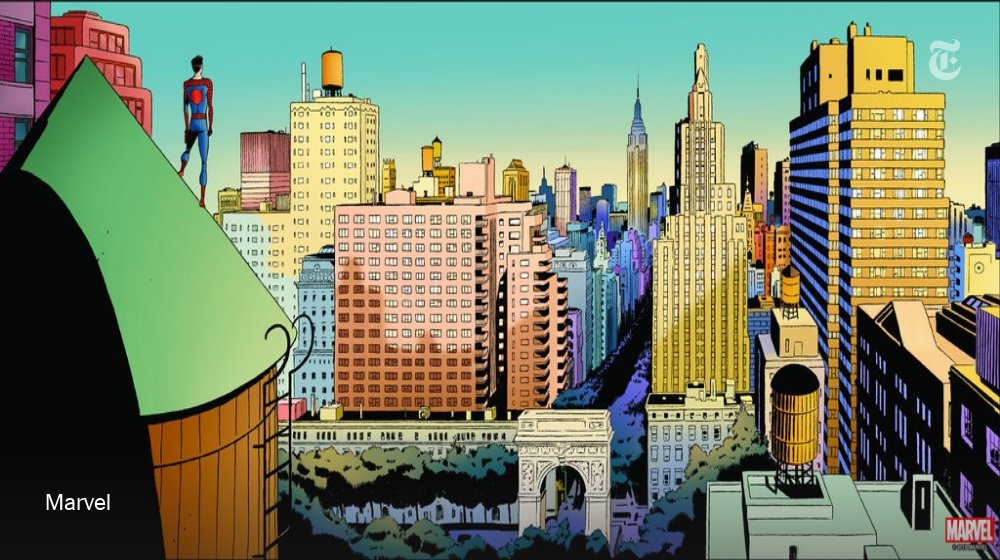
The New York universe hooked readers. And the artists drew what they were familiar with, which made the Marvel universe authentic-looking, down to the water towers atop many of the buildings. https://t.co/rDosqzpP8i
The Avengers Mansion was a Beaux-Arts palace. Fans know it as 890 Fifth Avenue. The Frick Collection, which now occupies the place, uses the address of the front door: 1 East 70th Street.
Stan Lee, who died Monday at 95, was born in Manhattan and graduated from DeWitt Clinton High School in the Bronx. His pulp-fiction heroes have come to define much of popular culture in the early 21st century.
Tying Marvel’s stable of pulp-fiction heroes to a real place — New York — served a counterbalance to the sometimes gravity-challenged action and the improbability of the stories. That was just what Stan Lee wanted. https://t.co/rDosqzpP8i
The New York universe hooked readers. And the artists drew what they were familiar with, which made the Marvel universe authentic-looking, down to the water towers atop many of the buildings. https://t.co/rDosqzpP8i
The Avengers Mansion was a Beaux-Arts palace. Fans know it as 890 Fifth Avenue. The Frick Collection, which now occupies the place, uses the address of the front door: 1 East 70th Street.