HUF / H!ndu Undivided Family - A thread

HUF or H!ndu undivided family is a special provision under the income tax act which allows H!ndu families to enjoy lesser payable income tax as compared to any other individual.

1/n

It also encompasses Buddhist, Ja!n & Sikh families.

HUF Essentially allows a Joint or any family 4 that matter 2 be treated as an individual & the family’s income 4m inherited property, wills and gifts 2 be taxed separately rather than being clubbed with individual’s income.
+
Essentially they can divide their income in two parts.

What does that mean? In essence, It means that it allows the individuals to reduce the payable income tax, as they do not have to consider income from HUF when calculating “their own” taxable income.

3/n
The income from inherited property,wills, gifts is accounted under HUF (with a separate PAN card) and since it is not summed with individual’s income, it warrants a lower payable tax.

4/n
What’s interesting is that, HUF is based on H!ndu law, which does not govern other families allowed to avail benefits of HUF, i.e Sikhs, Buddhists and Jains.

5/n
Now here is how the majority has been getting away with paying more tax, thus essentially qualifying to be called “free-loaders” protected by the Indian Law .

6/n
⬇️
According to Income tax department: For the year 2018-19, the total HUF payable tax was Rs. 4,612 Crores, for a gross HUF Income of Rs. 50,893 Crores. Had this gross HUF income been part of individual income, the payable tax for each individual would have been MUCH MORE.
Which means that if HUF didn’t exist, these people would end up paying more tax and generating more tax revenue for the government and country.

HUF is deeply rooted in appeasement of H!ndu sentiments while placing the interest of country and it’s revenue at the back seat.

8/n
It’s high time people realize that the only appeased and free-loading community in India that benefits the most is majority, which constantly tries to rub “so called Hajj subsidy” in the face of Musl!ms day in day out.

9/n
In fact, “so called Hajj subsidy” was cancelled in 2018, with Mukhtar Abbas Naqvi quoting “it’s part of our policy to empower minorities with dignity and without appeasement”.

10/n
The fact is that the so called Hajj subsidy was in fact a skullduggery to protect Air India Monopoly.

11/n

https://t.co/WtTOUHcjtN
Wonder when BJP would want to empower the majority with some dignity and prompt them to shell out more tax as the country rightly deserves. Since H!ndu appeasement now is anyway based on change of city names and dem0nization of Musl!ms, it shouldn’t be a big task.

END

More from Politics

This idea - that elections should translate into policy - is not wrong at all. But political science can help explain why it's not working this way. There are three main explanations: 1. mandates are constructed, not automatic, 2. party asymmetry, 3. partisan conpetition 1/


First, party/policy mandates from elections are far from self-executing in our system. Work on mandates from Dahl to Ellis and Kirk on the history of the mandate to mine on its role in post-Nixon politics, to Peterson Grossback and Stimson all emphasize that this link is... 2/

Created deliberately and isn't always persuasive. Others have to convinced that the election meant a particular thing for it to work in a legislative context. I theorized in the immediate period of after the 2020 election that this was part of why Repubs signed on to ...3/

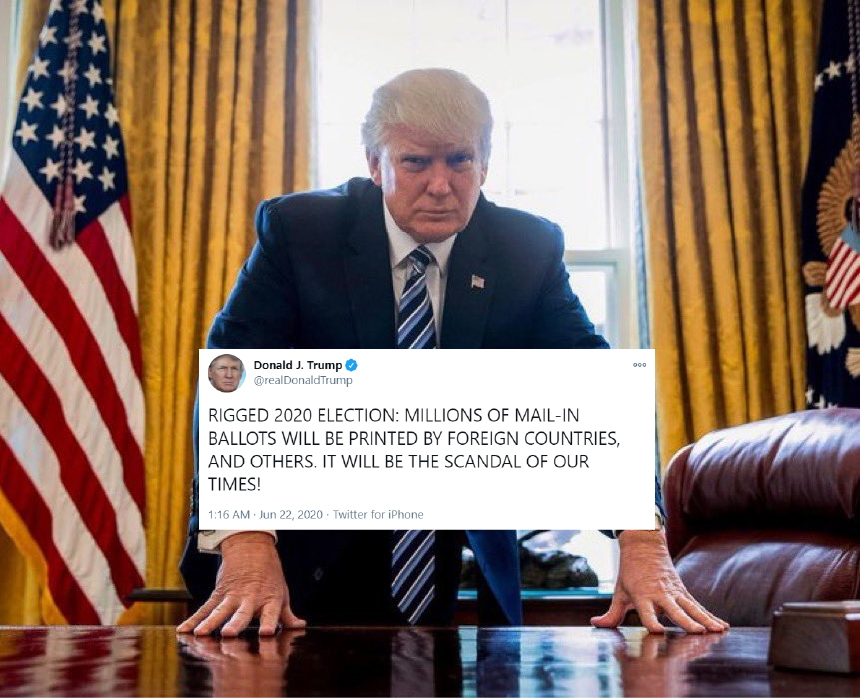
Trump's demonstrably false fraud nonsense - it derailed an emerging mandate news cycle. Winners of elections get what they get - institutional control - but can't expect much beyond that unless the perception of an election mandate takes hold. And it didn't. 4/

Let's turn to the legislation element of this. There's just an asymmetry in terms of passing a relief bill. Republicans are presumably less motivated to get some kind of deal passed. Democrats are more likely to want to do *something.* 5/

You May Also Like

“We don’t negotiate salaries” is a negotiation tactic.

Always. No, your company is not an exception.

A tactic I don’t appreciate at all because of how unfairly it penalizes low-leverage, junior employees, and those loyal enough not to question it, but that’s negotiation for you after all. Weaponized information asymmetry.

Listen to Aditya


And by the way, you should never be worried that an offer would be withdrawn if you politely negotiate.

I have seen this happen *extremely* rarely, mostly to women, and anyway is a giant red flag. It suggests you probably didn’t want to work there.

You wish there was no negotiating so it would all be more fair? I feel you, but it’s not happening.

Instead, negotiate hard, use your privilege, and then go and share numbers with your underrepresented and underpaid colleagues. […]
🌿𝑻𝒉𝒆 𝒔𝒕𝒐𝒓𝒚 𝒐𝒇 𝒂 𝑺𝒕𝒂𝒓 : 𝑫𝒉𝒓𝒖𝒗𝒂 & 𝑽𝒊𝒔𝒉𝒏𝒖

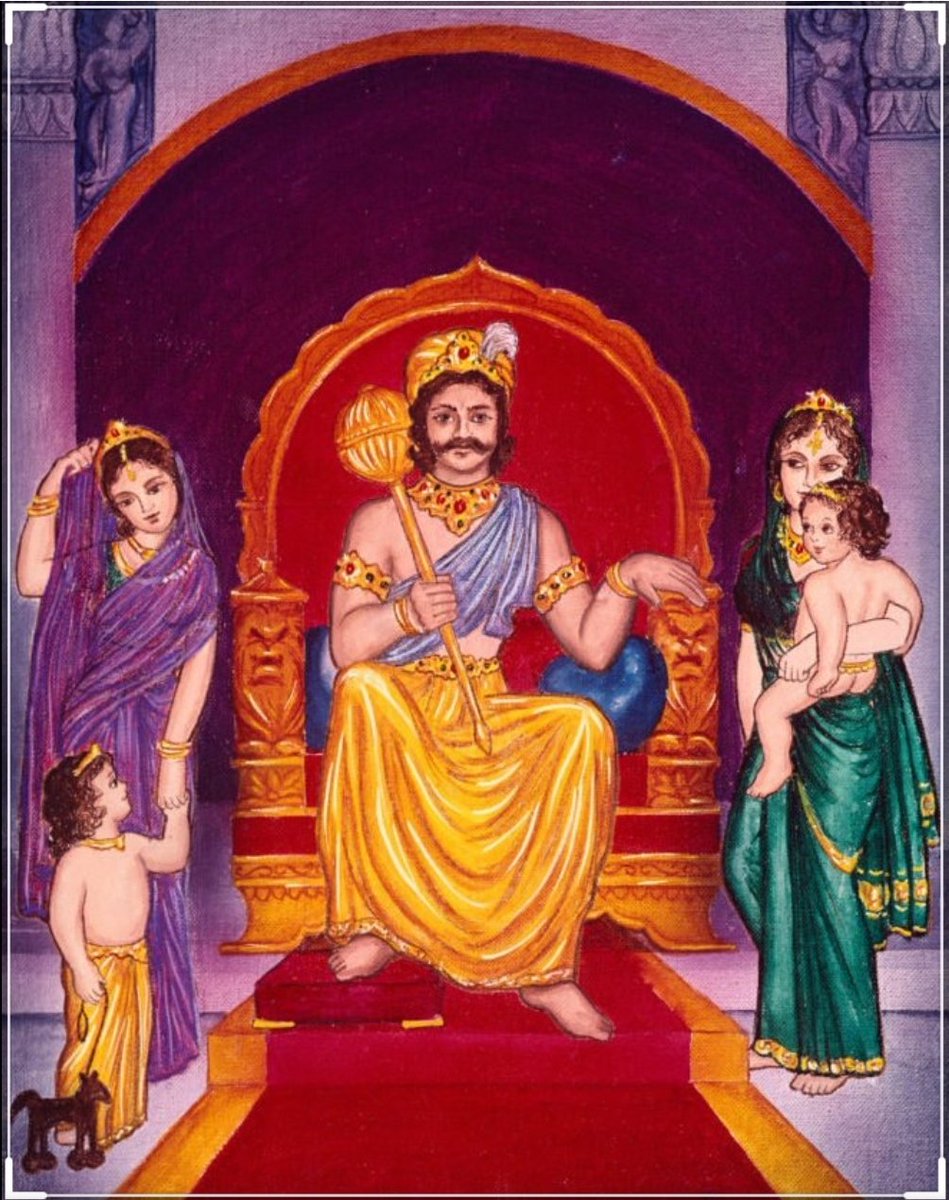
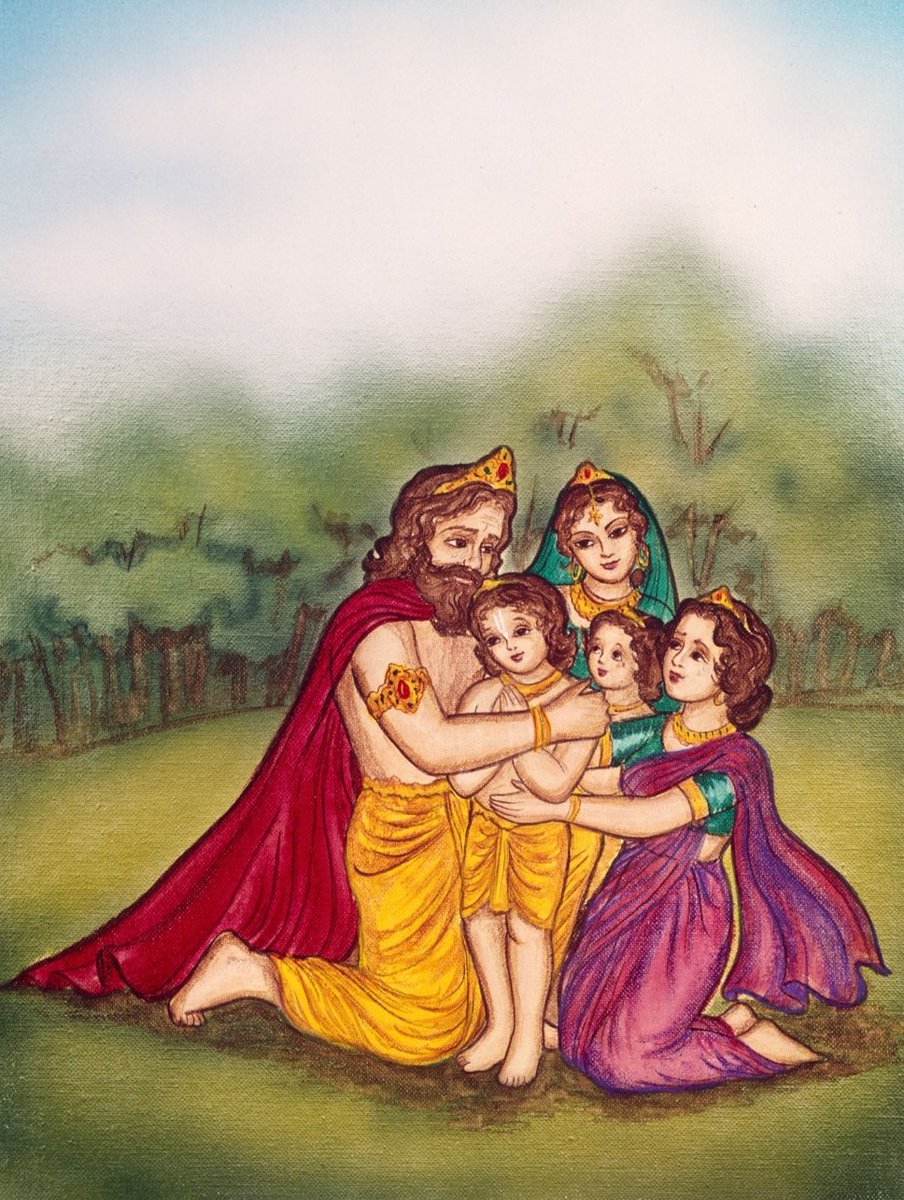
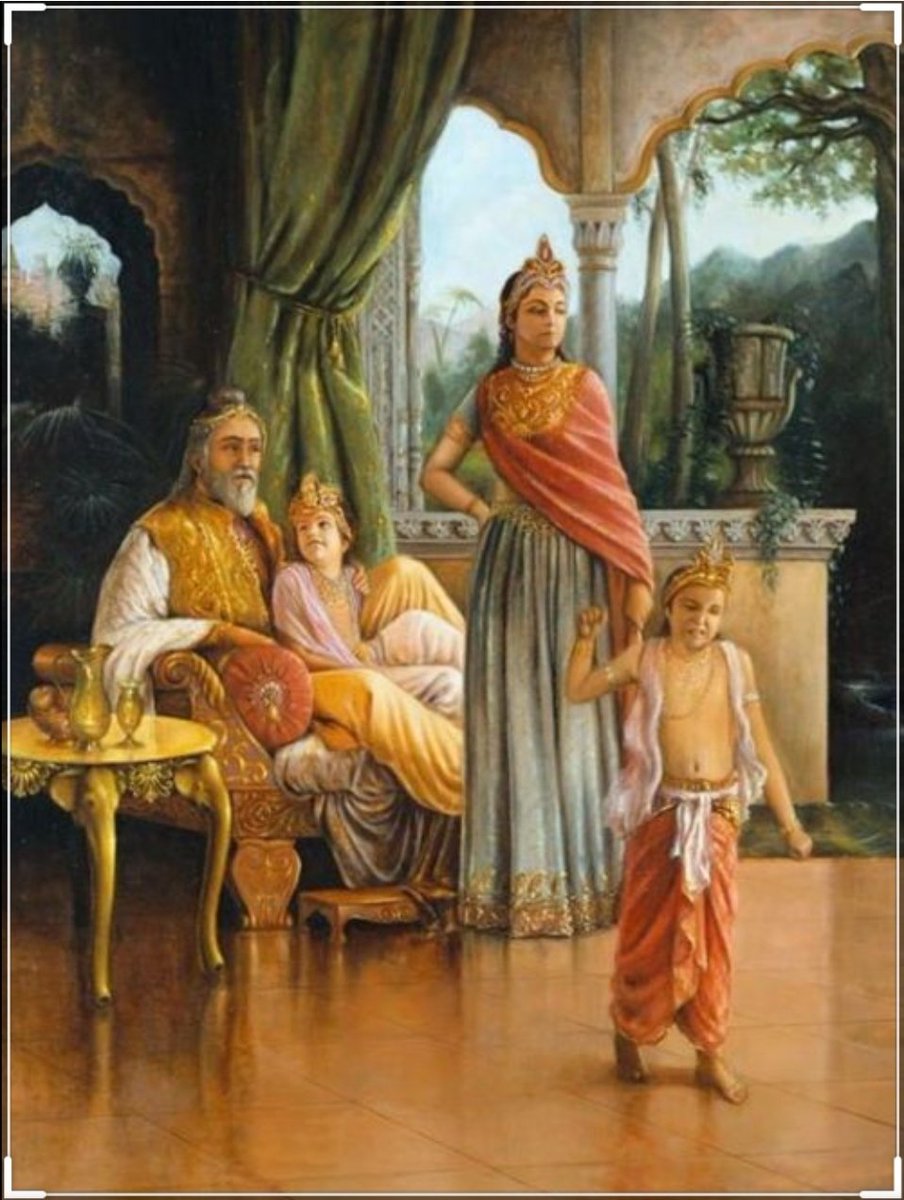
Once upon a time there was a Raja named Uttānapāda born of Svayambhuva Manu,1st man on earth.He had 2 beautiful wives - Suniti & Suruchi & two sons were born of them Dhruva & Uttama respectively.
#talesofkrishna https://t.co/E85MTPkF9W


Now Suniti was the daughter of a tribal chief while Suruchi was the daughter of a rich king. Hence Suruchi was always favored the most by Raja while Suniti was ignored. But while Suniti was gentle & kind hearted by nature Suruchi was venomous inside.
#KrishnaLeela


The story is of a time when ideally the eldest son of the king becomes the heir to the throne. Hence the sinhasan of the Raja belonged to Dhruva.This is why Suruchi who was the 2nd wife nourished poison in her heart for Dhruva as she knew her son will never get the throne.


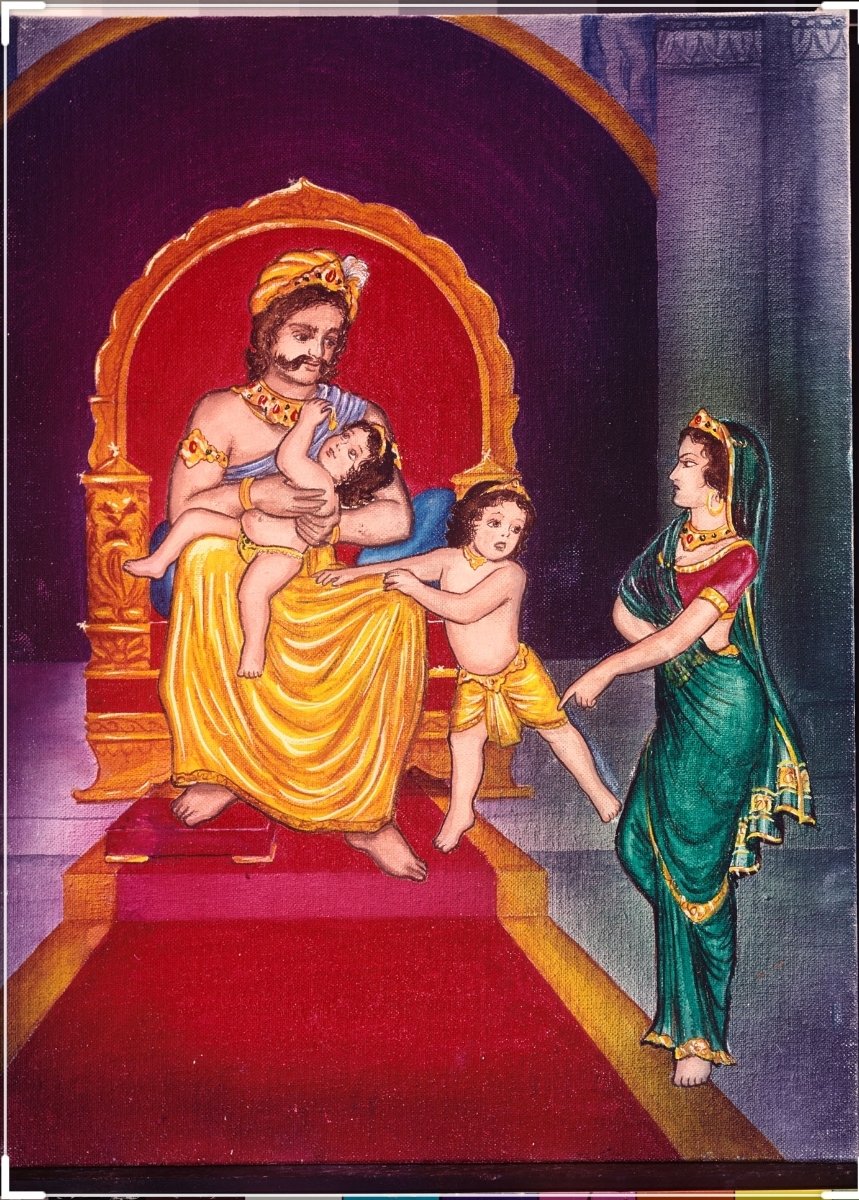
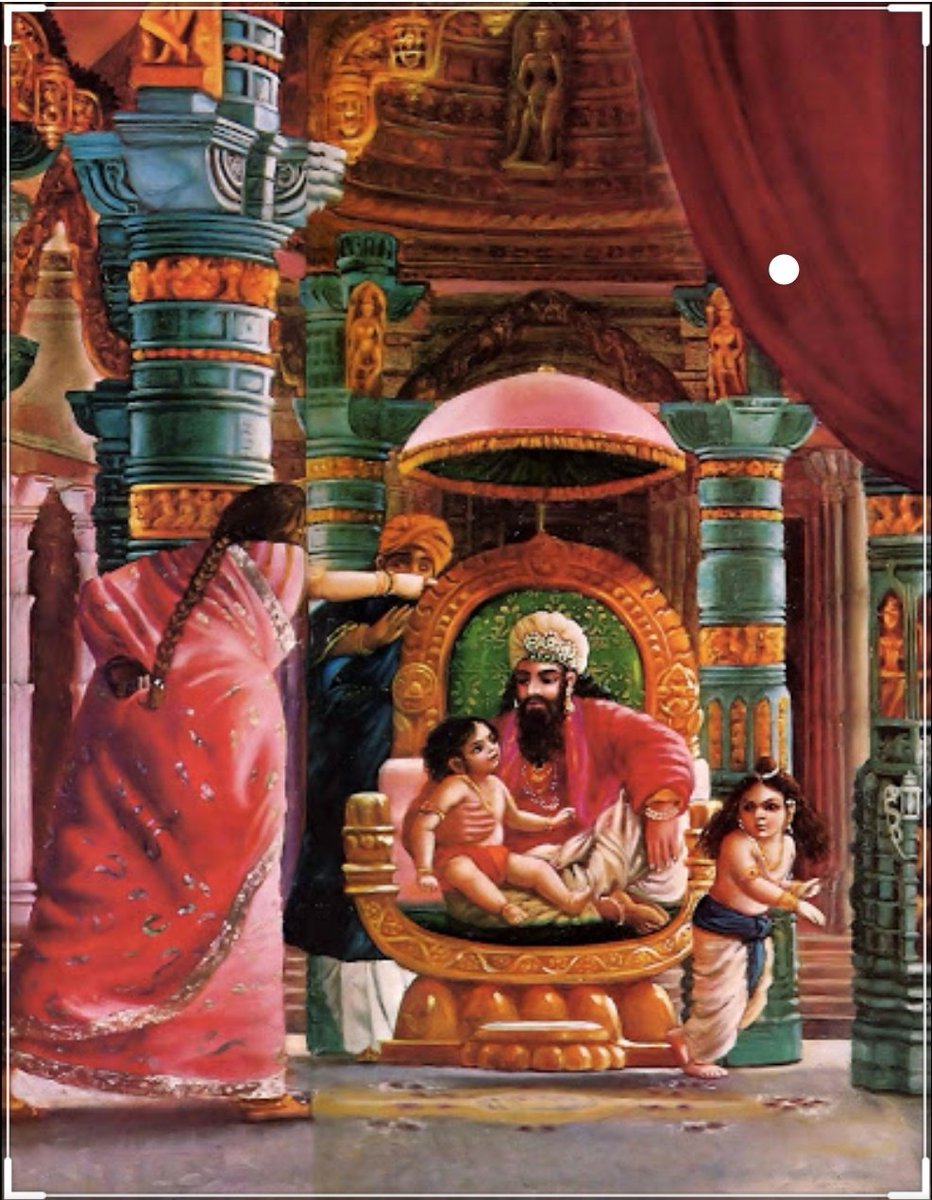
One day when Dhruva was just 5 years old he went on to sit on his father's lap. Suruchi, the jealous queen, got enraged and shoved him away from Raja as she never wanted Raja to shower Dhruva with his fatherly affection.


Dhruva protested questioning his step mother "why can't i sit on my own father's lap?" A furious Suruchi berated him saying "only God can allow him that privilege. Go ask him"
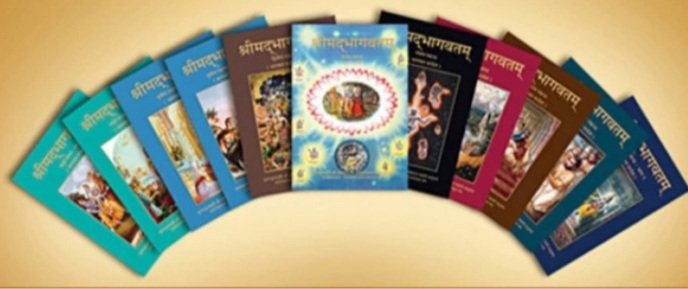
IMPORTANCE, ADVANTAGES AND CHARACTERISTICS OF BHAGWAT PURAN

It was Ved Vyas who edited the eighteen thousand shlokas of Bhagwat. This book destroys all your sins. It has twelve parts which are like kalpvraksh.

In the first skandh, the importance of Vedvyas


and characters of Pandavas are described by the dialogues between Suutji and Shaunakji. Then there is the story of Parikshit.
Next there is a Brahm Narad dialogue describing the avtaar of Bhagwan. Then the characteristics of Puraan are mentioned.

It also discusses the evolution of universe.(
https://t.co/2aK1AZSC79 )

Next is the portrayal of Vidur and his dialogue with Maitreyji. Then there is a mention of Creation of universe by Brahma and the preachings of Sankhya by Kapil Muni.


In the next section we find the portrayal of Sati, Dhruv, Pruthu, and the story of ancient King, Bahirshi.
In the next section we find the character of King Priyavrat and his sons, different types of loks in this universe, and description of Narak. ( https://t.co/gmDTkLktKS )


In the sixth part we find the portrayal of Ajaamil ( https://t.co/LdVSSNspa2 ), Daksh and the birth of Marudgans( https://t.co/tecNidVckj )

In the seventh section we find the story of Prahlad and the description of Varnashram dharma. This section is based on karma vaasna.