
Aim for Mediocrity
Standing on the cusp of 2021, life can be exhausting.
No matter where we look on social media, we will find people who seem wealthier, luckier, prettier, healthier, more popular, smarter, happier than us.
As highly ambitious people, what are we to do?
A solution to consider👇🏾
1) Aim to be mediocre at most things.
2) Celebrate this mediocrity.
3) Then focus on excellence at a few things.
4) Make sure those few things align with my passions, my strengths, and what the world needs.
contd.👇🏾
6) Find rewards in the act of getting better, not in immediate external feedback.
7) Get clarity on what rewards really matter.
8) Trust that those rewards will come.
9) Tweak my approach as I learn more.
Very few smart & ambitious people recognize this.
This isn’t about giving up or "being a loser".
It’s about recognizing that very few of the things that bring us lifelong anxiety actually matter, when all is said & done.
My answer:
Life principles.
I’ll leave you with some of my life principles below.
They are always work in progress, but the ones below have stayed stable for the past 3-4 years.
I am not saying these should be YOUR life principles or ANYONE’s life principles. Examples are useful for clear writing, so view them as merely an example of what’s worked/working for one person. If something resonates, consider adopting it. If something repels, ignore it
I do want to be the wisest person I personally know. To do this, I want to learn from everyone I come in contact with. Everyone.
I want to continue learning my craft as best as I possibly can.
(in my case, this craft is mainly product management)
(this principle has lasted the longest in my list, approximately the past 15 years)
I accept mediocrity in other aspects of my life.
Sometimes I’ll do better than mediocre (great)
Other times, I’ll do worse (not great, but fine)
Just be good-enough to avoid disaster.
https://t.co/caZwkypKAw
Standing on the cusp of 2021, life can be exhausting.
— Shreyas Doshi (@shreyas) December 28, 2020
No matter where we look on social media, we will find people who seem wealthier, luckier, prettier, healthier, more popular, smarter, happier than us.
As highly ambitious people, what are we to do?
A solution to consider\U0001f447\U0001f3fe
More from Shreyas Doshi
A thread of resources for aspiring & new Product Managers:
(should also be useful for Eng, Design, Data Science, Mktg, Ops folks who want to get better at PM work or want to build more empathy for your PM friends ☺️)
(oh, and pls also share *your* favorite resources below)
👇🏾
1/
Product Management - Start Here by @cagan
(hard to go wrong if you start with Marty Cagan’s
2/
Tips for Breaking into PM by @sriramk
(I’ve recommended this thread in my DMs more often than any other thread, by a pretty wide
3/
Top 100 Product Management Resources by @sachinrekhi
(well-categorized index so you can focus on whatever’s most useful right
4/
Brief interruption.
It’s important to understand your preferred learning style and go all in on that learning style (vs. struggling / procrastinating as you force a non-preferred learning
(should also be useful for Eng, Design, Data Science, Mktg, Ops folks who want to get better at PM work or want to build more empathy for your PM friends ☺️)
(oh, and pls also share *your* favorite resources below)
👇🏾
1/
Product Management - Start Here by @cagan
(hard to go wrong if you start with Marty Cagan’s
2/
Tips for Breaking into PM by @sriramk
(I’ve recommended this thread in my DMs more often than any other thread, by a pretty wide
Breaking into PMing - a \U0001f9f5 // A question folks from eng/design/other functions often have how to become a PM in a tech co.
— Sriram Krishnan (@sriramk) April 14, 2020
It can seem non-obvious and differs with each company but here are some patterns I've seen work. All the below assumes you have no PMing on your resume.
3/
Top 100 Product Management Resources by @sachinrekhi
(well-categorized index so you can focus on whatever’s most useful right
4/
Brief interruption.
It’s important to understand your preferred learning style and go all in on that learning style (vs. struggling / procrastinating as you force a non-preferred learning
There is no One Correct Way\u2122 to learn
— Shreyas Doshi (@shreyas) August 15, 2020
Don\u2019t feel pressured to read 70 books/year just becos Super-Successful Person X does that
Videos, Podcasts, Audiobooks, Discussions\u2014all are fine
What to do:
Understand your preferred learning style
Don't resist it, embrace it
Commit to it
🗓️Recap of March 2021 content
Includes:
Solve THE problem
3 types of product leaders
Levels of product work
Getting work done
“I don’t know”
Good people, bad managers
Customer segmentation
LinkedIn Envy
On communication
Important definitions
Life-changing books
& much more..
👇🏾
A story that often plays out when we are not rigorous enough about the importance of the customer problem our product
The 3 types / hats / modes of product
An extremely important observation about product
A thread on getting work
Includes:
Solve THE problem
3 types of product leaders
Levels of product work
Getting work done
“I don’t know”
Good people, bad managers
Customer segmentation
LinkedIn Envy
On communication
Important definitions
Life-changing books
& much more..
👇🏾
A story that often plays out when we are not rigorous enough about the importance of the customer problem our product
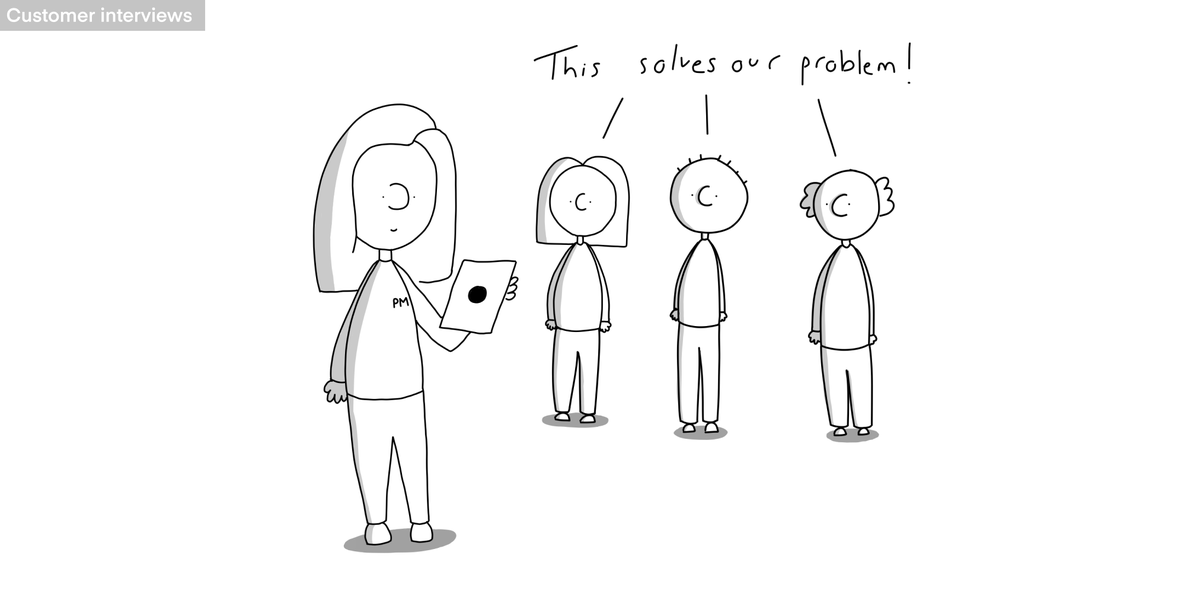
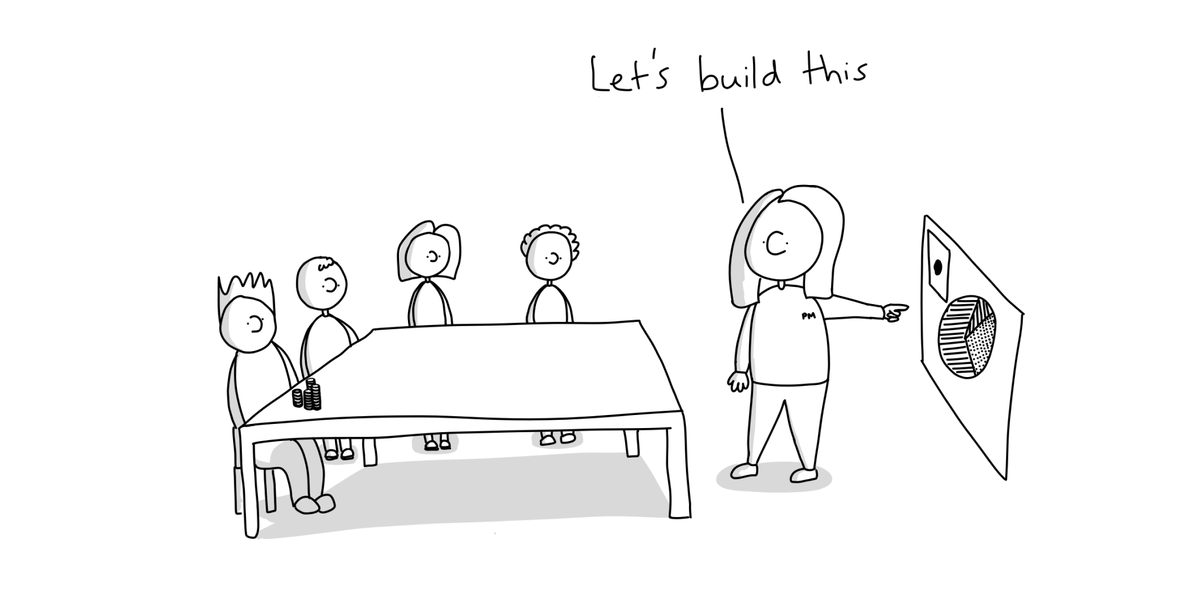
A B2B Product Management Story: on discovering problems that customers actually care about
— Shreyas Doshi (@shreyas) March 28, 2021
Very visual story thread\U0001f447\U0001f3fe pic.twitter.com/SQKpmLtBGC
The 3 types / hats / modes of product
3 types of product leaders:
— Shreyas Doshi (@shreyas) March 26, 2021
1) The Operator
2) The Craftsperson
3) The Visionary
It is important for you as a startup founder or CEO, product manager, or a product leader to deeply understand these types, as you make decisions on whom to hire or whom to work for.
Thread\U0001f447\U0001f3fe
An extremely important observation about product
There are 3 levels to product work
— Shreyas Doshi (@shreyas) March 12, 2021
(1) The Execution level
(2) The Impact level
(3) The Optics level
When an individual & their team are fixated on different levels, often there is conflict.
E.g.
PM is fixated on (2), Team on (1)
PM on (3), Team on (2)
PM on (2), Team on (3)
A thread on getting work
How I like to plan my work:
— Shreyas Doshi (@shreyas) March 17, 2021
Limit meetings
\u21d2 Long scheduled work blocks
At end of the work day, plan next day
\u21d2 Easier to disconnect, be present
Fit the next day's tasks in calendar
\u21d2 Forces prioritizing
Plan next week on Friday evening
\u21d2 Go into weekend with a clear mind
More from Life



This month I’m turning 22.
To celebrate, here are the 22 best threads I’ve found on Twitter this year.
Mostly about:
•Life/purpose
•Startups
•Entrepreneurs
•Writing
•Clarity of thought
If I see more interesting threads, I will add to this list.
Enjoy!
1. @ryanstephens: Need tips on growing a newsletter, mastering Twitter, writing online?
@ryanstephens breaks down a podcast discussion between @davidperell and @nathanbarry
Here’s what you can
2. @jackbutcher: How to separate your time from your income
•Explore the market
•Build equity
•Build products and services
•Scale your reputation
•Break the matrix
A fantastic thread complete with helpful
3. @AlexAndBooks_: I love to read.
Here is a great thread on 10 fantastic books.
Includes a short summary of each.
Don’t just take it from me, this is straight from the legend: @AlexAndBooks_
4. @m_franceschetti My biggest revelation in 2020 was the importance of sleep.
Here, @m_franceschetti founder of @eightsleep gives us his eight sleep hacks to improve sleep for 2021.
Do these and your productivity will
To celebrate, here are the 22 best threads I’ve found on Twitter this year.
Mostly about:
•Life/purpose
•Startups
•Entrepreneurs
•Writing
•Clarity of thought
If I see more interesting threads, I will add to this list.
Enjoy!
1. @ryanstephens: Need tips on growing a newsletter, mastering Twitter, writing online?
@ryanstephens breaks down a podcast discussion between @davidperell and @nathanbarry
Here’s what you can
"The Writing Guy" @david_perell recently joined the re-launch of @Nathanbarry's podcast to discuss growing your newsletter, mastering Twitter, writing online and monetizing your efforts.
— Ryan Stephens \U0001f943 (@ryanstephens) December 16, 2020
Here's what you can learn from him.
THREAD
2. @jackbutcher: How to separate your time from your income
•Explore the market
•Build equity
•Build products and services
•Scale your reputation
•Break the matrix
A fantastic thread complete with helpful
Divorce your time and income: (thread)
— Jack Butcher (@jackbutcher) July 18, 2020
3. @AlexAndBooks_: I love to read.
Here is a great thread on 10 fantastic books.
Includes a short summary of each.
Don’t just take it from me, this is straight from the legend: @AlexAndBooks_
I read 55 books in 2020.
— Alex and Books \U0001f4da (@AlexAndBooks_) December 29, 2020
Here are my top 10 favorites and a short summary of each.
(thread) \U0001f9f5 pic.twitter.com/yRyOFEygQ0
4. @m_franceschetti My biggest revelation in 2020 was the importance of sleep.
Here, @m_franceschetti founder of @eightsleep gives us his eight sleep hacks to improve sleep for 2021.
Do these and your productivity will
Sleep is always my top priority, and will continue to be in 2021. It is foundational to all health.
— Matteo Franceschetti (@m_franceschetti) January 4, 2021
I\u2019ve compiled a list of my top 8 sleep hacks that I use everyday to improve my sleep. If you are trying to improve your sleep in 2021, this thread is for you. \U0001f447
You May Also Like

“We don’t negotiate salaries” is a negotiation tactic.
Always. No, your company is not an exception.
A tactic I don’t appreciate at all because of how unfairly it penalizes low-leverage, junior employees, and those loyal enough not to question it, but that’s negotiation for you after all. Weaponized information asymmetry.
Listen to Aditya
And by the way, you should never be worried that an offer would be withdrawn if you politely negotiate.
I have seen this happen *extremely* rarely, mostly to women, and anyway is a giant red flag. It suggests you probably didn’t want to work there.
You wish there was no negotiating so it would all be more fair? I feel you, but it’s not happening.
Instead, negotiate hard, use your privilege, and then go and share numbers with your underrepresented and underpaid colleagues. […]
Always. No, your company is not an exception.
A tactic I don’t appreciate at all because of how unfairly it penalizes low-leverage, junior employees, and those loyal enough not to question it, but that’s negotiation for you after all. Weaponized information asymmetry.
Listen to Aditya
"we don't negotiate salaries" really means "we'd prefer to negotiate massive signing bonuses and equity grants, but we'll negotiate salary if you REALLY insist" https://t.co/80k7nWAMoK
— Aditya Mukerjee, the Otterrific \U0001f3f3\ufe0f\u200d\U0001f308 (@chimeracoder) December 4, 2018
And by the way, you should never be worried that an offer would be withdrawn if you politely negotiate.
I have seen this happen *extremely* rarely, mostly to women, and anyway is a giant red flag. It suggests you probably didn’t want to work there.
You wish there was no negotiating so it would all be more fair? I feel you, but it’s not happening.
Instead, negotiate hard, use your privilege, and then go and share numbers with your underrepresented and underpaid colleagues. […]






1/ Here’s a list of conversational frameworks I’ve picked up that have been helpful.
Please add your own.
2/ The Magic Question: "What would need to be true for you
3/ On evaluating where someone’s head is at regarding a topic they are being wishy-washy about or delaying.
“Gun to the head—what would you decide now?”
“Fast forward 6 months after your sabbatical--how would you decide: what criteria is most important to you?”
4/ Other Q’s re: decisions:
“Putting aside a list of pros/cons, what’s the *one* reason you’re doing this?” “Why is that the most important reason?”
“What’s end-game here?”
“What does success look like in a world where you pick that path?”
5/ When listening, after empathizing, and wanting to help them make their own decisions without imposing your world view:
“What would the best version of yourself do”?
Please add your own.
2/ The Magic Question: "What would need to be true for you
1/\u201cWhat would need to be true for you to\u2026.X\u201d
— Erik Torenberg (@eriktorenberg) December 4, 2018
Why is this the most powerful question you can ask when attempting to reach an agreement with another human being or organization?
A thread, co-written by @deanmbrody: https://t.co/Yo6jHbSit9
3/ On evaluating where someone’s head is at regarding a topic they are being wishy-washy about or delaying.
“Gun to the head—what would you decide now?”
“Fast forward 6 months after your sabbatical--how would you decide: what criteria is most important to you?”
4/ Other Q’s re: decisions:
“Putting aside a list of pros/cons, what’s the *one* reason you’re doing this?” “Why is that the most important reason?”
“What’s end-game here?”
“What does success look like in a world where you pick that path?”
5/ When listening, after empathizing, and wanting to help them make their own decisions without imposing your world view:
“What would the best version of yourself do”?