"They'd ruin everybody's life until they ran the whole system off a cliff."
When I was a kid, I played Deus Ex. I was about 17 years old at the time.
I was able to understand that DX was a cartoon version of its subject matter. But it nonetheless captured my imagination, asking
"What if the entire planet could be managed by mere mortals?"

"They'd ruin everybody's life until they ran the whole system off a cliff."
It was appealing. To imagine at least that someone was in a driver's seat.
Somewhere.
There are, literally, clubs. The Ivy League buys little hangouts in different major cities, so alums can efficiently transact that lucrative network. There's douchier, nouveau riche versions of the same. Cliques, associations, name it.
In practice, there's no global board of directors. The system isn't that tidy. It's all the chaotic grasping of people desperate to keep themselves safe, and therefore powerful.
The alignment of the elites is emergent.
They don't need to meet.
They don't need cloak and dagger coordination, though surely alliances form and shatter over time.
They just want all the same, basic things.
The world works as it does because of this simple fact.
Even the wealthy people who disagree don't fundamentally want to demolish the system over those disagreements because that would risk their comfort and safety
Money, power, they're the same substance in different states, like ice and water:
Ability to survive.
That is the circuitry that has been honed on a timescale so vast that it will make your head cave in. It's mundane to us because we all have a version of the code.
When guys are keeping so much money for themselves at the pointless expense of the workers who keep the machine running, that's illness.
Wealth collides with automation to gobble up resources and redirect them out of the larger system for narrow, dubious benefit.
All these brains, all this basic human attachment to justice and fairness—you need stories to manage, to justify, the inequality.
So nothing needs to change.
You need hate to justify excluding people from their fair share of the resources. So you decide they don't deserve it. Come up with reasons their judgment and values created their poverty and powerlessness.
So they fucking HATE AOC because she won't play ball. She's sitting there, unapologetic, demanding a fair share for people like her.
https://t.co/eiV5P6LmVg
Some of these folks just really hate her so much. It\u2019s not even a stretch, the conclusion of this chain. And that tweet drips with disdain. pic.twitter.com/sZ7qnLgFA9
— Karla Monterroso (@karlitaliliana) December 19, 2020
Because if these women, none of whom are white, are correct about how we've shared the wealth in this country...
That's it. The status quo has been illegitimate forever.
More from Life

THREAD: 12 Things Everyone Should Know About IQ
1. IQ is one of the most heritable psychological traits – that is, individual differences in IQ are strongly associated with individual differences in genes (at least in fairly typical modern environments). https://t.co/3XxzW9bxLE
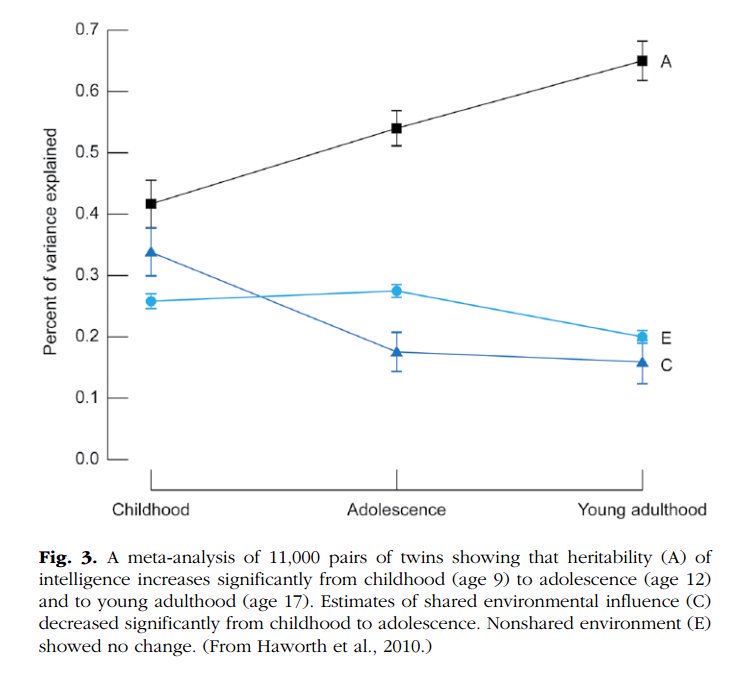
2. The heritability of IQ *increases* from childhood to adulthood. Meanwhile, the effect of the shared environment largely fades away. In other words, when it comes to IQ, nature becomes more important as we get older, nurture less. https://t.co/UqtS1lpw3n
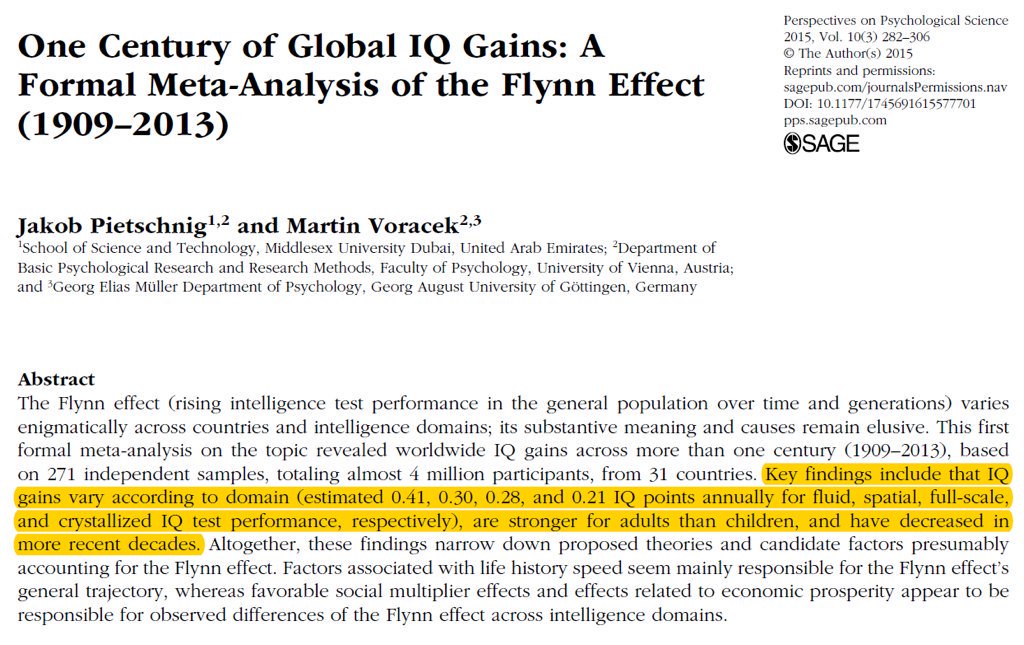
3. IQ scores have been increasing for the last century or so, a phenomenon known as the Flynn effect. https://t.co/sCZvCst3hw (N ≈ 4 million)
(Note that the Flynn effect shows that IQ isn't 100% genetic; it doesn't show that it's 100% environmental.)
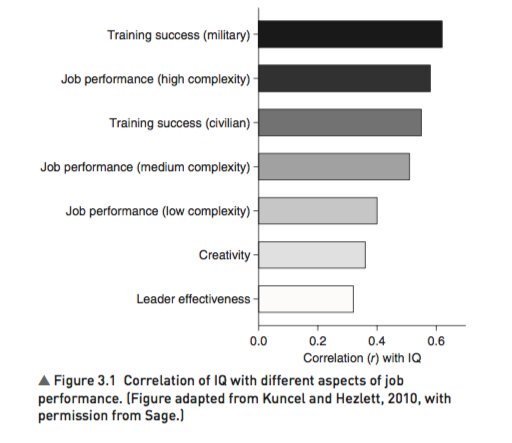
4. IQ predicts many important real world outcomes.
For example, though far from perfect, IQ is the single-best predictor of job performance we have – much better than Emotional Intelligence, the Big Five, Grit, etc. https://t.co/rKUgKDAAVx https://t.co/DWbVI8QSU3
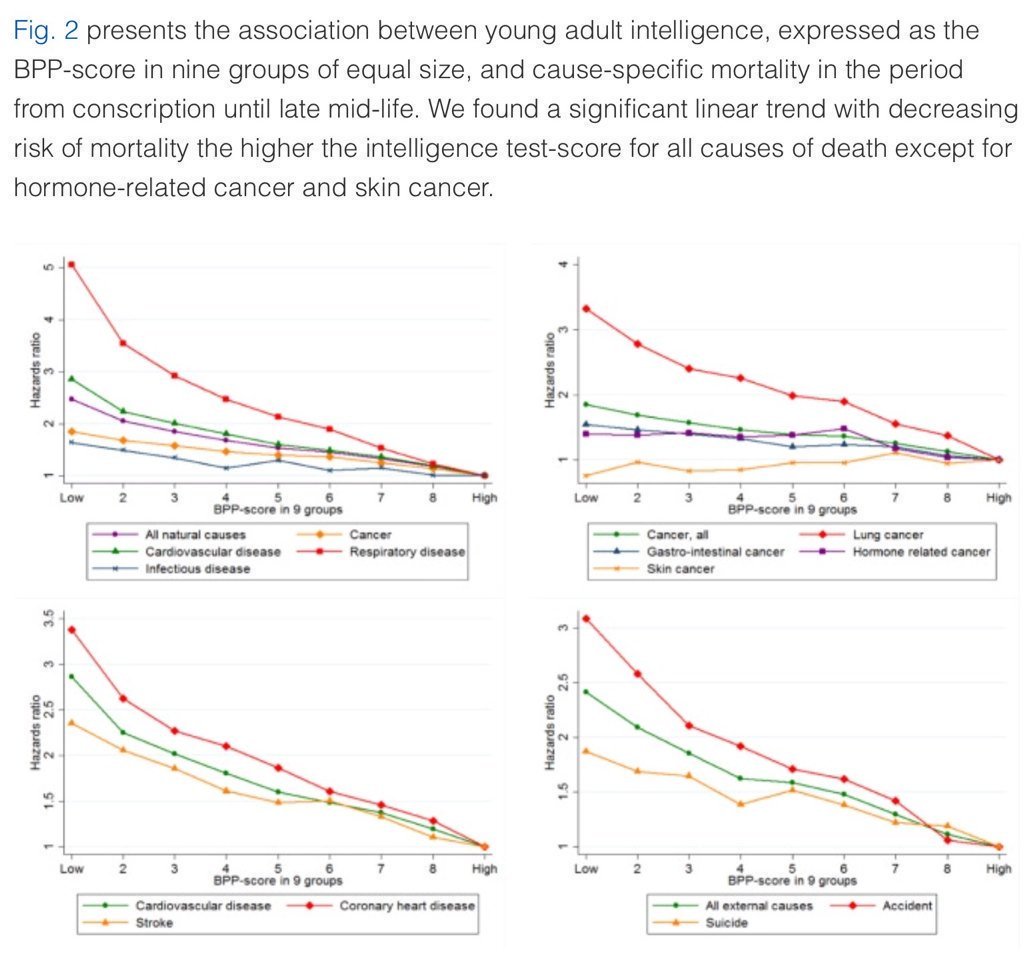
5. Higher IQ is associated with a lower risk of death from most causes, including cardiovascular disease, respiratory disease, most forms of cancer, homicide, suicide, and accident. https://t.co/PJjGNyeQRA (N = 728,160)
1. IQ is one of the most heritable psychological traits – that is, individual differences in IQ are strongly associated with individual differences in genes (at least in fairly typical modern environments). https://t.co/3XxzW9bxLE
2. The heritability of IQ *increases* from childhood to adulthood. Meanwhile, the effect of the shared environment largely fades away. In other words, when it comes to IQ, nature becomes more important as we get older, nurture less. https://t.co/UqtS1lpw3n
3. IQ scores have been increasing for the last century or so, a phenomenon known as the Flynn effect. https://t.co/sCZvCst3hw (N ≈ 4 million)
(Note that the Flynn effect shows that IQ isn't 100% genetic; it doesn't show that it's 100% environmental.)
4. IQ predicts many important real world outcomes.
For example, though far from perfect, IQ is the single-best predictor of job performance we have – much better than Emotional Intelligence, the Big Five, Grit, etc. https://t.co/rKUgKDAAVx https://t.co/DWbVI8QSU3
5. Higher IQ is associated with a lower risk of death from most causes, including cardiovascular disease, respiratory disease, most forms of cancer, homicide, suicide, and accident. https://t.co/PJjGNyeQRA (N = 728,160)