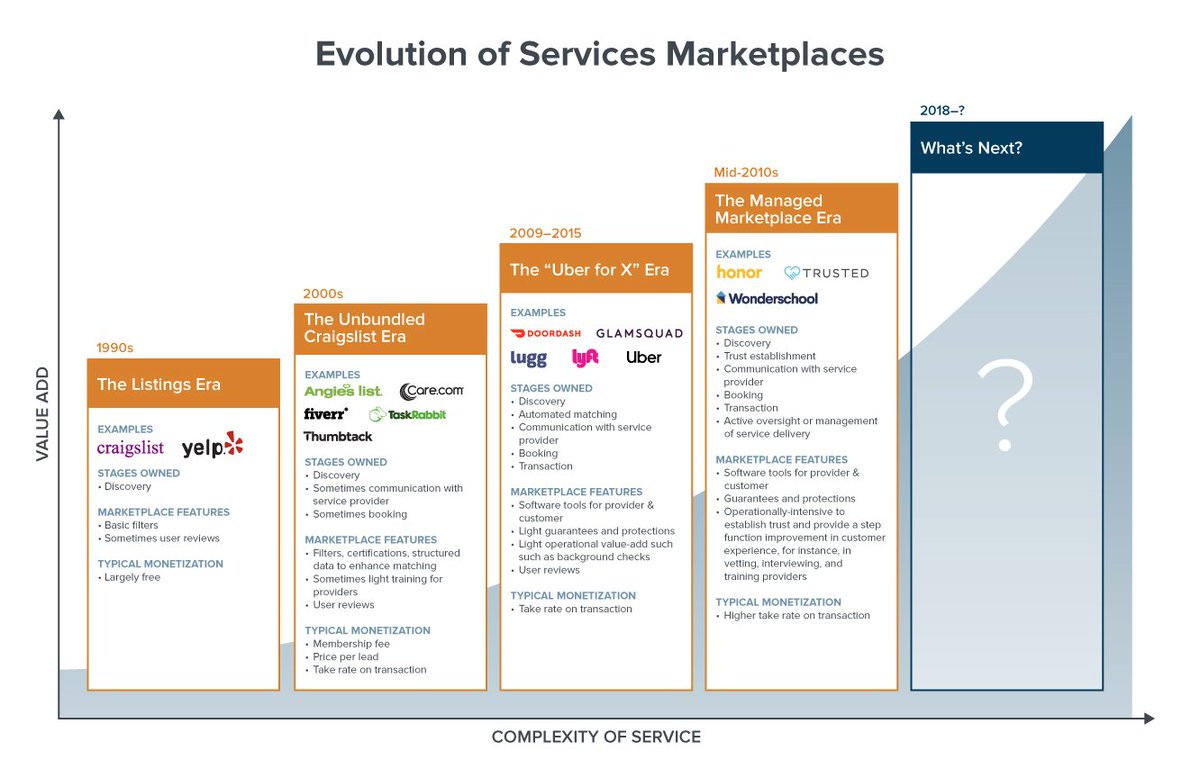
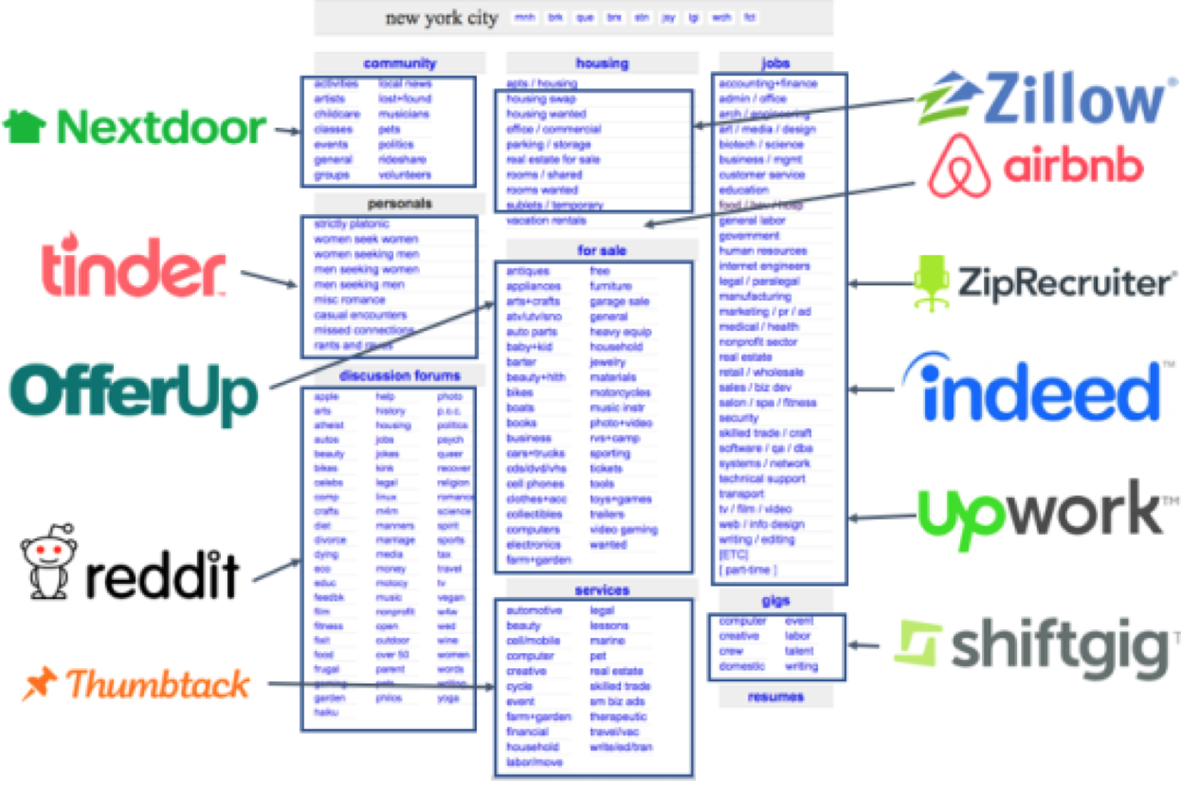
There is this inertia that most people in business who think they are successful have that prevents them from acting on things until it is too late. It is why they are caught unawares by change.
I read ”Only the paranoid survives” and I am seeing it play out in real life again.

More from Osaretin Victor Asemota

More from Life


This month I’m turning 22.
To celebrate, here are the 22 best threads I’ve found on Twitter this year.
Mostly about:
•Life/purpose
•Startups
•Entrepreneurs
•Writing
•Clarity of thought
If I see more interesting threads, I will add to this list.
Enjoy!
1. @ryanstephens: Need tips on growing a newsletter, mastering Twitter, writing online?
@ryanstephens breaks down a podcast discussion between @davidperell and @nathanbarry
Here’s what you can
2. @jackbutcher: How to separate your time from your income
•Explore the market
•Build equity
•Build products and services
•Scale your reputation
•Break the matrix
A fantastic thread complete with helpful
3. @AlexAndBooks_: I love to read.
Here is a great thread on 10 fantastic books.
Includes a short summary of each.
Don’t just take it from me, this is straight from the legend: @AlexAndBooks_
4. @m_franceschetti My biggest revelation in 2020 was the importance of sleep.
Here, @m_franceschetti founder of @eightsleep gives us his eight sleep hacks to improve sleep for 2021.
Do these and your productivity will
To celebrate, here are the 22 best threads I’ve found on Twitter this year.
Mostly about:
•Life/purpose
•Startups
•Entrepreneurs
•Writing
•Clarity of thought
If I see more interesting threads, I will add to this list.
Enjoy!
1. @ryanstephens: Need tips on growing a newsletter, mastering Twitter, writing online?
@ryanstephens breaks down a podcast discussion between @davidperell and @nathanbarry
Here’s what you can
"The Writing Guy" @david_perell recently joined the re-launch of @Nathanbarry's podcast to discuss growing your newsletter, mastering Twitter, writing online and monetizing your efforts.
— Ryan Stephens \U0001f943 (@ryanstephens) December 16, 2020
Here's what you can learn from him.
THREAD
2. @jackbutcher: How to separate your time from your income
•Explore the market
•Build equity
•Build products and services
•Scale your reputation
•Break the matrix
A fantastic thread complete with helpful
Divorce your time and income: (thread)
— Jack Butcher (@jackbutcher) July 18, 2020
3. @AlexAndBooks_: I love to read.
Here is a great thread on 10 fantastic books.
Includes a short summary of each.
Don’t just take it from me, this is straight from the legend: @AlexAndBooks_
I read 55 books in 2020.
— Alex and Books \U0001f4da (@AlexAndBooks_) December 29, 2020
Here are my top 10 favorites and a short summary of each.
(thread) \U0001f9f5 pic.twitter.com/yRyOFEygQ0
4. @m_franceschetti My biggest revelation in 2020 was the importance of sleep.
Here, @m_franceschetti founder of @eightsleep gives us his eight sleep hacks to improve sleep for 2021.
Do these and your productivity will
Sleep is always my top priority, and will continue to be in 2021. It is foundational to all health.
— Matteo Franceschetti (@m_franceschetti) January 4, 2021
I\u2019ve compiled a list of my top 8 sleep hacks that I use everyday to improve my sleep. If you are trying to improve your sleep in 2021, this thread is for you. \U0001f447
You May Also Like




MASTER THREAD on Short Strangles.
Curated the best tweets from the best traders who are exceptional at managing strangles.
• Positional Strangles
• Intraday Strangles
• Position Sizing
• How to do Adjustments
• Plenty of Examples
• When to avoid
• Exit Criteria
How to sell Strangles in weekly expiry as explained by boss himself. @Mitesh_Engr
• When to sell
• How to do Adjustments
• Exit
Beautiful explanation on positional option selling by @Mitesh_Engr
Sir on how to sell low premium strangles yourself without paying anyone. This is a free mini course in
1st Live example of managing a strangle by Mitesh Sir. @Mitesh_Engr
• Sold Strangles 20% cap used
• Added 20% cap more when in profit
• Booked profitable leg and rolled up
• Kept rolling up profitable leg
• Booked loss in calls
• Sold only
2nd example by @Mitesh_Engr Sir on converting a directional trade into strangles. Option Sellers can use this for consistent profit.
• Identified a reversal and sold puts
• Puts decayed a lot
• When achieved 2% profit through puts then sold
Curated the best tweets from the best traders who are exceptional at managing strangles.
• Positional Strangles
• Intraday Strangles
• Position Sizing
• How to do Adjustments
• Plenty of Examples
• When to avoid
• Exit Criteria
How to sell Strangles in weekly expiry as explained by boss himself. @Mitesh_Engr
• When to sell
• How to do Adjustments
• Exit
1. Let's start option selling learning.
— Mitesh Patel (@Mitesh_Engr) February 10, 2019
Strangle selling. ( I am doing mostly in weekly Bank Nifty)
When to sell? When VIX is below 15
Assume spot is at 27500
Sell 27100 PE & 27900 CE
say premium for both 50-50
If bank nifty will move in narrow range u will get profit from both.
Beautiful explanation on positional option selling by @Mitesh_Engr
Sir on how to sell low premium strangles yourself without paying anyone. This is a free mini course in
Few are selling 20-25 Rs positional option selling course.
— Mitesh Patel (@Mitesh_Engr) November 3, 2019
Nothing big deal in that.
For selling weekly option just identify last week low and high.
Now from that low and high keep 1-1.5% distance from strike.
And sell option on both side.
1/n
1st Live example of managing a strangle by Mitesh Sir. @Mitesh_Engr
• Sold Strangles 20% cap used
• Added 20% cap more when in profit
• Booked profitable leg and rolled up
• Kept rolling up profitable leg
• Booked loss in calls
• Sold only
Sold 29200 put and 30500 call
— Mitesh Patel (@Mitesh_Engr) April 12, 2019
Used 20% capital@44 each
2nd example by @Mitesh_Engr Sir on converting a directional trade into strangles. Option Sellers can use this for consistent profit.
• Identified a reversal and sold puts
• Puts decayed a lot
• When achieved 2% profit through puts then sold
Already giving more than 2% return in a week. Now I will prefer to sell 32500 call at 74 to make it strangle in equal ratio.
— Mitesh Patel (@Mitesh_Engr) February 7, 2020
To all. This is free learning for you. How to play option to make consistent return.
Stay tuned and learn it here free of cost. https://t.co/7J7LC86oW0