
First off, my preferred style of investing is more influenced by macro than micro (macroeconomics vs company specific).
THREAD, PM EXIT STRATEGY
I sometimes get the question “At what price do I liquidate my PM portfolio?” The short answer is:
A) I´ll never sell all of it
and
B) I don´t have a PT. I could start selling at $1900 or at $100000, it depends.
For the longer explanation, 👇
First off, my preferred style of investing is more influenced by macro than micro (macroeconomics vs company specific).
I frequently look at certain ratios, or said another way, instrument X relative to instrument Y.

More from Investing




How to screen for stocks in the Microcap/Smallcap space?
Look for the following:
1. PE < 15
2. Low debt
3. Low Float
4. No Analyst Coverage
5. High Promoter Holding
6. Recent Promoter Buying
7. High Operating Leverage
8. Conservative Management
9. Blockbuster Earnings Release
What more you should look at?
Read this post, the quote retweets to this and the
Look for the following:
1. PE < 15
2. Low debt
3. Low Float
4. No Analyst Coverage
5. High Promoter Holding
6. Recent Promoter Buying
7. High Operating Leverage
8. Conservative Management
9. Blockbuster Earnings Release
What more you should look at?
Read this post, the quote retweets to this and the
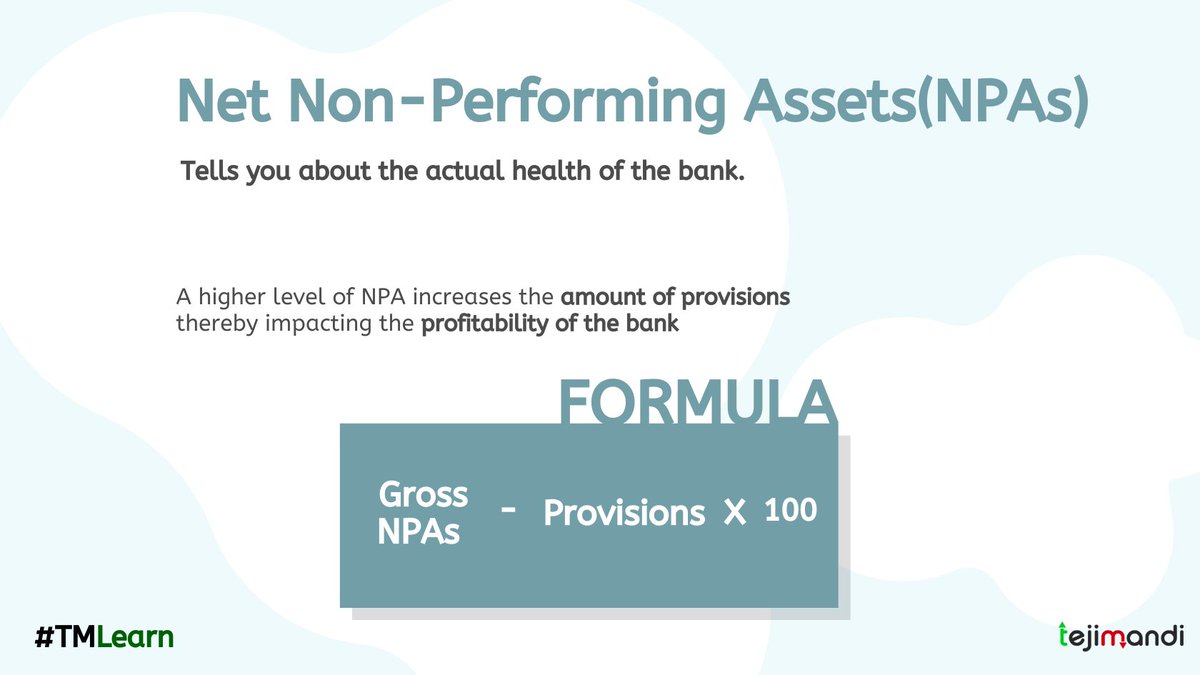
Things I look at before Investing:
— The Disciplined Investor (@Disciplined_Inv) August 27, 2021
Profitable \u2013 Free Cash Flow
Healthy \u2013 Interest Coverage
Quality \u2013 ROCE, ROA, Margins
Valuation \u2013 EV/EBITDA, FCF Yield
Governance \u2013 Dividend, Buybacks
Efficiency \u2013 Cash Conversion Cycle
Growth \u2013 Source of Funds for CAPEX
What do you look at?

You May Also Like








Recently, the @CNIL issued a decision regarding the GDPR compliance of an unknown French adtech company named "Vectaury". It may seem like small fry, but the decision has potential wide-ranging impacts for Google, the IAB framework, and today's adtech. It's thread time! 👇
It's all in French, but if you're up for it you can read:
• Their blog post (lacks the most interesting details): https://t.co/PHkDcOT1hy
• Their high-level legal decision: https://t.co/hwpiEvjodt
• The full notification: https://t.co/QQB7rfynha
I've read it so you needn't!
Vectaury was collecting geolocation data in order to create profiles (eg. people who often go to this or that type of shop) so as to power ad targeting. They operate through embedded SDKs and ad bidding, making them invisible to users.
The @CNIL notes that profiling based off of geolocation presents particular risks since it reveals people's movements and habits. As risky, the processing requires consent — this will be the heart of their assessment.
Interesting point: they justify the decision in part because of how many people COULD be targeted in this way (rather than how many have — though they note that too). Because it's on a phone, and many have phones, it is considered large-scale processing no matter what.
It's all in French, but if you're up for it you can read:
• Their blog post (lacks the most interesting details): https://t.co/PHkDcOT1hy
• Their high-level legal decision: https://t.co/hwpiEvjodt
• The full notification: https://t.co/QQB7rfynha
I've read it so you needn't!
Vectaury was collecting geolocation data in order to create profiles (eg. people who often go to this or that type of shop) so as to power ad targeting. They operate through embedded SDKs and ad bidding, making them invisible to users.
The @CNIL notes that profiling based off of geolocation presents particular risks since it reveals people's movements and habits. As risky, the processing requires consent — this will be the heart of their assessment.
Interesting point: they justify the decision in part because of how many people COULD be targeted in this way (rather than how many have — though they note that too). Because it's on a phone, and many have phones, it is considered large-scale processing no matter what.