A car with a 12 month waiting period in the 80s ruled the Indian roads for over 3 decades

A thread on Ambassador cars 🧵

1/

1956, UK - Morris Motors manufactured and sold 3 variants of Morris Oxford car

It sold the rights and tooling for these cars to Hindustan Motors, a subsidiary of CK Birla group to manufacture and sell these cars in India

2/
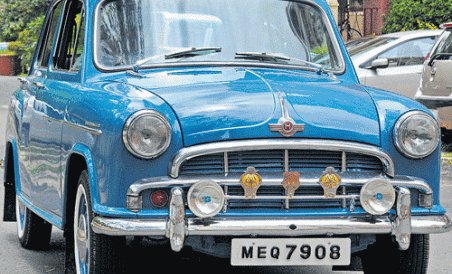
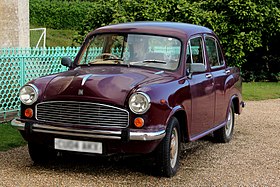
1956 - Morris Oxford Series 1 model was branded as Hindustan 10, Series 2 as Landmaster and Series 3 model as the Ambassador

3/
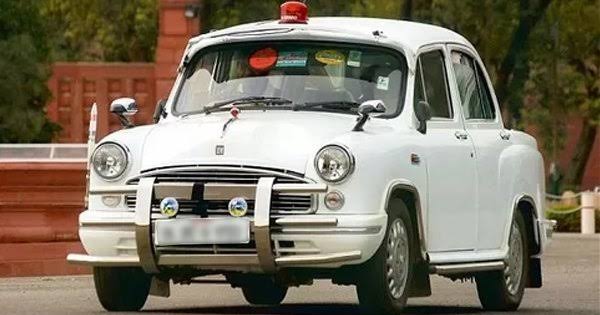
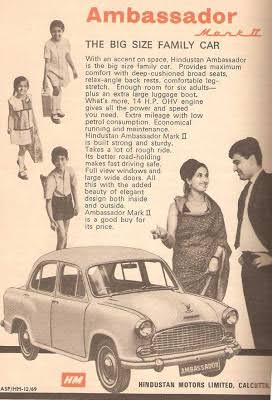
Out of the 3 cars, Ambassador was the best both in terms of looks, space and ruggedness required for Indian roads. It cost around 14000 Rs in 1958 when the production started

It was positioned as the family car given the kind of space available for bigger Indian families

4/
At that time, there were not many indian automobile brands. Standard 10 and Mahindra's Jeep were the only major car brands available.

The government controlled production and was encouraging domestic production. This helped all these 3 players

5/
But Ambassador took the lead right away capturing a large share of the market. It became very popular with the politicians & govt officers becoming their vehicle of choice

It became a symbol of esteem and power because of this. And began to be known as king of Indian roads

6/
The car also became popular with families because of good space. And even started getting used as taxis. And interestingly, its brand didn't get dilute because of this

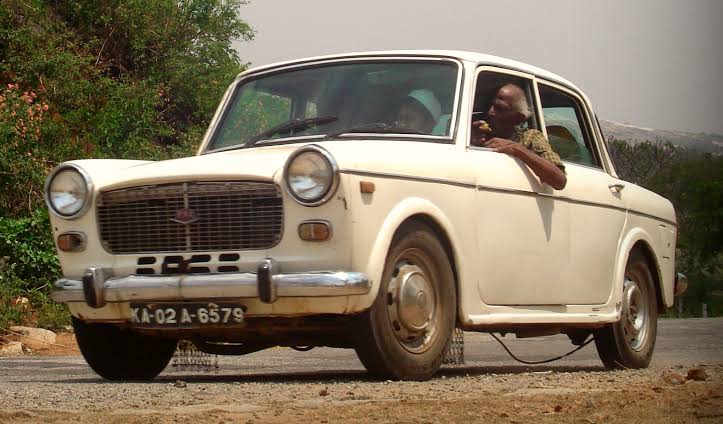
Though when Premier Padmini was launched in 1964, it became popular with families & took some market share

7/
But Ambassador remained most respected car brands in India. During the peak of its popularity in early 80s, it sold close to 24000 units per annum

And ranked 3rd after Mahindra and Premier Padmini in market share. In 80s it's waiting period after ordering was close to 1 year

8/
But in 80s, its problems started increasing. Government reduced protectionism and started allowing foreign JVs and entry of new players

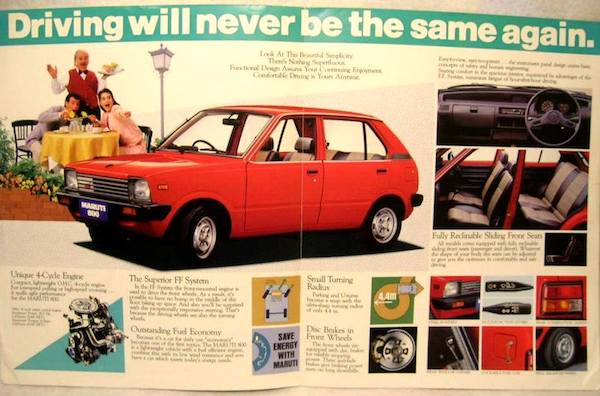
1981 - Indian Government created a PSU called Maruti Udyog. It signed a JV with Suzuki and started producing Maruti 800 in 1983

9/
Despite all the positives of Ambassador, it's mileage was very low and there was not much rework done on the design in past 2 decades

Maruti on the other hand looked more stylish, had a better mileage and cost only 50000 Rs, much lower than Ambassador

10/
After just 2 years of launch, Maruti stormed the Indian market taking away 34% of the market share with major contribution from 800

11/
Ambassador moved to 4th spot now as it didn't remain much popular with families any more who wanted more cost efficient vehicle. However it continued to be the vehicle of choice for government officials and politicians still

12/
Hindustan Motors tried fighting back introducing better versions of Ambassador

Launched Nova in 1990, classic in 1998 and Grand in 2003. However the design was almost the same. There was no way it could compete with the new stylish Indian and foreign cars

13/
In 89, Ambassador sold 35000 cars with a market share of 13% down from 17% in 85. And just 9% market share in 1995

With Tatas, Hyundai and Toyota entering the market, Ambassador was on its way out

14/
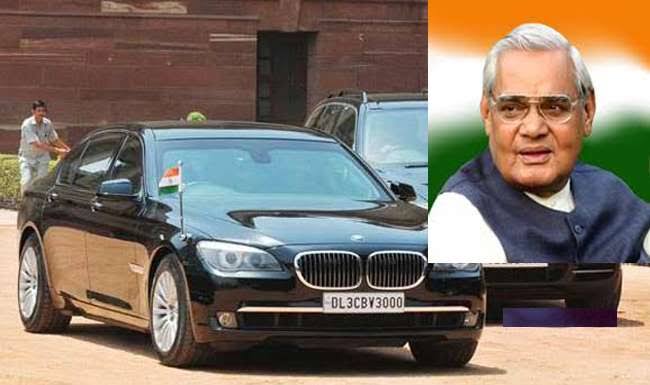
The final blow came from the government buyers in 2003. When the new PM Atal Ji opted for BMW over the Ambassador 1st time ever

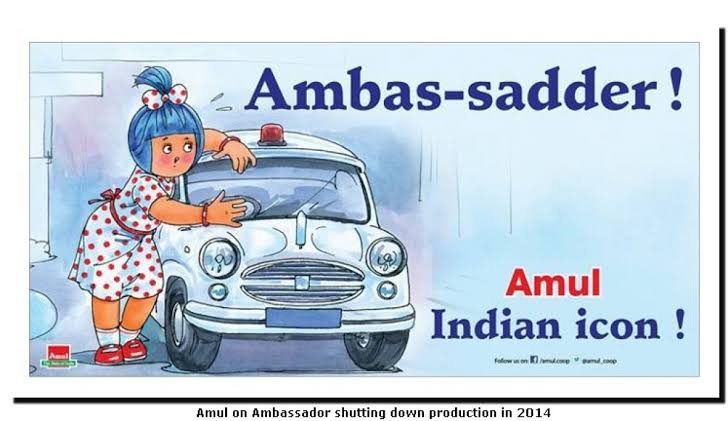
And in 2014, Government decided to start buying other brand cars for its officers. Fighting with losses, Ambassador decided to shut down production
15/
In 2014, Hindustan Motors manufactured the last Ambassador car.

The brand was sold to the French PSA group for just 80 crores INR in 2017

More than a car, Ambassador will remain as an emotion for many

16/16
References: https://t.co/Jt4qtqwBOv

https://t.co/Mq4f7sQO5A

https://t.co/XtMyH8sAmM
For more interesting brand stories and business concepts, do check https://t.co/z93wE0SEn9

More from India

You May Also Like

Department List of UCAS-China PROFESSORs for ANSO, CSC and UCAS (fully or partial) Scholarship Acceptance
1) UCAS School of physical sciences Professor
https://t.co/9X8OheIvRw
2) UCAS School of mathematical sciences Professor

3) UCAS School of nuclear sciences and technology
https://t.co/nQH8JnewcJ
4) UCAS School of astronomy and space sciences
https://t.co/7Ikc6CuKHZ
5) UCAS School of engineering

6) Geotechnical Engineering Teaching and Research Office
https://t.co/jBCJW7UKlQ
7) Multi-scale Mechanics Teaching and Research Section
https://t.co/eqfQnX1LEQ
😎 Microgravity Science Teaching and Research

9) High temperature gas dynamics teaching and research section
https://t.co/tVIdKgTPl3
10) Department of Biomechanics and Medical Engineering
https://t.co/ubW4xhZY2R
11) Ocean Engineering Teaching and Research

12) Department of Dynamics and Advanced Manufacturing
https://t.co/42BKXEugGv
13) Refrigeration and Cryogenic Engineering Teaching and Research Office
https://t.co/pZdUXFTvw3
14) Power Machinery and Engineering Teaching and Research
https://t.co/6cRR2B3jBE
Viruses and other pathogens are often studied as stand-alone entities, despite that, in nature, they mostly live in multispecies associations called biofilms—both externally and within the host.

https://t.co/FBfXhUrH5d


Microorganisms in biofilms are enclosed by an extracellular matrix that confers protection and improves survival. Previous studies have shown that viruses can secondarily colonize preexisting biofilms, and viral biofilms have also been described.


...we raise the perspective that CoVs can persistently infect bats due to their association with biofilm structures. This phenomenon potentially provides an optimal environment for nonpathogenic & well-adapted viruses to interact with the host, as well as for viral recombination.


Biofilms can also enhance virion viability in extracellular environments, such as on fomites and in aquatic sediments, allowing viral persistence and dissemination.
MDZS is laden with buddhist references. As a South Asian person, and history buff, it is so interesting to see how Buddhism, which originated from India, migrated, flourished & changed in the context of China. Here's some research (🙏🏼 @starkjeon for CN insight + citations)

1. LWJ’s sword Bichen ‘is likely an abbreviation for the term 躲避红尘 (duǒ bì hóng chén), which can be translated as such: 躲避: shunning or hiding away from 红尘 (worldly affairs; which is a buddhist teaching.) (
https://t.co/zF65W3roJe) (abbrev. TWX)

2. Sandu (三 毒), Jiang Cheng’s sword, refers to the three poisons (triviṣa) in Buddhism; desire (kāma-taṇhā), delusion (bhava-taṇhā) and hatred (vibhava-taṇhā).

These 3 poisons represent the roots of craving (tanha) and are the cause of Dukkha (suffering, pain) and thus result in rebirth.

Interesting that MXTX used this name for one of the characters who suffers, arguably, the worst of these three emotions.

3. The Qian kun purse “乾坤袋 (qián kūn dài) – can be called “Heaven and Earth” Pouch. In Buddhism, Maitreya (मैत्रेय) owns this to store items. It was believed that there was a mythical space inside the bag that could absorb the world.” (TWX)
@EricTopol @NBA @StephenKissler @yhgrad B.1.1.7 reveals clearly that SARS-CoV-2 is reverting to its original pre-outbreak condition, i.e. adapted to transgenic hACE2 mice (either Baric's BALB/c ones or others used at WIV labs during chimeric bat coronavirus experiments aimed at developing a pan betacoronavirus vaccine)

@NBA @StephenKissler @yhgrad 1. From Day 1, SARS-COV-2 was very well adapted to humans .....and transgenic hACE2 Mice


@NBA @StephenKissler @yhgrad 2. High Probability of serial passaging in Transgenic Mice expressing hACE2 in genesis of SARS-COV-2


@NBA @StephenKissler @yhgrad B.1.1.7 has an unusually large number of genetic changes, ... found to date in mouse-adapted SARS-CoV2 and is also seen in ferret infections.
https://t.co/9Z4oJmkcKj


@NBA @StephenKissler @yhgrad We adapted a clinical isolate of SARS-CoV-2 by serial passaging in the ... Thus, this mouse-adapted strain and associated challenge model should be ... (B) SARS-CoV-2 genomic RNA loads in mouse lung homogenates at P0 to P6.
https://t.co/I90OOCJg7o