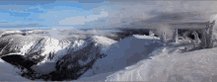
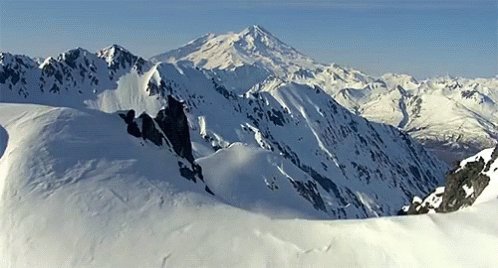
In what has become known as the Dyatlov Pass incident, ten members of the Urals Polytechnic Institute in Yekaterinburg—nine students and one sports instructor who fought in World War II—headed into the frigid wilderness on a skiing expedition on January 23, 1959. 1/x
One student turned back after experiencing joint pain.
He never saw his friends again.
2/x
The team made camp on February 1, pitching a large tent on the snowy slopes of Kholat Saykhl, whose name can be interpreted as “Dead Mountain” in the language of the region’s Indigenous Mansi people. Ominous, sure - but these were experienced mountain hikers. 3/x
The nine were never heard from again.
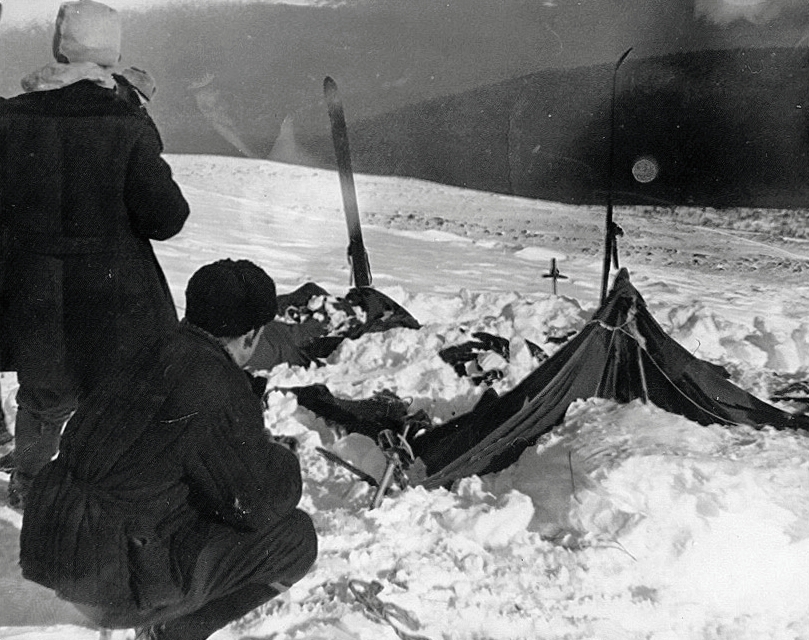
When a search team arrived at Kholat Saykhl a few weeks later, the tent was found just barely sticking out of the snow, and it appeared cut open from the inside. The next day, the first of the bodies was found near a cedar tree. 4/x
Eventually, all nine of the team members’ bodies were found: scattered around the mountain’s slope, some in a baffling state of undress; some of their skulls and chests had been smashed open; others had eyes missing, and one lacked a tongue. Some had traces of radioactivity. 5/x
A criminal investigation kept things hush hush, and had no idea what to conclude except that it was some insurmountable natural force. The lack of details in the secretive state, and the grim nature of the scene, gave rise to all kinds of wild conspiracy theories. 6/x
Apart from alien abductions, secret Cold War military experiments, attacks by the Mansi, romantic disputes, clandestine nuclear tests and even Yetis were suggested. A freak whirlwind making mind-melting low-frequency noises was also recently suggested. 7/x
When Russia reopened the case (again) in 2019, and concluded it was an avalanche in 2020, most people couldn't believe it, because a) the Russian government is famously truth-averse, and b) the theory just didn't stack up. 8/x
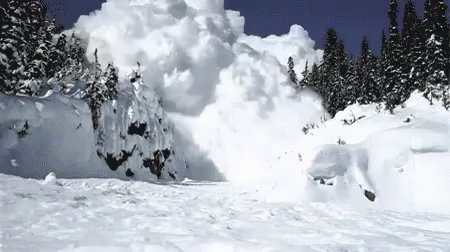
The slope was too shallow for an avalanche to occur, there was no snowfall to load up the slope to trigger an avalanche, there was at least a nine-hour delay between the campsite being made and the hypothetical avalanche, and the search teams saw no evidence of one. 9/x
Most importantly, perhaps, was the nature of the injuries: no way, people thought, could an avalanche cause such severe and gory injuries.
So two scientists, snow aficionado Johan Gaume and landslide expert Alexander Puzrin, decided to team up and take on the mystery. 10/x
The slope issue was quickly dismissed: not only did the local topography give the illusion that the slope was mild - it was actually somewhat steeper - but a weak layer of underlying snow made any avalanche perfectly possible there. 11/x
Sure, there was no snowfall that night. But strong winds, recorded in the victims' diaries, brought snow down from up on high to the slope just above their tent. This took time to accumulate, hence the nine-hour delay. 12/x
This is where things get extremely bizarre. How could such a small collapse have caused such traumatic injuries?
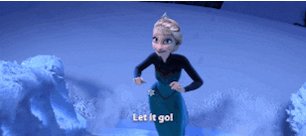
For that, the team turned to the movie Frozen. Yes, that movie. 13/x
A few years back, Gaume was struck by how well the movement of snow was depicted in the 2013 Disney movie Frozen—so impressed, in fact, that he decided to ask its animators how they pulled it off. He ended up going to Hollywood to chat to them. 14/x
Gaume modified the film’s snow animation code for his avalanche simulation models, albeit with a decidedly less entertaining purpose: to simulate the impacts that avalanches would have on the human body. 15/x
But they still needed to know the forces an icy block, tumbling at a person during an avalanche, would exert on the human body. And it turns out that, in the 1970s, General Motors launched blocks at dead humans to turn them into informative tapenade. 16/x
These tests were grim, but were used to calibrate the safety of seatbelts. As it happens, they were the perfect experiments for the pair to use to understand the fates of those nine students. 17/x
Some of the cadavers were braced with rigid supports while others weren’t. Back on the slopes of Kholat Saykhl, the team members had placed their bedding atop their skis. This meant that the avalanche, which hit them as they slept, struck an unusually rigid target. 18/x
Computer simulations precisely calibrated, the pair found that a small avalanche, one that released maybe a 5x5 meter block of rigid ice, would have crushed the sleeping students, giving some those horrible blunt force trauma injuries - awful, but not immediately fatal. 19/x
The avalanche that appears to have occurred on February 1, 1959, on Kholat Saykhl was an incredibly rare type of event. But rare events do occur, and this one could have come to pass only at that exact spot, at that exact moment, during that one very wintery night. 20/x
The case isn't closed. Some of the details, like the weird radioactivity, remain puzzling. But this paper is arguably first time a concrete scientific explanation has been slotted in to this truly bizarre mystery. 21/x
What happened after the avalanche is unknown, but it looks like they cut themselves out of the tent, dragged their injured friends away, tried to shelter, and died of hypothermia. The able-bodied students could have survived, but they chose to try and save their friends. 22/x
"This isn't just a mystery," Puzrin told me. “This is a story of courage and friendship." 23/x
The strange nature of the mystery - named the Dyatlov Pass incident after 23-year-old Igor Dyatlov, who led the expedition - and the fact that we will never know exactly what happened, means some will never accept the avalanche theory as plausible. 24/x
But the robust scientific investigation here may be of some comfort to the nine students' living relatives. Some in Russia have voiced the opinion that these hikers had taken stupid or unnecessary risks that ultimately killed them. 25/x
This study shows that this truly was a freak event, one that would have bamboozled even the most experienced mountaineers. These students were young, but they knew what they were doing. They were highly prepared, and they just wanted to go on an adventure with each other. 26/x
It won't be enough for some, though. The conspiracy theories will persist well into the future.
“People don’t want it to be an avalanche,” says Gaume. “It’s too normal.” 27/x
The moral of this story may be this: a baffling mystery may only be solved by getting extremely creative -- even if that means taking your inspiration from a popular animated movie and car crash tests from the 1970s.
Science rocks.
End.
(cc:
@kristinromey)
Congrats on the paper,
@ETH_en and
@EPFL_en!
And, um, thanks too,
@Pixar!