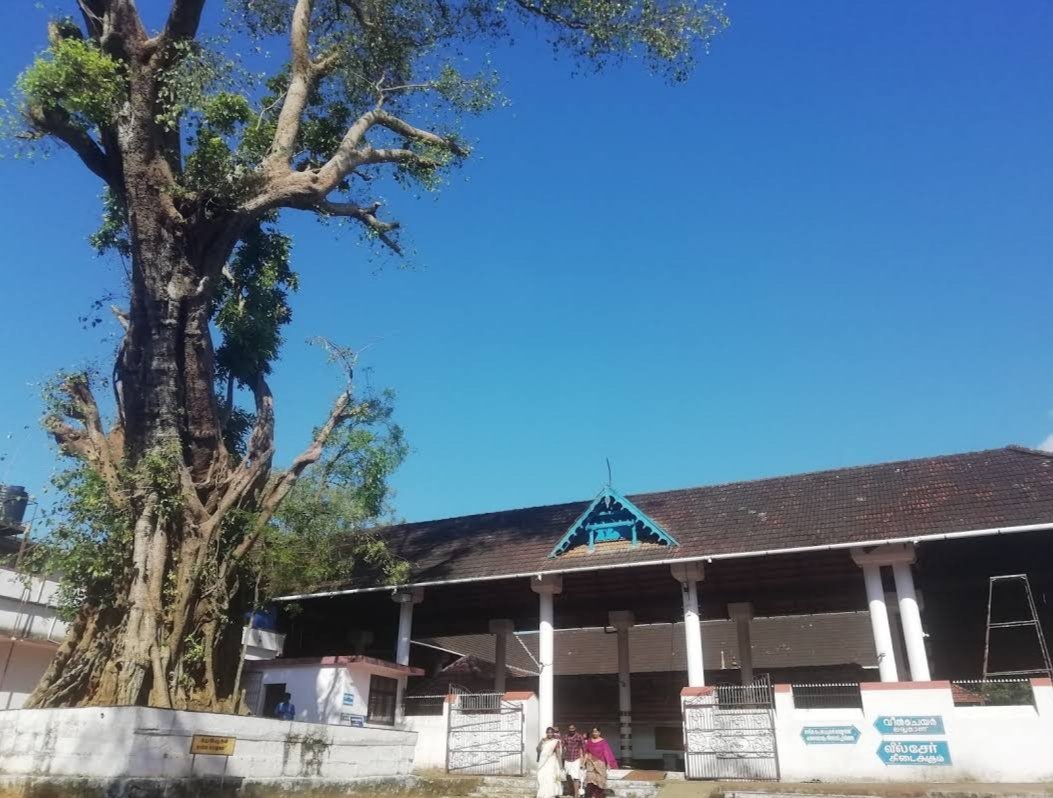
This is the $1mln question still without an answer: why were these workers cleaning bat guano from that abandoned mine?

Surprisingly we simply don't know.

China would have all interest in clarifying that point if for instance they were prospecting or selling guano. It did not.

What we know is that EcoHealth + WIV were sampling bat sites in the vicinity at the exact time of the workers being in that mine.

#DRASTIC wrote about this and about other oddities in the official story:
https://t.co/1iJOJz9LYj

@gumby4christ
Maybe it's just one of these coincidences.

Then it gets interesting: about a year after the miners death, Olival & Epstein from EcoHealth Alliance co-authored a paper about the coronavirus risk infection from bat guano collection.

No mention of the mine

https://t.co/Se4y9LcWwk
That paper oddly used some old bat samples collected by DARPA in 2006/7 at the famous Thai bat cave.

It never mentioned that the Thai monks have been doing this every Sunday for many many years without infection.

https://t.co/xECx8W0MRh
But most interestingly it never mentioned the Mojiang mine accident, even if the perfect timing and recycling of old DARPA bat samples seem to point to a likely knowledge of it.

Anyway, the idea was to ask for more money, as you correctly guessed.

https://t.co/g1TBZNQIJl
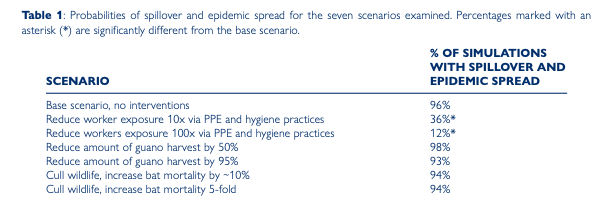
So here comes a very handy scenario of a major coronavirus outbreak with a very 'scientific' and precise estimate of 96% of risk..

Again, please do not mention that the Thai monks have been doing this every Sunday for ages, you would spoil the fun.

https://t.co/g1TBZNQIJl
Now that paper co-authored by EcoHealth had Supaporn Wacharapluesadee as main author.

Supaporn conveniently jumped back into the fray a few days ago with a Nature article pointing to batcovs in bats and pangolins in SE Asia:

https://t.co/n3x97oKEm8
Leave these poor pangolins in peace please. The debate is closed there.

As for the bats coronavirus mentioned they are actually fairly distant from SARS-CoV-2, much more than Yunnan ones, and do not bind to hACE2 - so nothing particularly new.

https://t.co/Bn5ygIcJoy
That Thai batcov article ended up being misused in a way that would support the China/Daszak narrative:

https://t.co/uZu90vt7QL
So the more you dig into this, the more the Mojiang mine accident becomes a key element.

Many of the odd silences and odd coincidences all link back to it.

I wish EcoHealth could tell us a bit more about it and their 2013 bat guano epiphany.

A job for @USRightToKnow.
@threadreaderapp compile

More from Health

You May Also Like

THREAD: 12 Things Everyone Should Know About IQ

1. IQ is one of the most heritable psychological traits – that is, individual differences in IQ are strongly associated with individual differences in genes (at least in fairly typical modern environments). https://t.co/3XxzW9bxLE


2. The heritability of IQ *increases* from childhood to adulthood. Meanwhile, the effect of the shared environment largely fades away. In other words, when it comes to IQ, nature becomes more important as we get older, nurture less.
https://t.co/UqtS1lpw3n


3. IQ scores have been increasing for the last century or so, a phenomenon known as the Flynn effect. https://t.co/sCZvCst3hw (N ≈ 4 million)

(Note that the Flynn effect shows that IQ isn't 100% genetic; it doesn't show that it's 100% environmental.)


4. IQ predicts many important real world outcomes.

For example, though far from perfect, IQ is the single-best predictor of job performance we have – much better than Emotional Intelligence, the Big Five, Grit, etc. https://t.co/rKUgKDAAVx https://t.co/DWbVI8QSU3


5. Higher IQ is associated with a lower risk of death from most causes, including cardiovascular disease, respiratory disease, most forms of cancer, homicide, suicide, and accident. https://t.co/PJjGNyeQRA (N = 728,160)