Categories Government




I want to discuss why.
Was the US presidential election hacked? My morning thoughts\u2026 https://t.co/dg7eMfv7al
— Jeremy Cioara (@CioaraJeremy) December 31, 2020
The issue is that it's not us rational people who won't take the time to determine the truth, but the conspiracy theorists. They keep dredging up things they don't understand and demand that rational people explain them.
Such is the case in the report cited in the video. The person in video hasn't spent the time to determine the truth about that document. He doesn't understand what it contains. Yet, he demands we explain it to
He claims it's by a military intelligence expert and that's why it's credible. It's not -- it's by a guy Joshua Merritt who worked in the motor pool who flunked out of his intro to military intelligence
No, this is not an "ad hominem". It's them saying the "evidence" is credible because he's an expert. Thus, we should point out the guy is not an expert, and that the "evidence" must be judged on its own merits.







It is important to understand that GR was not specifically meant for Pb ONLY and was attempted in other parts of country. Important to know that three things played important role
1. British Canal system.
2. Land holdings size
3. Nature of cultivating population.
Always had the question \u201cwhy punjab was chosen for GR and not UP/MO\u201d. Thanks for touching base.
— Rahul Duggal \U0001f426 (@rahulduggal18) December 28, 2020
Regarding Pepsico, further reading suggests it was forced into food processing by GOI to allow pepsi to sell colas. Hence once markets opened after \u201891, they bailed out. You missed it.
Contrary to what most people think about GR and that it suddenly took place in 1960, the truth is that country had to build on to actually enable something of the scale of GR. The work had started from 1939 onwards.

So we could have had GR in 1950s itself, an intensive program was launched in 1952 with Ford funding that identified 5,50,000 villages in India over Pb, UP, Kr, MP, MH for GR. But the program never saw light because a team of agronomists visited india and found that-
-It is not possible to make headway into 5,50,000 villages at the same time. They also found that irrigation is not same in all the areas, the soil texture varies in all areas and people have different indigenous varieties as well. In addition to this the rainfall varies as well.
So the program was called off and instead in 1960, almost 8yrs later, IADP mission with 15 districts one in each state was identified for GR. Ludhiana was chosen in Pb for its better mix of urban and rural demographics. It also had small scale industrial units like cycles etc.

We've been in denial - about far-right extremism, the GOP, and Trump - and now we're at a crossroads. History shows clearly what happens when you appease those who try and take down democracy. I don't want that for my country. pic.twitter.com/m2gamEkFDD
— Ruth Ben-Ghiat (@ruthbenghiat) January 28, 2021

I received numerous questions regarding my yesterday’s post. Why regional transmission projects are always given priority over the development of indigenous generation, knowing that Afghanistan will remain dependent on imported power? What went wrong?
I have already described the disadvantages of relying on imported electricity in this thread👇.
The legitimate question we all have is, why did the Afghan government and international donors opt for bringing electricity from the neighboring countries?
THREAD
— Mohsin Amin (@MohsinAmin_) July 27, 2020
The electricity-exporting countries Uzbekistan, Tajikistan, Turkmenistan and Iran mostly sell their surplus electricity to Afghanistan. When they no longer have a surplus, they stop supplying.
The answer is not easy and includes a mix of bureaucratic, social, economic and political considerations. Since 2002, energy sector planning efforts have been undertaken by a number of international development partners.
This has allowed for significant levels of investment and expertise to be placed in the service of Afghanistan's power sector. At the same time, the role of the Afghan government has often been marginal, as a plethora of donors have pursued their own agendas and projects.
As a result, this has led to a lack of coordination, off-budget project financing, insufficient planning and prioritization of projects, and a process that has lent itself to wasteful spending and unmet goals.


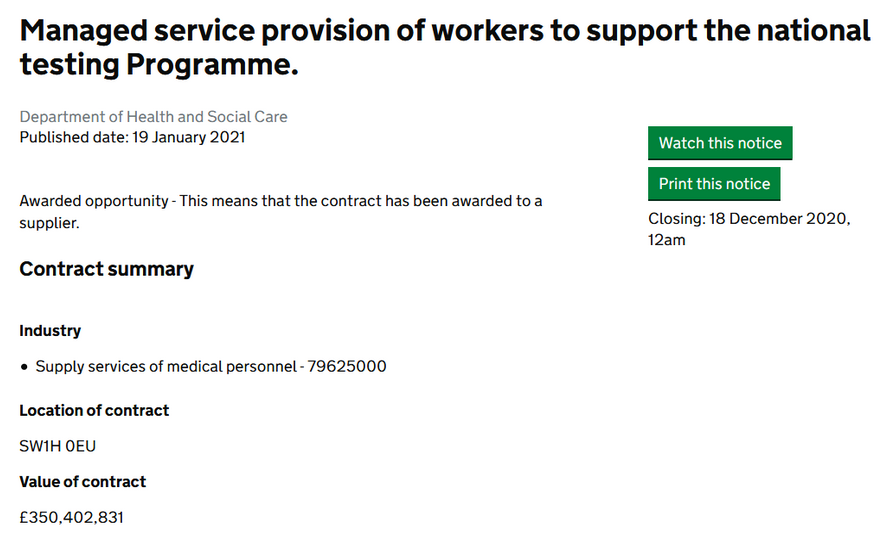
£350m Covid19 award goes to company run by Impellam, where former Tory treasurer has ‘significant interest’. THREAD:
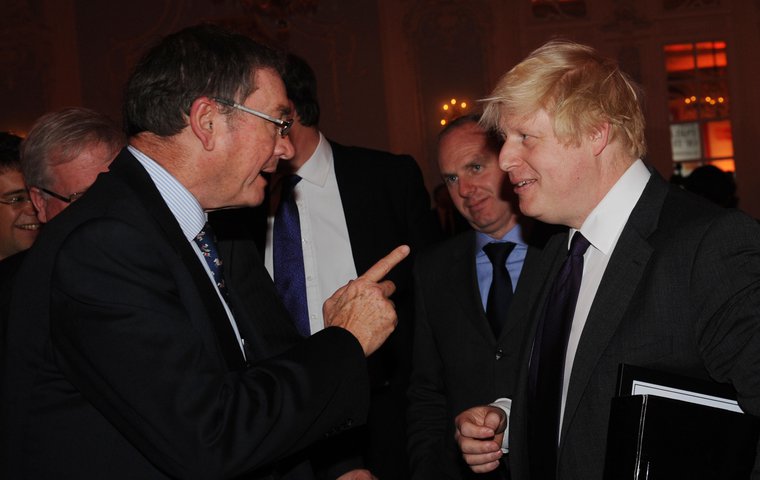
Recruitment firm Medacs Healthcare won the 17 Dec contract to “support medical and clinical services in laboratories” & assist “national testing programme in response to Covid-19”. It’s the 3rd largest Covid-related single award seen by @allthecitizens https://t.co/WjCQXuhTfA
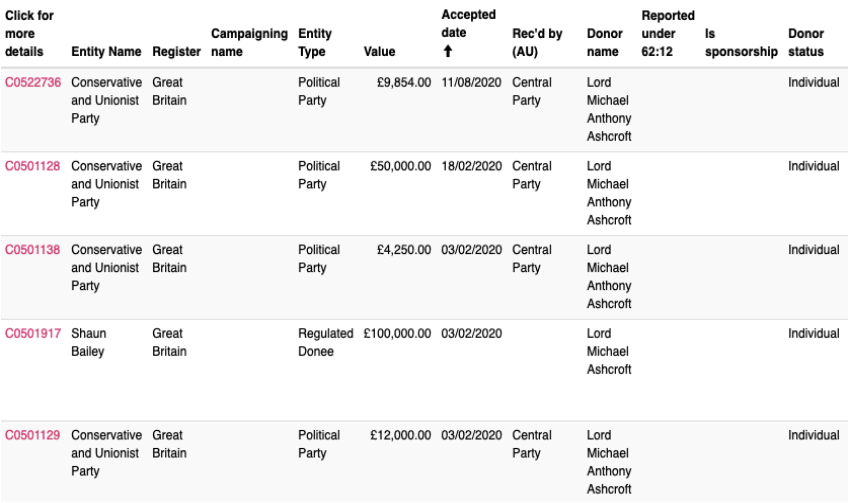
Medacs Healthcare is part of the Medacs Global Group, owned by parent company ‘Impellam Group’. Impellam’s main shareholder & Chairman is Conservative donor Michael Ashcroft. He’s donated £176,104 to the Tories since the pandemic began and £851,029 since 2001.
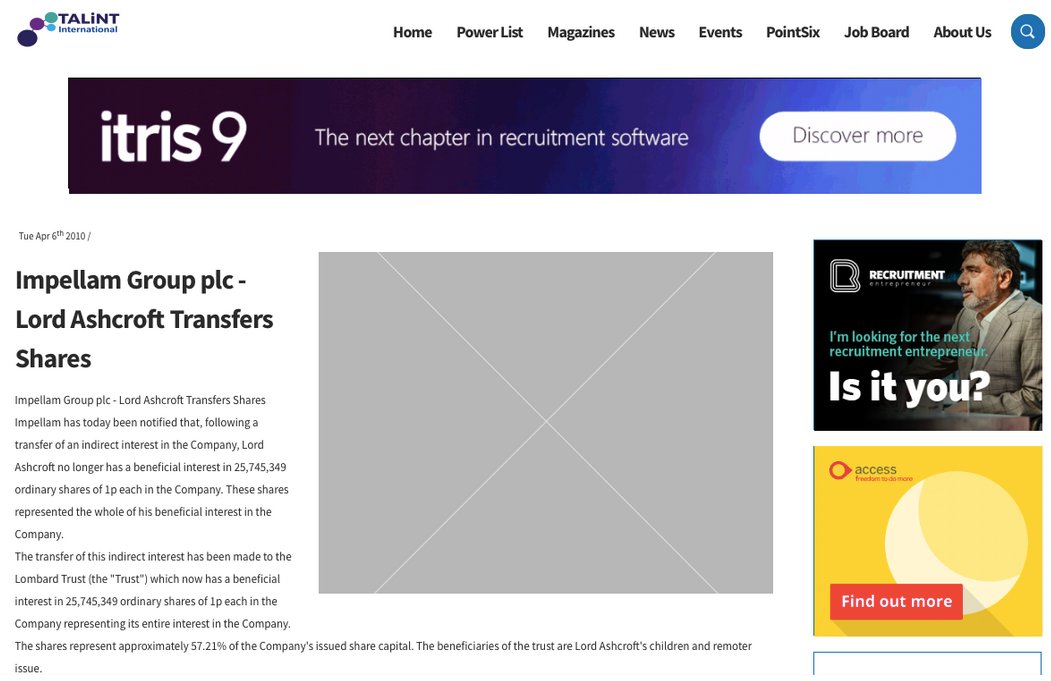
Lord Ashcroft is listed as having ‘significant influence’ over Impellam. In addition, 56% is owned by the Lombard Trust. In 2010, Ashcroft transferred the 26m shares he held in Impellam to the Lombard Trust; the beneficiaries are his children. https://t.co/Z8gcdRpwKz
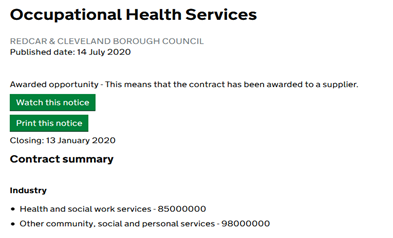
Medacs Healthcare is majority owned by Medacs Global Group, which is majority owned by Impellam Group. Medacs Healthcare has also won other Covid contracts: £357,830 on 2 smaller awards to supply temporary health personnel and also was part of two large group contracts.


Re: Your ABSENCE is required
Dear Republicans,
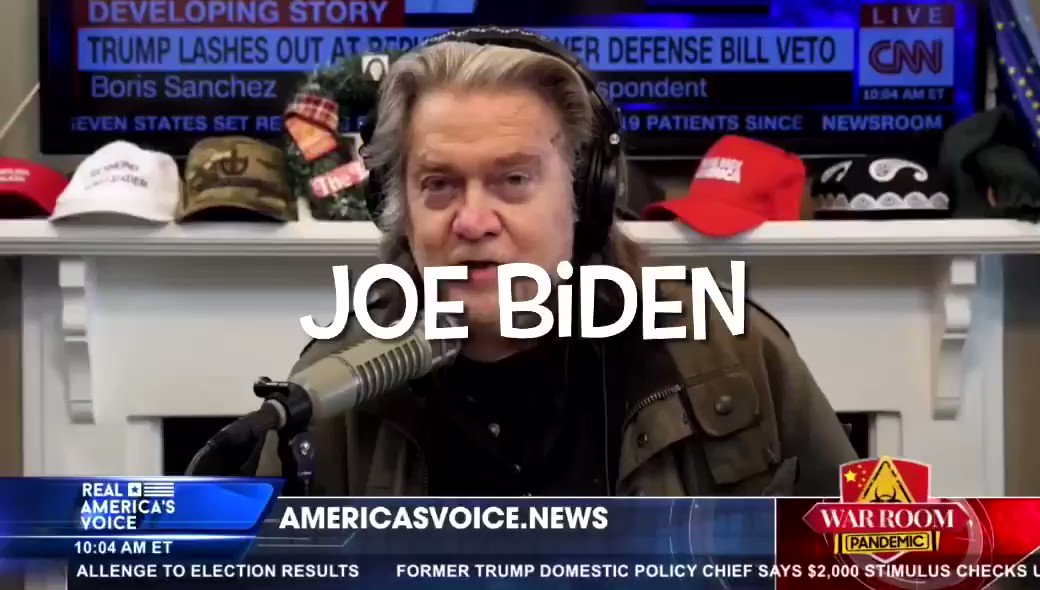
Do NOT legitimize the sham of @JoeBiden by attending on Jan. 20.
All voters were disenfranchised by his election fraud.
To those who CERTIFIED this FRAUD: Shame on you!
@Robert_Aderholt
@repRickAllen
To: @GOP in the @USSenate
— @USCongressDB \U0001f4bf\U0001f520\U0001f4ca (@uscongressdb) January 16, 2021
Re: Your absence is required
Dear Republicans,
You MUST NOT legitimize the sham \u201cswearing in\u201d of illegitimate cheater @JoeBiden by attending on Jan. 20.
All voters were disenfranchised by his massive election fraud. You CERTIFIED this FRAUD. Shame! pic.twitter.com/rbPkKWtut4
@Troy_Balderson
@Jim_Banks
@repAndyBarr
@CliffBentz
@repJackBergman
@StephanieBice
@repAndyBiggsAZ
@repGusBilirakis
@repDanBishop, @JDanBishop
@LaurenBoebert
@repBost
@Liz_Cheney
@repBenCline
@repCloudTX

https://t.co/rvz50giG2C
https://t.co/4UYoX1cVqJ