Chair Holden opens the meeting. by speaking to the promise and potential that smart city technology offers, especially amid the COVID-19 pandemic.
He notes how big data, the internet of things, and other innovative solutions could help New Yorkers address real challenges.
However, he stresses, these come with privacy and security risks. The chair talks about the need to mitigate these challenges and ensure the benefits provided by smart city technologies outweigh costs.
Following the Chair's opening statement, John Paul Farmer, Chief Technology Officer of New York, offers testimony from the Administration.
He notes his focus will be on the city's work in Internet of Things, where NYC leads nationally and internationally.
"The Mayor's Office of the CTO has focused on improving the connectivity infrastructure needed to operate as a smart city," says Farmer
"Equitable connectivity is a foundation of the smart city. Widespread broadband is needed to connect the tools and sensors that make up IoT."
He goes on to provide various examples of how IoT devices, a constantly evolving set of technologies, can help the city understand itself, inform policies that make more impact, and support more representative policy decisions.
Chair Holden: Could you update us on the status of universal broadband?
Farmer: This problem has been created over decades. The Internet Master Plan is the framework for response. In February, we'll be releasing an RFP for universal broadband that will invite in everyone.
Chair Holden: Do you have a specific timeframe in mind?
Farmer: Mayor has said 2025 is a target but this problem will be addressed in chunks, a little bit at a time.
Chair: So it will be rolled out in parts of the city piece by piece?
Farmer: Yes.
Chair Holden: What steps have been taken to modernize the city's infrastructure given the pandemic?
Farmer: At the core of a smart city is data, hyperlocal data that can be actionable. That's where we've focused during the pandemic, making sure we're more data-driven.
Farmer goes on to describe NYC's work with mobility data amid the pandemic. The data helped the city understand aggregated patterns of activity so that it could know where it needed to target resources and policies.
The Chair draws attention to the need to use technology to make NYC more accessible. He draws particular attention to the city's vaccine locator website and the challenges facing those who try to use it.
Farmer talks about how trust is important. When NYers see things they don't understand, that can fuel concern. He argues the City prioritizes efforts to do outreach to community.
The Chair says there's a need for signs on IoT devices so people know what's outside their homes.
Councilmember Vallone begins his questions. He asks Farmer to describe the differences between what NYC has now and what needs to be done to achieve 5G.
Farmer says that, to put in place 5G, that requires more broadband equipment in more places, such as rooftops and poles.
Vallone asks what the rules and safety practices will be regarding placement of new equipment and infrastructure. How are we determining parameters of safety and placement?
Farmer says City will work with communities to determine where and how tech can be deployed.
Chair Holden asks for details on the NYC Recovery Data Partnership.
Farmer says the Partnership is ongoing effort by community, non-profit, and private orgs to share data with NYC to aid in COVID-19 response and recovery. More info can be found at:
https://t.co/hW1tey591f
Public testimony now begins with Mr. Kamal Bherwani, Chief Executive Officer of GCOM. He begins his statement by talking about the tremendous value created from knowing real-time data about the city.
However, the pandemic has shed a harsh light on the inequities that exist. The city, he argues, needs to focus on human signals not machine signals.
He calls for the City to invest in tech to better understand human behavior amid the pandemic.
Stefaan Verhulst now begins.
He references that he previously testified before the committee on the need for data collaboratives, a new form of collaboration beyond the public-private partnership model, in which participants from different sectors exchange their data.
However, he says, this needs to be done in a legitimate way. There needs to be a social license to use data for purposes other than it was collected.
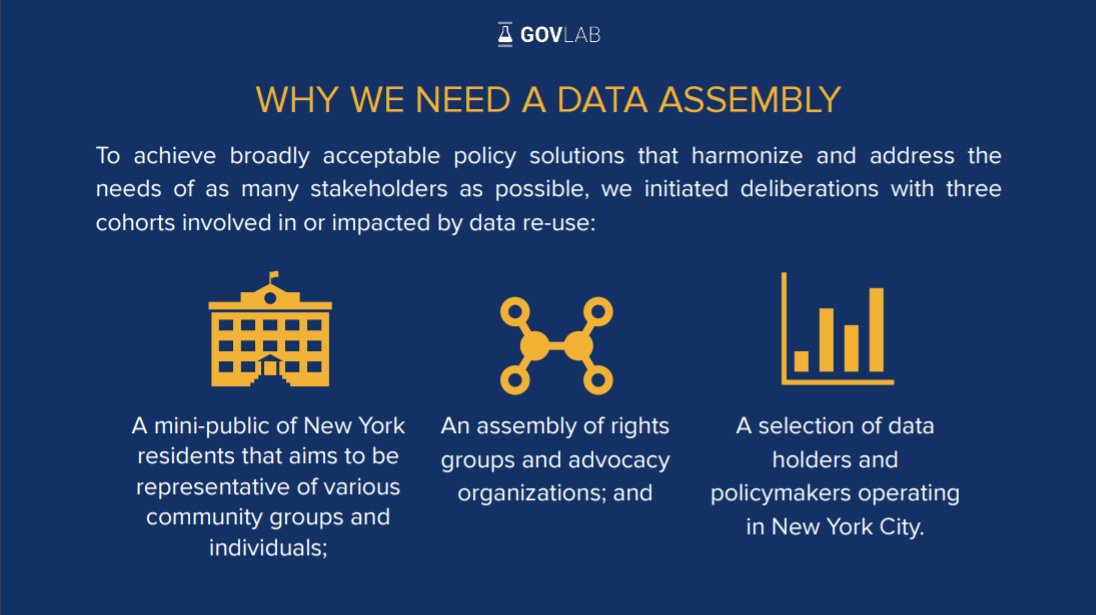
He describes The GovLab's work on The Data Assembly, an initiative to solicit diverse, actionable public input on data re-use.
The body convened three groups, one representing New Yorkers, another representing civil rights advocates, and another representing decision-makers and data holders on different kinds of data reuse.
The analysis revealed several interesting takeaways.
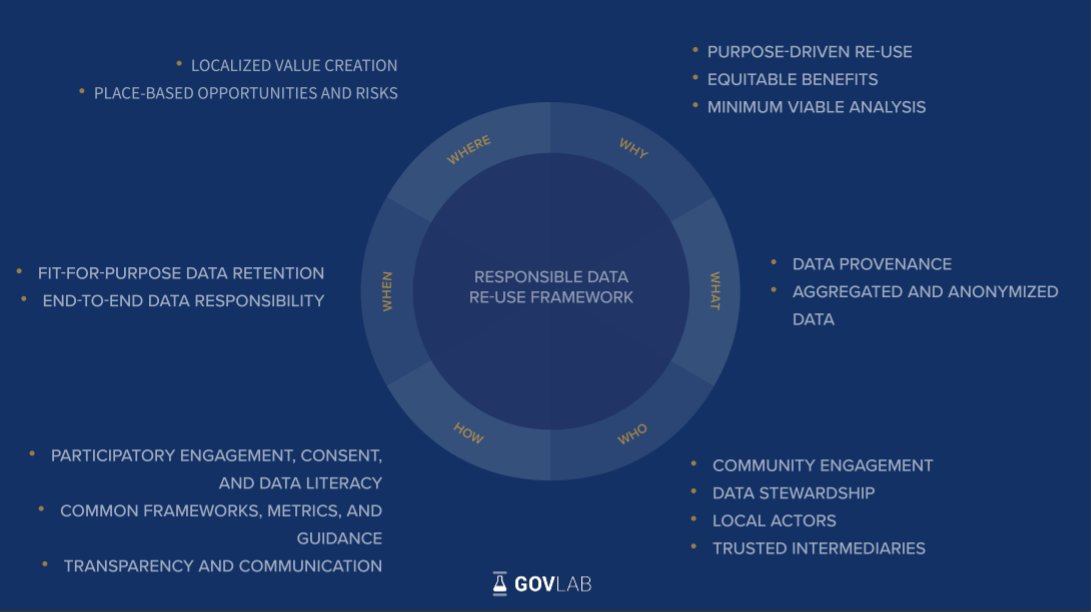
First, the Data Assembly led to a Wheel of Data Reuse, an abstract model demonstrating the kinds of questions and concerns an org might consider in a data reuse project..
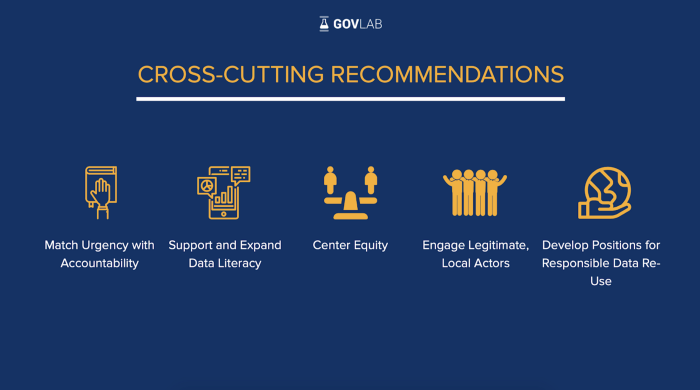
Second outcome was a set of cross-sector recommendations.
Among the first of these recommendations was the need to invest in data literacy across the public. If people don't understand what data is or how it is used, they cannot be active agents in its
Stefaan concludes by suggesting the City regularly establish similar Data Assemblies to understand expectations across the city.
By engaging regularly with the public, the City can promote trust for all its data reuse work, especially amid the pandemic.
The final witness argues the city needs additional sensors to detect and address noise complaints. She notes the health risks posed by excessive noise and the potential for IoT to address this.
The Chair asks Mr. Bherwani of work it is doing with other cities and states to improve its processes.
He describes some projects that GCOM has engaged in Maryland and elsewhere to promote more "frictionless" interactions with government agencies.
Chair Holden asks Stefaan the best way to create trust between the public and the City.
SV answers that there are several ways. One major component of trust-building is providing transparency. People need to know how and why their data is being used by the city.
However, he emphasizes the role deliberation can play. The questions facing smart cities are not binary. Ppl have degrees of concern and different views on how to address them.
Deliberation provides a way to understand what makes ppl comfortable and what they seek to happen.
Stefaan draws attention to an often ignored issue: What residents would like to see addressed. Often, the issues of focus in smart city efforts are those considered important by suppliers and not the public or stakeholders.
The 100 Questions Initiative is a GovLab effort to foster a more people-led process. It seeks to solicit questions on important issues. from experts that are validated by the general public.
More info can be found at:
https://t.co/GjAep5eWHk
Chair follows up with a question about the degree to which GovLab uses NYC's open data.
Stefaan says NYC is a leader in this area but, like much of the world, city open data is supply-driven. If we combine data supply w/ a understanding of the demand, we can better target work.
Chair asks a final question about what Stefaan means by the term "Social License."
Stefaan explains that the term refers to those who are included in datasets agreeing to how data is being used by others. Stat agencies worldwide depend on social license to collect & analyze data
Failure to secure a social license, SV notes, can lead to failure.
He draws attention to failed smart city efforts in places like Toronto where leaders did not secure public consent before embarking on work. The result was that these projects were canceled amid controversy.
The Chair dismisses the witnesses.
Thank you all who followed along via Twitter. If you are interested in The GovLab's work on the Data Assembly, you can find more information here:
https://t.co/1RsFnUD2tV