Hello friends, let's talk about gamer expectations of work/life balance & why they need to stfu.
More from Game


Considering this year I don't have much in the way of game translation to discuss, publicly, I'd say this was a productive year for writing threads on largely neglected and forgotten Japanese games. So if you're looking to learn about some, here's what I wrote about in 2020!

2020 was another year where I talked a *lot* of shop about dating sim history. Much of it was actual dating sims, like in some threads below, but sometimes I went on adjacent tangents, like for the cool Kojipro-developed Tokimeki Memorial adventure games:
I also went down a whole new rabbit hole for Fuuraiki, an open-ended PS1/PS2 adventure game with a cult following about traveling around the island of Hokkaido that's set to real world photography. It's a unique tangent in galge well worth exploring:
I also took a quick jaunt into Michinoku Hitou Koi Monogatari, a spiritual predecessor to Fuuraiki that's about traveling around Tohoku against a backdrop of mahjong matches. It's a rough draft that would get much more refined later, but still worthwhile:
In terms of actual dating sims that I covered, the focus was mainly post-Amagami games released by Kadokawa such as Photo Kano. While I think these games have MANY flaws, they do offer key insight into the state of the genre during its decade-long decline:
2020 was another year where I talked a *lot* of shop about dating sim history. Much of it was actual dating sims, like in some threads below, but sometimes I went on adjacent tangents, like for the cool Kojipro-developed Tokimeki Memorial adventure games:
I finished the drama CD for Shiori's route of Tokimemo Drama Vol. 3 earlier and it was sweet, but lacking. So, I'm plunging back into the world of Feeling Sad About Shiori! Maybe I'll make this a thread about all the cool ways KojiPro translated a dating sim to an adventure game? pic.twitter.com/SWXLvUwMO1
— Tom James, The Daigo Umehara of Dating Sims (@iiotenki) September 2, 2020
I also went down a whole new rabbit hole for Fuuraiki, an open-ended PS1/PS2 adventure game with a cult following about traveling around the island of Hokkaido that's set to real world photography. It's a unique tangent in galge well worth exploring:
So as I mentioned about a week ago, I've been digging into Fuuraiki, a late PS1 release I've been meaning to check out for years. It's an adventure game where you travel along Hokkaido on motorcycle taking photos of the scenery and writing travelogues and it's pretty rad. pic.twitter.com/uhajPmDrm9
— Tom James, The Daigo Umehara of Dating Sims (@iiotenki) January 27, 2020
I also took a quick jaunt into Michinoku Hitou Koi Monogatari, a spiritual predecessor to Fuuraiki that's about traveling around Tohoku against a backdrop of mahjong matches. It's a rough draft that would get much more refined later, but still worthwhile:
It's neat as a historical curiosity and I'm glad I did it to have context for a Fuuraikai route which sees Yumi (the oneesan in purple) return, but I wouldn't call it at all essential. My main takeaways are I suck real bad at hana-awase and a stupendously dumb swan boat chase. pic.twitter.com/aRe1S4yF6o
— Tom James, The Daigo Umehara of Dating Sims (@iiotenki) October 27, 2020
In terms of actual dating sims that I covered, the focus was mainly post-Amagami games released by Kadokawa such as Photo Kano. While I think these games have MANY flaws, they do offer key insight into the state of the genre during its decade-long decline:
Well.
— Tom James, The Daigo Umehara of Dating Sims (@iiotenki) April 25, 2020
Let's do this again, I guess. pic.twitter.com/pLoef5uHap



You May Also Like





THREAD: 12 Things Everyone Should Know About IQ
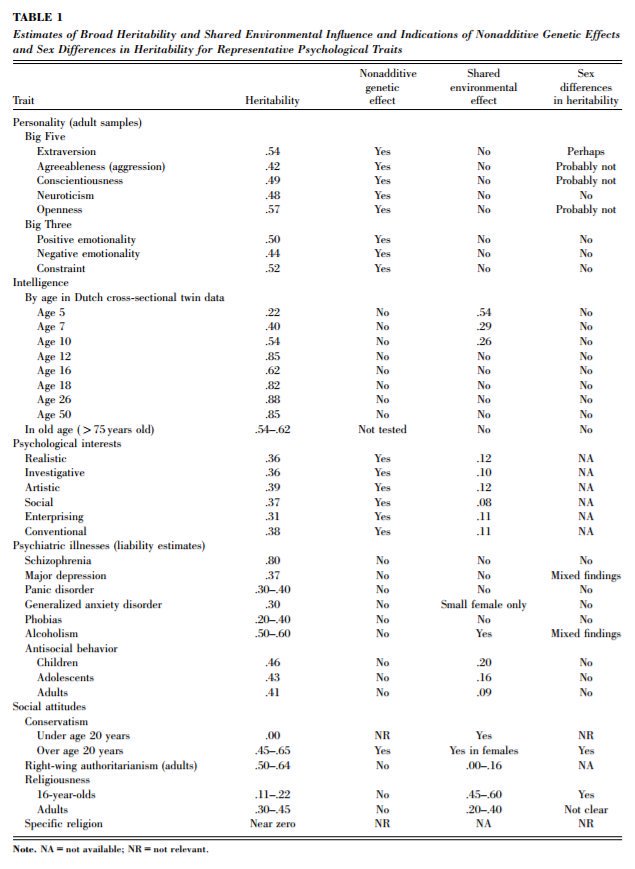
1. IQ is one of the most heritable psychological traits – that is, individual differences in IQ are strongly associated with individual differences in genes (at least in fairly typical modern environments). https://t.co/3XxzW9bxLE
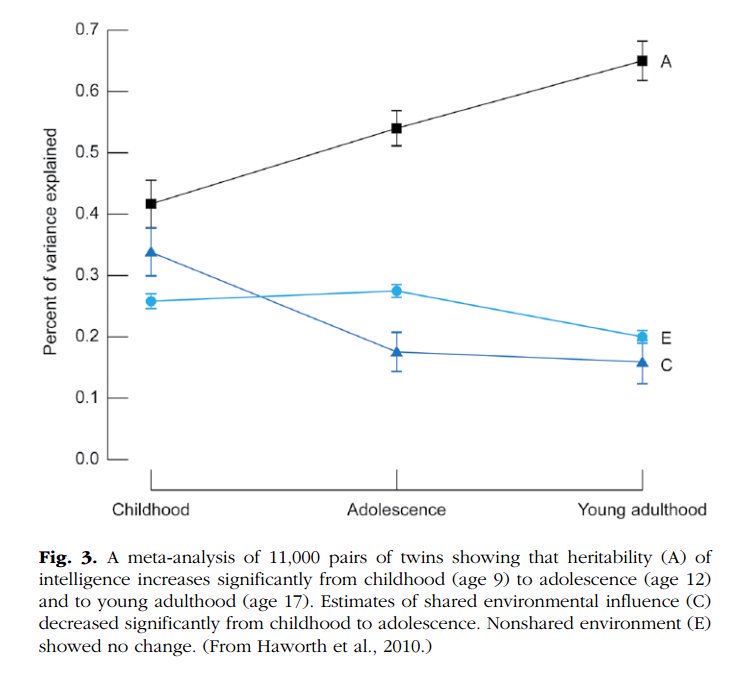
2. The heritability of IQ *increases* from childhood to adulthood. Meanwhile, the effect of the shared environment largely fades away. In other words, when it comes to IQ, nature becomes more important as we get older, nurture less. https://t.co/UqtS1lpw3n
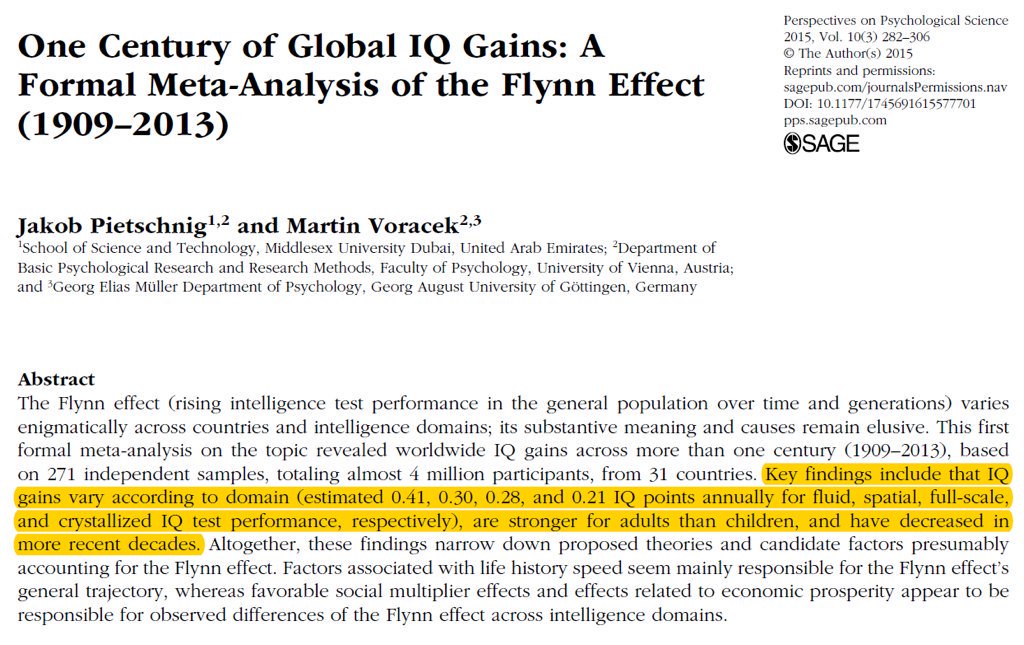
3. IQ scores have been increasing for the last century or so, a phenomenon known as the Flynn effect. https://t.co/sCZvCst3hw (N ≈ 4 million)
(Note that the Flynn effect shows that IQ isn't 100% genetic; it doesn't show that it's 100% environmental.)
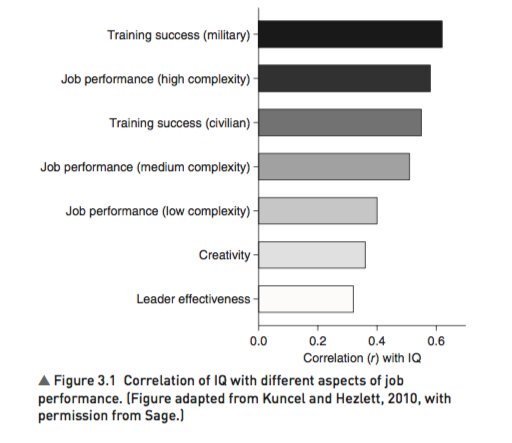
4. IQ predicts many important real world outcomes.
For example, though far from perfect, IQ is the single-best predictor of job performance we have – much better than Emotional Intelligence, the Big Five, Grit, etc. https://t.co/rKUgKDAAVx https://t.co/DWbVI8QSU3
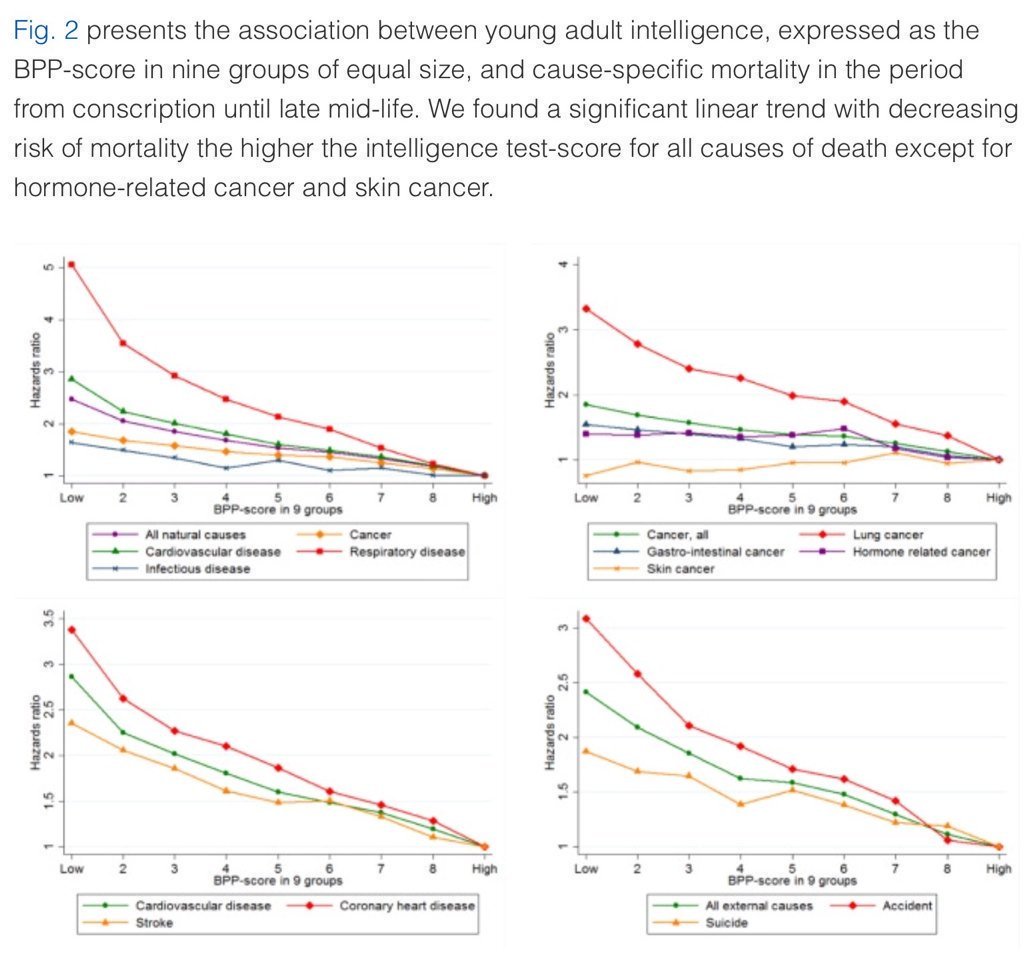
5. Higher IQ is associated with a lower risk of death from most causes, including cardiovascular disease, respiratory disease, most forms of cancer, homicide, suicide, and accident. https://t.co/PJjGNyeQRA (N = 728,160)
1. IQ is one of the most heritable psychological traits – that is, individual differences in IQ are strongly associated with individual differences in genes (at least in fairly typical modern environments). https://t.co/3XxzW9bxLE
2. The heritability of IQ *increases* from childhood to adulthood. Meanwhile, the effect of the shared environment largely fades away. In other words, when it comes to IQ, nature becomes more important as we get older, nurture less. https://t.co/UqtS1lpw3n
3. IQ scores have been increasing for the last century or so, a phenomenon known as the Flynn effect. https://t.co/sCZvCst3hw (N ≈ 4 million)
(Note that the Flynn effect shows that IQ isn't 100% genetic; it doesn't show that it's 100% environmental.)
4. IQ predicts many important real world outcomes.
For example, though far from perfect, IQ is the single-best predictor of job performance we have – much better than Emotional Intelligence, the Big Five, Grit, etc. https://t.co/rKUgKDAAVx https://t.co/DWbVI8QSU3
5. Higher IQ is associated with a lower risk of death from most causes, including cardiovascular disease, respiratory disease, most forms of cancer, homicide, suicide, and accident. https://t.co/PJjGNyeQRA (N = 728,160)