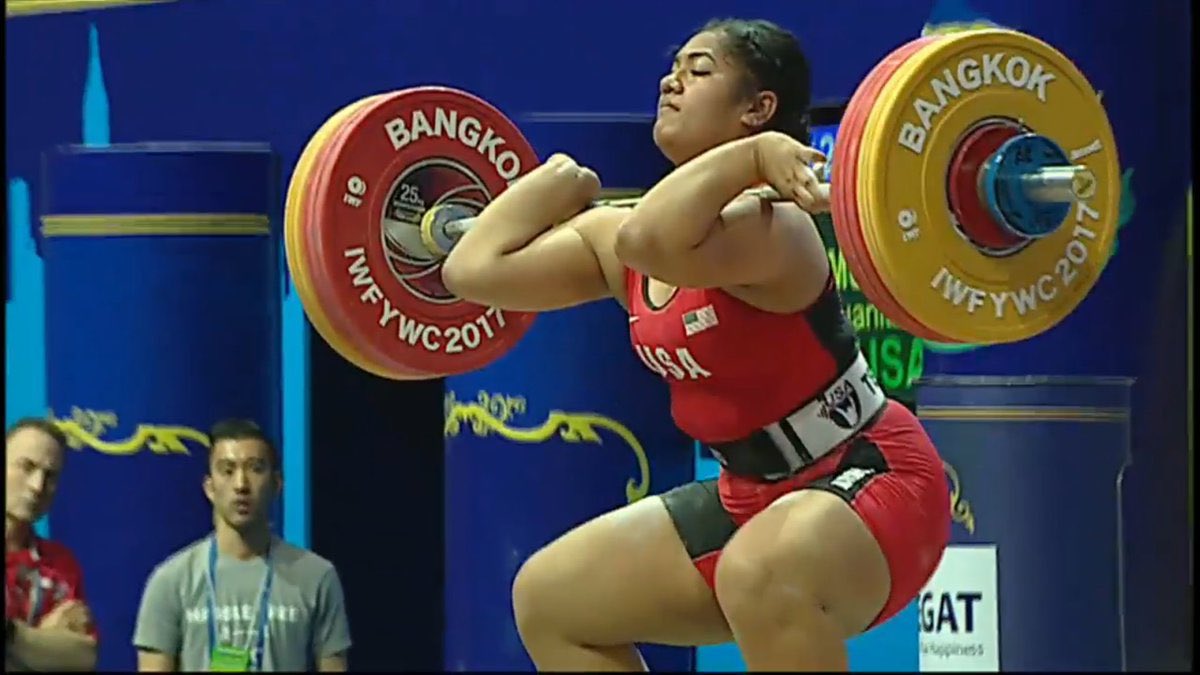
So I just watched @Polygon ‘s new video on using videogames and VR as a form of therapy, but this scene in particular seemed a bit off.

He is a neuropsychologist for the University of Southern California, and has done quite a bit of stuff on this kind of VR based exposure therapy.


As indicated, the predictive diagnostic utility of CPT tests in differentiating children with ADHD and those without is limited, given the large overlap in performance between the two groups.
```
```
In other words, these tests are poor in differentiating between children with ADHD and healthy controls. [This is] because setting the cutoff stringently enough to capture children with ADHD, results in incorrect classification of normal children as impaired.
```
Put a pin in that.
Grodzinsky and Barkley (1999) found, for example, that for boys, the CPT scores of “number correct” and “number of commissions” had a 'positive predictive power'* of over 80%; however, these scores had only 'moderate negative predictive power'**
```
```
The authors suggest that while “abnormal scores on the CPT may indicate relatively high probability for the diagnosis of ADHD, nearly 60% of the ADHD children received normal scores on this test”
```
*the chance that a child with an abnormal score has ADHD
**the chance that a child with a normal score did not have ADHD
---------
SIXTY.
HOW TF IS YOUR ADHD TEST FAILING TO DIAGNOSE SIXTY FUCKING PERCENT OF DIAGNOSED PEOPLE TESTED. YOU LITERALLY HAVE A BETTER CHANCE OF A CORRECT DIAGNOSIS BY FLIPPING A COIN.
While it has been difficult to present ecological distracters in a controlled manner in the past, advances in virtual reality technology now make it possible to do so.
```
```
Virtual reality can be seen as “an advanced form of human-computer interface which allows the user to ‘interact’ with and become ‘immersed’ in a computer-generated environment in a naturalistic fashion”
```
```
Virtual reality technology can be used to aid in the assessment and rehabilitation of cognitive abilities.
```
```
Virtual reality offers several benefits when combined with traditional neuropsychological assessment measures, including that it involves more realistic, lifelike environments that may allow persons to “forget” that...
```
```
...they are being assessed, the control of stimulus presentation, the safe assessment of hazardous situations, increased standardization of rehabilitation protocols, increased user...
```
```
...participation, and increased generalization of learning (Schultheis & Rizzo, 2001).
```
[THAT'S A SINGLE SENTENCE ARE YOU KIDDING ME?]
```
For example, virtual reality can aid in rehabilitation by allowing people to practice cognitive abilities in a simulated environment that is similar to the ones in which they will use these abilities (Rizzo et al., 2000).
```
```
VR has been used with adults in many domains of psychological assessment and intervention, including exposure therapy for anxiety disorders such as 'fear of flying'*, 'fear of heights'**, and 'various other phobias'***.
```
* (Rothbaum, Hodges, Anderson, Price, & Smith, 2002; Rothbaum et al., 2006; Rothbaum, Hodges,
Smith, Lee, & Price, 2000)
** (Emmelkamp et al., 2002; Rothbaum et al.,1995)
*** (Anderson, Rothbaum, & Hodges, 2003; Botella et al., 1998; Carlin, Hoffman, & Weghorst, 1997; Garcia-Palacios, Hoffman, Carlin, Furness, & Botella, 2002; Parsons & Rizzo, in press; Powers & Emmelkamp, in press).
---------
e.g. 'fear of heights' they would build a world of skyscrapers, 'fear of flying' they would build airplanes, and so on.
Well gosh darn this fancy simulator lets them control that!
```
Rizzo et al. (2006) conducted a clinical pilot study utilizing the Virtual Classroom in a head-mounted display with 8 boys with ADHD and 10 controls ranging in age from 6 to 12 years.
```
```
They compared the groups in the distracting condition and in a “non-distraction” condition where sound had been turned off and people and objects did not move.
```
```
The ADHD group performed significantly worse than the control group in both non-distracter and distracter conditions, committing more omission and commission errors and producing more variable reaction times in both.
```
This is then followed up with data on a similar test performed on a different sample.
The present study was an initial attempt to investigate the ability of the Virtual Classroom to discriminate between an ADHD* and control group, compared to a standard vigilance test (Vigil).
```
```
The Behavior Assessment System for Children (BASC) Monitor for ADHD, a parent rating scale, was also administered in order to provide confirmation of differences between the two groups of children and...
```
```
to examine the relationship between this rating scale and performance on the two different CPT presentations (Virtual Classroom versus Vigil).
```
* [Holy shit referring to people as ‘an ADHD’ WHAT THE FUCK DUDE]
---------
Another limitation of this study was that approximately half of the ADHD sample had taken their medication in the morning, while the other half had not.
```
```
Although no differences between those on versus those off medication were observed in performance in this study, it is conceivable that larger effects would have been observed...
```
```
had none of the children been on medication.
Future studies should attempt to control more carefully for medication effects
```
To put it simply, a lot of ADHD drugs are not like paracetamol; you cant just take one, feel the positive effects for a while, then feel them wear off.
BUT HANG ON A SECOND. DIDN’T THAT POLYGON SPLASH SAY THAT HE WAS USING THIS TECHNOLOGY TO TREAT ADHD??!?!?!?!?!

This was the only published thing related to ADHD, VR, and exposure therapy that I could find.
There is currently no public research showing that VR technology has been used for "treating" ADHD.
And there’s some very obvious sleight of hand being done with a lot of ADHD research that I’d like to go into, from my perspective.
It is not a disorder of personality. We do not ~choose~ to be this way. It is simply down to the way our bodies work.
- attentiveness (ability to focus)
- mobility (ability to control your body)
- attention (ability to process information).
I have, for a long time, stated that it is my personal belief this is not at all true.
Students were crammed together into small classrooms with barely enough room to move.
The class is lectured by a single teacher that's always out of earshot.
Normal room lighting can be too bright, a slightly warm room can be unbearably hot.
An uncomfortable chair will make your entire body hate you, small peaks in background noise can become piercing.
Imagine being an introvert, but like, REALLY being an introvert.
You can’t turn off this sensory information, you can’t tune it out; it’s just there. Constantly.
This would allow students to sit closer to teachers, making processing their lectures a lot easier (because now you can actually hear them!!).
It also decreases the amount of background noise from the chatter of other students.
Allow students to leave their seats after extended periods of time (say an half an hour or so) to let them stretch their muscles out.
Now, obviously, i have no *proof* these steps would help all people with ADHD; I can only opine on what works for me.
I'd be super interested to see this sort of stuff researched though.
what factors may be positively or negatively impact someone with ADHD
what they personally find comfortable or helpful, how to better diagnose it.
More from Game


Considering this year I don't have much in the way of game translation to discuss, publicly, I'd say this was a productive year for writing threads on largely neglected and forgotten Japanese games. So if you're looking to learn about some, here's what I wrote about in 2020!

2020 was another year where I talked a *lot* of shop about dating sim history. Much of it was actual dating sims, like in some threads below, but sometimes I went on adjacent tangents, like for the cool Kojipro-developed Tokimeki Memorial adventure games:
I also went down a whole new rabbit hole for Fuuraiki, an open-ended PS1/PS2 adventure game with a cult following about traveling around the island of Hokkaido that's set to real world photography. It's a unique tangent in galge well worth exploring:
I also took a quick jaunt into Michinoku Hitou Koi Monogatari, a spiritual predecessor to Fuuraiki that's about traveling around Tohoku against a backdrop of mahjong matches. It's a rough draft that would get much more refined later, but still worthwhile:
In terms of actual dating sims that I covered, the focus was mainly post-Amagami games released by Kadokawa such as Photo Kano. While I think these games have MANY flaws, they do offer key insight into the state of the genre during its decade-long decline:
2020 was another year where I talked a *lot* of shop about dating sim history. Much of it was actual dating sims, like in some threads below, but sometimes I went on adjacent tangents, like for the cool Kojipro-developed Tokimeki Memorial adventure games:
I finished the drama CD for Shiori's route of Tokimemo Drama Vol. 3 earlier and it was sweet, but lacking. So, I'm plunging back into the world of Feeling Sad About Shiori! Maybe I'll make this a thread about all the cool ways KojiPro translated a dating sim to an adventure game? pic.twitter.com/SWXLvUwMO1
— Tom James, The Daigo Umehara of Dating Sims (@iiotenki) September 2, 2020
I also went down a whole new rabbit hole for Fuuraiki, an open-ended PS1/PS2 adventure game with a cult following about traveling around the island of Hokkaido that's set to real world photography. It's a unique tangent in galge well worth exploring:
So as I mentioned about a week ago, I've been digging into Fuuraiki, a late PS1 release I've been meaning to check out for years. It's an adventure game where you travel along Hokkaido on motorcycle taking photos of the scenery and writing travelogues and it's pretty rad. pic.twitter.com/uhajPmDrm9
— Tom James, The Daigo Umehara of Dating Sims (@iiotenki) January 27, 2020
I also took a quick jaunt into Michinoku Hitou Koi Monogatari, a spiritual predecessor to Fuuraiki that's about traveling around Tohoku against a backdrop of mahjong matches. It's a rough draft that would get much more refined later, but still worthwhile:
It's neat as a historical curiosity and I'm glad I did it to have context for a Fuuraikai route which sees Yumi (the oneesan in purple) return, but I wouldn't call it at all essential. My main takeaways are I suck real bad at hana-awase and a stupendously dumb swan boat chase. pic.twitter.com/aRe1S4yF6o
— Tom James, The Daigo Umehara of Dating Sims (@iiotenki) October 27, 2020
In terms of actual dating sims that I covered, the focus was mainly post-Amagami games released by Kadokawa such as Photo Kano. While I think these games have MANY flaws, they do offer key insight into the state of the genre during its decade-long decline:
Well.
— Tom James, The Daigo Umehara of Dating Sims (@iiotenki) April 25, 2020
Let's do this again, I guess. pic.twitter.com/pLoef5uHap






You May Also Like

1/12
RT-PCR corona (test) scam
Symptomatic people are tested for one and only one respiratory virus. This means that other acute respiratory infections are reclassified as
2/12
It is tested exquisitely with a hypersensitive non-specific RT-PCR test / Ct >35 (>30 is nonsense, >35 is madness), without considering Ct and clinical context. This means that more acute respiratory infections are reclassified as
3/12
The Drosten RT-PCR test is fabricated in a way that each country and laboratory perform it differently at too high Ct and that the high rate of false positives increases massively due to cross-reaction with other (corona) viruses in the "flu
4/12
Even asymptomatic, previously called healthy, people are tested (en masse) in this way, although there is no epidemiologically relevant asymptomatic transmission. This means that even healthy people are declared as COVID
5/12
Deaths within 28 days after a positive RT-PCR test from whatever cause are designated as deaths WITH COVID. This means that other causes of death are reclassified as
RT-PCR corona (test) scam
Symptomatic people are tested for one and only one respiratory virus. This means that other acute respiratory infections are reclassified as
4/10
— Dr. Thomas Binder, MD (@Thomas_Binder) October 22, 2020
...indication, first of all that testing for a (single) respiratory virus is done outside of surveillance systems or need for specific therapy, but even so the lack of consideration of Ct, symptoms and clinical findings when interpreting its result. https://t.co/gHH6kwRdZG
2/12
It is tested exquisitely with a hypersensitive non-specific RT-PCR test / Ct >35 (>30 is nonsense, >35 is madness), without considering Ct and clinical context. This means that more acute respiratory infections are reclassified as
6/10
— Dr. Thomas Binder, MD (@Thomas_Binder) October 22, 2020
The neither validated nor standardised hypersensitive RT-PCR test / Ct 35-45 for SARS-CoV-2 is abused to mislabel (also) other diseases, especially influenza, as COVID-19.https://t.co/AkFIfTCTkS
3/12
The Drosten RT-PCR test is fabricated in a way that each country and laboratory perform it differently at too high Ct and that the high rate of false positives increases massively due to cross-reaction with other (corona) viruses in the "flu
External peer review of the RTPCR test to detect SARS-CoV-2 reveals 10 major scientific flaws at the molecular and methodological level: consequences for false positive results.https://t.co/mbNY8bdw1p pic.twitter.com/OQBD4grMth
— Dr. Thomas Binder, MD (@Thomas_Binder) November 29, 2020
4/12
Even asymptomatic, previously called healthy, people are tested (en masse) in this way, although there is no epidemiologically relevant asymptomatic transmission. This means that even healthy people are declared as COVID
Thread web\u2b06\ufe0f\u2b07\ufe0f
— Dr. Thomas Binder, MD (@Thomas_Binder) December 16, 2020
The fabrication of the "asymptomatic (super) spreader" is the coronation of the total nons(ci)ense in the belief system of #CoronasWitnesses.
Asymptomatic transmission 0.7%; 95% CI 0%-4.9% - could well be 0%!https://t.co/VeZTzxXfvT
5/12
Deaths within 28 days after a positive RT-PCR test from whatever cause are designated as deaths WITH COVID. This means that other causes of death are reclassified as
8/8
— Dr. Thomas Binder, MD (@Thomas_Binder) March 24, 2020
By the way, who the f*** created this obviously (almost) worldwide definition of #CoronaDeath?
This is not only medical malpractice, this is utterly insane!https://t.co/FFsTx4L2mw


#sculpture #story -
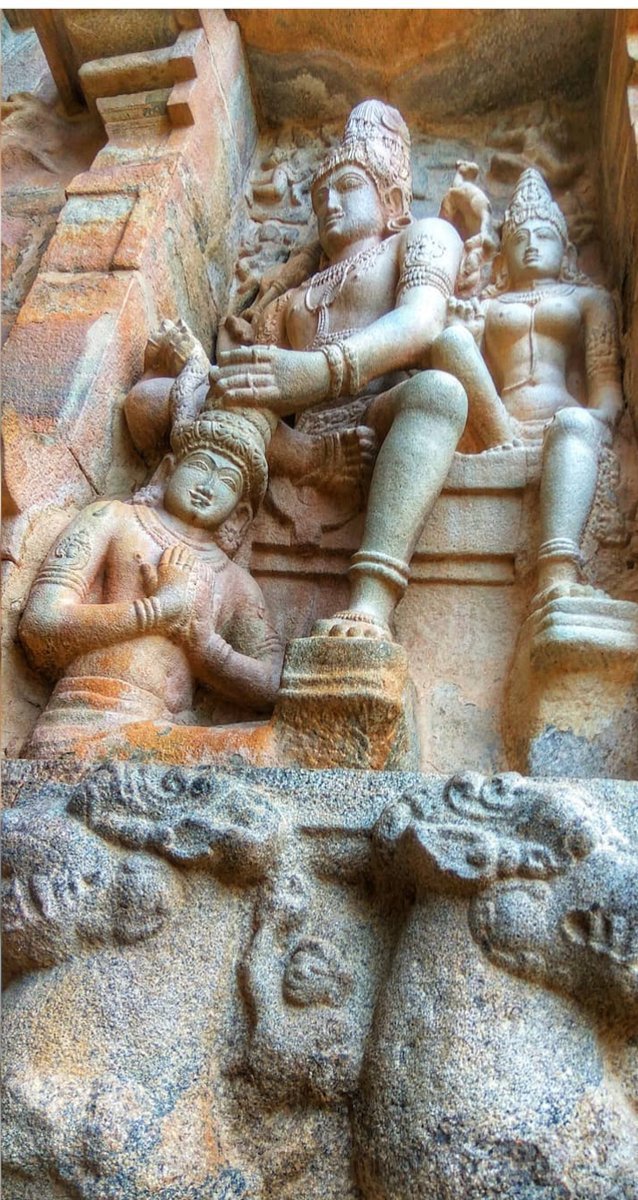
Chandesha-Anugraha Murti - One of the Sculpture in Brihadeshwara Temple at Gangaikonda Cholapuram - built by Raja Rajendra Chola I
This Sculpture depicts Bhagwan Shiva along with Devi Paravathi blessing Chandeshwara - one of the 63 Nayanmars.
#Thread
Chandeshwara/Chandikeshwara is regarded as custodian of Shiva Temple's wealth&most of Shiva temples in South India has separate sannathi for him.
His bhakti for Bhagwan Shiva elevated him as one of foremost among Nayanmars.
He gave importance to Shiva Pooja&protection of cows.
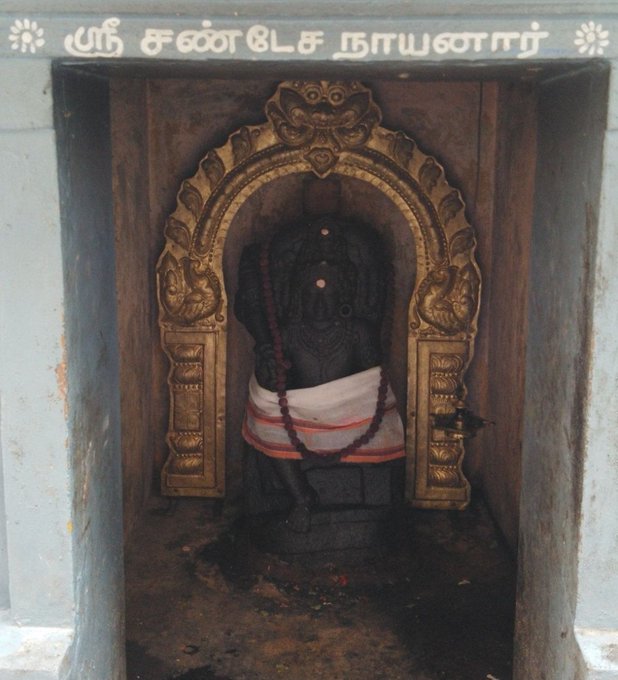
There are series of paintings, illustrating the #story of Chandikeshwar in the premises of
Sri Sathiyagireeswarar #Temple at Seinganur,near Kumbakonam,TN
Chandikeshwara's birth name
is Vichara sarman.He was born in the village of Senganur on the banks of River Manni.

His Parent names were Yajnathatan and Pavithrai.
Vichara Sarman was a gifted child and he learnt Vedas and Agamas at a very young age.
He was very devout and would always think about Bhagwan Shiva.
One day he saw a cowherd man brutally assaulting a cow,Vichara Sarman could not tolerate this. He spoke to cowherd: ‘Do you not know that the cow is worshipful & divine? All gods & Devas reside in https://t.co/ElLcI5ppsK it is our duty to protect cows &we should not to harm them.

Chandesha-Anugraha Murti - One of the Sculpture in Brihadeshwara Temple at Gangaikonda Cholapuram - built by Raja Rajendra Chola I
This Sculpture depicts Bhagwan Shiva along with Devi Paravathi blessing Chandeshwara - one of the 63 Nayanmars.
#Thread
Chandeshwara/Chandikeshwara is regarded as custodian of Shiva Temple's wealth&most of Shiva temples in South India has separate sannathi for him.
His bhakti for Bhagwan Shiva elevated him as one of foremost among Nayanmars.
He gave importance to Shiva Pooja&protection of cows.
There are series of paintings, illustrating the #story of Chandikeshwar in the premises of
Sri Sathiyagireeswarar #Temple at Seinganur,near Kumbakonam,TN
Chandikeshwara's birth name
is Vichara sarman.He was born in the village of Senganur on the banks of River Manni.
His Parent names were Yajnathatan and Pavithrai.
Vichara Sarman was a gifted child and he learnt Vedas and Agamas at a very young age.
He was very devout and would always think about Bhagwan Shiva.
One day he saw a cowherd man brutally assaulting a cow,Vichara Sarman could not tolerate this. He spoke to cowherd: ‘Do you not know that the cow is worshipful & divine? All gods & Devas reside in https://t.co/ElLcI5ppsK it is our duty to protect cows &we should not to harm them.