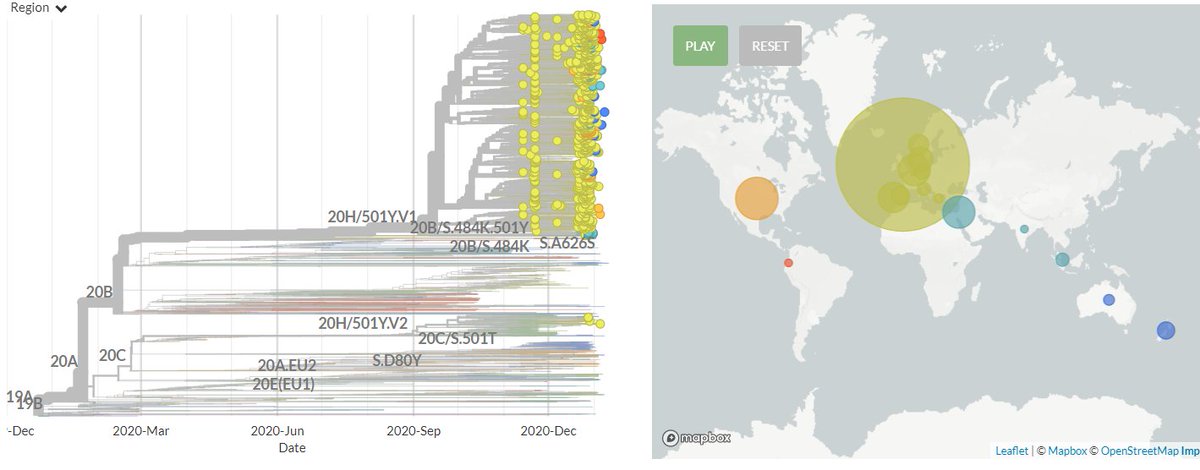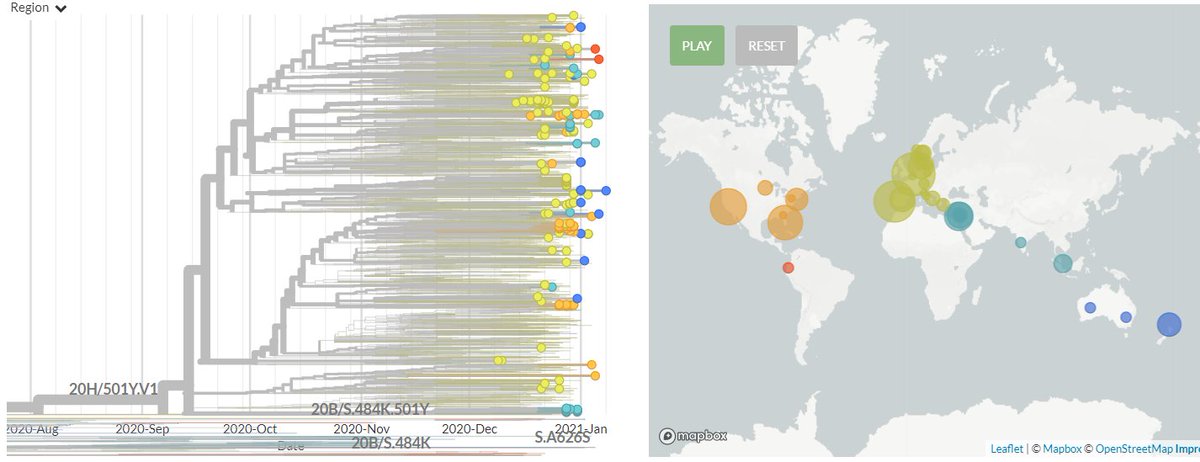

A brief update to the focal S:N501 builds to start your Friday off right! This one includes data from 7 Jan 21.

We have about 20 new sequences each in 501Y.V1 (B.1.1.7 #b117) & 501Y.V2.

Let's take a look at the new sequences, starting with 501Y.V1

1/14

https://t.co/kT1gFsSZn0

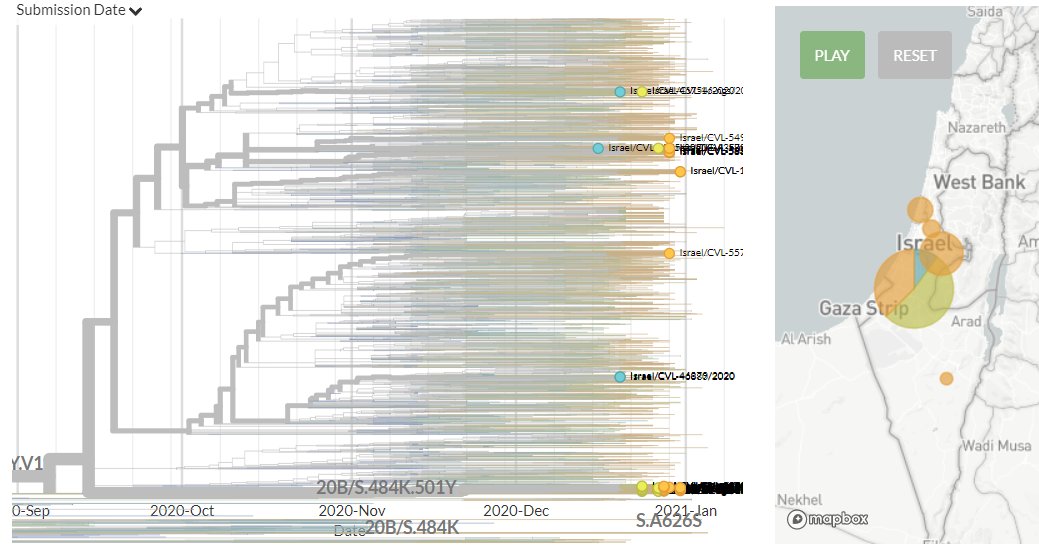
There are 22 new non-UK sequences in 501Y.V1, including for the first time from Luxembourg (3), & additional seqs from Singapore (1), Australia (4), France (12), & Switzerland (2).

2/14
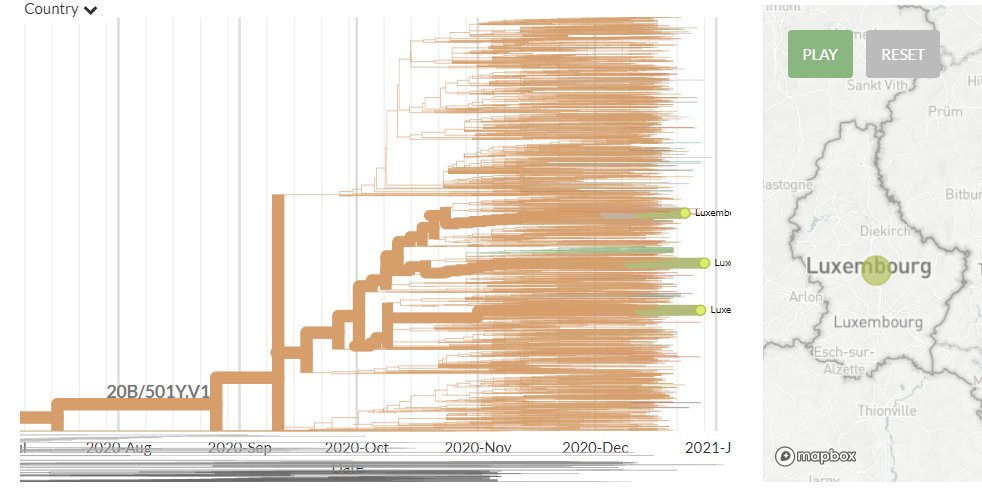
First, Luxembourg has 3 sequences in 501Y.V1 for the first time. Each represents a separate introduction.

3/14
France has 12 new sequences (orange). Many of these represent independent introductions.

Zooming in (divergence view), we can see 2 new sequences are identical (possible local transmission), & 2 differ by 2 mutations (1 each).

4/14
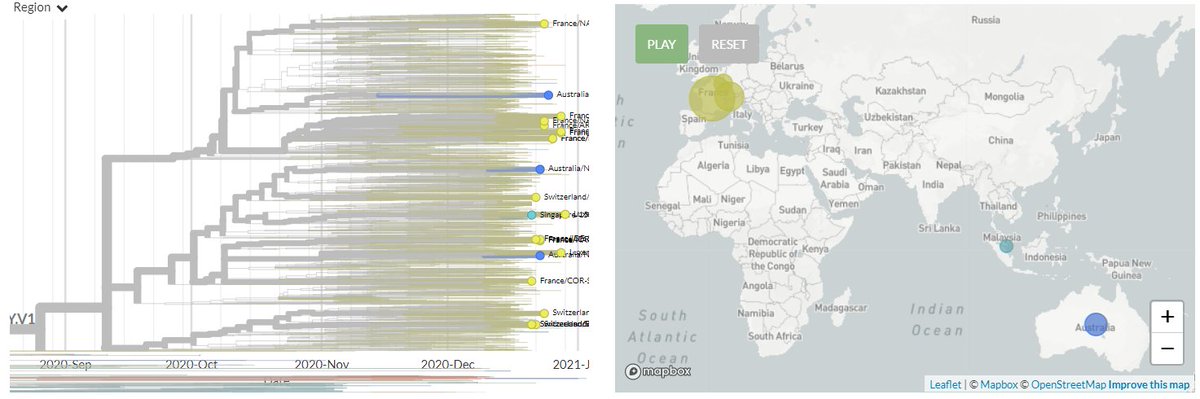
Australia has 4 new sequences (red and orange) which are spread across the tree, representing separate additional introductions.

5/14
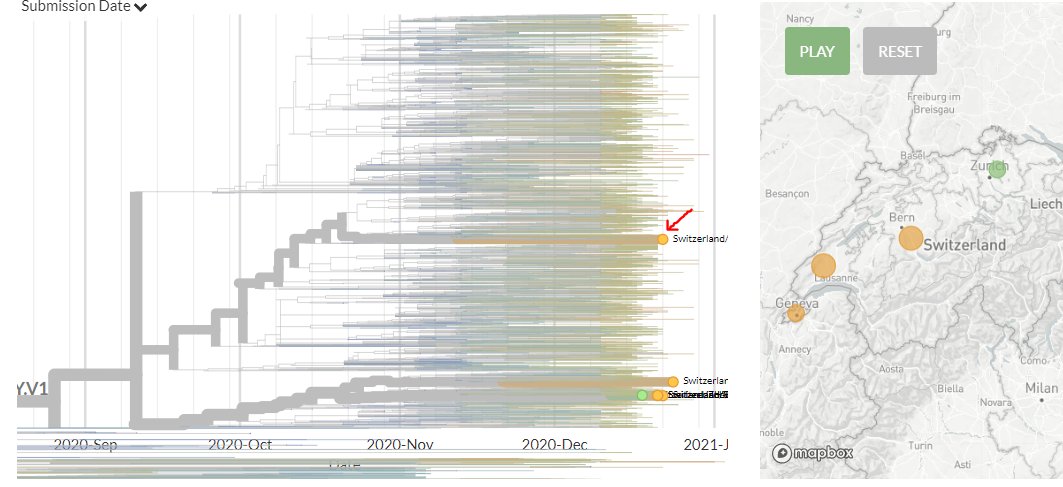
Switzerland has 2 new sequences. One (marked 1st pic) is a clear separate introduction. The other (marked 2nd pic, zoomed, divergence) is from Bern & identical to an earlier sequence from Zurich ('ZH'). This could be local transmission or a common exposure.

6/14
There is 1 new sequence from Singapore (orange).

Zooming in (divergence view), we can see it is identical to 2 older sequences, which may indicate local transmission or a common exposure.

7/14
There are ~19 new non-South African sequences in 501Y.V2, including for the first time from Botswana (6), South Korea (1), & France (1), as well as additional sequences from the UK (~9).

(UK data may be affected by subsampling due to large sequence numbers.)

8/14
At least 9 new sequences from the UK are now in 501Y.V2 (UK data may be impacted by subsampling).

These are a mix of separate introductions & local transmission.

Connections to French sequences are in the next tweet...

9/14
France has 2 sequences in 501Y.V2. They cluster together, which may indicate local transmission or a common source.
They are related to seqs from England, but whether this is European transmission or exposure to common diversity in S Africa can't be distinguished clearly.

10/14
Botswana has 6 sequences in 501Y.V2. One sits apart from the others, indicating at least 2 introductions.

The other 5 cluster together, but are separated by a 1-3 mutations. This could indicate local transmission or transmission from unsampled South African diversity.

11/14
Lastly, South Korea has a sequence in 501Y.V2 for the first time.

12/14
As previously, the country plots are also updated. Lithuania is now added!

Remember: many countries are currently focusing sequencing efforts on S:N501 variants, so frequencies are often not true representations of the 501Y variants.

13/14

https://t.co/c7wlQOLRiq
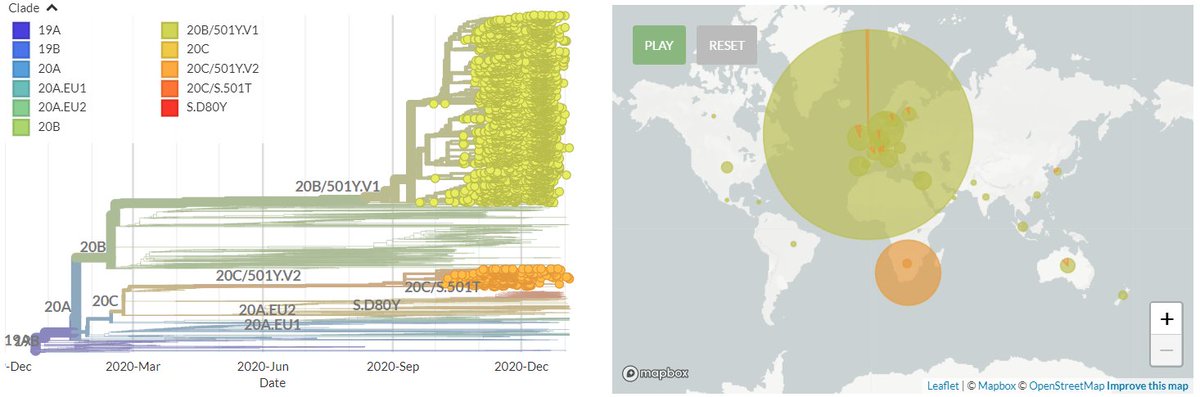
Finally, we've added a new label to help identify a cluster of sequences with a S:N501*T* mutation currently circulating in Australia.

This is another independent appearance of a S:N501 (again, to T, not Y) mutation, & is not related to 20C/501Y.V2 or 20B/501Y.V1.

14/14

More from Dr Emma Hodcroft

Lots of tweets about this today!
Let's see what we can see in the focal S:E484 build!

Phylogenetics (what I do - making 'family trees' from virus genetics) can be very informative to see how different variants are spreading, and how cases

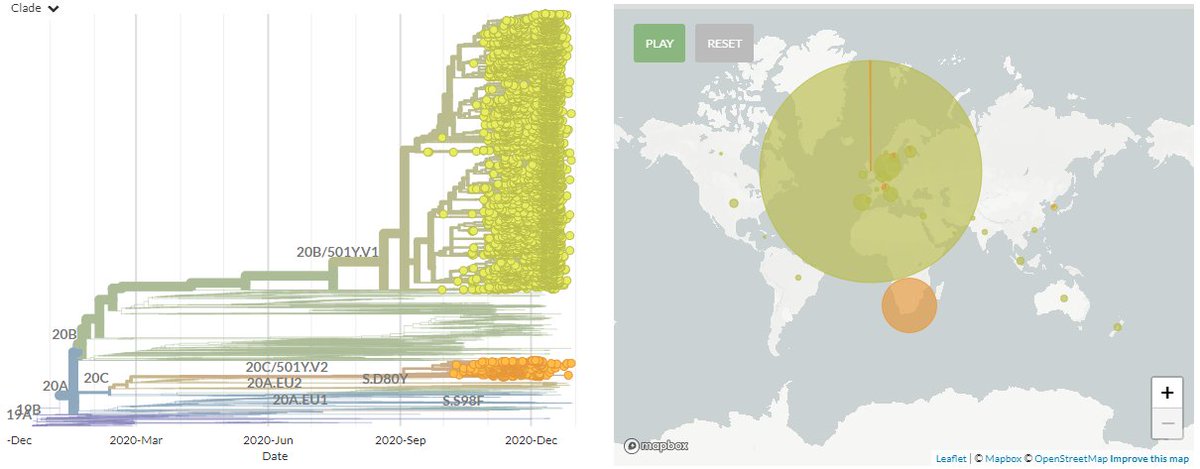
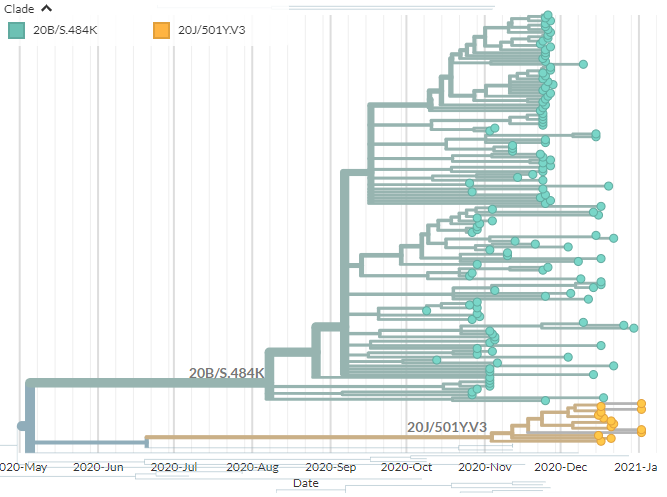
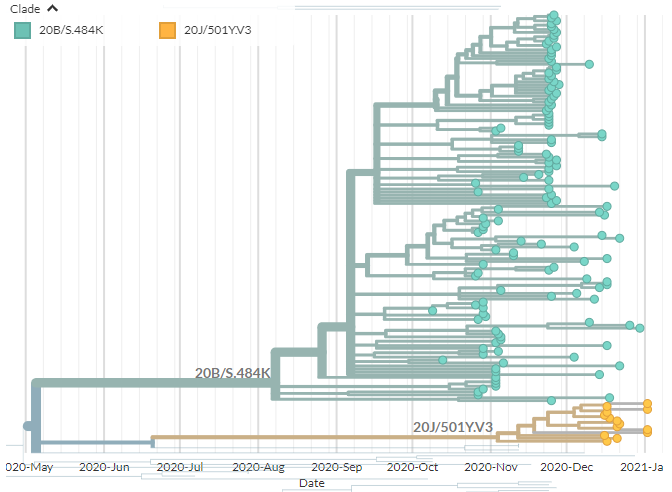
There are two variants circulating predominantly in Brazil:
- 20B/S.484K seems to be older & more widespread. It has (among others) a mutation at position 484
- 20J/501Y.V3 is smaller & detected recently. It has mutations at 501 *and* 484.

2/10

https://t.co/Cw5u2kuATa


The variant predominantly in the UK (501Y.V1 / B.1.1.7) and the variant predominantly in South Africa (501Y.V2) also both have 501. 501Y.V2 *also* has the 484K mutation.

Why are there concerns about these mutations? You can read more at https://t.co/wVE7ubYBoy!

3/10


The view below is from an analysis focusing on sequences with a mutation at 484. It shows all the samples in the 2 variants (20B/S.484K & 20J/501Y.V3) & how they're related. More closely related = closer together (very, very roughly).

4/10


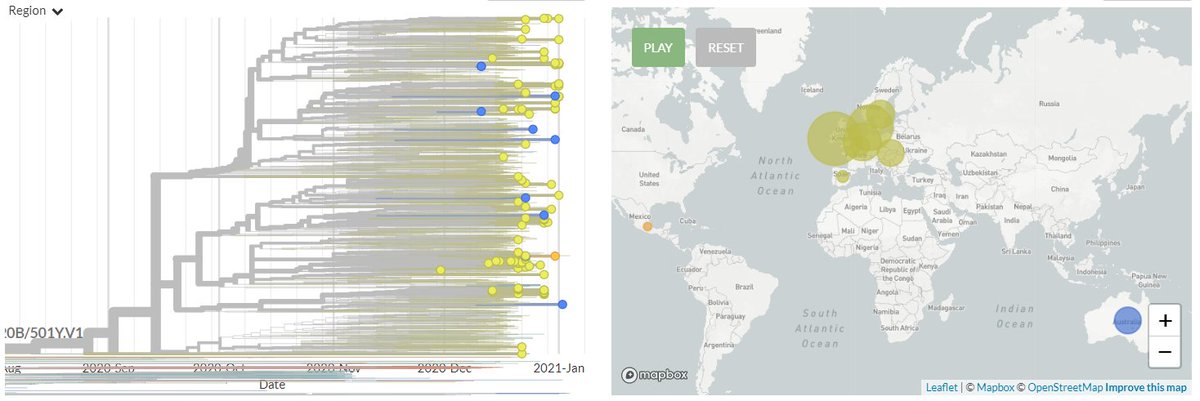
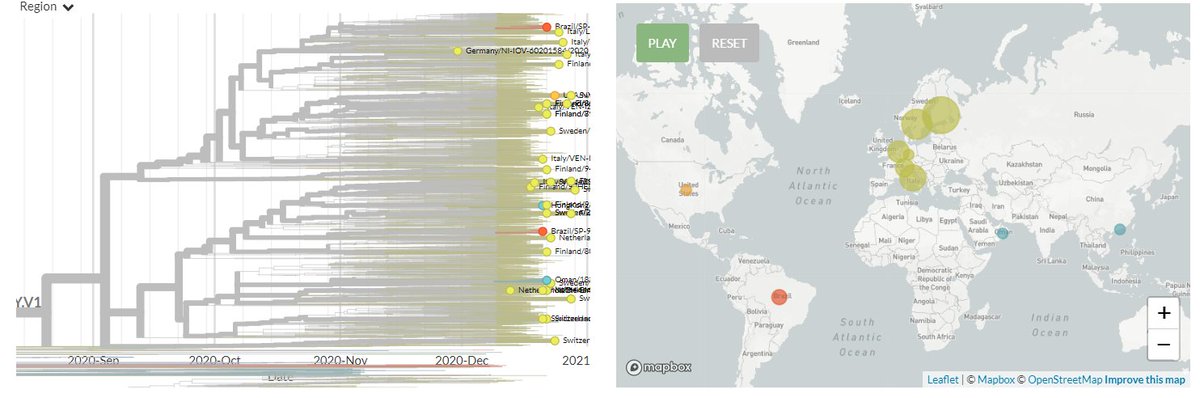
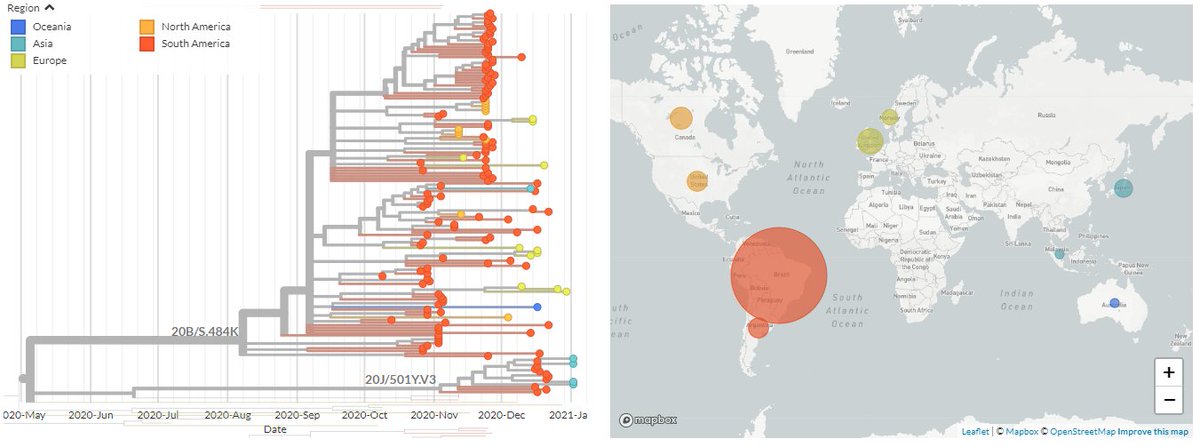
We can colour these samples by region to see where they're from. As we expect - most are in Brazil! A few are in Argentina (also red).

5/10

https://t.co/Cw5u2kuATa
🎉Happy New Year!🎉

To kick off 2021, here's an update on:
- S:N501 variants (501Y.V1/V2) with data from 31 Dec 2020
- 69/70del variants
- 20A.EU1 variant (most prevalent variant in Europe)

(Here are some fireworks that look a bit like phylogenies! 🎆)

1/23


The latest sequences from 31 Dec show new sequences in the S:N501Y.V1 variant (originating from SE England) from Netherlands, Denmark, Australia, Italy, Canada, the USA, Germany, Switzerland, & India.

2/23

S:N501 link
https://t.co/TfHfPgBEBS

Image link
https://t.co/3aCKv1pAcI


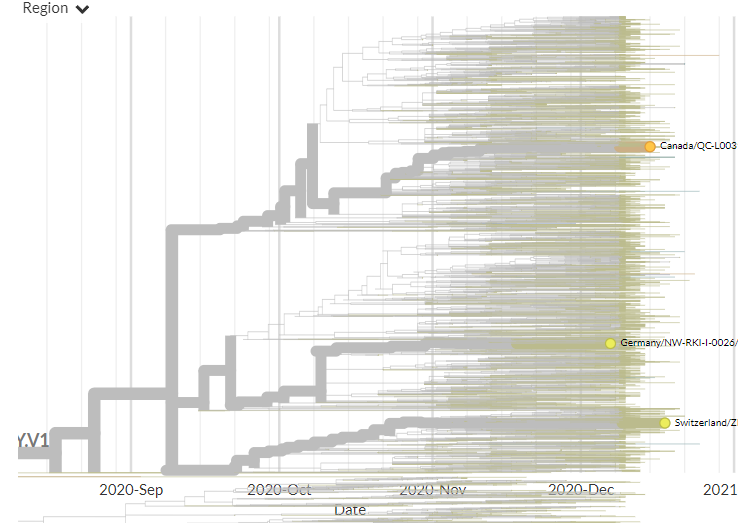
Canada, Germany, & Switzerland all have sequences that fall in 501Y.V1 for the first time, scattered across the tree.

3/23


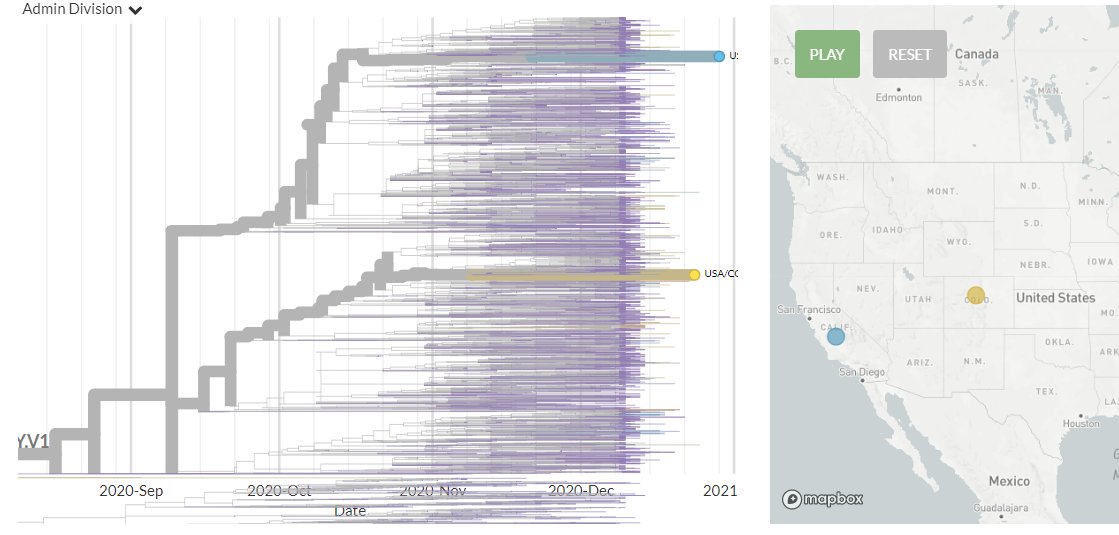
The USA also has its first 2 sequences that fall in 501Y.V1, from Colorado & California. India also had its first 3 sequences, also from different regions.

In both cases, the sequences are not connected, indicating separate introductions.

4/23


In countries with previous sequences:

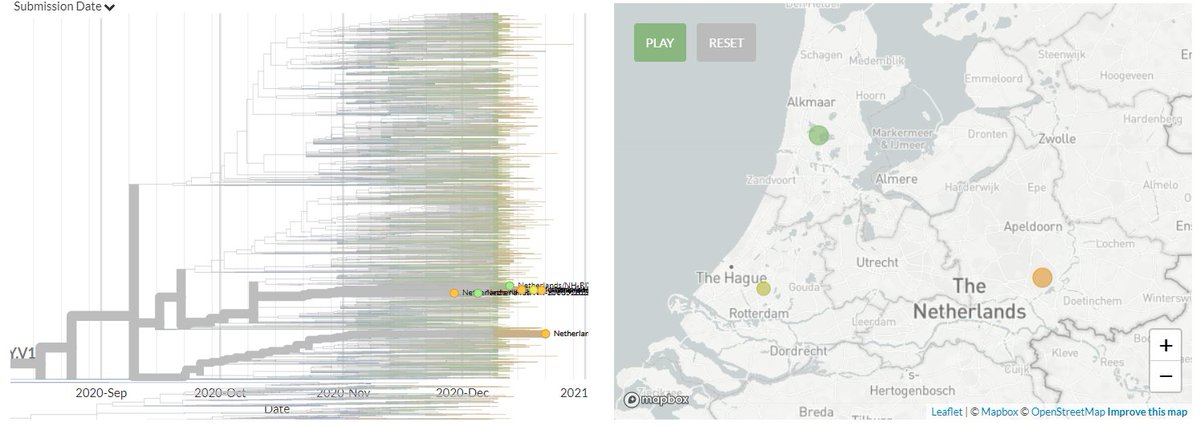
6 new sequences from Netherlands, in orange/yellow (green are older).
1 is clearly separate - zooming in (& in divergence view, coloured by country) it is harder to determine the relationship between the others.

5/23
Each day brings new challenges, but here's an update to the dedicated S.N501 build, using data from 6 Jan 2021 to keep you going.

There are 42 new non-UK sequences in 501Y.V1 (B.1.1.7) & 7 new non-South-African sequences in 501Y.V2.

1/14

https://t.co/kT1gFsSZn0


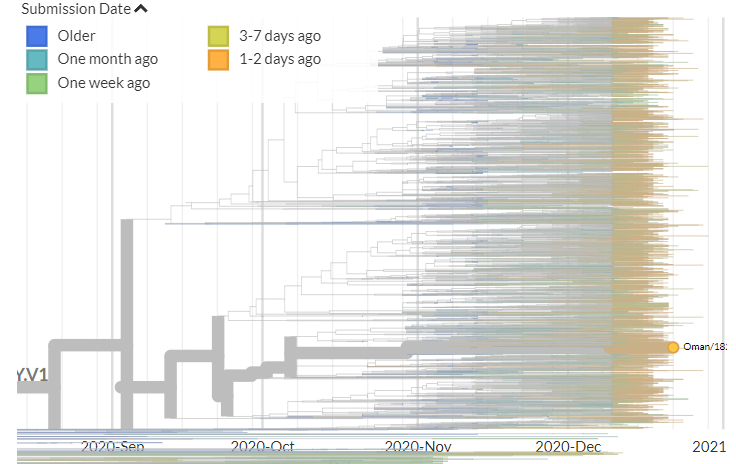
There are 42 new non-UK sequences in 501Y.V1 from the Netherlands, Italy, Hong Kong, Finland, Sweden, Germany, USA, Switzerland, Brazil, and the first sequence from 501Y.V1 in Oman.

https://t.co/XA8VR8HiEq

2/14


Oman has their first sequence which falls into 501Y.V1:

3/14


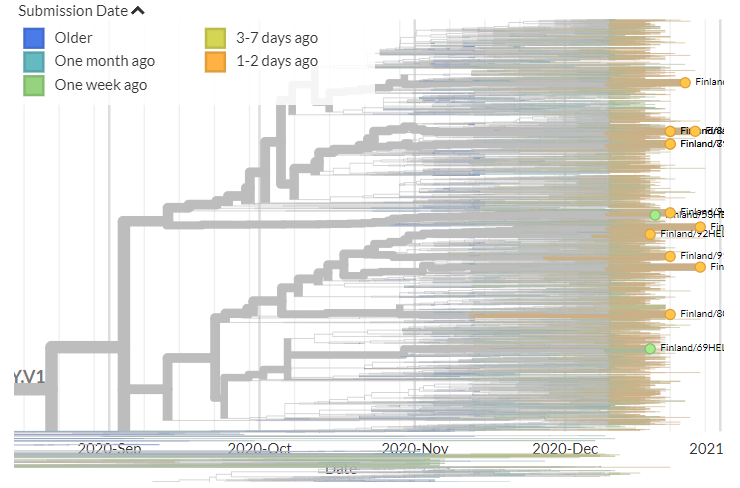
Finland has 12 new sequences (orange), which mostly represent separate introductions. Zooming in (divergence view), we can see 3 of the new sequences are identical (red), which may indicate the cases are connected.

4/14


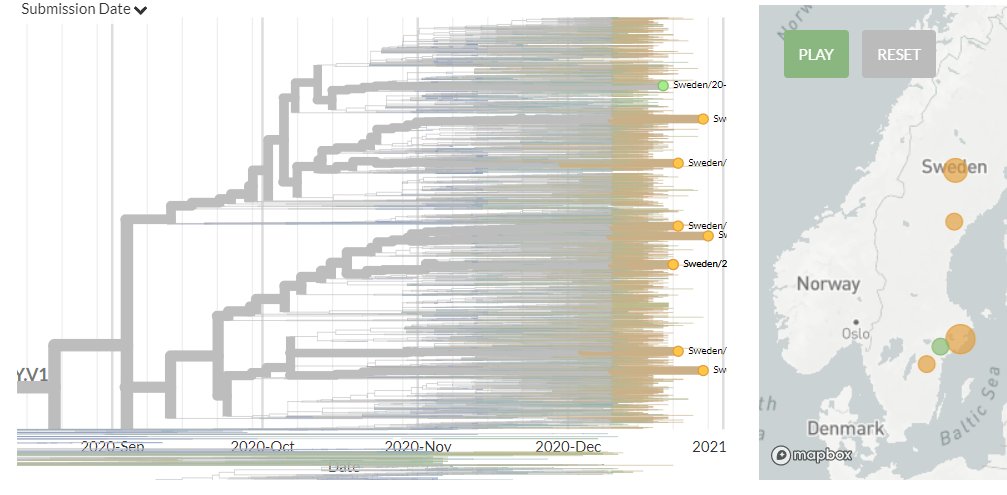
Sweden has 8 new sequences (orange), which indicate separate introductions.

5/14

More from For later read

You May Also Like