To see how this is clearly wrong, consider these two extreme cases: 2/
A serious reasoning error that is particularly common among educated people is to argue that if a study hasn't been done on a particular question we have 'no data', and therefore no basis on which to form beliefs or act.
This is incorrect and dangerous. 1/
To see how this is clearly wrong, consider these two extreme cases: 2/
But we can estimate the likelihood just fine! To start with we can just check the base rate of all vaccine trials.
What fraction of all vaccine trials in history have had +ve results? 3/
b. Imagine now that the vaccine trial results have come back positive. But by chance all the vaccines were given in a blue room.
So, will the vaccine still work if given in a red room? I guess we have 'no data'.
4/
That is plainly ridiculous — we understand the causal mechanism and it doesn't involve room colour, so in fact we can give a near definitive answer to that question. 5/
The error does most damage when we need to move fast in an uncertain environment. 7/
What complete bollocks! 8/
But even if they didn't, we could look at the base rate among all vaccines — what fraction of all vaccines offer protection for ~6 months after the first dose? 9/
Furthermore, we know how vaccines work, and people who are experts in immune reactions probably have a trained intuition on how likely one is to get immunity after a first exposure to an antigen. 10/
If they think one shot will work with 70% probability or 30% probability, that's a big update either way. 11/
But that's normal and fine, and they can go in an expected value calculation nonetheless. 12/
They call giving one dose 'risky' but if we were already planning to give one dose we could equally say two doses is wildly risky — because you only vaccinate half as many people!) 13/
No two cases are exactly the same, and we always have to reason from nearby analogies — which means we always have relevant information we can use to guide a decision. 14/
More from For later read

Humans inherently like the act of solidarity. We are social beings. We like to huddle up and be together.
They used this against us.
They convinced us that it was an act of solidarity to flatten the curve, to wear a mask for others, to take the vaccines for others,
and to reach #covidzero for others. They convinced us that this was for the greater good of society.
In reality, this couldn't be further away from the truth. They have divided us and broken the core structure of our society. They have dehumanized us with their masks.
They set us against each other into clans on opposite sides of a spectrum. They have turned us into aggressive beings fighting for our survival. Some of us fear harm from the virus, others fear harm from the vaccine, and yet others fear harm from the attack on our civilization.
We are all on a flight or fight mode. We are all operating under the influence of fear. We must collect ourselves and reflect on what has happened over the last year.
How is this for the greater good of society?
They used a tactical warfare strategy against us.
'Divide and conquer'.
We fell for it.
Now we must become aware of it and fight back.
We must reunite. We must find true solidarity to save our world. To free ourselves. To regain our autonomy.
They used this against us.
They convinced us that it was an act of solidarity to flatten the curve, to wear a mask for others, to take the vaccines for others,
If there was ever a time in our lifetime to be non-partisan and for citizens of all walks of life globally to unite behind the basic fundamentals of humanity, freedoms, liberties, human rights, sovereignty, autonomy, dignity, empathy and compassion: it is now. https://t.co/Fa3ieEq51x
— Kulvinder Kaur MD (@dockaurG) January 9, 2021
and to reach #covidzero for others. They convinced us that this was for the greater good of society.
In reality, this couldn't be further away from the truth. They have divided us and broken the core structure of our society. They have dehumanized us with their masks.
They set us against each other into clans on opposite sides of a spectrum. They have turned us into aggressive beings fighting for our survival. Some of us fear harm from the virus, others fear harm from the vaccine, and yet others fear harm from the attack on our civilization.
We are all on a flight or fight mode. We are all operating under the influence of fear. We must collect ourselves and reflect on what has happened over the last year.
How is this for the greater good of society?
They used a tactical warfare strategy against us.
'Divide and conquer'.
We fell for it.
Now we must become aware of it and fight back.
We must reunite. We must find true solidarity to save our world. To free ourselves. To regain our autonomy.



A name has caught the radar of agencies investigating #GretaToolkit- FRIEDRICH PIETER. Delhi Police expressed shock over the appearance of Pieter's name as "Who to Follow" in g-doc as he is under cops' scanner since 2006 for his Anti-India activities. Some shocking details..
1/9
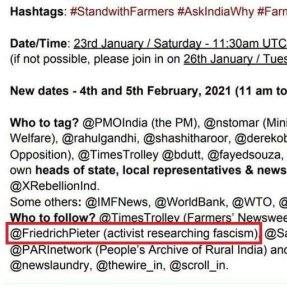
Pieter is close associate (read hired by) Bhajan Singh Bhindar, founder of OFMI (Org for Minorities of India) that considers itself an anti-Gandhi 'crusader' & is Pro-Khalistan. They also campaigned to free Bhullar (convicted Khalistani terr0r!st) & lobby against Modi in US.
2/9
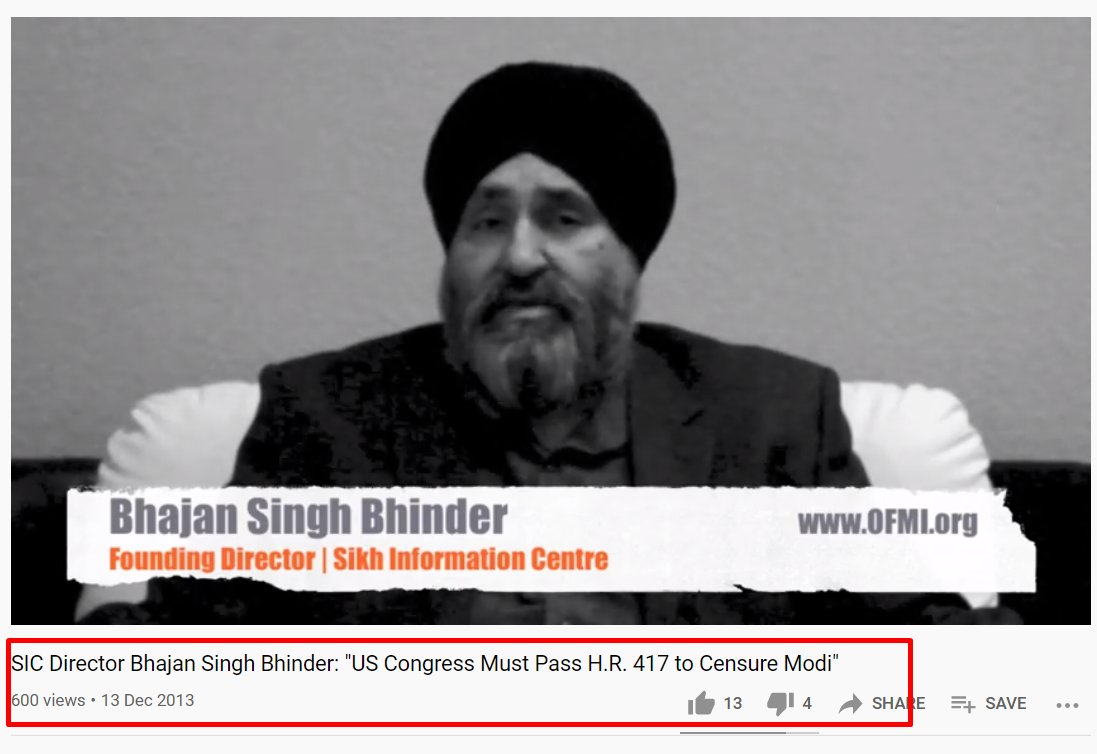
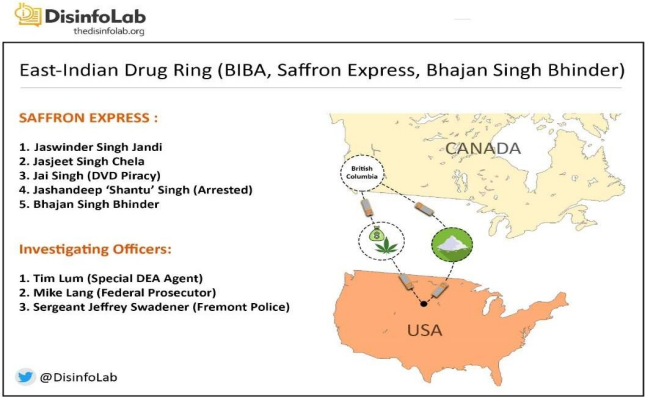
Bhinder has alleged connection with ISI & had records of owning inter-state drugs cartel & DVD piracy for terr0r funding. They also took control Fremont Gurudwara, US back in 2003 for millions of donation. Details of this 'Info-War' by @DisinfoLab
https://t.co/oIDFSoaDX2
3/9
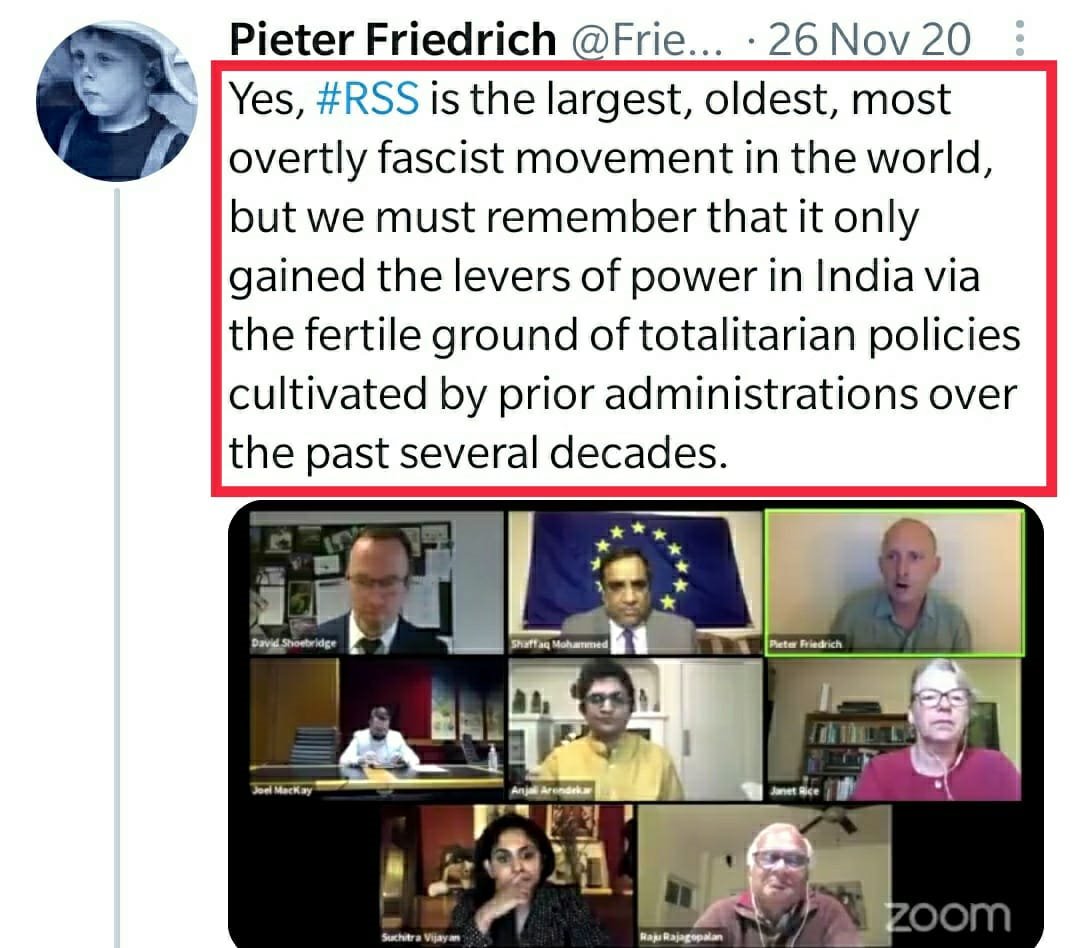
Back to Pieter. Take a glance at his work. His TL is filled with anti-BJP/RSS/Modi propaganda. From his speeches to articles, everything have few keywords in common- RSS/Fascism/gen0c!de/k!ll!ing/Kashmir/Hindutva, as if running a non-stop unrest in India is his bread & butter
4/9
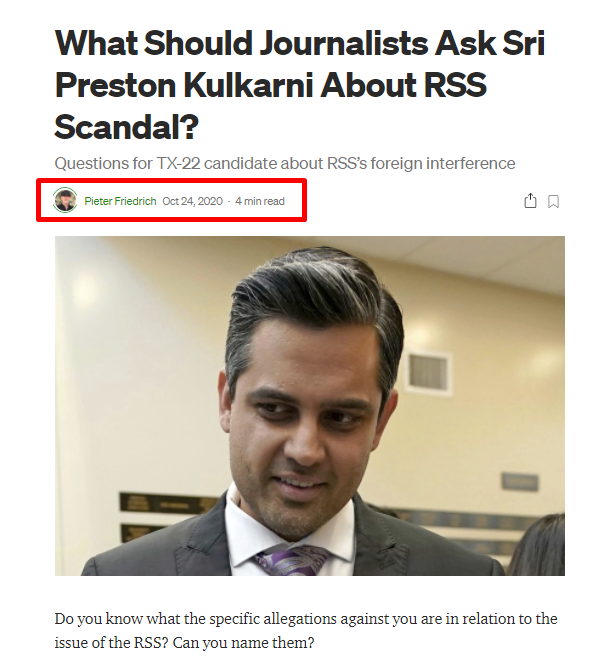
He picks every topic with an extreme narrative that potentially hurts integrity of nation, be it Kashmir,CAA,1984 & with his recent projects- Farmer protest & campaigning heavily against Sri Kulkarni. Despite all, Kulkarni appointed as Chief of Ext Affairs at Biden admin.
5/9
1/9
Pieter is close associate (read hired by) Bhajan Singh Bhindar, founder of OFMI (Org for Minorities of India) that considers itself an anti-Gandhi 'crusader' & is Pro-Khalistan. They also campaigned to free Bhullar (convicted Khalistani terr0r!st) & lobby against Modi in US.
2/9
Bhinder has alleged connection with ISI & had records of owning inter-state drugs cartel & DVD piracy for terr0r funding. They also took control Fremont Gurudwara, US back in 2003 for millions of donation. Details of this 'Info-War' by @DisinfoLab
https://t.co/oIDFSoaDX2
3/9
Back to Pieter. Take a glance at his work. His TL is filled with anti-BJP/RSS/Modi propaganda. From his speeches to articles, everything have few keywords in common- RSS/Fascism/gen0c!de/k!ll!ing/Kashmir/Hindutva, as if running a non-stop unrest in India is his bread & butter
4/9
He picks every topic with an extreme narrative that potentially hurts integrity of nation, be it Kashmir,CAA,1984 & with his recent projects- Farmer protest & campaigning heavily against Sri Kulkarni. Despite all, Kulkarni appointed as Chief of Ext Affairs at Biden admin.
5/9

the whole point of Dunks was you could go cop them at VIM whenever you wanted for $65. this shit is like having to enter a raffle to buy milk.
like seriously why not make a ton more of them if they're gonna be so sought-after? they land at outlets? so? nike still makes money off that.
the only reason to keep making them so limited is that they KNOW all that matters is the profit on the flip and if they were readily available FEWER people would want them, not more
the whole system is super broken, but it's just gonna go the way it goes, because at this point it all caters to the secondary market. the only reason Nike can sell Jordan 1s for $200 is because the people buying them can flip them for $500
adjusted for inflation, a $65 AJ1 in 1985 is like $160—and modern-day AJ1s are made from cheaper materials in factories staffed by cheaper workers. they don't HAVE to be $200 retail. but the secondary market nuked the whole concept of what sneakers are "worth"
\U0001f91e ONLINE RAFFLE is available from @bodega for the upcoming "UNLV" Nike Dunk Low Retro. Open until 5 PM ET on 2/16.
— Kicks Deals (@KicksDeals) February 15, 2021
\u27a1\ufe0f\u27a1\ufe0f https://t.co/JxJlyPuJVo pic.twitter.com/zenWOCDg4L
like seriously why not make a ton more of them if they're gonna be so sought-after? they land at outlets? so? nike still makes money off that.
the only reason to keep making them so limited is that they KNOW all that matters is the profit on the flip and if they were readily available FEWER people would want them, not more
the whole system is super broken, but it's just gonna go the way it goes, because at this point it all caters to the secondary market. the only reason Nike can sell Jordan 1s for $200 is because the people buying them can flip them for $500
adjusted for inflation, a $65 AJ1 in 1985 is like $160—and modern-day AJ1s are made from cheaper materials in factories staffed by cheaper workers. they don't HAVE to be $200 retail. but the secondary market nuked the whole concept of what sneakers are "worth"