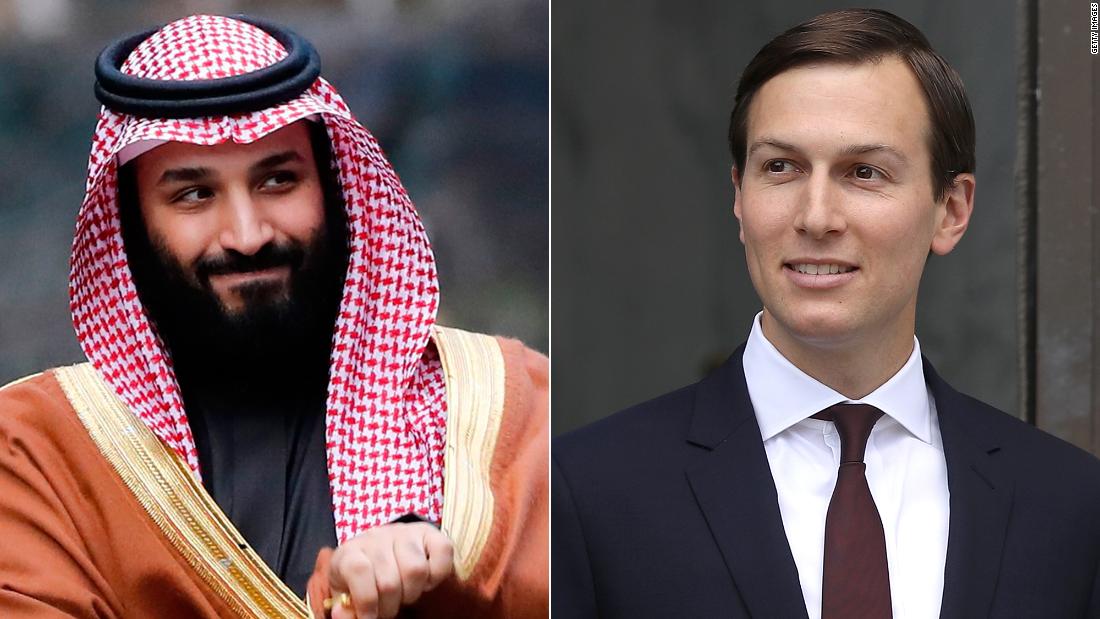
(THREAD) Pre-election Russia collusion may take down Trump. It's equally possible the Trumps' pre- and post-election collusion with Saudi Arabia, the UAE, and Israel will do it—a course of collusion also connected to the Kremlin. I explain here. I hope you'll read on and retweet.
1/ I must stress how unbelievably complex the "Grand Bargain" theory of the Trump-Russia case is—a different thing from saying it's not substantiated. It's substantiated in *almost every single particular*—it just *also* happens to be very confusing. Not byzantine—just confusing.
2/ The basics: Saudi Arabia, Israel, and the UAE all view Iran as their chief regional enemy. Iran is propped up by Russia. Therefore the Saudis, Israelis, and Emiratis all need a US government willing to find a way to get the Kremlin to *stop* supporting Iran in the Middle East.
3/ The best way to get Russia to stop supporting Iran—or reduce support—was/is to drop all sanctions on Russia over its 2014 annexation of Crimea, as that'd be worth *trillions* to the Kremlin over the next decade. Everyone knew that Clinton wouldn't do this—and that Trump would.
4/ Per the NYT, on August 3, 2016, Donald Trump Jr. met secretly at Trump Tower with a Saudi and Emirati emissary, George Nader, as well as an Israeli intelligence expert, Joel Zamel, with *significant* ties to both Israeli intelligence *and* Russian oligarchs allied with Putin.