Downplaying your Intelligence
In the hierarchy of conceit, intelligence reigns.
Thread
It is the ideal camouflage to seem less clever than you are and at times, somewhat of an idiot to confound people.
A gesture of admiration at their intellectual ability, for instance, can go a long way.
When you have power, do not be overt about it.
Feign a lesser position.
Lastly, if people discover the truth underlying your modesty and humbleness, they will not resent you for it.
More from For later read

A name has caught the radar of agencies investigating #GretaToolkit- FRIEDRICH PIETER. Delhi Police expressed shock over the appearance of Pieter's name as "Who to Follow" in g-doc as he is under cops' scanner since 2006 for his Anti-India activities. Some shocking details..
1/9
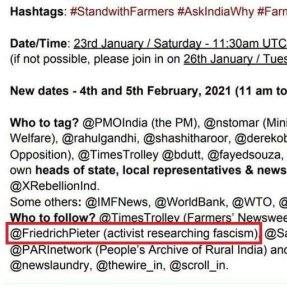
Pieter is close associate (read hired by) Bhajan Singh Bhindar, founder of OFMI (Org for Minorities of India) that considers itself an anti-Gandhi 'crusader' & is Pro-Khalistan. They also campaigned to free Bhullar (convicted Khalistani terr0r!st) & lobby against Modi in US.
2/9
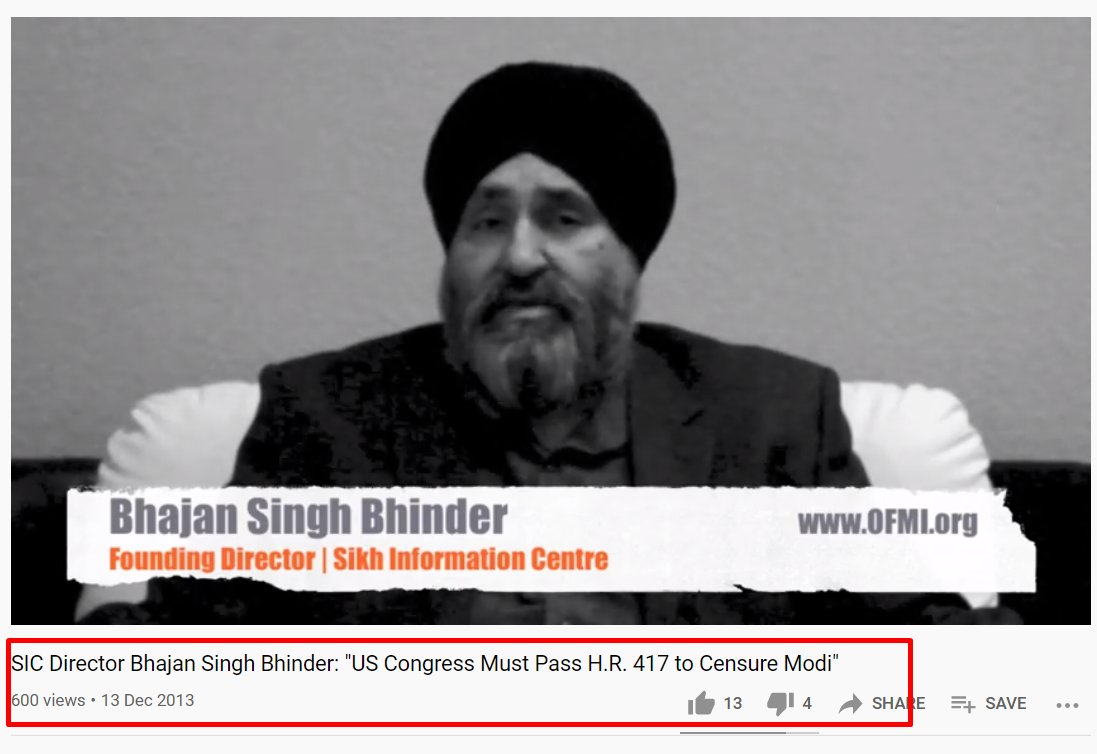
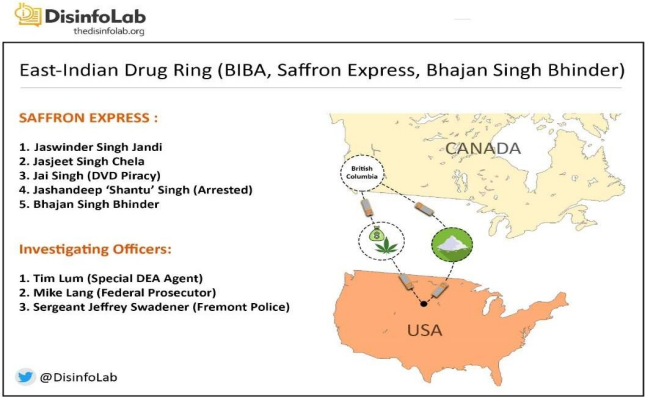
Bhinder has alleged connection with ISI & had records of owning inter-state drugs cartel & DVD piracy for terr0r funding. They also took control Fremont Gurudwara, US back in 2003 for millions of donation. Details of this 'Info-War' by @DisinfoLab
https://t.co/oIDFSoaDX2
3/9
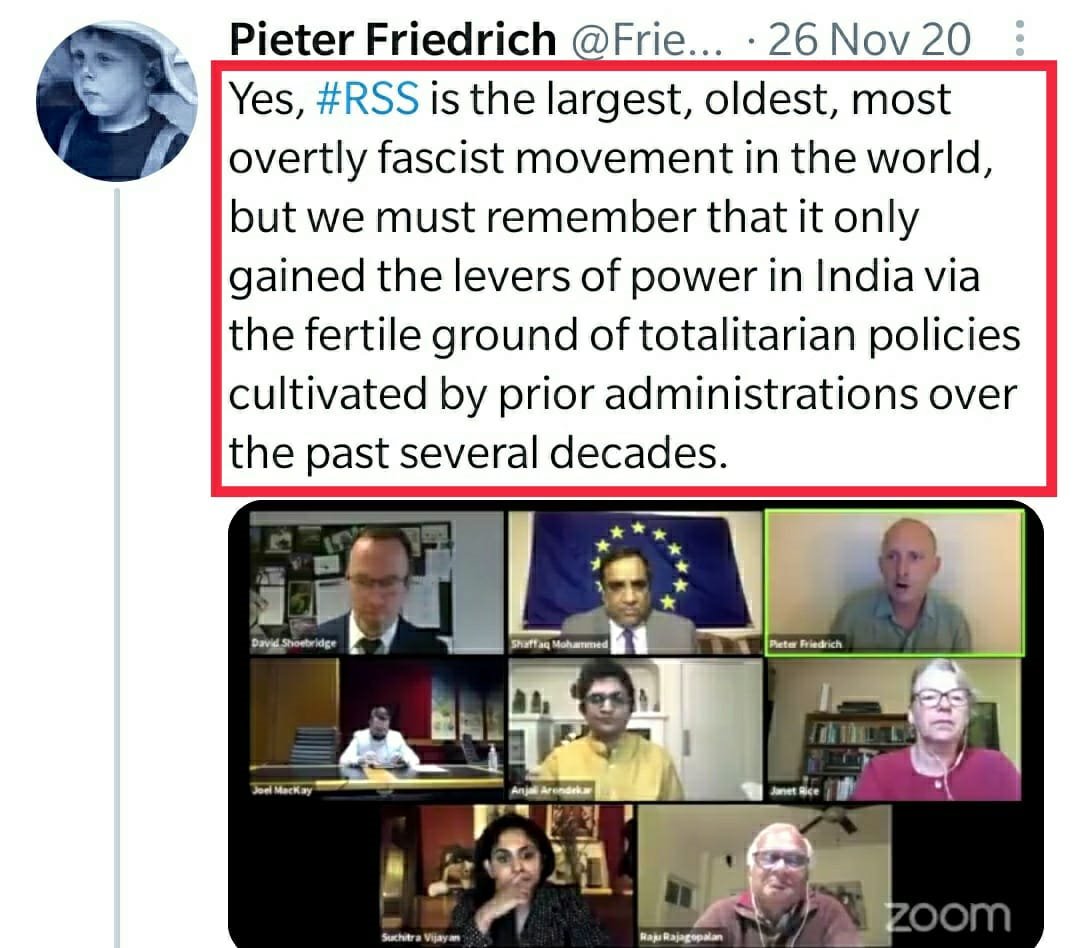
Back to Pieter. Take a glance at his work. His TL is filled with anti-BJP/RSS/Modi propaganda. From his speeches to articles, everything have few keywords in common- RSS/Fascism/gen0c!de/k!ll!ing/Kashmir/Hindutva, as if running a non-stop unrest in India is his bread & butter
4/9
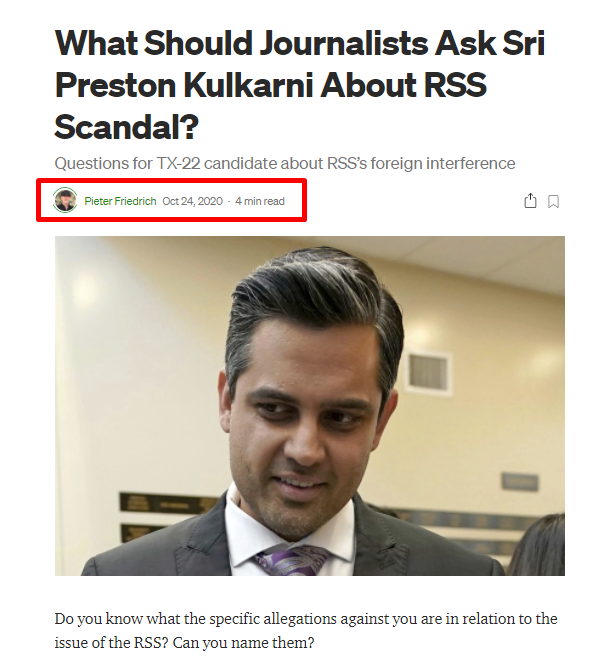
He picks every topic with an extreme narrative that potentially hurts integrity of nation, be it Kashmir,CAA,1984 & with his recent projects- Farmer protest & campaigning heavily against Sri Kulkarni. Despite all, Kulkarni appointed as Chief of Ext Affairs at Biden admin.
5/9
1/9
Pieter is close associate (read hired by) Bhajan Singh Bhindar, founder of OFMI (Org for Minorities of India) that considers itself an anti-Gandhi 'crusader' & is Pro-Khalistan. They also campaigned to free Bhullar (convicted Khalistani terr0r!st) & lobby against Modi in US.
2/9
Bhinder has alleged connection with ISI & had records of owning inter-state drugs cartel & DVD piracy for terr0r funding. They also took control Fremont Gurudwara, US back in 2003 for millions of donation. Details of this 'Info-War' by @DisinfoLab
https://t.co/oIDFSoaDX2
3/9
Back to Pieter. Take a glance at his work. His TL is filled with anti-BJP/RSS/Modi propaganda. From his speeches to articles, everything have few keywords in common- RSS/Fascism/gen0c!de/k!ll!ing/Kashmir/Hindutva, as if running a non-stop unrest in India is his bread & butter
4/9
He picks every topic with an extreme narrative that potentially hurts integrity of nation, be it Kashmir,CAA,1984 & with his recent projects- Farmer protest & campaigning heavily against Sri Kulkarni. Despite all, Kulkarni appointed as Chief of Ext Affairs at Biden admin.
5/9


#IDTwitter #IDFellows
Introducing our new series: “IDFN top 10 articles every fellow should read”🔖
#1: SAB management
by @mmcclean1 @LeMiguelChavez
Reviewers @KaBourgi, @IgeGeorgeMD, @Courtcita, @MDdreamchaser
We know is subjective & expect feedback/future improvements 👇
1. Clinical management of Staphylococcus aureus bacteremia: a review.
https://t.co/9tBCtp9mlP
👉 A must read written by Holland et al. where they review the evidence of the management of SAB.
2. Impact of Infectious Disease Consultation on Quality of Care, Mortality, and Length of Stay in Staphylococcus aureus Bacteremia: Results From a Large Multicenter Cohort Study.
https://t.co/XujO68pCuH
👉ID consult associated with reduced inpatient mortality.
3. Predicting Risk of Endocarditis Using a Clinical Tool (PREDICT): Scoring System to Guide Use of Echocardiography in the Management of Staphylococcus aureus Bacteremia
https://t.co/otcA1pxjAw
👉Predictive risk factors for infective endocarditis, and thus the need for TEE.
4. The Cefazolin Inoculum Effect Is Associated With Increased Mortality in Methicillin-Susceptible Staphylococcus aureus Bacteremia.
https://t.co/CQZiryVWZz
👉Presence of cefazolin inoculum effect in the infecting isolate was associated with an increase 30-day mortality.
Introducing our new series: “IDFN top 10 articles every fellow should read”🔖
#1: SAB management
by @mmcclean1 @LeMiguelChavez
Reviewers @KaBourgi, @IgeGeorgeMD, @Courtcita, @MDdreamchaser
We know is subjective & expect feedback/future improvements 👇
1. Clinical management of Staphylococcus aureus bacteremia: a review.
https://t.co/9tBCtp9mlP
👉 A must read written by Holland et al. where they review the evidence of the management of SAB.
2. Impact of Infectious Disease Consultation on Quality of Care, Mortality, and Length of Stay in Staphylococcus aureus Bacteremia: Results From a Large Multicenter Cohort Study.
https://t.co/XujO68pCuH
👉ID consult associated with reduced inpatient mortality.
3. Predicting Risk of Endocarditis Using a Clinical Tool (PREDICT): Scoring System to Guide Use of Echocardiography in the Management of Staphylococcus aureus Bacteremia
https://t.co/otcA1pxjAw
👉Predictive risk factors for infective endocarditis, and thus the need for TEE.
4. The Cefazolin Inoculum Effect Is Associated With Increased Mortality in Methicillin-Susceptible Staphylococcus aureus Bacteremia.
https://t.co/CQZiryVWZz
👉Presence of cefazolin inoculum effect in the infecting isolate was associated with an increase 30-day mortality.

The #worldwildlifeday2021 theme is Forests and Livelihoods: Sustaining People and Planet aligning with UN Sustainable Development Goals 1, 12, 13 and 15. So, what are the UN Sustainable Development Goals (SDGs) & how can children begin to learn about them & get involved ?
https://t.co/8ICvHxE9QL is easy & fun to follow for our smallest of people #EYFS. Early childhood is the perfect stage to introduce the core concepts of what it means to be a global citizen. For our reception & KS1 children please take a look at this fabulous free resource
https://t.co/tZx8UIS58Q Storytelling is a powerful communications tool and helps children remember lessons and virtues that they will use in everyday life. The idea is to simplify the lessons of the (SDGs) so young children can relate to – and better understand – the SDGs.
For older children here’s a board game that aims to help teach children around the world about the Sustainable Development Goals in a simple and child-friendly way
This is a lovely free book for children to enjoy flicking through themselves https://t.co/ScMbQCfpjl Elyx, the United Nations’ digital ambassador, uses various expressions and actions to help demonstrate the meaning of each Sustainable Development Goal.
https://t.co/8ICvHxE9QL is easy & fun to follow for our smallest of people #EYFS. Early childhood is the perfect stage to introduce the core concepts of what it means to be a global citizen. For our reception & KS1 children please take a look at this fabulous free resource
https://t.co/tZx8UIS58Q Storytelling is a powerful communications tool and helps children remember lessons and virtues that they will use in everyday life. The idea is to simplify the lessons of the (SDGs) so young children can relate to – and better understand – the SDGs.
For older children here’s a board game that aims to help teach children around the world about the Sustainable Development Goals in a simple and child-friendly way
This is a lovely free book for children to enjoy flicking through themselves https://t.co/ScMbQCfpjl Elyx, the United Nations’ digital ambassador, uses various expressions and actions to help demonstrate the meaning of each Sustainable Development Goal.
You May Also Like

1/Politics thread time.
To me, the most important aspect of the 2018 midterms wasn't even about partisan control, but about democracy and voting rights. That's the real battle.
2/The good news: It's now an issue that everyone's talking about, and that everyone cares about.
3/More good news: Florida's proposition to give felons voting rights won. But it didn't just win - it won with substantial support from Republican voters.
That suggests there is still SOME grassroots support for democracy that transcends
4/Yet more good news: Michigan made it easier to vote. Again, by plebiscite, showing broad support for voting rights as an
5/OK, now the bad news.
We seem to have accepted electoral dysfunction in Florida as a permanent thing. The 2000 election has never really
To me, the most important aspect of the 2018 midterms wasn't even about partisan control, but about democracy and voting rights. That's the real battle.
2/The good news: It's now an issue that everyone's talking about, and that everyone cares about.
3/More good news: Florida's proposition to give felons voting rights won. But it didn't just win - it won with substantial support from Republican voters.
That suggests there is still SOME grassroots support for democracy that transcends
4/Yet more good news: Michigan made it easier to vote. Again, by plebiscite, showing broad support for voting rights as an
5/OK, now the bad news.
We seem to have accepted electoral dysfunction in Florida as a permanent thing. The 2000 election has never really
Bad ballot design led to a lot of undervotes for Bill Nelson in Broward Co., possibly even enough to cost him his Senate seat. They do appear to be real undervotes, though, instead of tabulation errors. He doesn't really seem to have a path to victory. https://t.co/utUhY2KTaR
— Nate Silver (@NateSilver538) November 16, 2018