You know why ppl show up at the very second a class/mtg starts? It can feel awkward to sit in a room quietly or walk in on a random convo. Structure your pre #zoom time. Begin w/intentionality. It doesn’t have to be content focused, community building is good too! Some ideas...

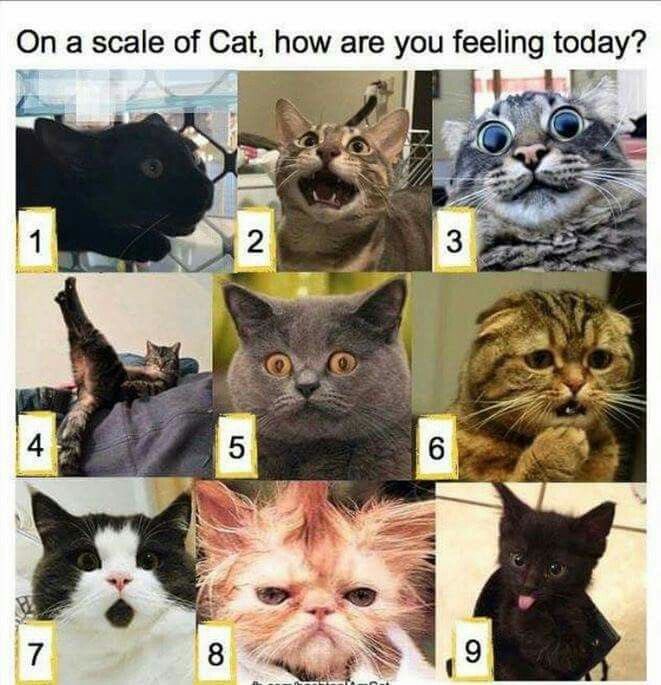
What are your pre #zoom activities? I tried this one today and enjoyed it.
— DR. \uff36\uff29\uff2a\uff29\u3000\uff33\uff21\uff34\uff28\uff39 (@vijisathy) January 29, 2021
Task: Where\u2019s Bernie?
Instructions: Drop a note in the chat when you find him.
(We also asked for hints & just before time was up his location was revealed). pic.twitter.com/bK5ZkGNcQl
We colored the other day (h/t: @lilymayubc) and it was soooo relaxing and fun! Love all these ideas - planning to borrow! pic.twitter.com/xFIqQ7pznR
— Parker Holman (@ParkerHolman) January 29, 2021
I did a word search with technical vocabulary from last term for the first lesson!
— Jodie Martin (@jodiemartinphd) January 29, 2021
#AcademicTwitter #AcademicChatter
#Inclusiveteaching
#Inclusivemeetings
More from For later read




@snip96581187 @Daoyu15 @lab_leak @walkaboutrick @ydeigin @Ayjchan @franciscodeasis @TheSeeker268 @angie_rasmussen Clearly, because as I have been saying for 8 months now, DTRA and DARPA have been using Ecohealth and UC Davis to collect novel pathogens for gain of function work back in the USA. I have documented this in many threads which I will post here just to annoy everyone.
@Daoyu15 @lab_leak @walkaboutrick @ydeigin @Ayjchan @franciscodeasis @TheSeeker268 @angie_rasmussen
@Daoyu15 @lab_leak @walkaboutrick @ydeigin @Ayjchan @franciscodeasis @TheSeeker268 @angie_rasmussen
@Daoyu15 @lab_leak @walkaboutrick @ydeigin @Ayjchan @franciscodeasis @TheSeeker268 @angie_rasmussen
@Daoyu15 @lab_leak @walkaboutrick @ydeigin @Ayjchan @franciscodeasis @TheSeeker268 @angie_rasmussen
@Daoyu15 @lab_leak @walkaboutrick @ydeigin @Ayjchan @franciscodeasis @TheSeeker268 @angie_rasmussen
28. Before moving on to DARPA, let's look at DTRA:
— Billy Bostickson \U0001f3f4\U0001f441&\U0001f441 \U0001f193 (@BillyBostickson) July 31, 2020
A must read!
It is astonishing the number of pies they had their dirty little fingers poking into:
Note John Epstein and Kevin Olival from EcoHealth Alliance are key figures in DTRA:https://t.co/O4QwVWrm7m pic.twitter.com/cnNGZ7AApj
@Daoyu15 @lab_leak @walkaboutrick @ydeigin @Ayjchan @franciscodeasis @TheSeeker268 @angie_rasmussen
24. DTRA Network for Collection of Viruses
— Billy Bostickson \U0001f3f4\U0001f441&\U0001f441 \U0001f193 (@BillyBostickson) January 9, 2021
7. DTRA - Metabiota - One Health - Ecohealth
Bat Research Networks and Viral Surveillance: Gaps and Opportunities in Western Asia pic.twitter.com/SOqSSXF3pa
@Daoyu15 @lab_leak @walkaboutrick @ydeigin @Ayjchan @franciscodeasis @TheSeeker268 @angie_rasmussen
That is the key question
— Billy Bostickson \U0001f3f4\U0001f441&\U0001f441 \U0001f193 (@BillyBostickson) January 5, 2021
1. DARPA/DTRA use NGOs like Ecohealth or Metabiota to collect new pathogens
2. They are sent to US labs (Mailman, Rocky Mountain, Atlanta CDC, UNC, USAMRIID) for GOF work by Lipkin, Nichols, Rasmussen, Baric, Dension, Munster, etchttps://t.co/wqhHK7uZO6
@Daoyu15 @lab_leak @walkaboutrick @ydeigin @Ayjchan @franciscodeasis @TheSeeker268 @angie_rasmussen
1. I wonder why Dr. Angela Rasmussen is so so upset & full of almost palpable venom about a Hypothesis and a "What if" question by @nicholsonbaker8 in the @NYMag https://t.co/a6lxtJLpKR
— Billy Bostickson \U0001f3f4\U0001f441&\U0001f441 \U0001f193 (@BillyBostickson) January 5, 2021
Did I hear someone say "DARPA"?
Did I hear someone say "DTRA"?https://t.co/i27mpxJDw2 pic.twitter.com/x4X3QPnTMS