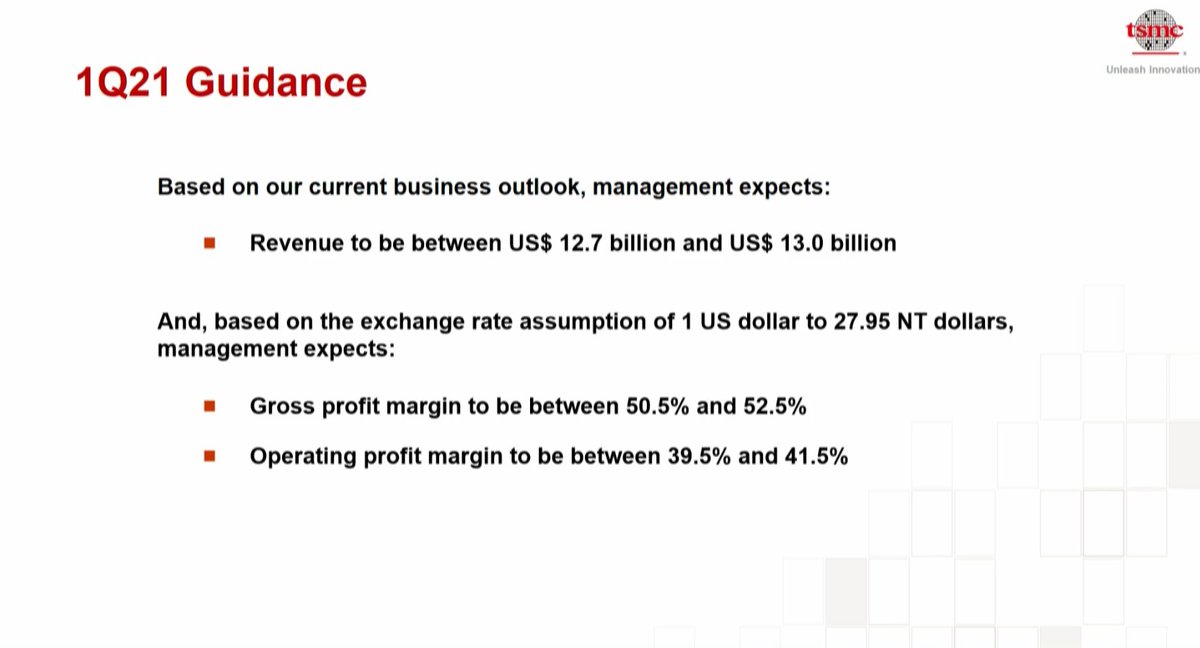
TSMC $TSM projecting capital expenses of 25-28B USD in 2021. 80% allocated for advanced process tech, 3, 5, 7nm. 10% advanced packaging and mask making, 10% other. 2020 capex, originally slated at $15B, was over $17B. For context $AMD's entire revenue for 2020 estimated at $9.5B
All this, especially the capex, in line with suggestions Intel will be increasing their use of TSMC fabs, or else AMD making really large increases (or both), but they also project a lot of growth in phones
I expect some inflation for autos and appliances as production is limited by the silicon shortage. Not like these fabs want to build more capacity at these nodes.
They still plan on continuing to expand in China, but a reset on the leading edge.
TSMC 4Q earnings remained strong on \u201cextremely high\u201d UTR and some shipments will land 1Q. 1Q21 guided +1% QoQ midpoint, 2021 growing mid-teens USD. Capex up huge $17.2bn to 25-28bn in \u201921, and now expect LT growth of 10-15% CAGR in \u201820-25 vs before 5-10% CAGR....
— cyw60 (@cyw60) January 14, 2021
More from Finance






You May Also Like


✨📱 iOS 12.1 📱✨
🗓 Release date: October 30, 2018
📝 New Emojis: 158
https://t.co/bx8XjhiCiB
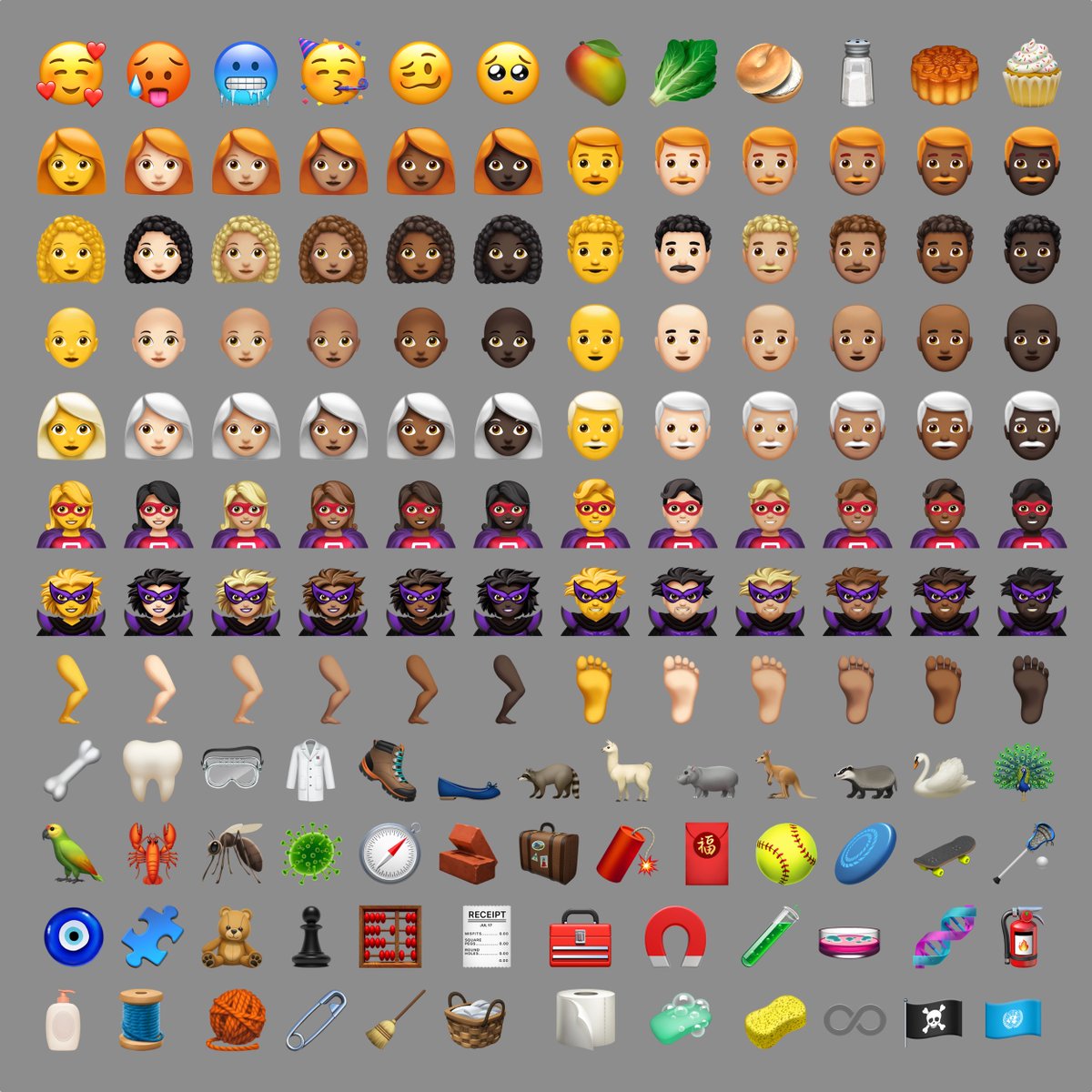
New in iOS 12.1: 🥰 Smiling Face With 3 Hearts https://t.co/6eajdvueip

New in iOS 12.1: 🥵 Hot Face https://t.co/jhTv1elltB

New in iOS 12.1: 🥶 Cold Face https://t.co/EIjyl6yZrF

New in iOS 12.1: 🥳 Partying Face https://t.co/p8FDNEQ3LJ

🗓 Release date: October 30, 2018
📝 New Emojis: 158
https://t.co/bx8XjhiCiB
New in iOS 12.1: 🥰 Smiling Face With 3 Hearts https://t.co/6eajdvueip
New in iOS 12.1: 🥵 Hot Face https://t.co/jhTv1elltB
New in iOS 12.1: 🥶 Cold Face https://t.co/EIjyl6yZrF
New in iOS 12.1: 🥳 Partying Face https://t.co/p8FDNEQ3LJ



A list of cool websites you might now know about
A thread 🧵
1) Learn Anything - Search tools for knowledge discovery that helps you understand any topic through the most efficient
2) Grad Speeches - Discover the best commencement speeches.
This website is made by me
3) What does the Internet Think - Find out what the internet thinks about anything
4) https://t.co/vuhT6jVItx - Send notes that will self-destruct after being read.
A thread 🧵
1) Learn Anything - Search tools for knowledge discovery that helps you understand any topic through the most efficient
2) Grad Speeches - Discover the best commencement speeches.
This website is made by me
3) What does the Internet Think - Find out what the internet thinks about anything
4) https://t.co/vuhT6jVItx - Send notes that will self-destruct after being read.