Financial Crisis (1667) avoided by Charles II, via London Goldsmiths' Loans https://t.co/UxtABIpH2n via @old_currency_ex


John Law (baptised 21 April 1671 – 21 March 1729) was a Scottish economist who distinguished money, a means of exchange, from national wealth dependent on trade.


Following Peace of Augsburg, official religion of a territory was determined by "cuius regio, eius religio" The Peace of Westphalia abrogated that principle religion was to be what it had been on 1 January 1624, considered a "normal year".
#NewNormal


More from RealRLD
@jbhearn @scientificecon @JoeBlob20 @financialeyes @Lloyd__Evans @wiki_ballot @GrubStreetJorno
#CovidStroika #CovidPurpose #GreatReset #GFC11
https://t.co/gUb9OX7AdL https://t.co/qqXCutbKK1

https://t.co/3D4TpmeXZr #CovidStroika @jbhearn @scientificecon @JoeBlob20 @financialeyes @Lloyd__Evans @wiki_ballot @GrubStreetJorno
Night has fallen only for those who have let themselves fall into the night. For
those who are living, [says Heraclitus], "helios neos eph’hemerei estin"– the sun is
new each day.

"in effect, all business sagacity reduces itself in the last analysis to judicious use of sabotage."
Veblen (1917) An Inquiry .. Nature of Peace, &.. Perpetuation, p. 168
#CovidStroika @jbhearn @scientificecon @JoeBlob20 @financialeyes @Lloyd__Evans @wiki_ballot @GrubStreetJorno

https://t.co/OtstKx9heK #CovidStroika
@jbhearn @scientificecon @JoeBlob20 @financialeyes @Lloyd__Evans @wiki_ballot @GrubStreetJorno JOURNAL OF INTEGRAL THEORY AND PRACTICE. NOTES FOR CONTEXTUAL SEARCH ENGINE OFFERING INTEGRAL FRAMEWORK PERSPECTIVES. GRUB STREET JOURNAL NOTE 1.

#CovidStroika #CovidPurpose #GreatReset #GFC11
https://t.co/gUb9OX7AdL https://t.co/qqXCutbKK1
https://t.co/3D4TpmeXZr #CovidStroika @jbhearn @scientificecon @JoeBlob20 @financialeyes @Lloyd__Evans @wiki_ballot @GrubStreetJorno
Night has fallen only for those who have let themselves fall into the night. For
those who are living, [says Heraclitus], "helios neos eph’hemerei estin"– the sun is
new each day.
"in effect, all business sagacity reduces itself in the last analysis to judicious use of sabotage."
Veblen (1917) An Inquiry .. Nature of Peace, &.. Perpetuation, p. 168
#CovidStroika @jbhearn @scientificecon @JoeBlob20 @financialeyes @Lloyd__Evans @wiki_ballot @GrubStreetJorno
https://t.co/OtstKx9heK #CovidStroika
@jbhearn @scientificecon @JoeBlob20 @financialeyes @Lloyd__Evans @wiki_ballot @GrubStreetJorno JOURNAL OF INTEGRAL THEORY AND PRACTICE. NOTES FOR CONTEXTUAL SEARCH ENGINE OFFERING INTEGRAL FRAMEWORK PERSPECTIVES. GRUB STREET JOURNAL NOTE 1.
https://t.co/3XLYTgAnSV via @yumpu_com
#Moduloft The Concept. #Cop26 Draft No.1 Presentation and discussion #BuildBackBetter #LevellingUp

https://t.co/83Lcp66ySk
#Moduloft #AffordableHousingFinance #TheBestMove
Affordable Homes, Are we Looking for a Solution? If so heres where to look!

https://t.co/TFmLjdJWF8 via @yumpu_com Affordable Homes, Are we Looking for a Solution? If so heres where to look! #Moduloft #AffordableHousingFinance #TheBestMove
https://t.co/YUGr2H0HGl
Affordable Homes, Are we Looking for a Solution? If so heres where to look! #Moduloft #AffordableHousingFinance #TheBestMove
https://t.co/qhAB3TOQHo
Affordable Homes, Are we Looking for a Solution? If so heres where to look! #Moduloft #AffordableHousingFinance #TheBestMove
#Moduloft The Concept. #Cop26 Draft No.1 Presentation and discussion #BuildBackBetter #LevellingUp
https://t.co/83Lcp66ySk
#Moduloft #AffordableHousingFinance #TheBestMove
Affordable Homes, Are we Looking for a Solution? If so heres where to look!
https://t.co/TFmLjdJWF8 via @yumpu_com Affordable Homes, Are we Looking for a Solution? If so heres where to look! #Moduloft #AffordableHousingFinance #TheBestMove
https://t.co/YUGr2H0HGl
Affordable Homes, Are we Looking for a Solution? If so heres where to look! #Moduloft #AffordableHousingFinance #TheBestMove
https://t.co/qhAB3TOQHo
Affordable Homes, Are we Looking for a Solution? If so heres where to look! #Moduloft #AffordableHousingFinance #TheBestMove
https://t.co/4URpPnni05 @scientificecon @jbhearn @wesfree @financialeyes @JoeBlob20 @GrubStreetJorno @wiki_ballot @Pathos14658352
The Road to 2021 Thread.
https://t.co/dSznB4Wg46
@scientificecon @jbhearn @wesfree @financialeyes @JoeBlob20 @GrubStreetJorno @wiki_ballot @Pathos14658352
https://t.co/GvExaHUoqS
@scientificecon @jbhearn @wesfree @financialeyes @JoeBlob20 @GrubStreetJorno @wiki_ballot @Pathos14658352
https://t.co/RS3RcYEgsH
@scientificecon @jbhearn @wesfree @financialeyes @JoeBlob20 @GrubStreetJorno @wiki_ballot @Pathos14658352
https://t.co/Z8vYbaC5Cu
@scientificecon @jbhearn @wesfree @financialeyes @JoeBlob20 @GrubStreetJorno @wiki_ballot @Pathos14658352
The Road to 2021 Thread.
https://t.co/dSznB4Wg46
@scientificecon @jbhearn @wesfree @financialeyes @JoeBlob20 @GrubStreetJorno @wiki_ballot @Pathos14658352
https://t.co/GvExaHUoqS
@scientificecon @jbhearn @wesfree @financialeyes @JoeBlob20 @GrubStreetJorno @wiki_ballot @Pathos14658352
https://t.co/RS3RcYEgsH
@scientificecon @jbhearn @wesfree @financialeyes @JoeBlob20 @GrubStreetJorno @wiki_ballot @Pathos14658352
https://t.co/Z8vYbaC5Cu
@scientificecon @jbhearn @wesfree @financialeyes @JoeBlob20 @GrubStreetJorno @wiki_ballot @Pathos14658352
More from Finance



You May Also Like


✨📱 iOS 12.1 📱✨
🗓 Release date: October 30, 2018
📝 New Emojis: 158
https://t.co/bx8XjhiCiB
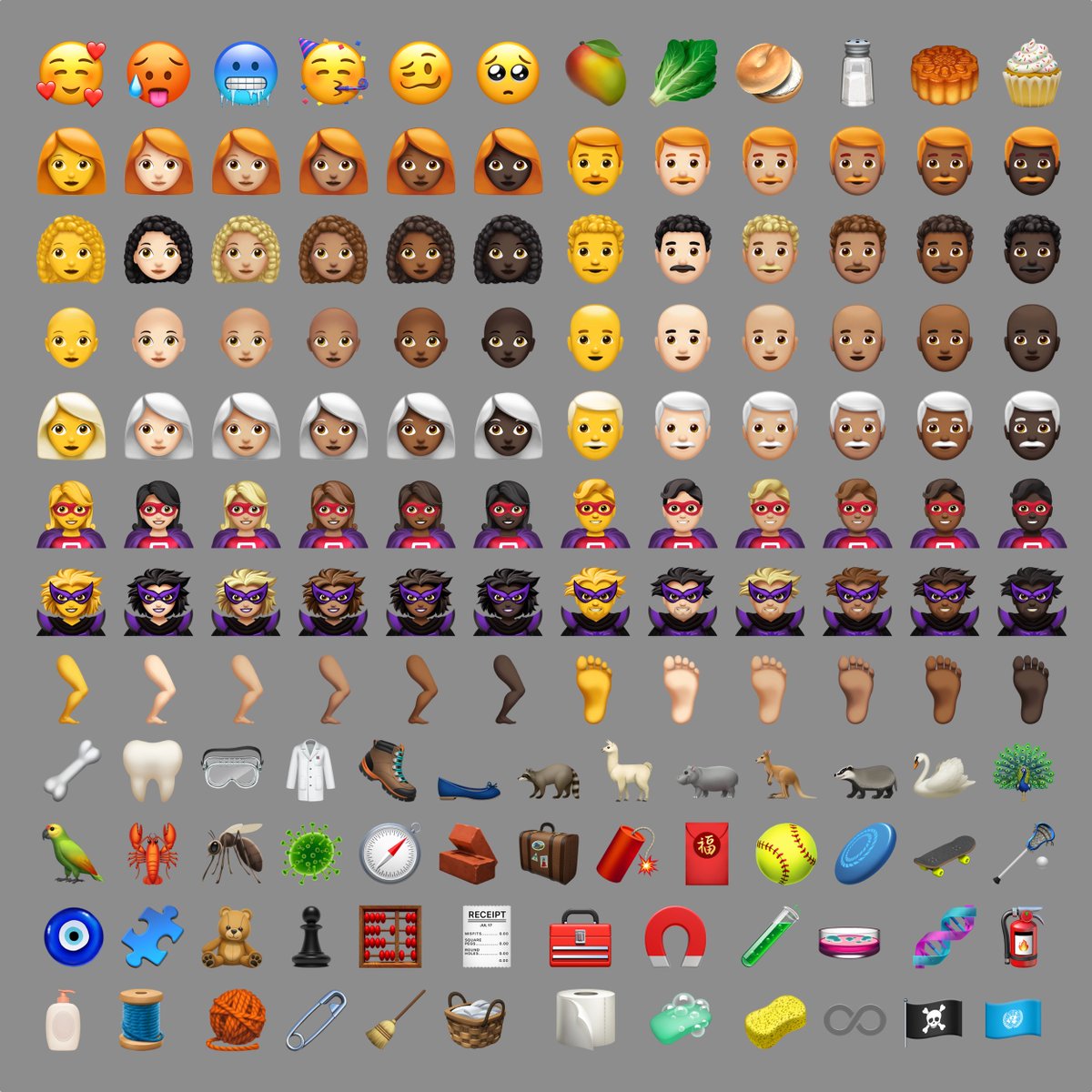
New in iOS 12.1: 🥰 Smiling Face With 3 Hearts https://t.co/6eajdvueip

New in iOS 12.1: 🥵 Hot Face https://t.co/jhTv1elltB

New in iOS 12.1: 🥶 Cold Face https://t.co/EIjyl6yZrF

New in iOS 12.1: 🥳 Partying Face https://t.co/p8FDNEQ3LJ

🗓 Release date: October 30, 2018
📝 New Emojis: 158
https://t.co/bx8XjhiCiB
New in iOS 12.1: 🥰 Smiling Face With 3 Hearts https://t.co/6eajdvueip
New in iOS 12.1: 🥵 Hot Face https://t.co/jhTv1elltB
New in iOS 12.1: 🥶 Cold Face https://t.co/EIjyl6yZrF
New in iOS 12.1: 🥳 Partying Face https://t.co/p8FDNEQ3LJ