
I sense a few double standards present in the debate over Bidens’ historic Child Tax Credit proposal that would cut the child poverty rate by more than 40%.
My focus here is on a perhaps less obvious one but I think relevant: trust fund kids & the tax treatment of inheritances
https://t.co/2dbjAW1pUA
https://t.co/yW210XtBFE
https://t.co/HaKhd0NZjv
https://t.co/3quHxvySnQ
https://t.co/EcOri1K9UP
https://t.co/sRrqQaYDF1
More from Finance


1/ My Mission: To Spread Financial Wellness (thread)
Here’s what "financial wellness" means to me
⬇️⬇️⬇️⬇️⬇️⬇️⬇️⬇️⬇️⬇️
2/ Mindset
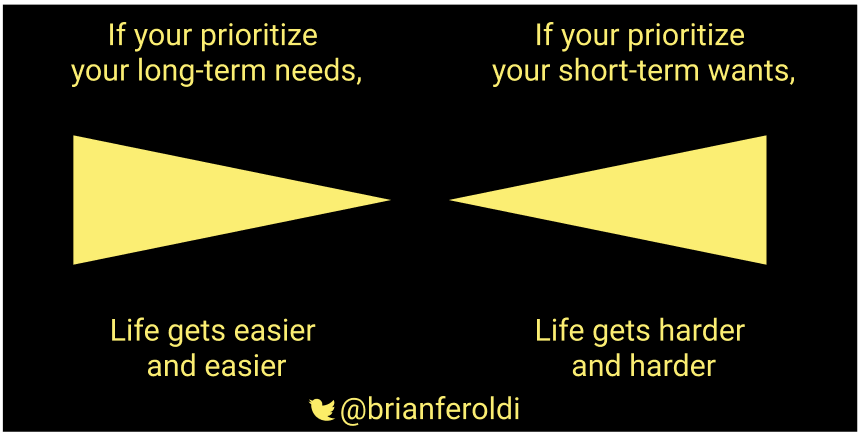
Humans are programmed to think short-term
Evolutionary, thinking short-term makes sense. It helps with survival.
Financial wellness is all about training yourself to develop a long-term mindset
Not easy -- it takes practice
3/ Mindset
If you join the right tribes, you can’t help but improve
My favs:
@AffordAnything
@ChooseFiFI
FinTwit
@MicroCapClub
@themotleyfoolFool
@visualizevalue
Twitter / Podcasts / Blogs / YouTube -- when used correctly -- are amazing
4/ Mindset
Educate yourself - constantly!
Especially about:
1⃣Money
2⃣Relationships
3⃣Health
These 3 categories have an outsized influence on all areas of your life
Books
5/ Career
In the beginning, focus on growing your income
Do more than what is expected
Become a lynchpin
Find a career that you ENJOY (<- important!) that also has high-income potential
Start a side hustle (<- important!)
Build your talent
Here’s what "financial wellness" means to me
⬇️⬇️⬇️⬇️⬇️⬇️⬇️⬇️⬇️⬇️
2/ Mindset
Humans are programmed to think short-term
Evolutionary, thinking short-term makes sense. It helps with survival.
Financial wellness is all about training yourself to develop a long-term mindset
Not easy -- it takes practice
3/ Mindset
If you join the right tribes, you can’t help but improve
My favs:
@AffordAnything
@ChooseFiFI
FinTwit
@MicroCapClub
@themotleyfoolFool
@visualizevalue
Twitter / Podcasts / Blogs / YouTube -- when used correctly -- are amazing
1/ YouTube is an AMAZING resource when used properly (Thread)
— Brian Feroldi (@BrianFeroldi) November 7, 2020
Here are my favorite YouTube channels:
Top 5:
Mark Rober - @MarkRober
Real Engineering
Smarter Every Day - @smartereveryday
Stuff Made Here - @stuffmadehere
Wintegartan - @wintergatan
More \U0001f447\U0001f447\U0001f447\U0001f447\U0001f447
4/ Mindset
Educate yourself - constantly!
Especially about:
1⃣Money
2⃣Relationships
3⃣Health
These 3 categories have an outsized influence on all areas of your life
Books
1/ Book recommendations (thread)
— Brian Feroldi (@BrianFeroldi) November 20, 2020
Start Here:
Choose FI
Richest Man in Babylon
Millionaire Next Door
Rich Dad, Poor Dad
The Wealthy Barber
\u2b07\ufe0f\u2b07\ufe0f\u2b07\ufe0f\u2b07\ufe0f\u2b07\ufe0f
5/ Career
In the beginning, focus on growing your income
Do more than what is expected
Become a lynchpin
Find a career that you ENJOY (<- important!) that also has high-income potential
Start a side hustle (<- important!)
Build your talent
Boosting your salary is a great way to turbo-charge wealth building
— Brian Feroldi (@BrianFeroldi) November 1, 2020
Here's the good news: Your salary is negotiable!@themotleyfool and @ChooseFi have some AMAZING free resources for scoring a big raise:
Use them!
\U0001f447\U0001f447\U0001f447


You May Also Like


Neo-nazi group #PatriotFront held a photo op in #Chicago last weekend & is currently marching around #DC so it's as good time as any to compile a list of their identified members for folks to watch for
Who are these chuds?
Patriot Front broke away from white nationalist org Vanguard America following #unitetheright in #charlottesville after James Alex Fields was seen with a VA shield before driving his car into a crowd, murdering Heather Heyer & injuring dozens of others
Syed Robbie Javid a.k.a. Sayed Robbie Javid or Robbie Javid of Alexandria,
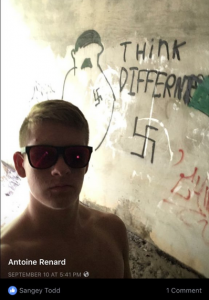
Antoine Bernard Renard (a.k.a. “Charlemagne MD” on Discord) from Rockville, MD.
https://t.co/ykEjdZFDi6
Brandon Troy Higgs, 25, from Reisterstown,
Who are these chuds?
Patriot Front broke away from white nationalist org Vanguard America following #unitetheright in #charlottesville after James Alex Fields was seen with a VA shield before driving his car into a crowd, murdering Heather Heyer & injuring dozens of others
Syed Robbie Javid a.k.a. Sayed Robbie Javid or Robbie Javid of Alexandria,
Happy Monday everyone :-) Let's ring in September by reacquainting ourselves with Virginia neo-Nazi and NSC Dixie affiliate Sayed "Robbie" Javid, now known by "Reform the States". Robbie is an explicitly genocidal neo-Nazi, so lets get to know him a bit better!
— Garfield but Anti-Fascist (@AntifaGarfield) August 31, 2020
CW on this thread pic.twitter.com/3gzxrIo9HD
Antoine Bernard Renard (a.k.a. “Charlemagne MD” on Discord) from Rockville, MD.
https://t.co/ykEjdZFDi6
Brandon Troy Higgs, 25, from Reisterstown,
