‘.. a group of UK academics who work with children and adolescents. … concerned about the lack of focus on the needs of this age group … in policy making during the pandemic. We provide scientific evidence that might help to redress this imbalance.’
1/ Updated thread. The impact of lockdown on children/adolescents 2021. Or, why we need to keep schools open.

‘.. a group of UK academics who work with children and adolescents. … concerned about the lack of focus on the needs of this age group … in policy making during the pandemic. We provide scientific evidence that might help to redress this imbalance.’
https://t.co/ljAGD72fol
Conclusion: ‘The consequences of a large gap in schooling are waiting to be documented and these effects will occupy social services and mental health specialists for many years to come.’
https://t.co/WDSSlXC2LT
Concluding: Ensure safeguarding, bereavement, & mental health needs are promptly identified & evidence-based provision is made available to those who need it
https://t.co/UCXeBgqt5Z
‘Regional & local multi-agency planning to support the mental health of those known to be vulnerable & to maximise capacity to meet increased need over the next few years.’
https://t.co/qbRUnJmzad
‘Loneliness is associated with later depression and anxiety, up to 9 years later.’
https://t.co/j7DKZmwYDV
Importantly I noted ‘Suicide is the leading cause of death in England in 5-19 year olds and many more young people will die from suicide and road traffic accidents than Covid-19 this year’
‘… we can choose to put the needs and rights of children first – we can choose a different path.’
https://t.co/44nWfvLol6
https://t.co/Bk0yFH2e4h
We must ask ourselves whether future actions will in fact, ‘help, or at least, do no harm... safeguarding young people is everyone’s responsibility.’
https://t.co/20uX1RLcP0
‘Self-harm has been rising in recent years, alongside anxiety & depression. A real worry is that the pandemic & the measures taken to curb the spread of COVID-19 will exacerbate &entrench these trends.’
'Mental health research is underfunded. The current emphasis on COVID-19 research is likely to widen that inequality. Funders need to explicitly address this...to protect young people ...'
https://t.co/lIa30X8ctg
'More support needs to be readily available for those struggling with their mental health ...'
https://t.co/H0mFuipkzl
End.
More from Education

** Schools have been getting ready for this: a thread **
In many ways, I don't blame folks who tweet things like this. The media coverage of the schools situation in Covid-19 rarely talks about the quiet, day-in-day-out work that schools have been doing these past 9 months. 1/
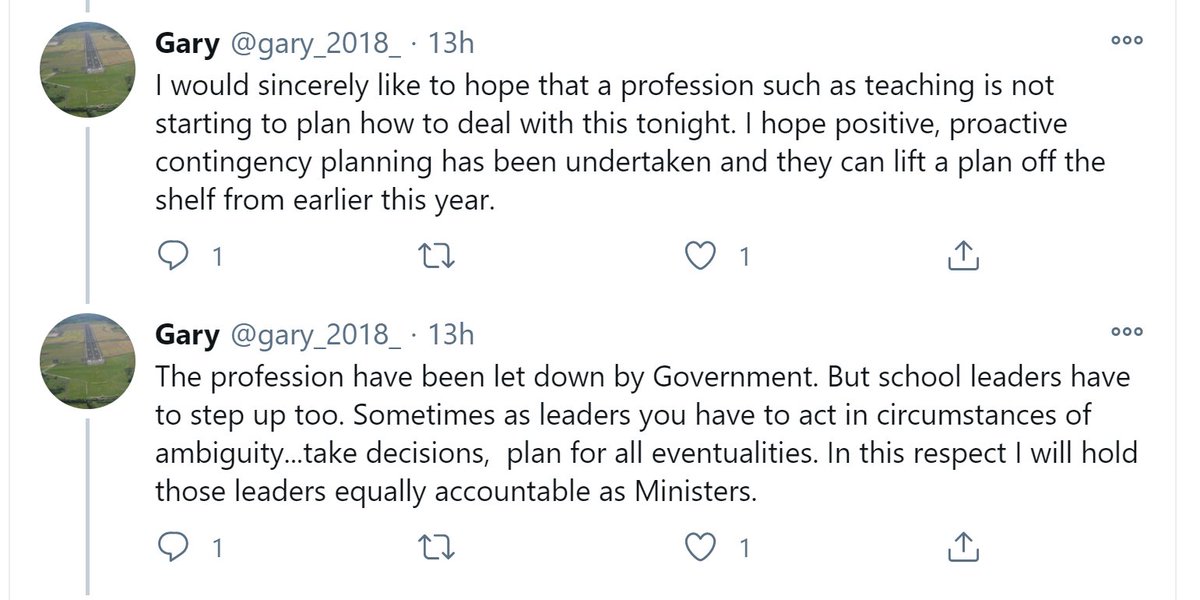
Instead, the coverage focused on the dramatic, last minute policy announcements by the government, or of dramatic stories of school closures, often accompanied by photos of socially distanced classrooms that those of us in schools this past term know are from a fantasy land. 2/
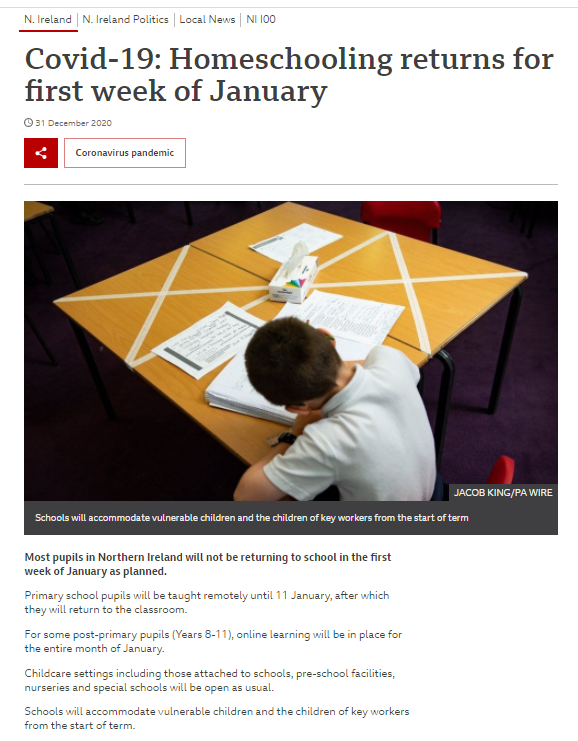
If that's all you see & hear, it's no wonder that you may not know what has actually been happening in schools to meet the challenges. So, if you'd like a glimpse behind the curtain, then read on. For this is something of what teachers & schools leaders have been up to. 3/
It started last March with trying to meet the challenges of lockdown, being thrown into the deep end, with only a few days' notice, to try to learn to teach remotely during the first lockdown. 4/
https://t.co/S39EWuap3b
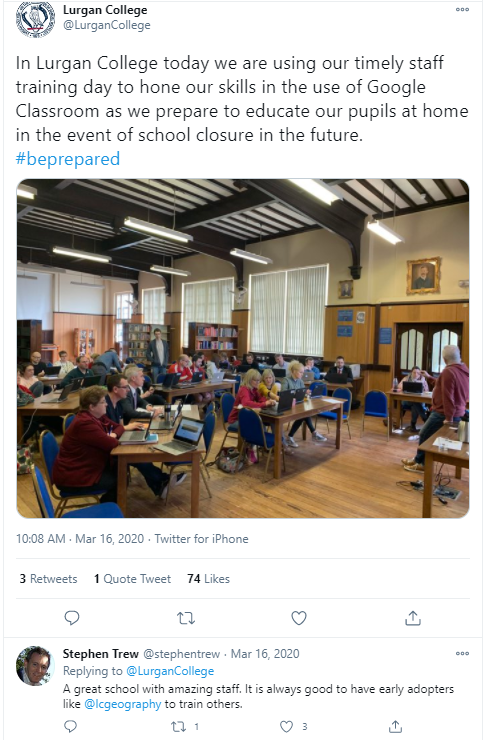
I wrote a policy document for our staff the weekend before our training as we anticipated what was to come, a document I shared freely & widely as the education community across the land started to reach out to one another for ideas and support. 5/
https://t.co/m1QsxlPaV4
In many ways, I don't blame folks who tweet things like this. The media coverage of the schools situation in Covid-19 rarely talks about the quiet, day-in-day-out work that schools have been doing these past 9 months. 1/
Instead, the coverage focused on the dramatic, last minute policy announcements by the government, or of dramatic stories of school closures, often accompanied by photos of socially distanced classrooms that those of us in schools this past term know are from a fantasy land. 2/
If that's all you see & hear, it's no wonder that you may not know what has actually been happening in schools to meet the challenges. So, if you'd like a glimpse behind the curtain, then read on. For this is something of what teachers & schools leaders have been up to. 3/
It started last March with trying to meet the challenges of lockdown, being thrown into the deep end, with only a few days' notice, to try to learn to teach remotely during the first lockdown. 4/
https://t.co/S39EWuap3b
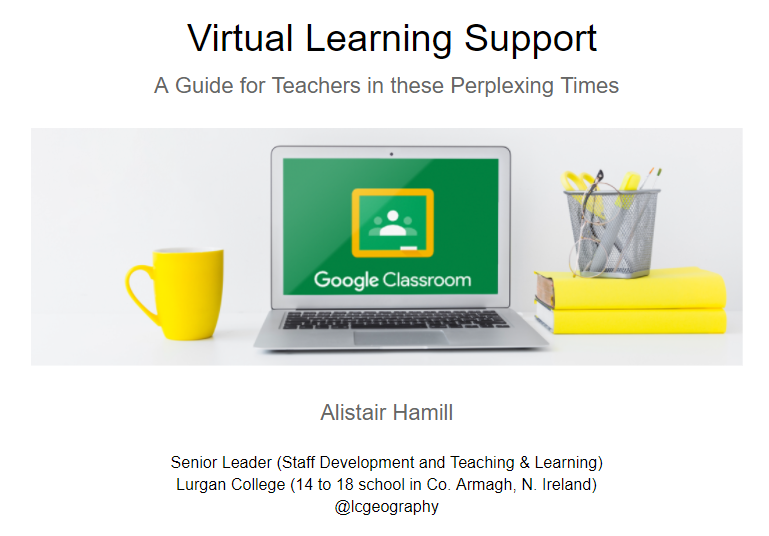
In Lurgan College today we are using our timely staff training day to hone our skills in the use of Google Classroom as we prepare to educate our pupils at home in the event of school closure in the future. #beprepared pic.twitter.com/E0LQkYqvBD
— Lurgan College (@LurganCollege) March 16, 2020
I wrote a policy document for our staff the weekend before our training as we anticipated what was to come, a document I shared freely & widely as the education community across the land started to reach out to one another for ideas and support. 5/
https://t.co/m1QsxlPaV4




You May Also Like


One of the most successful stock trader with special focus on cash stocks and who has a very creative mind to look out for opportunities in dark times
Covering one of the most unique set ups: Extended moves & Reversal plays
Time for a 🧵 to learn the above from @iManasArora
What qualifies for an extended move?
30-40% move in just 5-6 days is one example of extended move
How Manas used this info to book
Post that the plight of the
Example 2: Booking profits when the stock is extended from 10WMA
10WMA =
Another hack to identify extended move in a stock:
Too many green days!
Read
Covering one of the most unique set ups: Extended moves & Reversal plays
Time for a 🧵 to learn the above from @iManasArora
What qualifies for an extended move?
30-40% move in just 5-6 days is one example of extended move
How Manas used this info to book
The stock exploded & went up as much as 63% from my price.
— Manas Arora (@iManasArora) June 22, 2020
Closed my position entirely today!#BroTip pic.twitter.com/CRbQh3kvMM
Post that the plight of the
What an extended (away from averages) move looks like!!
— Manas Arora (@iManasArora) June 24, 2020
If you don't learn to sell into strength, be ready to give away the majority of your gains.#GLENMARK pic.twitter.com/5DsRTUaGO2
Example 2: Booking profits when the stock is extended from 10WMA
10WMA =
#HIKAL
— Manas Arora (@iManasArora) July 2, 2021
Closed remaining at 560
Reason: It is 40+% from 10wma. Super extended
Total revenue: 11R * 0.25 (size) = 2.75% on portfolio
Trade closed pic.twitter.com/YDDvhz8swT
Another hack to identify extended move in a stock:
Too many green days!
Read
When you see 15 green weeks in a row, that's the end of the move. *Extended*
— Manas Arora (@iManasArora) August 26, 2019
Simple price action analysis.#Seamecltd https://t.co/gR9xzgeb9K

The YouTube algorithm that I helped build in 2011 still recommends the flat earth theory by the *hundreds of millions*. This investigation by @RawStory shows some of the real-life consequences of this badly designed AI.
This spring at SxSW, @SusanWojcicki promised "Wikipedia snippets" on debated videos. But they didn't put them on flat earth videos, and instead @YouTube is promoting merchandising such as "NASA lies - Never Trust a Snake". 2/

A few example of flat earth videos that were promoted by YouTube #today:
https://t.co/TumQiX2tlj 3/
https://t.co/uAORIJ5BYX 4/
https://t.co/yOGZ0pLfHG 5/
Flat Earth conference attendees explain how they have been brainwashed by YouTube and Infowarshttps://t.co/gqZwGXPOoc
— Raw Story (@RawStory) November 18, 2018
This spring at SxSW, @SusanWojcicki promised "Wikipedia snippets" on debated videos. But they didn't put them on flat earth videos, and instead @YouTube is promoting merchandising such as "NASA lies - Never Trust a Snake". 2/
A few example of flat earth videos that were promoted by YouTube #today:
https://t.co/TumQiX2tlj 3/
https://t.co/uAORIJ5BYX 4/
https://t.co/yOGZ0pLfHG 5/