
True that all the people cherishing the support of IMF or WTO for farm reforms need to cool it down a bit, because that is a model we do not want to emulate to the t in India here.
But here are some issues that deserve to be better discussed by all:
WTO backed by Western countries have always wanted to dismantle support systems for farmers in developing countries including India while pumping in federal payments to its farmers. Trump gave 46 billion dollars in 2020 alone to US farmers. pic.twitter.com/0V34ZQQq4J
— Ranveer Singh (@ranveersiiingh) February 4, 2021
But the same assumption won't work for India, because we have always had a large workforce in agriculture, agri subsidies have always run high, protection has been the hallmark of agriculture and rural representation in the parliament has always been+
2. This brings us to the another point of providing MSP on all the commodities and the demand side of the issue that we+
The developed nations are able to offer that MSP because the per capita incomes in those countries are high, and people spend less proportion of rising incomes on food. But, for a country like India +
(Source: Prof Ashutosh Varshney's Democracy, Development and the country side)
We will reach the MSP for all stage too, but at the moment that is not a fire we should be playing with. That is for when we are a country with increased per capita incomes and+
Thread
https://t.co/ESNy33sAYm
Seen a lot of people aver the following, "but where are the jobs?" in response to someone asserting the need to incentivize the movement of our people from agriculture to industry.
— Sargoon (@SargoonK) January 31, 2021
Well, here's one major part of the big answer: Labour reforms.
Thread\U0001f447
More from Economy

What do a Tory Peer, Selwyn Gummer (Lord Chadlington), David Sumner ( Sumner Group Holdings) and the Sanchez Perez family (drugs money, laundered through Gold mines) have in common?
It’s another company-saving a £50 million PPE contract shaggy dog story
Connections, connections
What a start to the story
“A bulletproof truck trundled down the road in downtown Lima, guarded by 18 policeman
They were wearing body armour & wielding high velocity rifles
No-one was taking any chances
This was a Special delivery for Peruvian Prosecutor for an anti drug trial

That was in 2011, the same year that Lord Chadlington’s daughter got married in Chadlington to Henry Allsopp.
Who was there?
Yes Kirstie Allsopp of Location, location, location and all this Covid nonsense fame) is his sister
Camilla, his Godmother
Jeremy Hunt
Cameron

Well. Come on. Lord Chadlington had been chair of the local Witney Conservative Association. It’s only fair.
Hang on. Julian Wheatland, Director of SCL Group/ Cambridge Analytica had also been chair of Witney Conservative Association...and campaigned for his mate Cameron
Are we sure Julian Wheatland and his side kick Alexander Nix were not there too @JolyonMaugham ?
I mean. They move in the same North Oxford circles.
It’s another company-saving a £50 million PPE contract shaggy dog story
Connections, connections
The *staggering* tale of a Tory Peer and a \xa350m PPE contract. https://t.co/SH2qxOmfQ4
— Jo Maugham (@JolyonMaugham) December 10, 2020
What a start to the story
“A bulletproof truck trundled down the road in downtown Lima, guarded by 18 policeman
They were wearing body armour & wielding high velocity rifles
No-one was taking any chances
This was a Special delivery for Peruvian Prosecutor for an anti drug trial
That was in 2011, the same year that Lord Chadlington’s daughter got married in Chadlington to Henry Allsopp.
Who was there?
Yes Kirstie Allsopp of Location, location, location and all this Covid nonsense fame) is his sister
Camilla, his Godmother
Jeremy Hunt
Cameron
Well. Come on. Lord Chadlington had been chair of the local Witney Conservative Association. It’s only fair.
Hang on. Julian Wheatland, Director of SCL Group/ Cambridge Analytica had also been chair of Witney Conservative Association...and campaigned for his mate Cameron
Are we sure Julian Wheatland and his side kick Alexander Nix were not there too @JolyonMaugham ?
I mean. They move in the same North Oxford circles.


1/OK, let's take a little break from Coup Twitter, and think about an economic issue:
How can we build up the wealth of the middle class?
2/The typical American has surprisingly little wealth compared to the typical resident of many other developed countries.
This is a fact that is not widely known or appreciated.
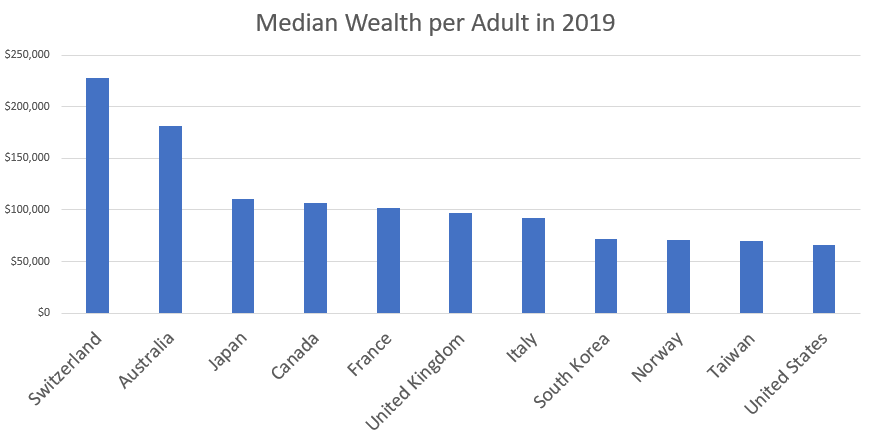
3/Now, some people argue that stuff like Social Security or social insurance programs should be included in wealth. But I chose to focus on private wealth because I think having assets you can sell whenever you want is important to
4/For many decades after World War 2, middle-class wealth in America was on a smooth upward trajectory.
Then the housing crash came, and all that changed. Suddenly the rich were still doing well but everyone else was seeing the end of their American Dream.
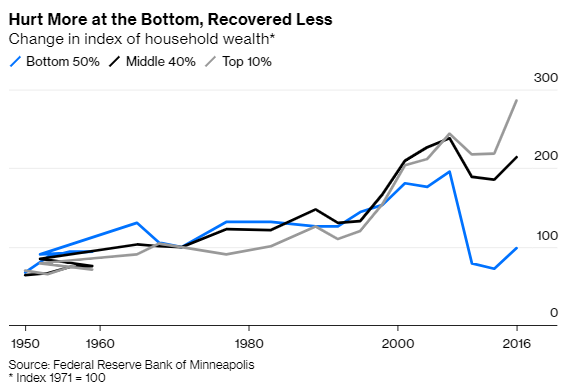
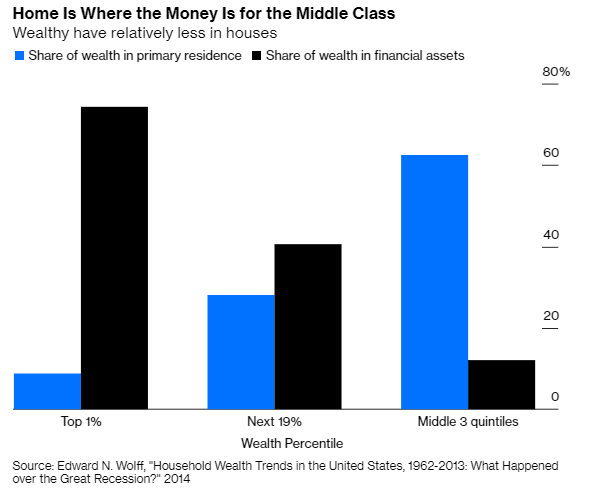
5/Why the divergence?
Because the American middle class has its wealth in houses -- specifically, in the houses they live in.
It's the rich who own stocks.
How can we build up the wealth of the middle class?
2/The typical American has surprisingly little wealth compared to the typical resident of many other developed countries.
This is a fact that is not widely known or appreciated.
3/Now, some people argue that stuff like Social Security or social insurance programs should be included in wealth. But I chose to focus on private wealth because I think having assets you can sell whenever you want is important to
Yes, these numbers don't include things like Social Security, just privately held wealth. They're not an attempt to capitalize every possible future income stream.
— Noahtogolpe \U0001f407 (@Noahpinion) January 10, 2021
4/For many decades after World War 2, middle-class wealth in America was on a smooth upward trajectory.
Then the housing crash came, and all that changed. Suddenly the rich were still doing well but everyone else was seeing the end of their American Dream.
5/Why the divergence?
Because the American middle class has its wealth in houses -- specifically, in the houses they live in.
It's the rich who own stocks.


You May Also Like





Department List of UCAS-China PROFESSORs for ANSO, CSC and UCAS (fully or partial) Scholarship Acceptance
1) UCAS School of physical sciences Professor
https://t.co/9X8OheIvRw
2) UCAS School of mathematical sciences Professor
3) UCAS School of nuclear sciences and technology
https://t.co/nQH8JnewcJ
4) UCAS School of astronomy and space sciences
https://t.co/7Ikc6CuKHZ
5) UCAS School of engineering
6) Geotechnical Engineering Teaching and Research Office
https://t.co/jBCJW7UKlQ
7) Multi-scale Mechanics Teaching and Research Section
https://t.co/eqfQnX1LEQ
😎 Microgravity Science Teaching and Research
9) High temperature gas dynamics teaching and research section
https://t.co/tVIdKgTPl3
10) Department of Biomechanics and Medical Engineering
https://t.co/ubW4xhZY2R
11) Ocean Engineering Teaching and Research
12) Department of Dynamics and Advanced Manufacturing
https://t.co/42BKXEugGv
13) Refrigeration and Cryogenic Engineering Teaching and Research Office
https://t.co/pZdUXFTvw3
14) Power Machinery and Engineering Teaching and Research
1) UCAS School of physical sciences Professor
https://t.co/9X8OheIvRw
2) UCAS School of mathematical sciences Professor
3) UCAS School of nuclear sciences and technology
https://t.co/nQH8JnewcJ
4) UCAS School of astronomy and space sciences
https://t.co/7Ikc6CuKHZ
5) UCAS School of engineering
6) Geotechnical Engineering Teaching and Research Office
https://t.co/jBCJW7UKlQ
7) Multi-scale Mechanics Teaching and Research Section
https://t.co/eqfQnX1LEQ
😎 Microgravity Science Teaching and Research
9) High temperature gas dynamics teaching and research section
https://t.co/tVIdKgTPl3
10) Department of Biomechanics and Medical Engineering
https://t.co/ubW4xhZY2R
11) Ocean Engineering Teaching and Research
12) Department of Dynamics and Advanced Manufacturing
https://t.co/42BKXEugGv
13) Refrigeration and Cryogenic Engineering Teaching and Research Office
https://t.co/pZdUXFTvw3
14) Power Machinery and Engineering Teaching and Research