Buzz Chronicles
Follow
Home
Threads
Daily Charts
Most Popular
Most Recent
Authors
Categories
Life
Tech
Culture
Politics
Society
Fun
See All Categories
About
×
Share it somewhere
BC
DIVINE
Saved by @SUDRED12
प्रियंवदा 🇮🇳🚩
@Priyamvada22S
4 years, 4 months ago
1134 views
Save to PDF
Share
See On Twitter
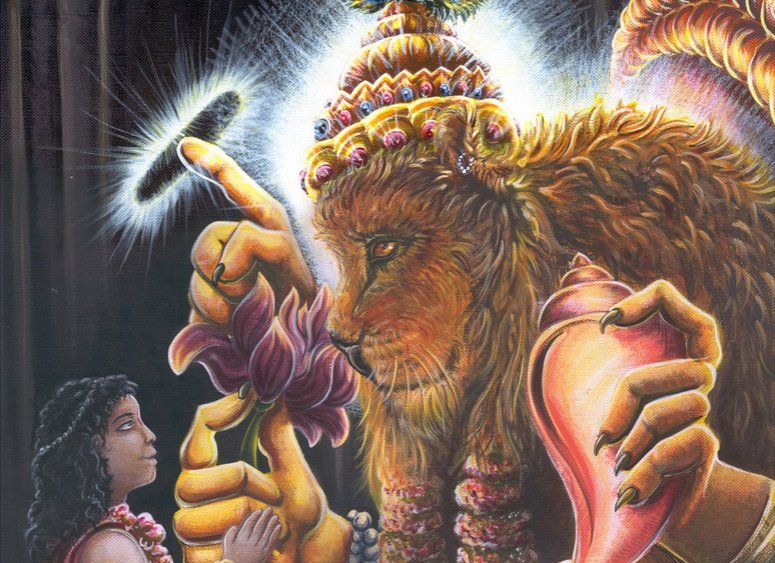
ॐ उग्रं वीरं महाविष्णुं ज्वलन्तं सर्वतोमुखम् ।
नृसिंहं भीषणं भद्रं मृत्युमृत्युं नमाम्यहम् ॥
हे क्रुद्ध एवं शूर-वीर महाविष्णु, आपकी ज्वाला एवं ताप चारों दिशाओं में फैली हुई है।
हे नरसिंहदेव प्रभु, आपका चेहरा सर्वव्यापी है, तुम मृत्यु के भी यम हो और मैं आपके समक्ष आत्मसमर्पण करता हूँ।
More from Divine
Jaya_Upadhyaya
@Jayalko1
जीतने से पहले जीत और हारने से पहले हार कभी नहीं माननी चाहिए…
संध्या वंदन🙏🏻
Priyagini Pandey
@TheHinduPandit
Unexpected results & problems are part of life.Never lose hope in any condition because darkness of night always end with light of the day...
🕉 सूर्याय नमः🙏
Have a blessed day 🥰🙏
Advertisement
Abhi
@abhiart
Mother of Time, Maa Kaali.
story: https://t.co/bs1I8V6UzV
Akshita Rai
@AkshitaR_
ट्विटर पर उपस्थित महादेव जी के भक्तों को हर-हर महादेव 🙏
VEDA ❄️ വേദാ 🇮🇳 🚩...
@__Veda_
ॐ त्र्यम्बकं यजामहे सुगन्धिं पुष्टिवर्धनम् उर्वारुकमिव बन्धनान्मृत्योर्मुक्षीय मामृतात् || 🙏
@SankuThulasiDas
You May Also Like
Emma Hilton
@FondOfBeetles
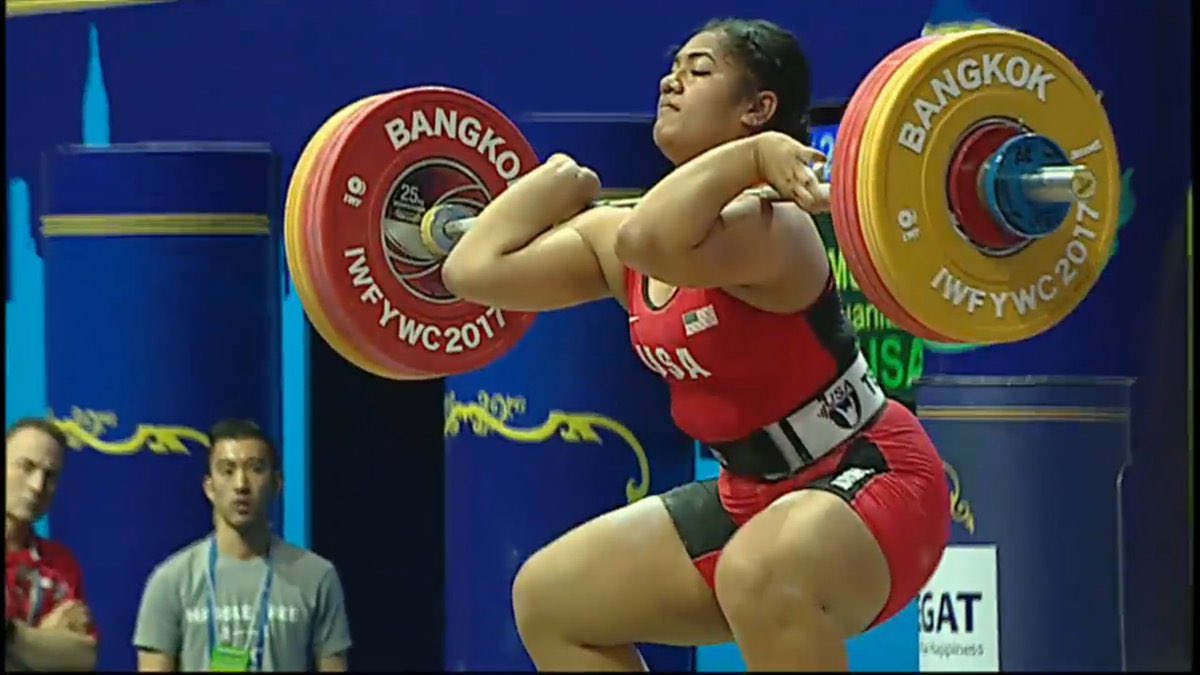
This is Kuinini ‘Nini’ Manumua, the woman who was ultimately displaced by inclusion of Laurel Hubbard.
She’s 21, and it would have been her first Olympics.
Anshul Pandey
@Anshulspiritual
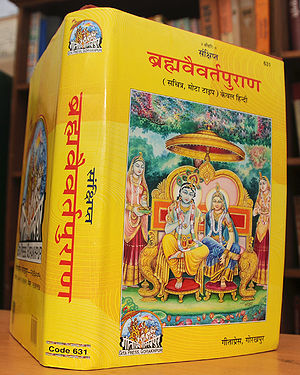
BRAHMA VAIVARTA PURAN: IMPORTANCE AND CHARACTERISTICS.
This Puran introduces us to way of Vedas. On the request of Narad Muni Bhagwan Saavarni had preached this Puran. It is a summary of Dharma, Arth, Moksha etc.
Listening to this Puran one gets automatically attached to Vishnu and Shiva and realize that there is no difference between them. Vyasji divided this book into four parts. It has eighteen thousand shlokas. This whole book is in the form of dialogue between Suutji and Maharishi's.
The first part Brahmkhand, consists of Shrishti description. Here Shri is known as Para Brahma and description of Gokul is also mentioned, It also narrates the argument between Brahma and Narad in which both were defeated, and then Narad went to Shiva to attain more gyan.
Shivji advised him to go to Bhagwan Saavarni for this. Narad goes to Saavarni ashram to seek Knowledge and is totally amazed by the sorroundings.
Next is Prakriti khand which consists of dialogue between Narad and Saavarni where they discuss the
Importance of Shri Krishna through various stories. Then there is the discussion of Prakriti and its various hues. Listening to this gets you wealth.
Next is Ganesh Khand which describes the Punyak vrat done by Parvati ji. After this it narrates the birth of Kartikeya and Ganesh.
Advertisement
Will Buxton
@wbuxtonofficial
The Haas / Force India argument is fascinating, and the decision of the stewards may still have consequences. The first key finding is that the stewards ruled Racing Point Force India to be a valid constructor. That means that it builds its own cars.
Haas had argued that the cars had been designed by Force India, but as Haas knows only too well, "outsourcing" is legal. The stewards decided that "there is no regulatory support for the argument that Outsourcing of Listed Parts cannot come from a former or excluded team."
In determining this, the stewards also came to the following conclusion: "In relation to the submission by the Racing Point Force India F1 Team that it is not a new team, the Stewards decide that the Racing Point Force India F1 Team is indeed a new team."
This will have a big knock on effect for Haas in its continued arguments over the rights of RPFI as relates to its eligibility and rights under the complex payments structure. Haas has argued all along that RPFI should be treated as a new team and tread the same path that it did.
TLDR? Haas lost the fight but may have won the war. In having its argument that Racing Point hadn't designed their own car thrown out, they gained clarification that RPFI was a new team.
Henry George ن
@intothefuture45
Thread: *Post-Liberal reading list*
1/ Religion and the Rise of Capitalism - R.H. Tawney
Unto This Last - John Ruskin
Liberty, Equality, Fraternity - James Fitzjames Stephen
The Great Transformation - Karl Polanyi
The Quest for Community - Robert Nisbet
2/ Family and Civilisation - Carle C. Zimmerman
Science, Politics and Gnosticism - Eric Voegelin
Liberty Before Liberalism - Quentin Skinner
The Great Debate - Yuval Levin
Lincoln and the Politics of Christian Love - Grant Havers
Where We Are - Roger Scruton
3/ The Humane Vision of Wendell Berry - Various
The Unsettling of America - Wendell Berry
Moral Matters - Mark Dooley
Red Tory - Phillip Blond
Blue Labour - Eds. Ian Geary and Adrian Pabst
Together for the Common Good - Eds. Nicholas Sagovsky & Peter McGrail
4/ The Politics of Virtue - John Milbank & Adrian Pabst
Localism in a Mass Age - Eds. Mark T. Mitchell & Jason Peters
The Antimodern Condition - Peter King
The Principle of Duty - David Selbourne
Nostalgia - Anthony Esolen
A Common Human Ground - Claes G. Ryn
5/ The Politics of Gratitude - Mark T. Mitchell
A Time to Build - Yuval Levin
Remaking One Nation - Nick Timothy
Despised - Paul Embery
Defending Identity - Natan Sharansky
Between Kin and Cosmopolis - Nigel Biggar
The Virtue of Nationalism - Yoram Hazony
Tweeting Historians
@Tweetistorian
@ChenHuailun here. I'm adding a supplementary thread before today's scheduled one to expand on the origins and early history of the Church of the East (aka the Nestorian Church) ~ahc #jingjiao 1/
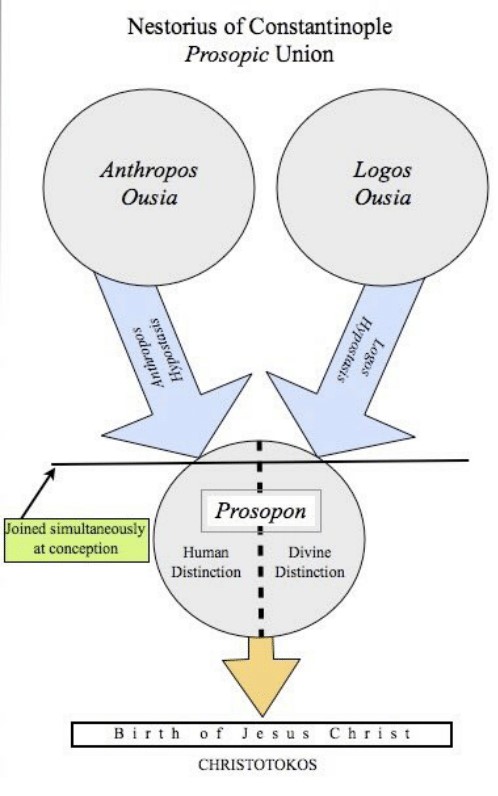
The Church of the East traces its origins to the christological position of the School of Antioch, which held that the human and divine and human essences (ουσία) of Christ were united in a single prosopon (πρόσωπον). ~ahc #jingjiao 2/
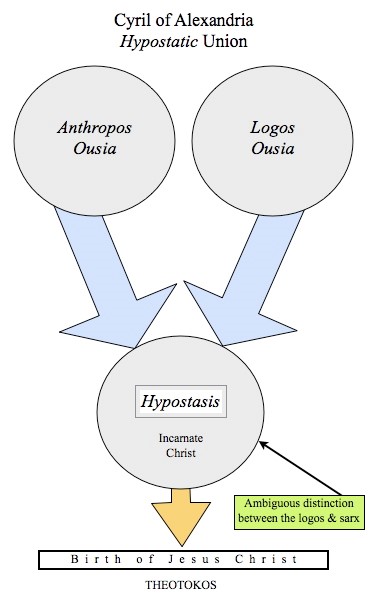
This ran against the position of the School of Alexandria, which held that the two essences of Christ were united in a single hypostasis (ὑπόστασις). In general terms, hypostasis is more inherent than prosopon. ~ahc #jingjiao 3/
One implication of the Antiochene rejection of the hypostatic union is that Mary could not accurately be called the Theotokos, or God-bearer. Instead, she is the Christotokos, the Christ-bearer. ~ahc #jingjiao 4/
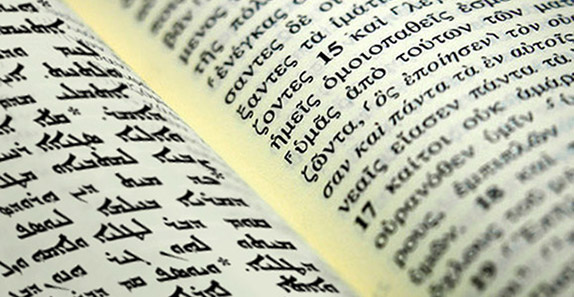
These Christological debates were further complicated by Syriac terms such as 'kyana' (ܟܝܢܐ), associated with 'ousia' but later translated to 'hypostasis' by Syrian Orthodox; and 'qnoma ' (ܩܢܘܡܐ), sometimes contentiously translated as 'hypostasis' or 'person.' ~ahc #jingjiao 5/