
To my JVM friends looking to explore Machine Learning techniques - you don’t necessarily have to learn Python to do that. There are libraries you can use from the comfort of your JVM environment. 🧵👇
More from Data science

Wellll... A few weeks back I started working on a tutorial for our lab's Code Club on how to make shitty graphs. It was too dispiriting and I balked. A twitter workshop with figures and code:
Here's the code to generate the data frame. You can get the "raw" data from https://t.co/jcTE5t0uBT

Obligatory stacked bar chart that hides any sense of variation in the data

Obligatory stacked bar chart that shows all the things and yet shows absolutely nothing at the same time

STACKED Donut plot. Who doesn't want a donut? Who wouldn't want a stack of them!?! This took forever to render and looked worse than it should because coord_polar doesn't do scales="free_x".

When are you doing pie charts?
— #BlackLivesMatter (@surt_lab) October 13, 2020
Here's the code to generate the data frame. You can get the "raw" data from https://t.co/jcTE5t0uBT
Obligatory stacked bar chart that hides any sense of variation in the data
Obligatory stacked bar chart that shows all the things and yet shows absolutely nothing at the same time
STACKED Donut plot. Who doesn't want a donut? Who wouldn't want a stack of them!?! This took forever to render and looked worse than it should because coord_polar doesn't do scales="free_x".

✨✨ BIG NEWS: We are hiring!! ✨✨
Amazing Research Software Engineer / Research Data Scientist positions within the @turinghut23 group at the @turinginst, at Standard (permanent) and Junior levels 🤩
👇 Here below a thread on who we are and what we
We are a highly diverse and interdisciplinary group of around 30 research software engineers and data scientists 😎💻 👉 https://t.co/KcSVMb89yx #RSEng
We value expertise across many domains - members of our group have backgrounds in psychology, mathematics, digital humanities, biology, astrophysics and many other areas 🧬📖🧪📈🗺️⚕️🪐
https://t.co/zjoQDGxKHq
/ @DavidBeavan @LivingwMachines
In our everyday job we turn cutting edge research into professionally usable software tools. Check out @evelgab's #LambdaDays 👩💻 presentation for some examples:
We create software packages to analyse data in a readable, reliable and reproducible fashion and contribute to the #opensource community, as @drsarahlgibson highlights in her contributions to @mybinderteam and @turingway: https://t.co/pRqXtFpYXq #ResearchSoftwareHour
Amazing Research Software Engineer / Research Data Scientist positions within the @turinghut23 group at the @turinginst, at Standard (permanent) and Junior levels 🤩
👇 Here below a thread on who we are and what we
We are a highly diverse and interdisciplinary group of around 30 research software engineers and data scientists 😎💻 👉 https://t.co/KcSVMb89yx #RSEng
We value expertise across many domains - members of our group have backgrounds in psychology, mathematics, digital humanities, biology, astrophysics and many other areas 🧬📖🧪📈🗺️⚕️🪐
https://t.co/zjoQDGxKHq
/ @DavidBeavan @LivingwMachines
In our everyday job we turn cutting edge research into professionally usable software tools. Check out @evelgab's #LambdaDays 👩💻 presentation for some examples:
We create software packages to analyse data in a readable, reliable and reproducible fashion and contribute to the #opensource community, as @drsarahlgibson highlights in her contributions to @mybinderteam and @turingway: https://t.co/pRqXtFpYXq #ResearchSoftwareHour


1/ A ∞-wide NN of *any architecture* is a Gaussian process (GP) at init. The NN in fact evolves linearly in function space under SGD, so is a GP at *any time* during training. https://t.co/v1b6kndqCk With Tensor Programs, we can calculate this time-evolving GP w/o trainin any NN
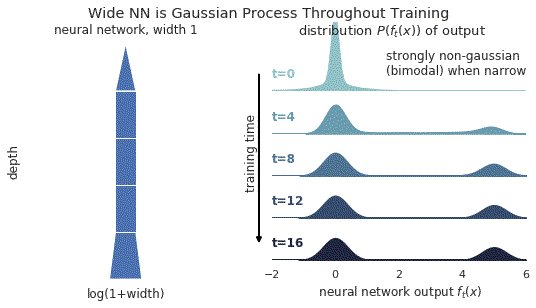
2/ In this gif, narrow relu networks have high probability of initializing near the 0 function (because of relu) and getting stuck. This causes the function distribution to become multi-modal over time. However, for wide relu networks this is not an issue.
3/ This time-evolving GP depends on two kernels: the kernel describing the GP at init, and the kernel describing the linear evolution of this GP. The former is the NNGP kernel, and the latter is the Neural Tangent Kernel (NTK).
4/ Once we have these two kernels, we can derive the GP mean and covariance at any time t via straightforward linear algebra.
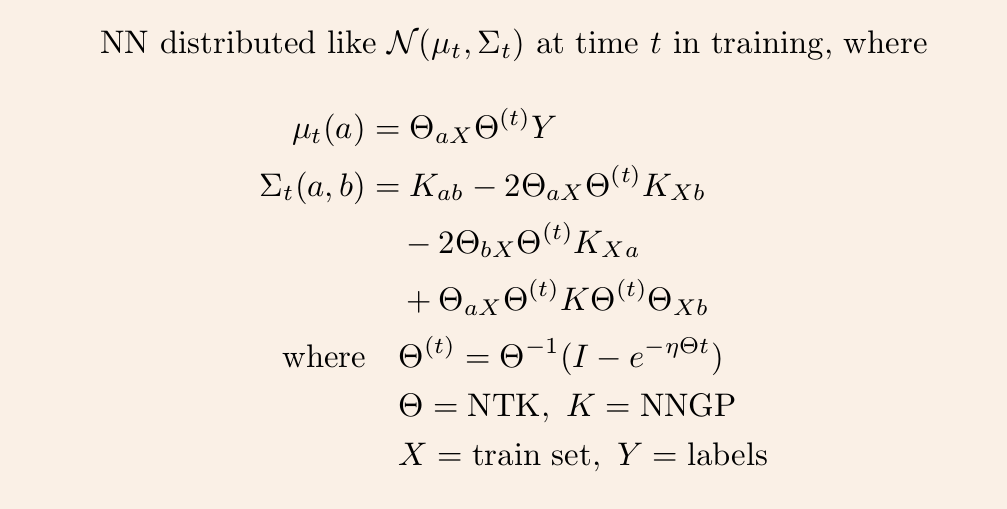
5/ So it remains to calculate the NNGP kernel and NT kernel for any given architecture. The first is described in https://t.co/cFWfNC5ALC and in this thread
2/ In this gif, narrow relu networks have high probability of initializing near the 0 function (because of relu) and getting stuck. This causes the function distribution to become multi-modal over time. However, for wide relu networks this is not an issue.
3/ This time-evolving GP depends on two kernels: the kernel describing the GP at init, and the kernel describing the linear evolution of this GP. The former is the NNGP kernel, and the latter is the Neural Tangent Kernel (NTK).
4/ Once we have these two kernels, we can derive the GP mean and covariance at any time t via straightforward linear algebra.
5/ So it remains to calculate the NNGP kernel and NT kernel for any given architecture. The first is described in https://t.co/cFWfNC5ALC and in this thread


You May Also Like


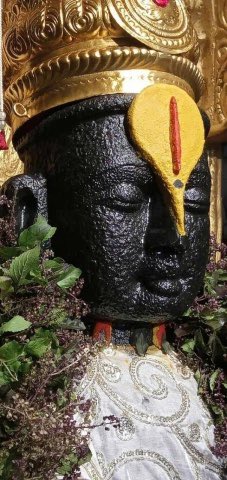
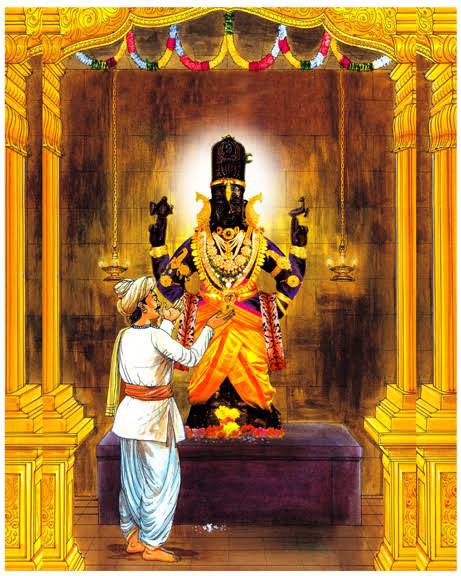
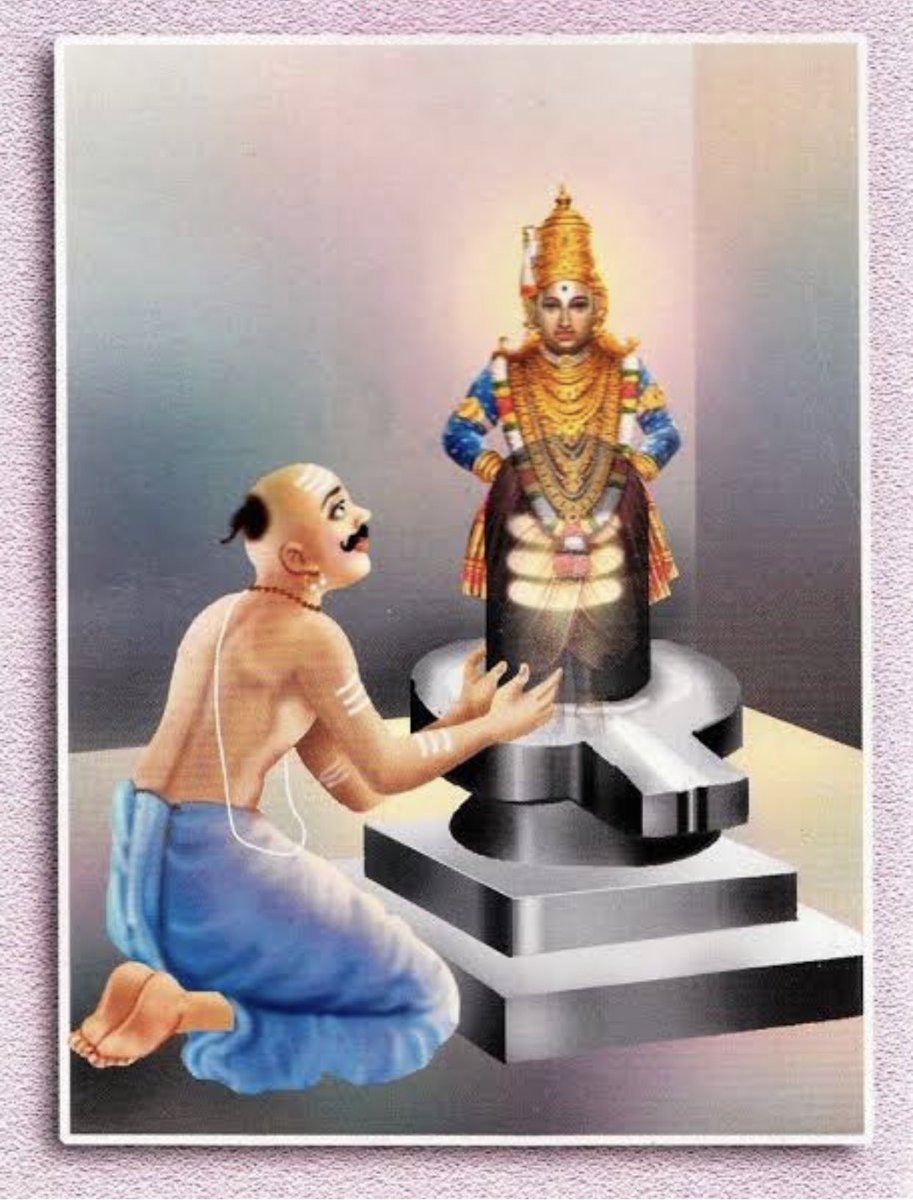
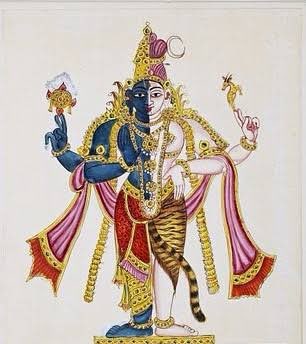

First thread of the year because I have time during MCO. As requested, a thread on the gods and spirits of Malay folk religion. Some are indigenous, some are of Indian origin, some have Islamic
Before I begin, it might be worth explaining the Malay conception of the spirit world. At its deepest level, Malay religious belief is animist. All living beings and even certain objects are said to have a soul. Natural phenomena are either controlled by or personified as spirits
Although these beings had to be respected, not all of them were powerful enough to be considered gods. Offerings would be made to the spirits that had greater influence on human life. Spells and incantations would invoke their
Two known examples of such elemental spirits that had god-like status are Raja Angin (king of the wind) and Mambang Tali Arus (spirit of river currents). There were undoubtedly many more which have been lost to time
Contact with ancient India brought the influence of Hinduism and Buddhism to SEA. What we now call Hinduism similarly developed in India out of native animism and the more formal Vedic tradition. This can be seen in the multitude of sacred animals and location-specific Hindu gods
i wonder if you can make a thread bout witchcraft in malaysia.. or list of our own local gods/deites..
— r a y a \U0001f319 (@lcvelylilith) February 20, 2020
Before I begin, it might be worth explaining the Malay conception of the spirit world. At its deepest level, Malay religious belief is animist. All living beings and even certain objects are said to have a soul. Natural phenomena are either controlled by or personified as spirits
Although these beings had to be respected, not all of them were powerful enough to be considered gods. Offerings would be made to the spirits that had greater influence on human life. Spells and incantations would invoke their
Animist ceremonies of a religious or magical nature were normally held for the purpose of divination or making a request. This would either be done at a keramat or at a shrine similar to the Thai spirit houses or Chinese roadside shrines pic.twitter.com/I1hliyi0x3
— \u2745\u1710\u170b\u1713\u170e (@uglyluhan) June 16, 2019
Two known examples of such elemental spirits that had god-like status are Raja Angin (king of the wind) and Mambang Tali Arus (spirit of river currents). There were undoubtedly many more which have been lost to time
Contact with ancient India brought the influence of Hinduism and Buddhism to SEA. What we now call Hinduism similarly developed in India out of native animism and the more formal Vedic tradition. This can be seen in the multitude of sacred animals and location-specific Hindu gods
