Until @realDonaldTrump came into politics, every time a Republican was confronted by one of these rules, they rolled over and showed their soft bellies as they waved the white flag.
🧵THREAD🧵
So, I'm on a another platform with some very smart people that apparently got Jack's goat over the years, and late last night, I got a crazy idea.
The idiot shitlibs have been, with varying degrees of effectiveness, using a basic rulebook since the early 1970s.
Until @realDonaldTrump came into politics, every time a Republican was confronted by one of these rules, they rolled over and showed their soft bellies as they waved the white flag.
Here in the next tweets, I'm going to go over the "rules" and how Trump has broken, subverted, or appropriated their rules to beat them at their own game.
Trump's answer: This is straight out of the "Art of War": Appear weak when you are strong, and strong when you are weak.
Interesting dichotomy, isn't it?
By refusing to acknowledge Trump's power, the Democrats think that they are winning when really, they set themselves up for pain.
Trump takes this rule and lives it.
If you wonder why there is so much turnover in his administration, it's because he hires people for specific missions.
If you finish the job or can't, then you leave.
Do you notice how he talks about some of them?
“If your opponent is of choleric temper, seek to irritate him. Pretend to be weak, that he may grow arrogant”
That last point falls right into this one.
Trump is a businessman FIRST and foremost.
Most politicians, especially those on the left, couldn't run a Dairy Queen during the lunch rush.
So, for this rule, the Democrats actually ignores their own rule, and Trump embraces it.
Trump's answer?
Make EVERYONE live up to the rule of law.
No separate books, no double standards.
Every time the left has tried to make him "guilty" in the GOP's book, his response?
"You wrote the laws this way."
We covered this earlier, because this goes perfectly with "The Art of War":
This is where Alinsky proves that a blind squirrel can find a nut every once in a while, and Trump uses this to his advantage with mean tweets.
Trump rallies with chants of "Lock Her Up!"
Enough said, and another rule that Trump has appropriated from the enemy.
Trump knows this as well as anyone, hence why, under normal circumstances, his administration often has multiple irons in the fire at any given time.
Even with many balls in the air, Trump will still focus in on a problem, issue, or person.
He doesn't forget or forgive, he gets even.
This rule only works with an enemy who is showing their hand and trying to look powerful.
Trump always understates the threat.
By feigning weakness, he leads the enemy straight to the trap.
Again, Trump works best when his enemies lead themselves into a honey trap.
So many times during this administration...

Oops...
This is why the left tries to pin what BLM and Antifa do on the Proud Boys and Trump supporters.
This is why the left screams that Trump doesn't have a plan whenever he says he is about to do something.
They want THEIR plan to be implemented.
More from Culture

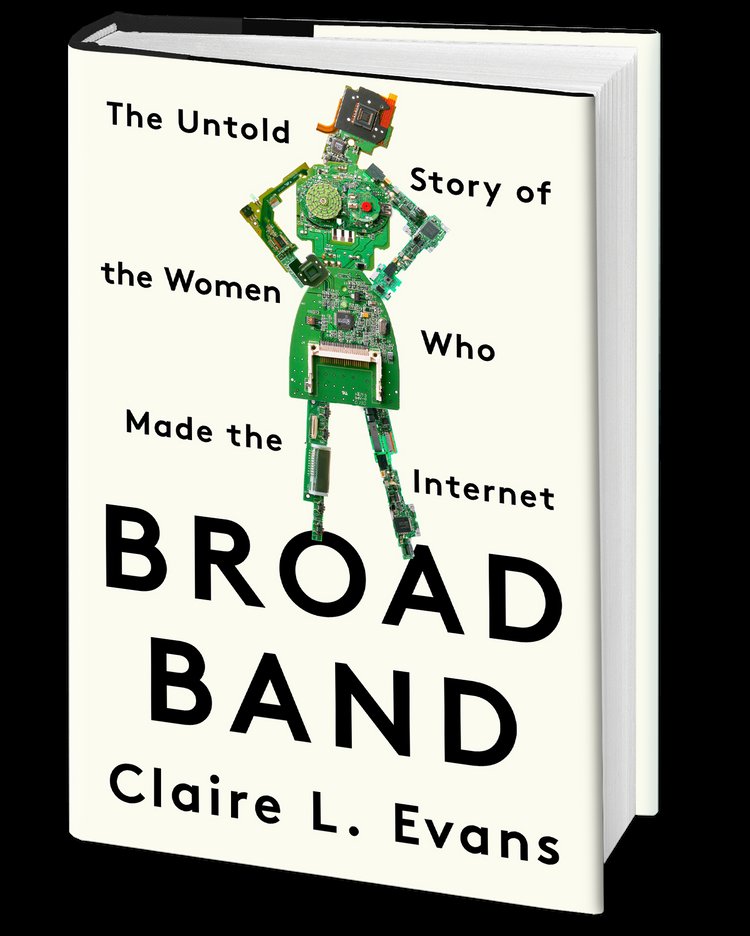

I just finished Eric Adler's The Battle of the Classics, and wanted to say something about Joel Christiansen's review linked below. I am not sure what motivates the review (I speculate a bit below), but it gives a very misleading impression of the book. 1/x
The meat of the criticism is that the history Adler gives is insufficiently critical. Adler describes a few figures who had a great influence on how the modern US university was formed. It's certainly critical: it focuses on the social Darwinism of these figures. 2/x
Other insinuations and suggestions in the review seem wildly off the mark, distorted, or inappropriate-- for example, that the book is clickbaity (it is scholarly) or conservative (hardly) or connected to the events at the Capitol (give me a break). 3/x
The core question: in what sense is classics inherently racist? Classics is old. On Adler's account, it begins in ancient Rome and is revived in the Renaissance. Slavery (Christiansen's primary concern) is also very old. Let's say classics is an education for slaveowners. 4/x
It's worth remembering that literacy itself is elite throughout most of this history. Literacy is, then, also the education of slaveowners. We can honor oral and musical traditions without denying that literacy is, generally, good. 5/x
As someone\u2019s who\u2019s read the book, this review strikes me as tremendously unfair. It mostly faults Adler for not writing the book the reviewer wishes he had! https://t.co/pqpt5Ziivj
— Teresa M. Bejan (@tmbejan) January 12, 2021
The meat of the criticism is that the history Adler gives is insufficiently critical. Adler describes a few figures who had a great influence on how the modern US university was formed. It's certainly critical: it focuses on the social Darwinism of these figures. 2/x
Other insinuations and suggestions in the review seem wildly off the mark, distorted, or inappropriate-- for example, that the book is clickbaity (it is scholarly) or conservative (hardly) or connected to the events at the Capitol (give me a break). 3/x
The core question: in what sense is classics inherently racist? Classics is old. On Adler's account, it begins in ancient Rome and is revived in the Renaissance. Slavery (Christiansen's primary concern) is also very old. Let's say classics is an education for slaveowners. 4/x
It's worth remembering that literacy itself is elite throughout most of this history. Literacy is, then, also the education of slaveowners. We can honor oral and musical traditions without denying that literacy is, generally, good. 5/x


For my book, I interviewed Texan Republicans, Democrats, oil guys + clean energy pioneers. Texas was once leading in wind energy, with GOP support. Now we get lies, from the Gov on down on renewables. What happened?
Lessons from Short Circuiting Policy https://t.co/KtxaBci5oC 🧵
Texas' challenges are not from "learning too many renewable energy lessons from California.” - Rep. Crenshaw
Texas passed its first renewable energy target in 1999, 3 years before California. The law was signed by, Gov. George W. Bush — you may recall he’s a Republican.
Gov. Bush was so proud of Texas’ leadership on wind energy, that he campaigned on it when running for President in 2000.
The "bill he signed in 1999 will make Texas the country’s largest market for renewable energy by 2009."
https://t.co/T4dKZ5qGnA
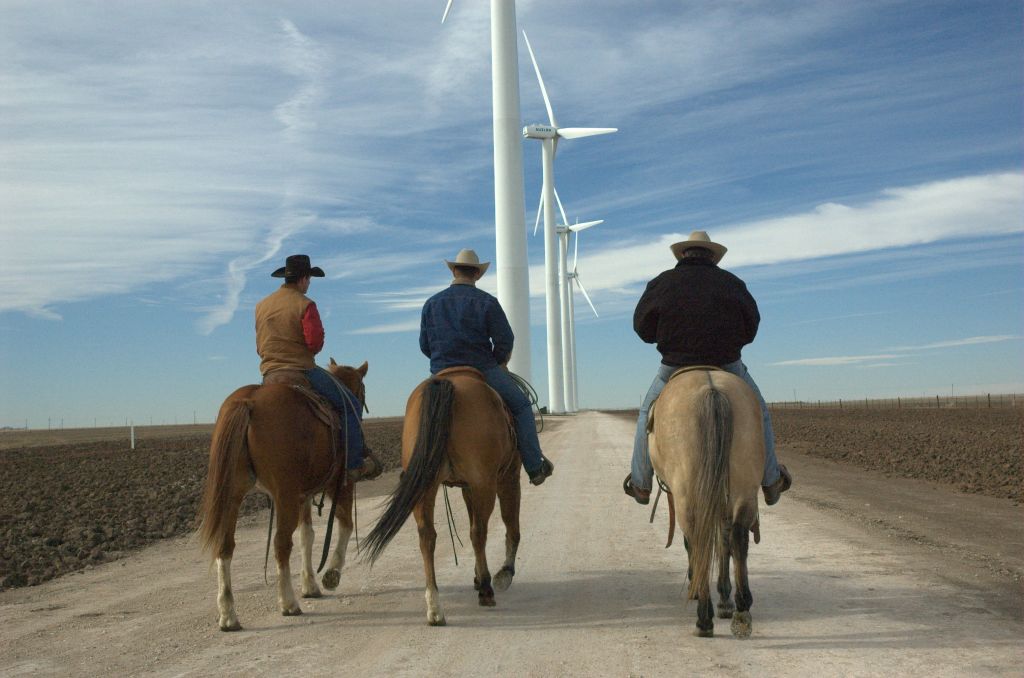
In 2005, Texas passed another big wind energy law, which included $7 billion for transmission.
It was sponsored by Republican state Senator Troy Fraser and signed by Republican Gov. Rick
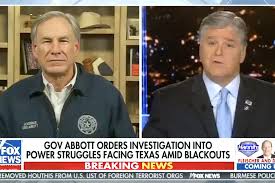
With Gov. Abbott going on TV this week and lying, blaming the boogeyman “Green New Deal” and wind turbines for Texas’ current crisis, GOP leadership on renewables feels like ancient history.
What happened over the past 15
Lessons from Short Circuiting Policy https://t.co/KtxaBci5oC 🧵
Texas' challenges are not from "learning too many renewable energy lessons from California.” - Rep. Crenshaw
Texas passed its first renewable energy target in 1999, 3 years before California. The law was signed by, Gov. George W. Bush — you may recall he’s a Republican.
Gov. Bush was so proud of Texas’ leadership on wind energy, that he campaigned on it when running for President in 2000.
The "bill he signed in 1999 will make Texas the country’s largest market for renewable energy by 2009."
https://t.co/T4dKZ5qGnA
In 2005, Texas passed another big wind energy law, which included $7 billion for transmission.
It was sponsored by Republican state Senator Troy Fraser and signed by Republican Gov. Rick
With Gov. Abbott going on TV this week and lying, blaming the boogeyman “Green New Deal” and wind turbines for Texas’ current crisis, GOP leadership on renewables feels like ancient history.
What happened over the past 15