Did he hate them?
I read things, you see?
I read a lot of things. I know how rapidly everything can change. When I see you try to declare "they're just not regularly around women and don't know them" I mock you and will continue to do so. Because you have no idea what's happened.
While I've learned to see it and let go of nearly all of it after the fact I don't think most people understand that almost none of it is real.
More from Polina


More from Culture





. THREAD 1/x
David Baddiel is getting lots of coverage and feedback on his book which again focuses on so called 'left wing' antisemitism.
I will start by saying that I have seen antisemitic comments made by Labour members and some genuine cases.
However, I have huge concerns.

2/x
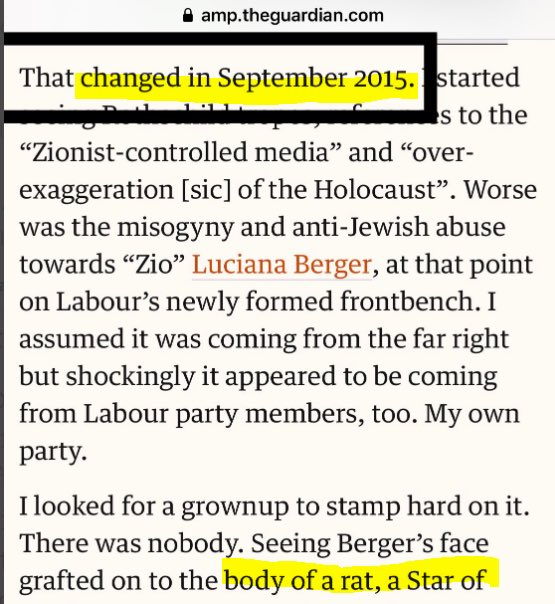
Let's look in detail at this article written in April 2019 in the @Guardian - and I will explain the concerns.
The areas highlighted guide you to believe this was all Labour - IT WASN'T.
It also occurred before 2015! Detail follows...
https://t.co/cK59FP83aG
3/x
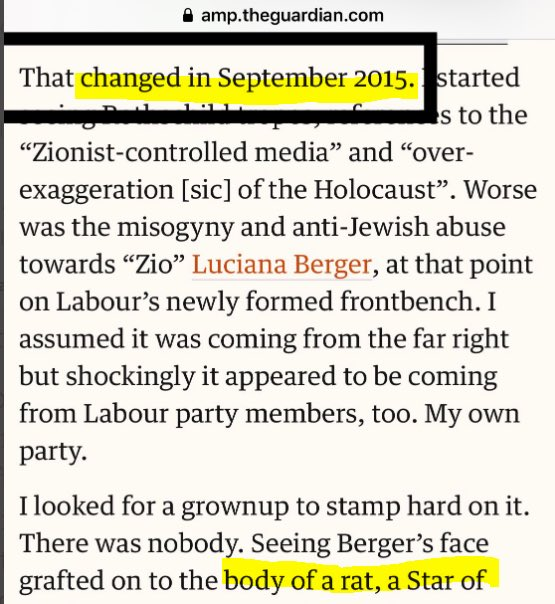
So as you see the writer of this rather deceitful piece starts with
"THAT CHANGED IN SEPTEMBER 2015" 🙄
This was done to point the timeframe as Corbyn's leadership. Yet the article goes on to describe things that are not even related to Labour, which occurred in 2014.
4/x
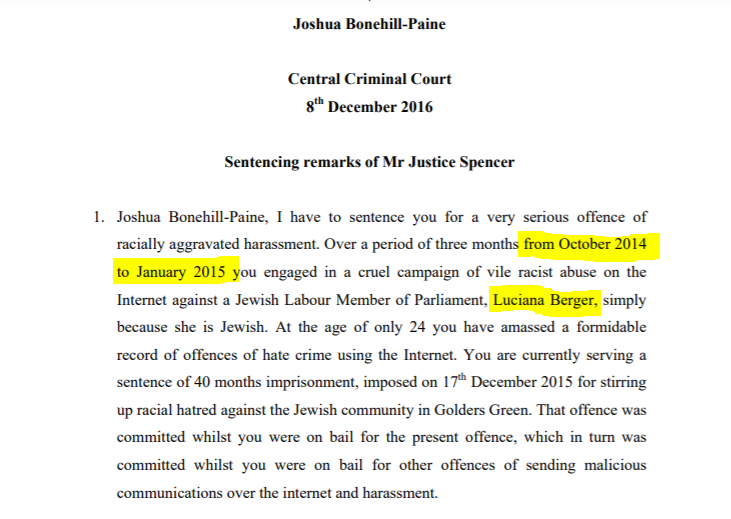
So... What in fact the @Guardian writer is discussing here is this case - where a group of Neo-Nazi's spent months inflicting abuse on Jewish MP Luciana Berger
All the detail is in the Court Notes when Bonehill-Paine was sentenced by the judge.
https://t.co/wAyo6Yro5Q
5/x
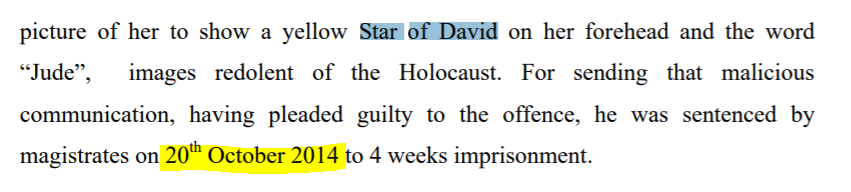
The Justice sentencing remarks to Neo-Nazi explain the previous cases too. See the date 2014.
Yet the Guardian writer refers to this NON LABOUR case to effectively make her article a lie.
"Star of David" - this was Garron Helm another neo-Nazi..
David Baddiel is getting lots of coverage and feedback on his book which again focuses on so called 'left wing' antisemitism.
I will start by saying that I have seen antisemitic comments made by Labour members and some genuine cases.
However, I have huge concerns.
2/x
Let's look in detail at this article written in April 2019 in the @Guardian - and I will explain the concerns.
The areas highlighted guide you to believe this was all Labour - IT WASN'T.
It also occurred before 2015! Detail follows...
https://t.co/cK59FP83aG
3/x
So as you see the writer of this rather deceitful piece starts with
"THAT CHANGED IN SEPTEMBER 2015" 🙄
This was done to point the timeframe as Corbyn's leadership. Yet the article goes on to describe things that are not even related to Labour, which occurred in 2014.
4/x
So... What in fact the @Guardian writer is discussing here is this case - where a group of Neo-Nazi's spent months inflicting abuse on Jewish MP Luciana Berger
All the detail is in the Court Notes when Bonehill-Paine was sentenced by the judge.
https://t.co/wAyo6Yro5Q
5/x
The Justice sentencing remarks to Neo-Nazi explain the previous cases too. See the date 2014.
Yet the Guardian writer refers to this NON LABOUR case to effectively make her article a lie.
"Star of David" - this was Garron Helm another neo-Nazi..
You May Also Like

"I lied about my basic beliefs in order to keep a prestigious job. Now that it will be zero-cost to me, I have a few things to say."
We know that elite institutions like the one Flier was in (partial) charge of rely on irrelevant status markers like private school education, whiteness, legacy, and ability to charm an old white guy at an interview.
Harvard's discriminatory policies are becoming increasingly well known, across the political spectrum (see, e.g., the recent lawsuit on discrimination against East Asian applications.)
It's refreshing to hear a senior administrator admits to personally opposing policies that attempt to remedy these basic flaws. These are flaws that harm his institution's ability to do cutting-edge research and to serve the public.
Harvard is being eclipsed by institutions that have different ideas about how to run a 21st Century institution. Stanford, for one; the UC system; the "public Ivys".
As a dean of a major academic institution, I could not have said this. But I will now. Requiring such statements in applications for appointments and promotions is an affront to academic freedom, and diminishes the true value of diversity, equity of inclusion by trivializing it. https://t.co/NfcI5VLODi
— Jeffrey Flier (@jflier) November 10, 2018
We know that elite institutions like the one Flier was in (partial) charge of rely on irrelevant status markers like private school education, whiteness, legacy, and ability to charm an old white guy at an interview.
Harvard's discriminatory policies are becoming increasingly well known, across the political spectrum (see, e.g., the recent lawsuit on discrimination against East Asian applications.)
It's refreshing to hear a senior administrator admits to personally opposing policies that attempt to remedy these basic flaws. These are flaws that harm his institution's ability to do cutting-edge research and to serve the public.
Harvard is being eclipsed by institutions that have different ideas about how to run a 21st Century institution. Stanford, for one; the UC system; the "public Ivys".







Stan Lee’s fictional superheroes lived in the real New York. Here’s where they lived, and why. https://t.co/oV1IGGN8R6
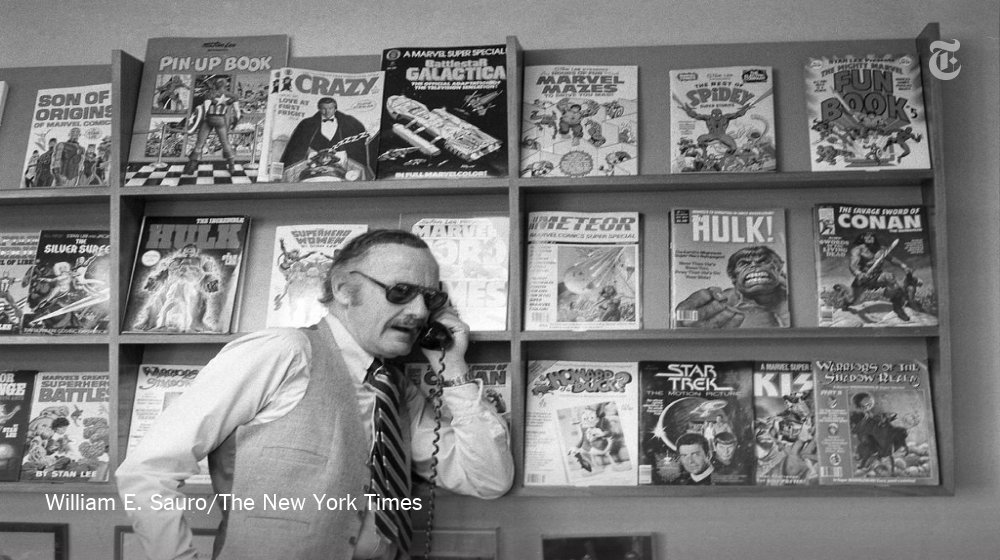
Stan Lee, who died Monday at 95, was born in Manhattan and graduated from DeWitt Clinton High School in the Bronx. His pulp-fiction heroes have come to define much of popular culture in the early 21st century.
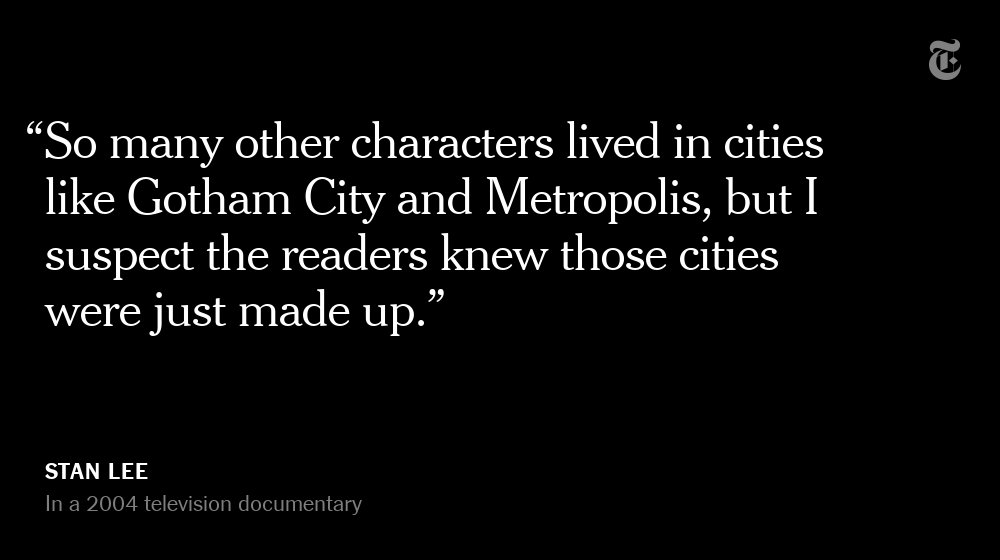
Tying Marvel’s stable of pulp-fiction heroes to a real place — New York — served a counterbalance to the sometimes gravity-challenged action and the improbability of the stories. That was just what Stan Lee wanted. https://t.co/rDosqzpP8i
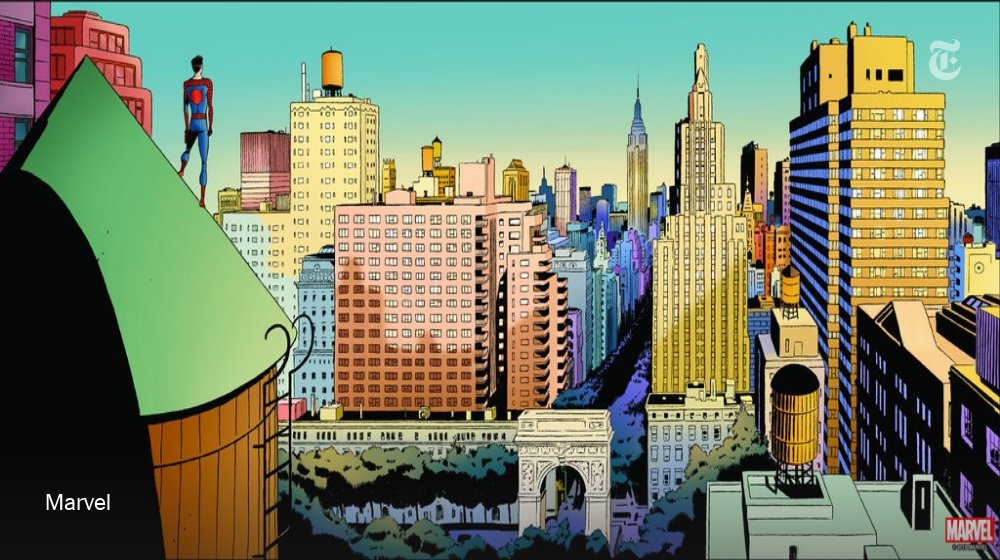
The New York universe hooked readers. And the artists drew what they were familiar with, which made the Marvel universe authentic-looking, down to the water towers atop many of the buildings. https://t.co/rDosqzpP8i
The Avengers Mansion was a Beaux-Arts palace. Fans know it as 890 Fifth Avenue. The Frick Collection, which now occupies the place, uses the address of the front door: 1 East 70th Street.
Stan Lee, who died Monday at 95, was born in Manhattan and graduated from DeWitt Clinton High School in the Bronx. His pulp-fiction heroes have come to define much of popular culture in the early 21st century.
Tying Marvel’s stable of pulp-fiction heroes to a real place — New York — served a counterbalance to the sometimes gravity-challenged action and the improbability of the stories. That was just what Stan Lee wanted. https://t.co/rDosqzpP8i
The New York universe hooked readers. And the artists drew what they were familiar with, which made the Marvel universe authentic-looking, down to the water towers atop many of the buildings. https://t.co/rDosqzpP8i
The Avengers Mansion was a Beaux-Arts palace. Fans know it as 890 Fifth Avenue. The Frick Collection, which now occupies the place, uses the address of the front door: 1 East 70th Street.