This will be my first and possibly last tweet (thread) as I am mostly here to learn. It is prompted by a recent study questioning lockdown efficacy that is getting a lot of attention. It appears people believe it to be the first of its kind, but I have been collecting similar
“there is no evidence that more restrictive nonpharmaceutical interventions (“lockdowns”) contributed substantially to bending the curve of new cases in England, France, Germany, Iran, Italy, the Netherlands, Spain, or the United States in early 2020”
“Inferences on effects of NPIs are non-robust and highly sensitive to model specification. Claimed benefits of lockdown appear grossly exaggerated.”
“government actions such as border closures, full lockdowns, and a high rate of COVID-19 testing were not associated with statistically significant reductions in the number of critical cases or overall mortality”
“Official data from Germany’s RKI agency suggest strongly that the spread of the coronavirus in Germany receded autonomously, before any interventions become effective”
“the decline in infections in England...began before full lockdown…[S]uch a scenario would be consistent with...Sweden, which began its decline in fatal infections shortly after the UK, but did so on the basis of measures well short of full lockdown”
“the UK lockdown was both superfluous (it did not prevent an otherwise explosive behavior of the spread of the coronavirus) and ineffective (it did not slow down the death growth rate visibly).”
“Given that the evidence reveals that the Corona disease declines even without a complete lockdown, it is recommendable to reverse the current policy and remove
the lockdown”
“stay at home orders, closure of all non-essential businesses and requiring the wearing of facemasks or coverings in public was not associated with any independent additional impact”
“these strategies might not have saved any life in western Europe. We also show that neighboring countries applying less restrictive social distancing measures … experience a very similar time evolution of the epidemic.”
“the model does not support [the] estimate that lockdown reduced the case reproduction number R by 81% or that more than three million deaths were averted by non-pharmaceutical interventions.”
“The case of Sweden, where the authors find the reduction in transmission to have been only moderately weaker than in other countries despite no lockdown having occurred, is prima facie evidence”
“general social distancing was also projected to reduce the number of cases but increase the total number of deaths compared with social distancing of over 70 only”
“Strategies that minimise deaths involve the infected fraction primarily being in the
“results presented in the report suggested that the addition of interventions restricting younger people
“We show that [lockdown] is modestly superior in saving lives compared to [focused protection], but with tremendous costs to prevent one case of death. This might result in overwhelming economic effects that are expected to increase future death toll”
“For pathogens that inflict greater morbidity at older ages, interventions that reduce but do not eliminate exposure can paradoxically increase the number of cases of severe disease by shifting the burden of infection toward older individuals”
“Current policy can be misdirected and can therefore have long and even short-term negative effects on human welfare and thus result in not actually minimizing death rates (incorporating externalities), especially in the long run.”
“For example, the data…shows a decrease in infection rates after countries eased...lockdowns with >99% statistical significance. Indeed...infection rates have declined after reopening even after allowing for an appropriate measurement lag.
“restrictions imposed by the pandemic (eg, stay-at-home orders) could claim lives indirectly through delayed care for acute emergencies, exacerbations of chronic diseases, and psychological distress (eg, drug overdoses).”
“In 14 states, more than 50%
“We found that 180-day of mandatory isolations to healthy <60 (ie schools and workplaces closed) produces more final deaths if the vaccination date is later than (Madrid: Feb 23 2021; Catalonia: Dec 28 2020; Paris: Jan 14 2021; London: Jan 22 2021)”
“Comparing weekly mortality in 24 European countries, the findings in this paper suggest that more severe lockdown policies have not been associated with lower mortality. In other words, the lockdowns have not worked as intended”
“Our findings … further raise doubt about the importance in NPI’s (lockdown policies in particular) in accounting for the evolution of COVID-19 transmission rates over time and across locations”
“[the] President...has flatly denied the seriousness of the pandemic, refusing to impose a lockdown, close schools, or cancel mass events…Yet the country’s death rate is among the lowest in Europe-just over 700 in a population of 9.5 million”
“living with children 0-11 years was not associated with increased risks of recorded SARS-CoV-2 infection, COVID-19 related hospital or ICU admission but was associated with reduced risk of COVID-19 death (HR 0.75, 95%CI 0.62-0.92).”
More from Category c19


All you need to know about COVID19
FACTS NOT FEAR
Covid 19 is a disease caused by the SARS-CoV-2 virus. SARS-CoV-2 is one of 7 coronaviruses known to man. 1/n
The pandemic is real. Excess deaths were observed in many countries. Not all countries were affected in the same way due to pre-existing immunity, the health status of the population and demographics (the proportion of elderly in the population) 2/n
https://t.co/65elPq3gp5
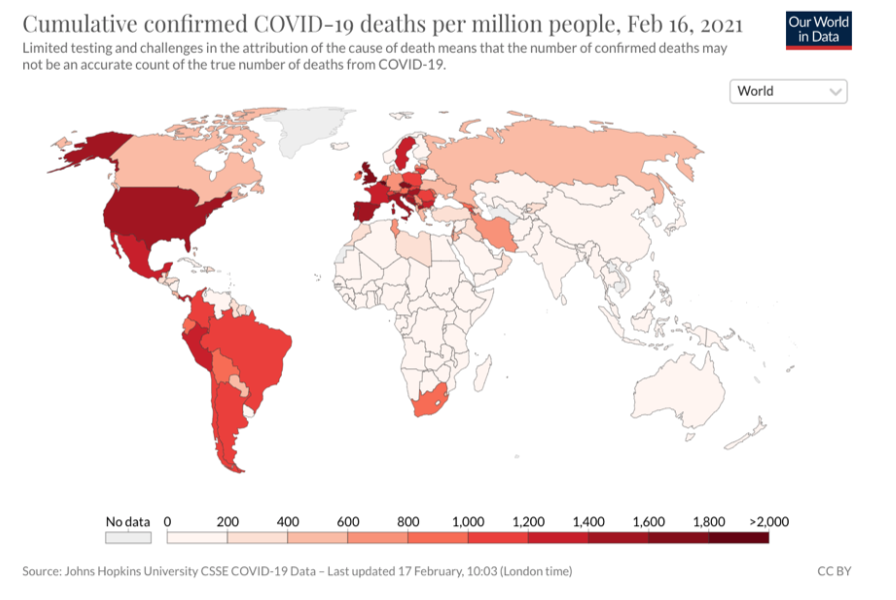
COVID 19 presents a high risk for the very few and negligible risk for the many.
The infection fatality rate in different age groups:
<19 y, IFR= 0.003%
20-49 y: IFR= 0.02%
50-69 y: 0.5%
>70y, IFR=
Not everybody is susceptible to the virus. If reinfected, pre-existing immunity from related viruses gives protection from developing the disease or from developing serious symptoms.
4/n
“The evidence that a subset of people has a cross-reactive T cell repertoire through exposure to related coronaviruses is
FACTS NOT FEAR
Covid 19 is a disease caused by the SARS-CoV-2 virus. SARS-CoV-2 is one of 7 coronaviruses known to man. 1/n
The pandemic is real. Excess deaths were observed in many countries. Not all countries were affected in the same way due to pre-existing immunity, the health status of the population and demographics (the proportion of elderly in the population) 2/n
https://t.co/65elPq3gp5
COVID 19 presents a high risk for the very few and negligible risk for the many.
The infection fatality rate in different age groups:
<19 y, IFR= 0.003%
20-49 y: IFR= 0.02%
50-69 y: 0.5%
>70y, IFR=
Not everybody is susceptible to the virus. If reinfected, pre-existing immunity from related viruses gives protection from developing the disease or from developing serious symptoms.
4/n
“The evidence that a subset of people has a cross-reactive T cell repertoire through exposure to related coronaviruses is

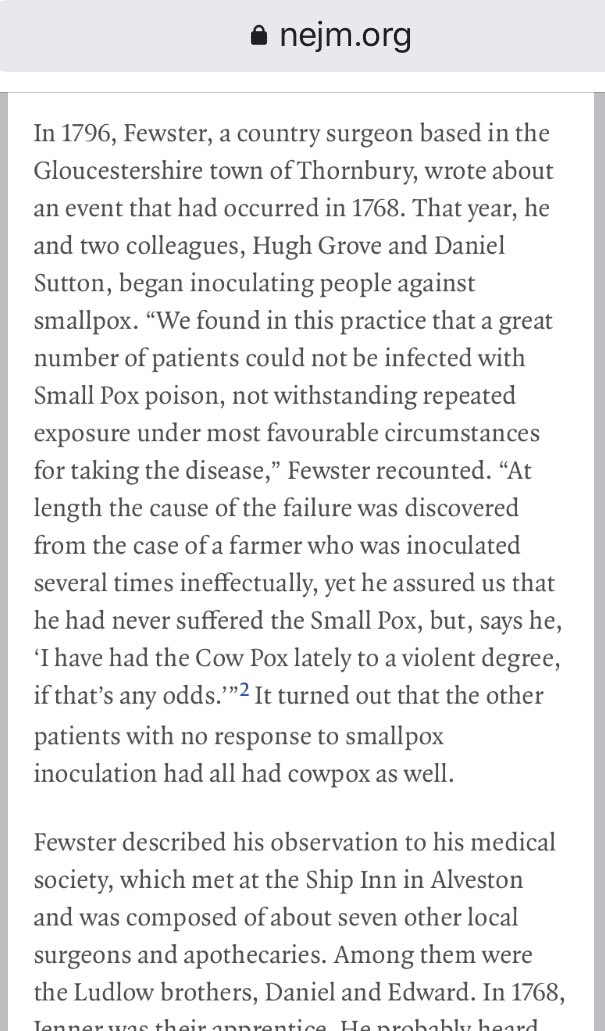
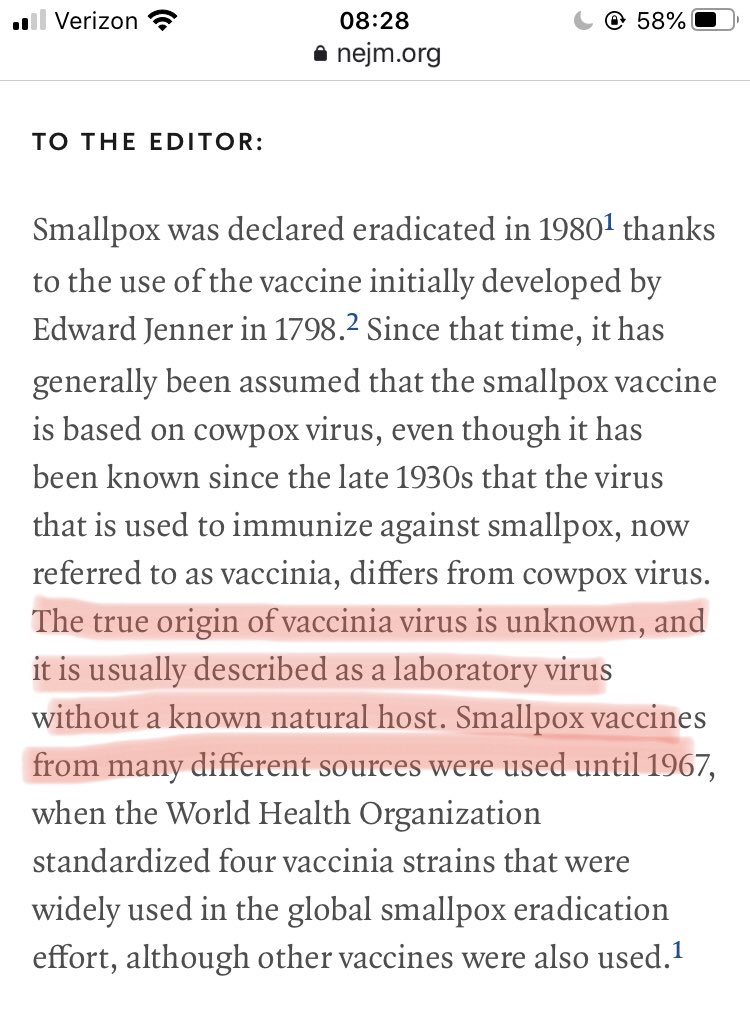
I am puzzled as to what the greatest medical scholar found in his research of smallpox vaccination.
/1
Legends and myths in medicine. Debunked. Not that but few care.
https://t.co/3Hu2D9Un0J
/2
https://t.co/xnZ2EXO1f5
/3
Open access.
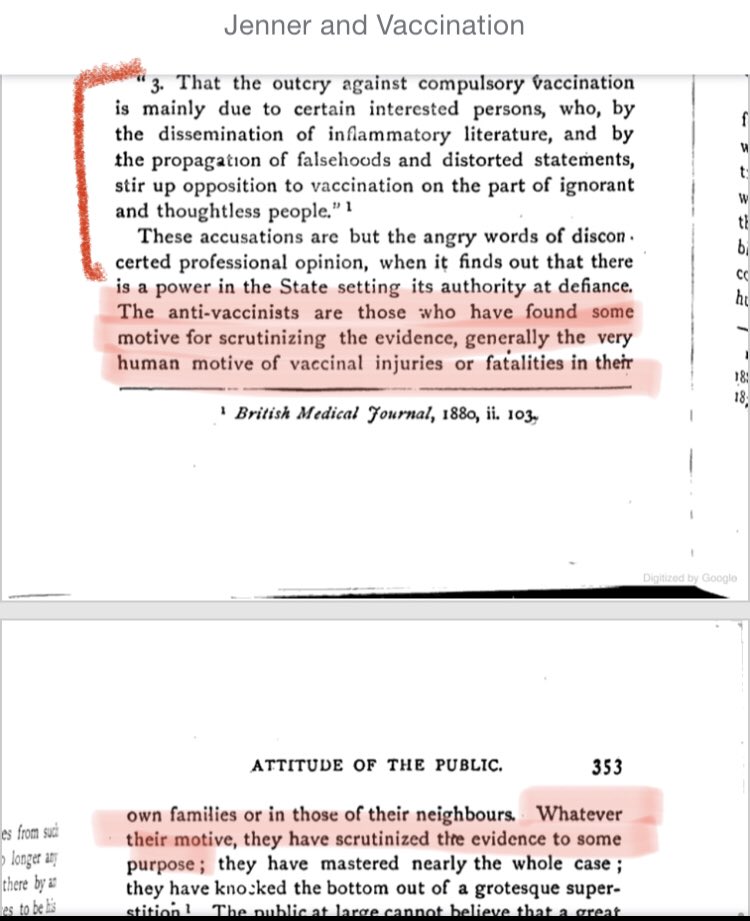
Where have we seen this before? 🤔
/1
https://t.co/qwQS3b2NPq pic.twitter.com/TqW1K3oC60
— Medical Nemesis (@Medical_Nemesis) February 20, 2021
Legends and myths in medicine. Debunked. Not that but few care.
https://t.co/3Hu2D9Un0J
/2
https://t.co/xnZ2EXO1f5
/3
Open access.
Where have we seen this before? 🤔

1/: The Nuremberg Code is a set of research ethics principles for human experimentation created as a result of the Nuremberg trials at the end of the Second World War. In light of the current events, they are more actual than ever before. ⬇️an important thread⬇️
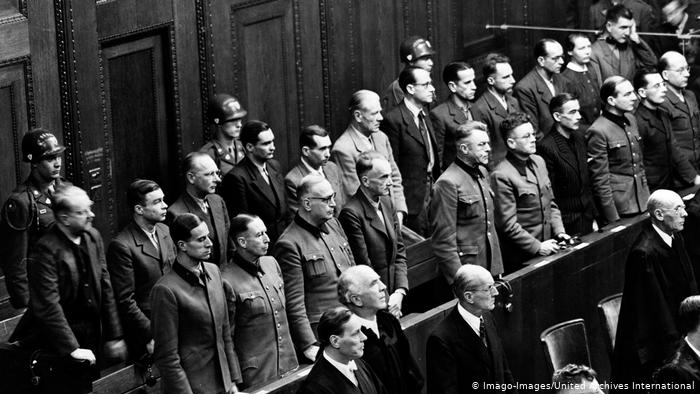
2/: These so-called ‘Doctors’ Trial’ focused on physicians who conducted #inhumane and #unethical human experiments in German concentration camps, in addition to those who were involved in over 3,500,000 sterilizations of German citizens. (the picture shows doctors/criminals)
3/: Ten points of the code were given in the section of the verdict entitled "Permissible Medical Experiments". They can be found in detail on the following website:
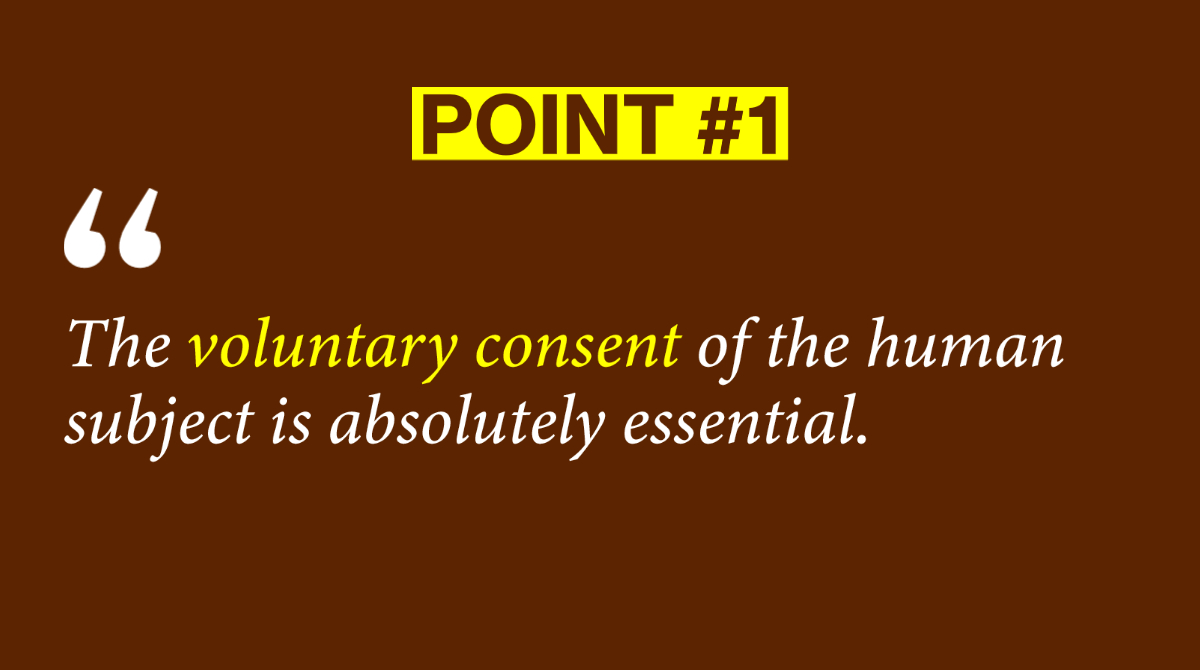
4/: Point #1 means that the person involved should have legal capacity to give consent; should be so situated as to be able to exercise free power of choice, without the intervention of any element of force, fraud, or deceit.
5/: Using an insufficiently-tested vaccine on humans is unethical. However, as long as people voluntarily consent to receive the vaccine, being informed about all risks, everything is OK. Doing this with force, however, is against the Nuremberg Code.
2/: These so-called ‘Doctors’ Trial’ focused on physicians who conducted #inhumane and #unethical human experiments in German concentration camps, in addition to those who were involved in over 3,500,000 sterilizations of German citizens. (the picture shows doctors/criminals)
3/: Ten points of the code were given in the section of the verdict entitled "Permissible Medical Experiments". They can be found in detail on the following website:
4/: Point #1 means that the person involved should have legal capacity to give consent; should be so situated as to be able to exercise free power of choice, without the intervention of any element of force, fraud, or deceit.
5/: Using an insufficiently-tested vaccine on humans is unethical. However, as long as people voluntarily consent to receive the vaccine, being informed about all risks, everything is OK. Doing this with force, however, is against the Nuremberg Code.
Important - share: Camera footage out of care homes (USA, corrected), provided by @RobertKennedyJr's team. You can clearly see: Collateral Damages, Army assisting, force, death.
— Bobby Rajesh Malhotra \u30c4 (@Bobby_Network) February 17, 2021
Worldwide phenomen, also in Germany:https://t.co/GV7gqiPl1u
21st Century Nuremberg Trials-material pic.twitter.com/wPekgPYHIR
You May Also Like

So the cryptocurrency industry has basically two products, one which is relatively benign and doesn't have product market fit, and one which is malignant and does. The industry has a weird superposition of understanding this fact and (strategically?) not understanding it.
The benign product is sovereign programmable money, which is historically a niche interest of folks with a relatively clustered set of beliefs about the state, the literary merit of Snow Crash, and the utility of gold to the modern economy.
This product has narrow appeal and, accordingly, is worth about as much as everything else on a 486 sitting in someone's basement is worth.
The other product is investment scams, which have approximately the best product market fit of anything produced by humans. In no age, in no country, in no city, at no level of sophistication do people consistently say "Actually I would prefer not to get money for nothing."
This product needs the exchanges like they need oxygen, because the value of it is directly tied to having payment rails to move real currency into the ecosystem and some jurisdictional and regulatory legerdemain to stay one step ahead of the banhammer.
If everyone was holding bitcoin on the old x86 in their parents basement, we would be finding a price bottom. The problem is the risk is all pooled at a few brokerages and a network of rotten exchanges with counter party risk that makes AIG circa 2008 look like a good credit.
— Greg Wester (@gwestr) November 25, 2018
The benign product is sovereign programmable money, which is historically a niche interest of folks with a relatively clustered set of beliefs about the state, the literary merit of Snow Crash, and the utility of gold to the modern economy.
This product has narrow appeal and, accordingly, is worth about as much as everything else on a 486 sitting in someone's basement is worth.
The other product is investment scams, which have approximately the best product market fit of anything produced by humans. In no age, in no country, in no city, at no level of sophistication do people consistently say "Actually I would prefer not to get money for nothing."
This product needs the exchanges like they need oxygen, because the value of it is directly tied to having payment rails to move real currency into the ecosystem and some jurisdictional and regulatory legerdemain to stay one step ahead of the banhammer.

@EricTopol @NBA @StephenKissler @yhgrad B.1.1.7 reveals clearly that SARS-CoV-2 is reverting to its original pre-outbreak condition, i.e. adapted to transgenic hACE2 mice (either Baric's BALB/c ones or others used at WIV labs during chimeric bat coronavirus experiments aimed at developing a pan betacoronavirus vaccine)
@NBA @StephenKissler @yhgrad 1. From Day 1, SARS-COV-2 was very well adapted to humans .....and transgenic hACE2 Mice
@NBA @StephenKissler @yhgrad 2. High Probability of serial passaging in Transgenic Mice expressing hACE2 in genesis of SARS-COV-2
@NBA @StephenKissler @yhgrad B.1.1.7 has an unusually large number of genetic changes, ... found to date in mouse-adapted SARS-CoV2 and is also seen in ferret infections.
https://t.co/9Z4oJmkcKj

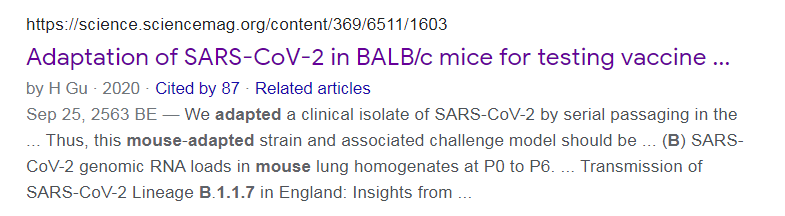
@NBA @StephenKissler @yhgrad We adapted a clinical isolate of SARS-CoV-2 by serial passaging in the ... Thus, this mouse-adapted strain and associated challenge model should be ... (B) SARS-CoV-2 genomic RNA loads in mouse lung homogenates at P0 to P6.
https://t.co/I90OOCJg7o
@NBA @StephenKissler @yhgrad 1. From Day 1, SARS-COV-2 was very well adapted to humans .....and transgenic hACE2 Mice
1. From Day 1, SARS-COV-2 was very well adapted to humans .....and transgenic hACE2 Mice
— Billy Bostickson \U0001f3f4\U0001f441&\U0001f441 \U0001f193 (@BillyBostickson) January 30, 2021
"we generated a mouse model expressing hACE2 by using CRISPR/Cas9 knockin technology. In comparison with wild-type C57BL/6 mice, both young & aged hACE2 mice sustained high viral loads... pic.twitter.com/j94XtSkscj
@NBA @StephenKissler @yhgrad 2. High Probability of serial passaging in Transgenic Mice expressing hACE2 in genesis of SARS-COV-2
1. High Probability of serial passaging in Transgenic Mice expressing hACE2 in genesis of SARS-COV-2!
— Billy Bostickson \U0001f3f4\U0001f441&\U0001f441 \U0001f193 (@BillyBostickson) January 2, 2021
2 papers:
Human\u2013viral molecular mimicryhttps://t.co/irfH0Zgrve
Molecular Mimicryhttps://t.co/yLQoUtfS6s https://t.co/lsCv2iMEQz
@NBA @StephenKissler @yhgrad B.1.1.7 has an unusually large number of genetic changes, ... found to date in mouse-adapted SARS-CoV2 and is also seen in ferret infections.
https://t.co/9Z4oJmkcKj
@NBA @StephenKissler @yhgrad We adapted a clinical isolate of SARS-CoV-2 by serial passaging in the ... Thus, this mouse-adapted strain and associated challenge model should be ... (B) SARS-CoV-2 genomic RNA loads in mouse lung homogenates at P0 to P6.
https://t.co/I90OOCJg7o