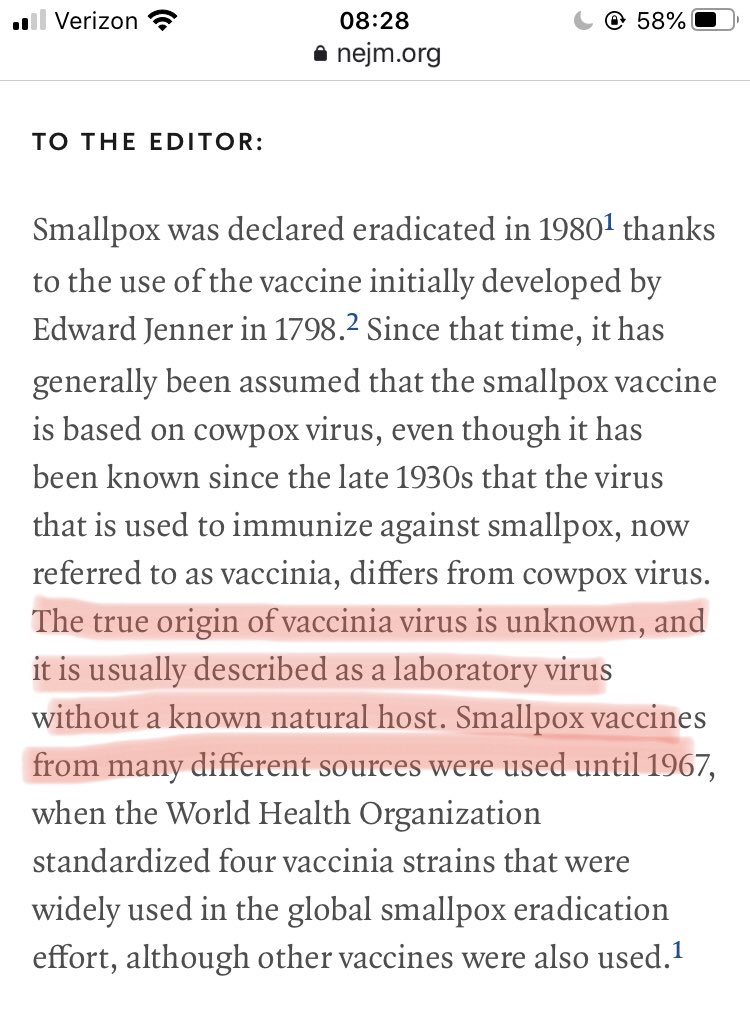
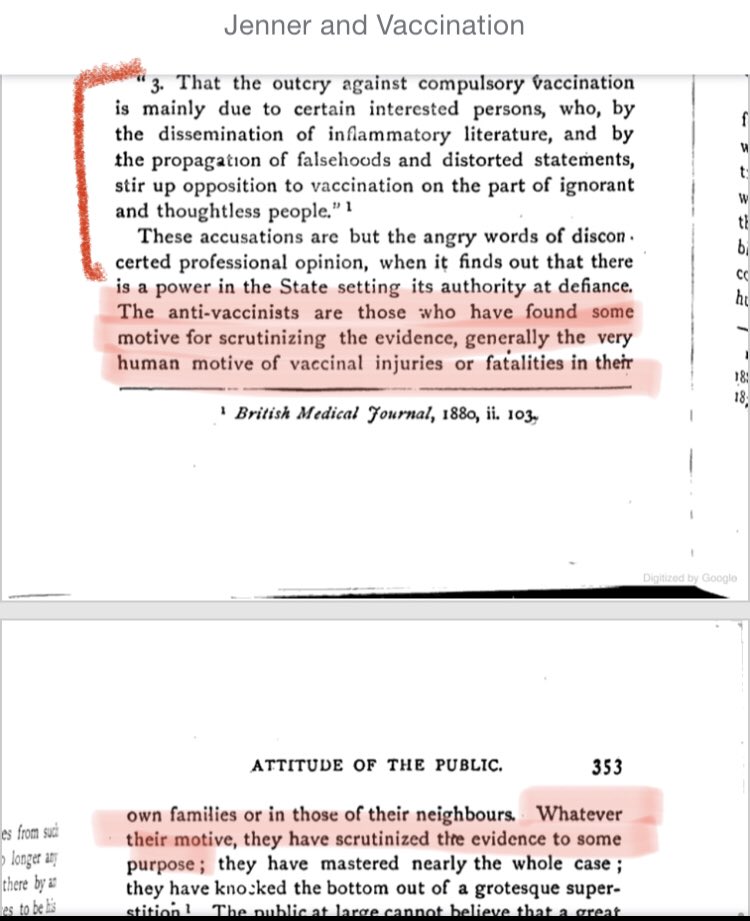
I am puzzled as to what the greatest medical scholar found in his research of smallpox vaccination.

/1

Legends and myths in medicine. Debunked. Not that but few care.

https://t.co/3Hu2D9Un0J

/2
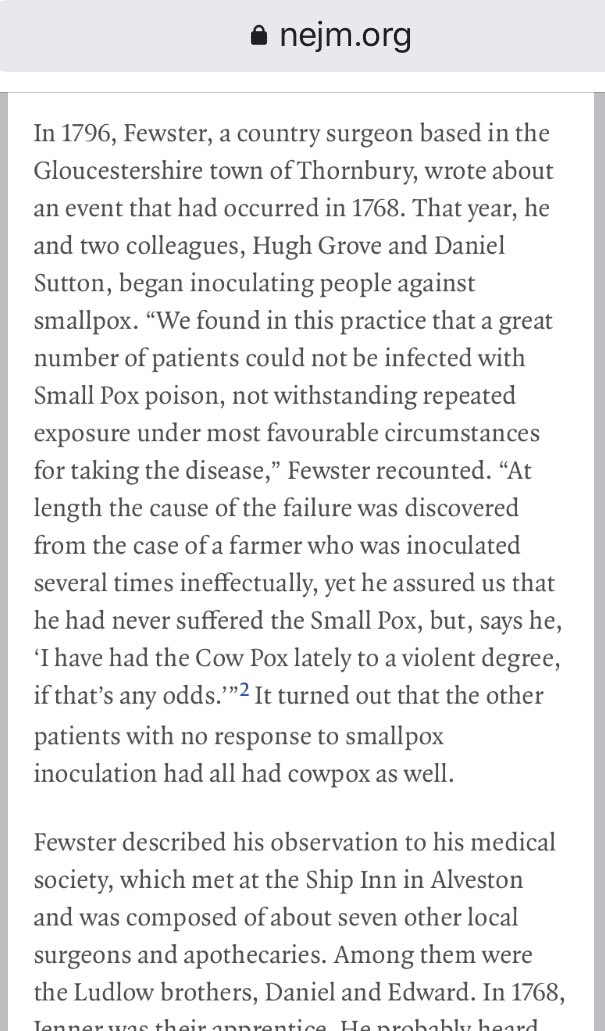
https://t.co/xnZ2EXO1f5

/3
Open access. /4

https://t.co/7VF7fFb1cr
Where have we seen this before? 🤔
It appears Charles Creighton questioned Jenner vaccination on scientific, procedural, and humanitarian grounds. Of note he starts exploration of the subject with a look at Jenner’s persona and context of his experiments. /6
Creighton produces a very detailed account how vaccination fad took hold without much reasonable evidence (at the time). Those familiar with politics of medicinal enterprise may find this painfully familiar. /7
Creighton asserts that Jenner got preoccupied with cowpox/smallpox connection due to name similarity of the disease. /8
Interesting juxtaposition of observable reality vs artificial experiment. Creighton suggests Jenner cherry-picked “evidence”. /9
A slight of hand - invention of a fancy name for a common disease. This is still a common technique in “science” to attract attention and I inspire awe. Rebranding of disease often allows to create illusion of disease eradication or emergence.
/10

More from Category c19

You May Also Like

These 10 threads will teach you more than reading 100 books

Five billionaires share their top lessons on startups, life and entrepreneurship (1/10)


10 competitive advantages that will trump talent (2/10)


Some harsh truths you probably don’t want to hear (3/10)


10 significant lies you’re told about the world (4/10)
1/ Some initial thoughts on personal moats:

Like company moats, your personal moat should be a competitive advantage that is not only durable—it should also compound over time.

Characteristics of a personal moat below:


2/ Like a company moat, you want to build career capital while you sleep.

As Andrew Chen noted:


3/ You don’t want to build a competitive advantage that is fleeting or that will get commoditized

Things that might get commoditized over time (some longer than


4/ Before the arrival of recorded music, what used to be scarce was the actual music itself — required an in-person artist.

After recorded music, the music itself became abundant and what became scarce was curation, distribution, and self space.

5/ Similarly, in careers, what used to be (more) scarce were things like ideas, money, and exclusive relationships.

In the internet economy, what has become scarce are things like specific knowledge, rare & valuable skills, and great reputations.