THREAD: The story of the week in finance is how a group of retail traders at @wallstreetbets, with assists from @ElonMusk and @Chamath, took down the establishment short sellers at GameStop.

A thread on the underlying mechanics of the $GME saga...

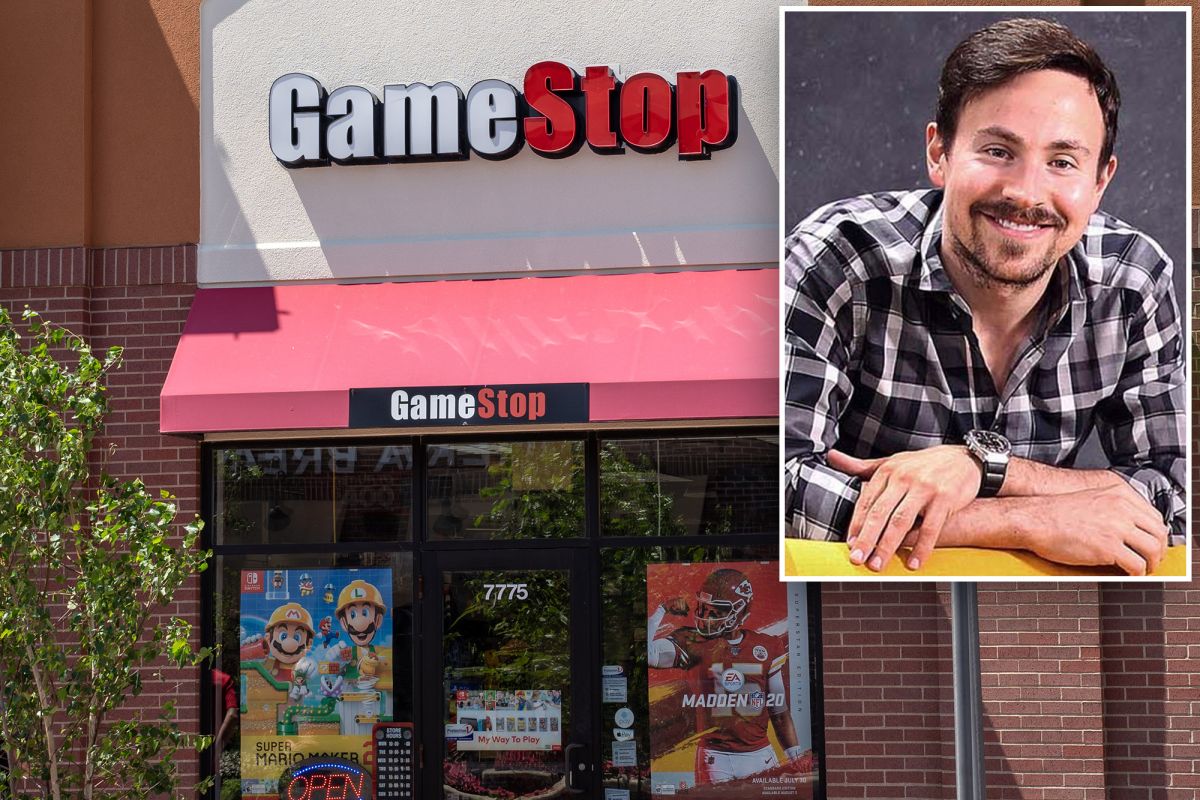
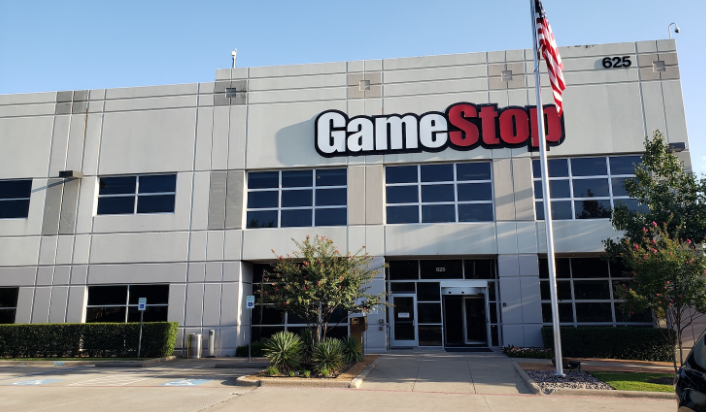
1/ First, for those unfamiliar with the business, GameStop is a videogame and merchandise retailer.

It has >5,000 stores, primarily in malls, across North America, Europe, and Australia.

The business has struggled to modernize, hurting its financial and stock performance.
2/ For a variety of business reasons, a bull (i.e. optimistic) case regarding its future performance has formed.

It really came to the forefront after RC Ventures, an entity managed by Chewy founder @ryancohen, disclosed a large position and assumed three board seats.
3/ @ryancohen summarized his case, stating:

"We are excited to bring our customer-obsessed mindset and technology experience to GameStop and its strategic assets...expanding the ways in which it delights customers and by becoming the ultimate destination for gamers."
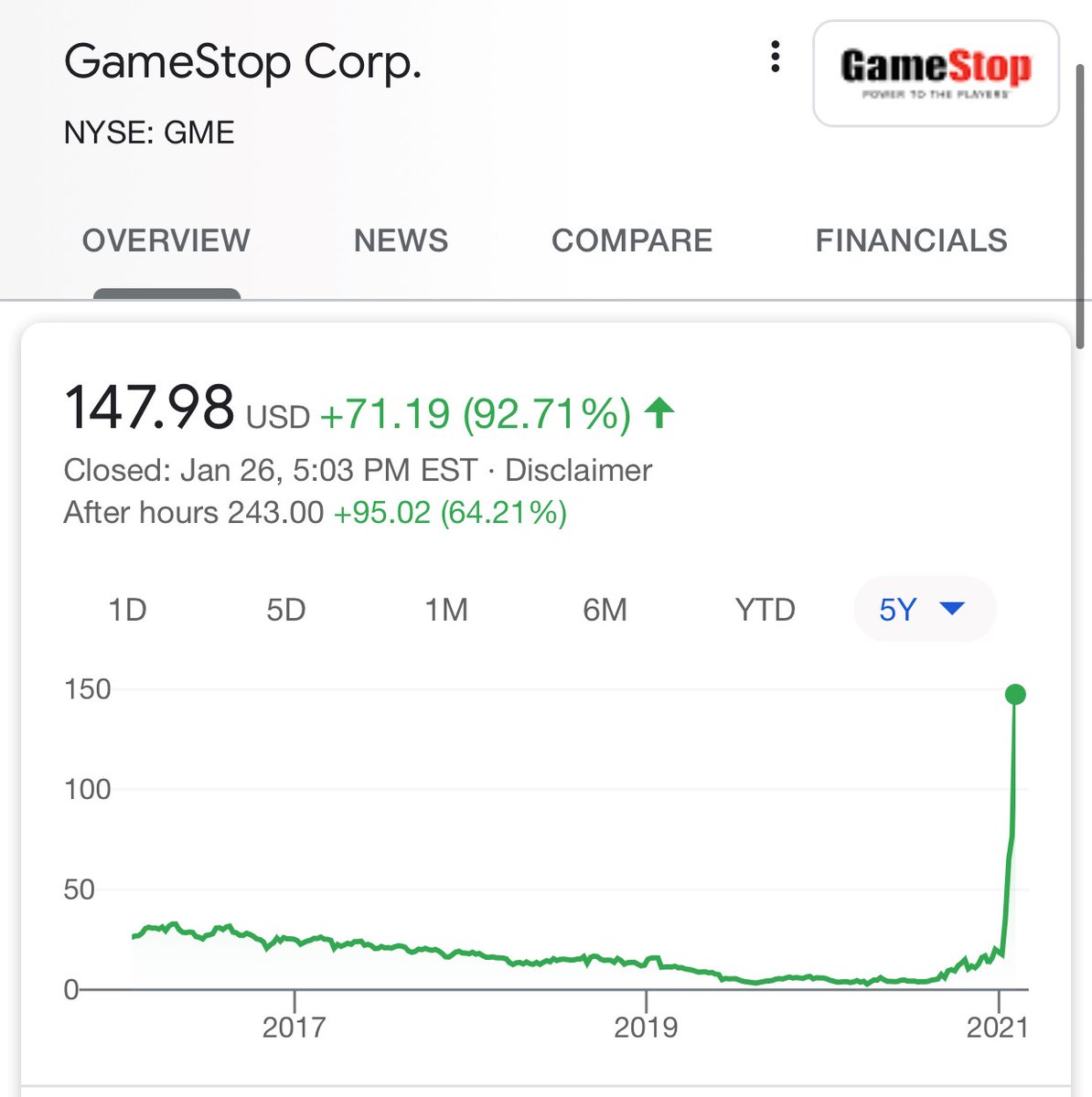
4/ At the time of that statement on January 11, $GME stock was trading at about ~$20 per share.

Since then, the stock has surged to ~$200 per share and captured the public imagination.

But how did it happen?

There are two dynamics at play: a short squeeze and a gamma squeeze.
5/ First, a short squeeze.

This occurs when short sellers (those betting against a stock, like Melvin Capital here), are forced to buy stock to exit/cover their shorts.

I wrote a primer on the short squeeze, which you can find below. https://t.co/xKDUscvQup
6/ The gamma squeeze is a bit more complicated.

As usual, let's simplify it here for everyone to understand.

A gamma squeeze is all about options contracts and their indirect impact on the underlying stock.

For a primer on options, see my thread below. https://t.co/jU7gEt9sf7
7/ When you buy a call option on $GME, someone has to sell you that option contract.

You pay them a bit of money (the premium) and they make a commitment to deliver you the underlying stock at a future date for the strike price of the option.

It's a pretty simple transaction.
8/ But in the background, the seller (often called a "market maker") has to think about their risk exposure.

If $GME rises above your strike price, they will have to buy the stock at the market price and sell it to you for the strike price, incurring a (potentially large!) loss.
9/ To hedge this risk, when the market maker sells you the option, she also goes into the market and buys a bit of the underlying stock.

The amount of stock she buys is based on the "Delta" - a ratio of how much the option price moves relative to a $1 move in the stock.
10/ "Gamma" is the rate of change of the "Delta" of the option.

As Delta and Gamma rise, the market maker gets more and more nervous!

She has to buy more stock to hedge the risk of the option being exercised in the money (i.e. with the underlying price above the strike price).
11/ So here we have the (simplified!) makings of the gamma squeeze.

As call option purchasing volumes suddenly surged (thanks to @wallstreetbets @chamath and @ElonMusk), market makers had to purchase a lot of $GME stock to hedge.

This set in motion a self-fulfilling prophecy…
12/ Market makers rushed to purchase $GME stock to hedge exposure. This drove the price of $GME up!

As the price of $GME went up, the Delta and Gamma of $GME call options rose.

This meant market makers had to buy more stock, further driving up the $GME price!

Reflexivity!
13/ So to summarize:

With $GME, we had both (1) a short squeeze - short-sellers frantically buying the stock to close/cover their shorts and (2) a gamma squeeze - call option market makers frantically buying the stock to hedge their exposure.

Result: 👇
14/ As always, I hope this thread was helpful and makes you feel more well-informed on what is happening in the crazy world of finance.

For more on this topic, I highly recommend reading @matt_levine's "Money Stuff" newsletter on the topic. https://t.co/5nxzRyTaee
15/ In addition, my friend @ShaanVP wrote an incredible/hilarious thread on the story dynamics behind the @wallstreetbets $GME moves. Check it out here! https://t.co/9z38w7fwTy
16/ If you enjoyed this, follow me for more educational threads on business, money, finance, and economics. You can find all of my threads in the meta-thread below. https://t.co/53UhhfzIcp
17/ And if you are less Twitter inclined, sign up for my newsletter here, where you can find all of my old threads and receive all of my new threads directly to your inbox. https://t.co/NEe1Tov0Xg

More from Sahil Bloom

More from Business

You May Also Like

A brief analysis and comparison of the CSS for Twitter's PWA vs Twitter's legacy desktop website. The difference is dramatic and I'll touch on some reasons why.

Legacy site *downloads* ~630 KB CSS per theme and writing direction.

6,769 rules
9,252 selectors
16.7k declarations
3,370 unique declarations
44 media queries
36 unique colors
50 unique background colors
46 unique font sizes
39 unique z-indices

https://t.co/qyl4Bt1i5x


PWA *incrementally generates* ~30 KB CSS that handles all themes and writing directions.

735 rules
740 selectors
757 declarations
730 unique declarations
0 media queries
11 unique colors
32 unique background colors
15 unique font sizes
7 unique z-indices

https://t.co/w7oNG5KUkJ


The legacy site's CSS is what happens when hundreds of people directly write CSS over many years. Specificity wars, redundancy, a house of cards that can't be fixed. The result is extremely inefficient and error-prone styling that punishes users and developers.

The PWA's CSS is generated on-demand by a JS framework that manages styles and outputs "atomic CSS". The framework can enforce strict constraints and perform optimisations, which is why the CSS is so much smaller and safer. Style conflicts and unbounded CSS growth are avoided.