Here’s a fundamental Brexit truth I don’t think we’ve discussed enough: the reason why Brexit has been on the front pages for so much of the past few years doesn’t actually have that much to do with Brexit. Let me explain:
The war is over. pic.twitter.com/5wN23RzzGF
— Nigel Farage (@Nigel_Farage) December 24, 2020
More from Brexit

This very short article by Jeremy Cliffe is the best thing I have ever read on Brexit and the EU. It pivots on the contrast between Delors’ and Thatcher’s authentically provincial Christian visions and suggests the battle in Britain between the two is not over.
Thatcher: Protestant believer in the totally free market and absolutely sovereign centralised nation state. Delors: Catholic believer in third way personalism, corporatism and federalism. Individualism versus relational love. Heterodoxy versus Orthodoxy.
The article useful gives the lie to the idea that the Catholic vision of the EU has altogether vanished even though it is weakened. Delors wanted a social dimension to the free market and single currency and yet lexiteers laughably insist the EU is more neoliberal than the U.K.!
Subsidiary federalism is a doctrine of democracy and human fraternity. State sovereignty is a doctrine of naked power. It is a face of Antichrist. Leviathan.
Those combined that democracy can only be inside a single state fail to power just how much of private law and evermore so is necessarily international. Thus if political institutions don’t extend over borders there can be no democracy.
The rupture between Margaret Thatcher and Jacques Delors lives on in Brexit https://t.co/r3YiyPoSFB
— john milbank (@johnmilbank3) January 9, 2021
Thatcher: Protestant believer in the totally free market and absolutely sovereign centralised nation state. Delors: Catholic believer in third way personalism, corporatism and federalism. Individualism versus relational love. Heterodoxy versus Orthodoxy.
The article useful gives the lie to the idea that the Catholic vision of the EU has altogether vanished even though it is weakened. Delors wanted a social dimension to the free market and single currency and yet lexiteers laughably insist the EU is more neoliberal than the U.K.!
Subsidiary federalism is a doctrine of democracy and human fraternity. State sovereignty is a doctrine of naked power. It is a face of Antichrist. Leviathan.
Those combined that democracy can only be inside a single state fail to power just how much of private law and evermore so is necessarily international. Thus if political institutions don’t extend over borders there can be no democracy.


You May Also Like

Facebook originally a CIA program called "LifeLog".
LifeLog, via DARPA, terminated on Feb 4th, 2004.
Facebook was launched on Feb 4th, 2004.
Many of the LifeLog team became execs at FB.
Zuckerberg is a figurehead.
CIA allowed Cambridge to help Trump win
https://t.co/enzOXDCogV

Pentagon Kills LifeLog
LifeLog, via DARPA, terminated on Feb 4th, 2004.
Facebook was launched on Feb 4th, 2004.
Many of the LifeLog team became execs at FB.
Zuckerberg is a figurehead.
CIA allowed Cambridge to help Trump win
https://t.co/enzOXDCogV
Project: Lifelog
— Robert Horan (@Robby12692) December 13, 2018
Started by DARPA in 1999, the goal of Lifelog was to create a database on civilians without their knowledge, and track everything they do.
The project "ended" on Feb 4th, 2004.
Facebook began the exact same day.
The CIA funneled tens of millions into Facebook. pic.twitter.com/r7hwF0v9kh
Pentagon Kills LifeLog

Speech Delay is most common in children nowadays
In ancient times, our grandparents used to follow typical natural way of caring the needs of a child. All they used were more of natural products than chemical based for the growth of child.

One of major step followed was to feed Gurbach Jadd/ Vasa Kommu/ Acorus Calamus for initiating good speech ability in a child. This stem was needed to babies on Tuesdays and Sundays in mother's milk.
Vasa is feed to baby after the 1st bath on 12th day in week. Weekly only thrice it is fed and named as :
Budhwar - Budhi Vasa
Mangalwar - Vaak Vasa
Ravi Vaar - Aayush Vasa
This stem is burnt and rubbed against the grinding stone in mother's milk or warm water to get a paste
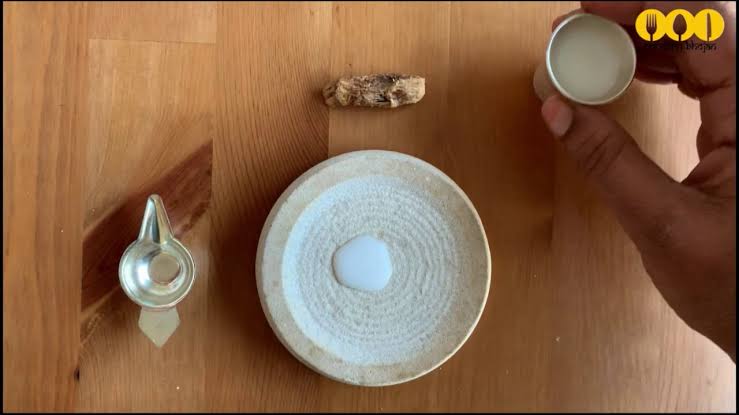
The procedure to make it is in the link
https://t.co/uo4sGp7mUm
It should not be given daily to the child. Other main benefits are
1. It clears the phlegm in child's throat caused due to continuous milk intake. It clears the tracts and breathing is effortless.
2. Digestion
For children who haven't got their speech and is delayed than usual should feed this vasa on these days in week atleast for 6months. Don't get carried away with this dialogue
"Some gain speech little late"
In ancient times, our grandparents used to follow typical natural way of caring the needs of a child. All they used were more of natural products than chemical based for the growth of child.
One of major step followed was to feed Gurbach Jadd/ Vasa Kommu/ Acorus Calamus for initiating good speech ability in a child. This stem was needed to babies on Tuesdays and Sundays in mother's milk.
Vasa is feed to baby after the 1st bath on 12th day in week. Weekly only thrice it is fed and named as :
Budhwar - Budhi Vasa
Mangalwar - Vaak Vasa
Ravi Vaar - Aayush Vasa
This stem is burnt and rubbed against the grinding stone in mother's milk or warm water to get a paste
The procedure to make it is in the link
https://t.co/uo4sGp7mUm
It should not be given daily to the child. Other main benefits are
1. It clears the phlegm in child's throat caused due to continuous milk intake. It clears the tracts and breathing is effortless.
2. Digestion
For children who haven't got their speech and is delayed than usual should feed this vasa on these days in week atleast for 6months. Don't get carried away with this dialogue
"Some gain speech little late"