
https://t.co/tk22KFIUGe
NEW: 🚨🇪🇺🇬🇧🚛🚚🍤🐟🚢🇬🇧🇪🇺🚨 Building of Brexit border posts faces delays via...industry calling for delay to July 1 U.K. #brexit border roll out - my latest via @FinancialTimes
https://t.co/tk22KFIUGe
https://t.co/wkQW81BBOQ
And the report gov handling - @cabinetofficeuk and @DefraGovUK - has been "inadequate, inequitable and ponderous". /9
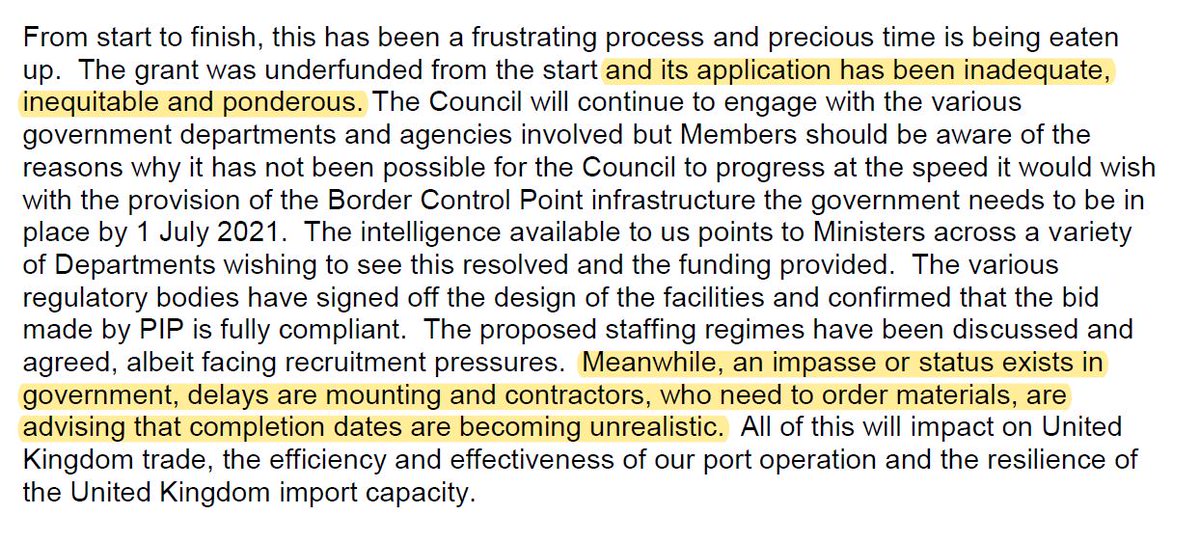
Will they stick to that,? On past form, if chaos looms, I bet not. ENDS
More from Peter Foster
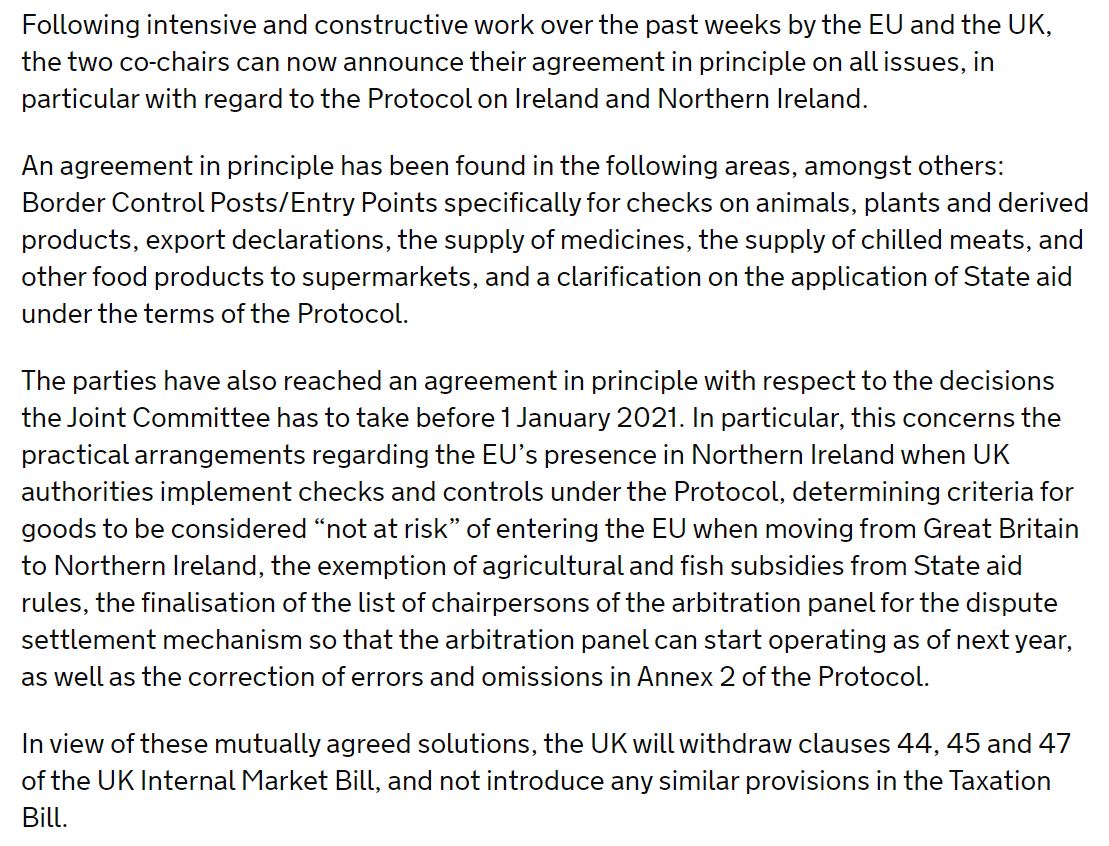
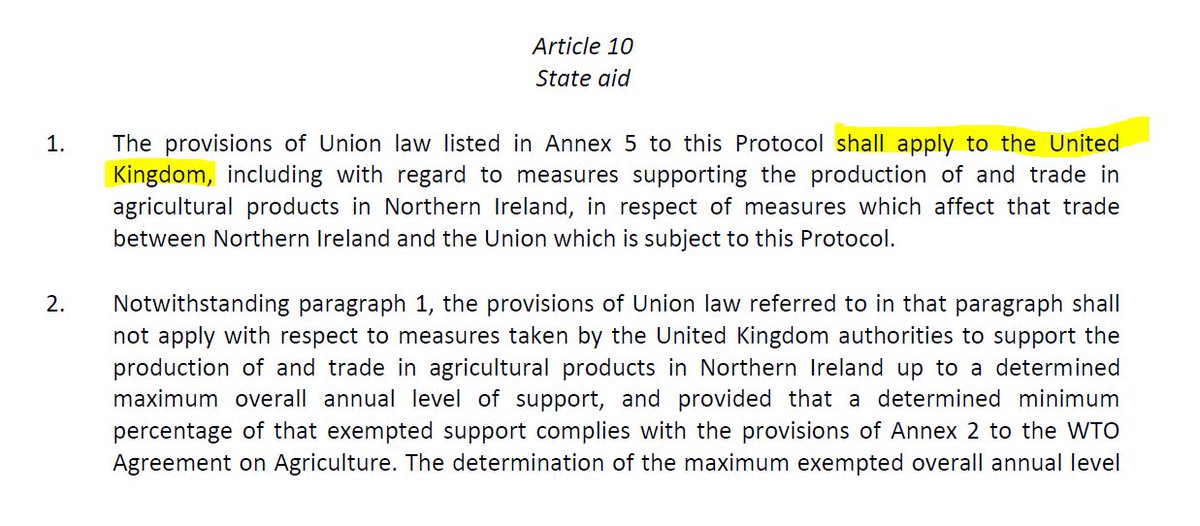
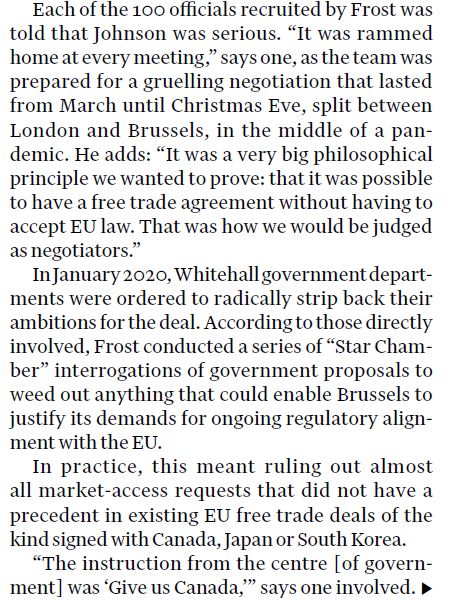

More from Brexit

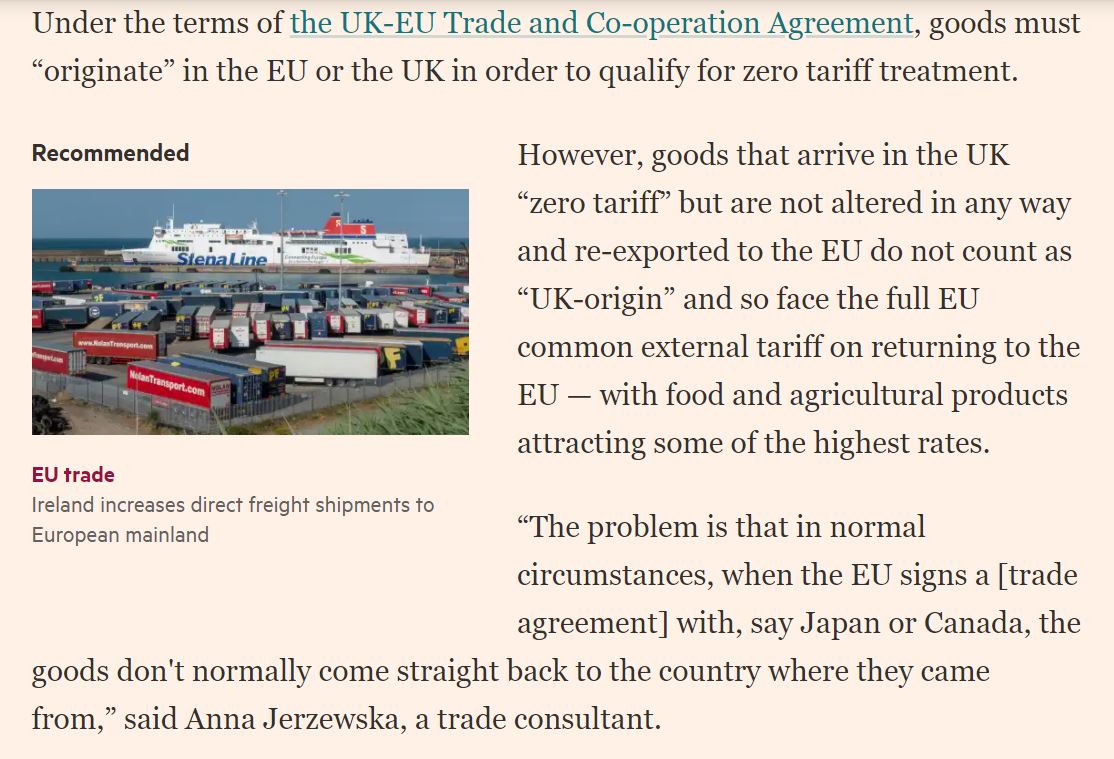


A quote from this excellent piece, neatly summarising a core impact of Brexit.
The Commission’s view, according to several sources, is that Brexit means existing distribution networks and supply chains are now defunct and will have to be replaced by other systems.
Of course, this was never written on the side of a bus. And never acknowledged by government. Everything was meant to be broadly fine apart from the inevitable teething problems.
It was, however, visible from space to balanced observers. You did not have to be a trade specialist to understand that replacing the Single Market with a third country trade arrangement meant the end of many if not all of the complex arrangements optimised for the former.
In the absence of substantive mitigations, the Brexit winners are those who subscribe to some woolly notion of ‘sovereignty’ and those who did not like freedom of movement. The losers are everyone else.
But, of course, that’s not good enough. For understandable reasons Brexit was sold as a benefit not a cost. The trading benefits of freedom would far outweigh the costs. Divergence would benefit all.
The Commission’s view, according to several sources, is that Brexit means existing distribution networks and supply chains are now defunct and will have to be replaced by other systems.
Brexit reality bites: The new dawn of trade friction via @RTENews https://t.co/p6VdlhZUAN
— Tony Connelly (@tconnellyRTE) January 9, 2021
Of course, this was never written on the side of a bus. And never acknowledged by government. Everything was meant to be broadly fine apart from the inevitable teething problems.
It was, however, visible from space to balanced observers. You did not have to be a trade specialist to understand that replacing the Single Market with a third country trade arrangement meant the end of many if not all of the complex arrangements optimised for the former.
In the absence of substantive mitigations, the Brexit winners are those who subscribe to some woolly notion of ‘sovereignty’ and those who did not like freedom of movement. The losers are everyone else.
But, of course, that’s not good enough. For understandable reasons Brexit was sold as a benefit not a cost. The trading benefits of freedom would far outweigh the costs. Divergence would benefit all.

#Brexitadventcalendar
31 liars & hypocrites who facilitated brexit
Some are mad, some are bad
All are millionaires, some are billionaires
They’ll profit from UK companies failing, keep their money abroad to avoid UK tax and travel freely with their EU passports
#RejoinEU
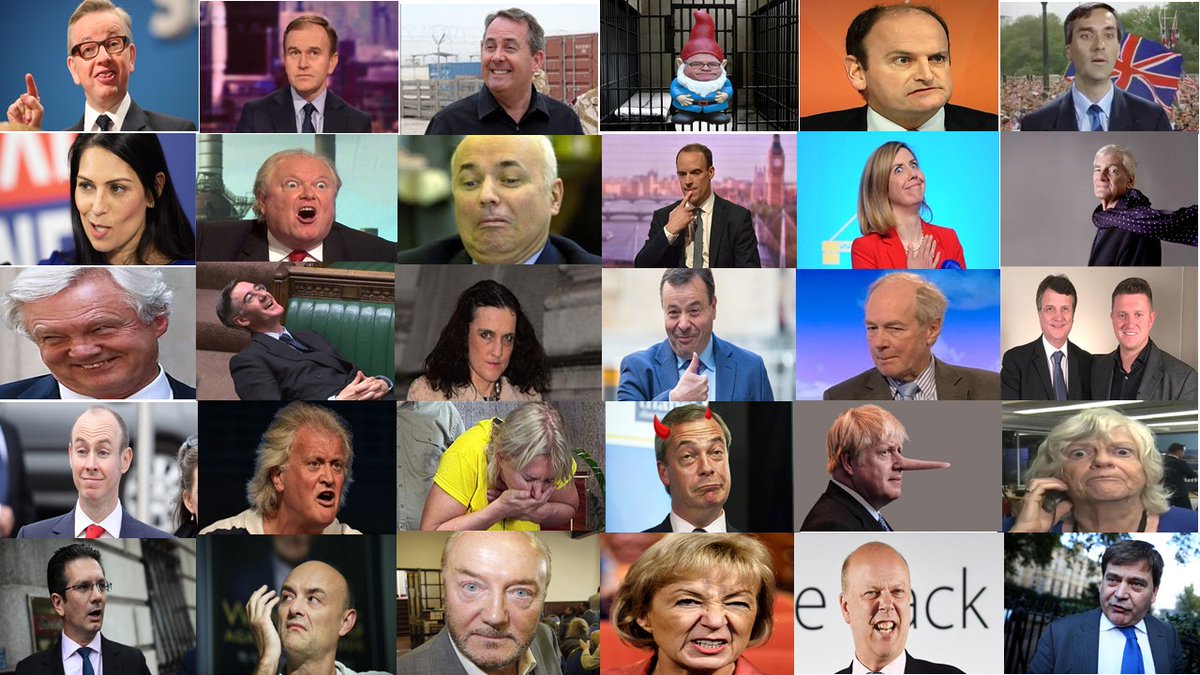
https://t.co/mZRr9u1RPb
https://t.co/BY6hKloR9d
https://t.co/NdC0ltLeSM
https://t.co/BLnRLotso7
31 liars & hypocrites who facilitated brexit
Some are mad, some are bad
All are millionaires, some are billionaires
They’ll profit from UK companies failing, keep their money abroad to avoid UK tax and travel freely with their EU passports
#RejoinEU
https://t.co/mZRr9u1RPb
A brexit advent calendar to count down to loss of our EU rights
— European Unity #FBPE \U0001f1ea\U0001f1fa\U0001f4b6\u2b50\ufe0f (@EuropeanUnity1) December 31, 2020
Box 31: Boris Johnson told us:
\u201cI\u2019m in favour of the single market\u201d
\u201cThe cost of getting out will be virtually nil\u201d
\u201cWe have an oven ready deal\u201d
\u201cThere is no threat to the Erasmus scheme\u201d
\u201cF**k business\u201d pic.twitter.com/w8KxDJYV4x
https://t.co/BY6hKloR9d
A brexit advent calendar to count down to loss of our EU rights
— European Unity #FBPE \U0001f1ea\U0001f1fa\U0001f4b6\u2b50\ufe0f (@EuropeanUnity1) December 30, 2020
Box 30: Nigel Farage told us:
\u201cIn a 52-48 referendum this would be unfinished business by a long way\u201d
\u201cI never promised brexit would be a huge success\u201d
\u201cIf brexit is a disaster, I will go and live abroad\u201d pic.twitter.com/UfO9gzoUPD
https://t.co/NdC0ltLeSM
A brexit advent calendar to count down to loss of our EU rights
— European Unity #FBPE \U0001f1ea\U0001f1fa\U0001f4b6\u2b50\ufe0f (@EuropeanUnity1) December 29, 2020
Box 29: Andrea Leadsom told us:
\u201cI don\u2019t think the UK should leave the EU. It would be a disaster for our economy & lead to a decade of uncertainty\u201d
\u201cMy expectation is that there will not be an economic impact\u201d pic.twitter.com/SMSQ6ruG2h
https://t.co/BLnRLotso7
A brexit advent calendar to count down to loss of our EU rights
— European Unity #FBPE \U0001f1ea\U0001f1fa\U0001f4b6\u2b50\ufe0f (@EuropeanUnity1) December 28, 2020
Box 28: Andrew Bridgen told us:
\u201cAs an English person I have the right to go to Ireland, I believe I can ask for a passport can\u2019t I?\u201d
\u201cWe won\u2019t be crashing out, we\u2019ll be cashing in\u201d pic.twitter.com/jFINFu8xNe
You May Also Like










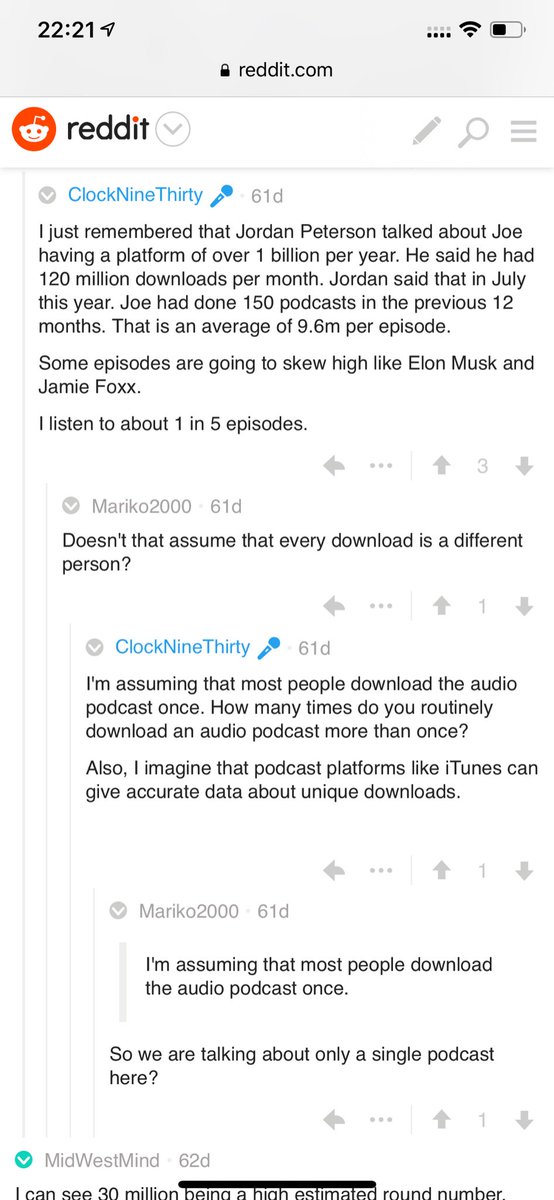
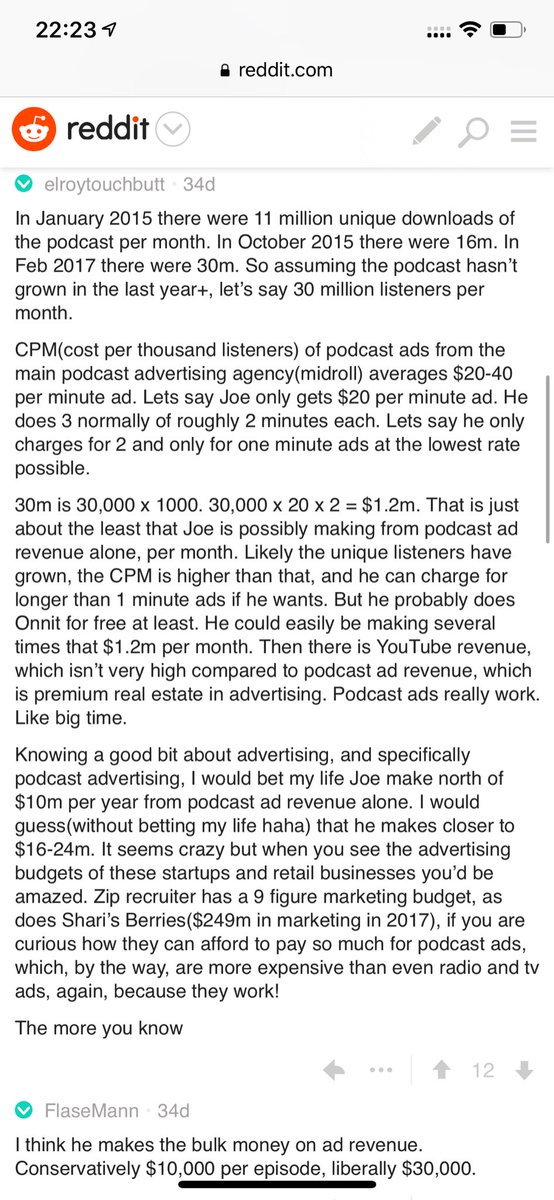
Joe Rogan's podcast is now is listened to 1.5+ billion times per year at around $50-100M/year revenue.
Independent and 100% owned by Joe, no networks, no middle men and a 100M+ people audience.
👏
https://t.co/RywAiBxA3s
Joe is the #1 / #2 podcast (depends per week) of all podcasts
120 million plays per month source https://t.co/k7L1LfDdcM
https://t.co/aGcYnVDpMu
Independent and 100% owned by Joe, no networks, no middle men and a 100M+ people audience.
👏
https://t.co/RywAiBxA3s
Joe is the #1 / #2 podcast (depends per week) of all podcasts
120 million plays per month source https://t.co/k7L1LfDdcM
https://t.co/aGcYnVDpMu


