As things stand, while this article deals with England, the system applies to Scotland also.
A not-so-little thread on how post-Brexit work permit regulations will apply in Scottish football and why it’s, broadly, not a good thing...
As things stand, while this article deals with England, the system applies to Scotland also.
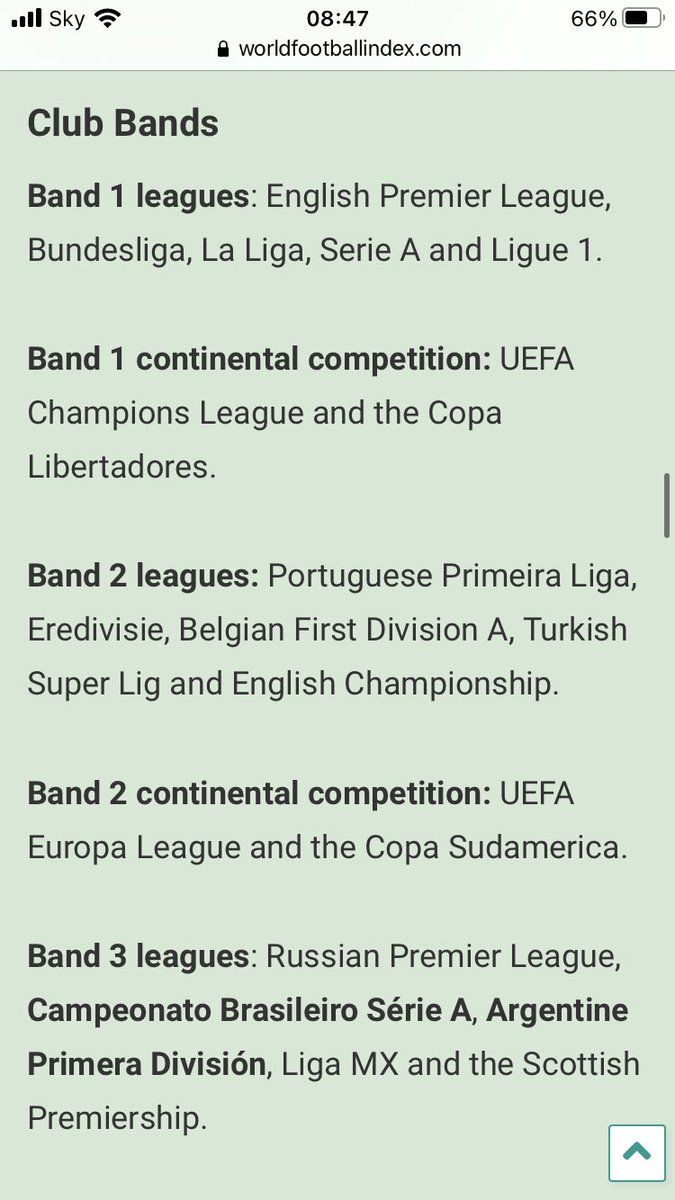
b) trying to sell those players to England now
c) Non-EU players moving to the league this past summer
Take a look... https://t.co/ChFOOdwJ7D
More from Brexit

[thread] on the tub thumping jingoism of "best in the world"
Whether it be Gavin Williamson
or Jeremy Hunt
Why they need this amidst the shitshow of brexit and the disaster of covid?
Is a fascinating question
A reminder
Whether it be Gavin Williamson
or Jeremy Hunt
Why they need this amidst the shitshow of brexit and the disaster of covid?
Is a fascinating question
Is British science the best in the world? My question to the boss of our gold medal winning regulator, Dr June Raine pic.twitter.com/cR9977XeUt
— Jeremy Hunt (@Jeremy_Hunt) December 9, 2020
A reminder
We could only approve this vaccine so quickly because we have left the EU. Last month we changed the regulations so a vaccine did not need EU approval which is slower. https://t.co/y2Az7okPdx
— Jacob Rees-Mogg (@Jacob_Rees_Mogg) December 2, 2020



#Brexitadventcalendar
31 liars & hypocrites who facilitated brexit
Some are mad, some are bad
All are millionaires, some are billionaires
They’ll profit from UK companies failing, keep their money abroad to avoid UK tax and travel freely with their EU passports
#RejoinEU

https://t.co/mZRr9u1RPb
https://t.co/BY6hKloR9d
https://t.co/NdC0ltLeSM
https://t.co/BLnRLotso7
31 liars & hypocrites who facilitated brexit
Some are mad, some are bad
All are millionaires, some are billionaires
They’ll profit from UK companies failing, keep their money abroad to avoid UK tax and travel freely with their EU passports
#RejoinEU
https://t.co/mZRr9u1RPb
A brexit advent calendar to count down to loss of our EU rights
— European Unity #FBPE \U0001f1ea\U0001f1fa\U0001f4b6\u2b50\ufe0f (@EuropeanUnity1) December 31, 2020
Box 31: Boris Johnson told us:
\u201cI\u2019m in favour of the single market\u201d
\u201cThe cost of getting out will be virtually nil\u201d
\u201cWe have an oven ready deal\u201d
\u201cThere is no threat to the Erasmus scheme\u201d
\u201cF**k business\u201d pic.twitter.com/w8KxDJYV4x
https://t.co/BY6hKloR9d
A brexit advent calendar to count down to loss of our EU rights
— European Unity #FBPE \U0001f1ea\U0001f1fa\U0001f4b6\u2b50\ufe0f (@EuropeanUnity1) December 30, 2020
Box 30: Nigel Farage told us:
\u201cIn a 52-48 referendum this would be unfinished business by a long way\u201d
\u201cI never promised brexit would be a huge success\u201d
\u201cIf brexit is a disaster, I will go and live abroad\u201d pic.twitter.com/UfO9gzoUPD
https://t.co/NdC0ltLeSM
A brexit advent calendar to count down to loss of our EU rights
— European Unity #FBPE \U0001f1ea\U0001f1fa\U0001f4b6\u2b50\ufe0f (@EuropeanUnity1) December 29, 2020
Box 29: Andrea Leadsom told us:
\u201cI don\u2019t think the UK should leave the EU. It would be a disaster for our economy & lead to a decade of uncertainty\u201d
\u201cMy expectation is that there will not be an economic impact\u201d pic.twitter.com/SMSQ6ruG2h
https://t.co/BLnRLotso7
A brexit advent calendar to count down to loss of our EU rights
— European Unity #FBPE \U0001f1ea\U0001f1fa\U0001f4b6\u2b50\ufe0f (@EuropeanUnity1) December 28, 2020
Box 28: Andrew Bridgen told us:
\u201cAs an English person I have the right to go to Ireland, I believe I can ask for a passport can\u2019t I?\u201d
\u201cWe won\u2019t be crashing out, we\u2019ll be cashing in\u201d pic.twitter.com/jFINFu8xNe

You May Also Like





Ivor Cummins has been wrong (or lying) almost entirely throughout this pandemic and got paid handsomly for it.
He has been wrong (or lying) so often that it will be nearly impossible for me to track every grift, lie, deceit, manipulation he has pulled. I will use...

... other sources who have been trying to shine on light on this grifter (as I have tried to do, time and again:
Example #1: "Still not seeing Sweden signal versus Denmark really"... There it was (Images attached).
19 to 80 is an over 300% difference.
Tweet: https://t.co/36FnYnsRT9

Example #2 - "Yes, I'm comparing the Noridcs / No, you cannot compare the Nordics."
I wonder why...
Tweets: https://t.co/XLfoX4rpck / https://t.co/vjE1ctLU5x

Example #3 - "I'm only looking at what makes the data fit in my favour" a.k.a moving the goalposts.
Tweets: https://t.co/vcDpTu3qyj / https://t.co/CA3N6hC2Lq

He has been wrong (or lying) so often that it will be nearly impossible for me to track every grift, lie, deceit, manipulation he has pulled. I will use...
... other sources who have been trying to shine on light on this grifter (as I have tried to do, time and again:
Ivor Cummins BE (Chem) is a former R&D Manager at HP (sourcre: https://t.co/Wbf5scf7gn), turned Content Creator/Podcast Host/YouTube personality. (Call it what you will.)
— Steve (@braidedmanga) November 17, 2020
Example #1: "Still not seeing Sweden signal versus Denmark really"... There it was (Images attached).
19 to 80 is an over 300% difference.
Tweet: https://t.co/36FnYnsRT9
Example #2 - "Yes, I'm comparing the Noridcs / No, you cannot compare the Nordics."
I wonder why...
Tweets: https://t.co/XLfoX4rpck / https://t.co/vjE1ctLU5x
Example #3 - "I'm only looking at what makes the data fit in my favour" a.k.a moving the goalposts.
Tweets: https://t.co/vcDpTu3qyj / https://t.co/CA3N6hC2Lq