17 Lessons From the Book
"Super Coach"

📚#DDBook Thread🧵

1. We think we are experiencing reality but what we are really experiencing is our thinking.

2. The most important choice you make is what you choose to make important.

3. If we really want something, there is always a way.
4. What we decide is less important then how we respond to life.

5. Our intuition already knows what we want to do but we create reasons to keep us locked out.
6. Every emotion we feel is a response to a thought, not an event.

7. Your day doesn’t create your mood, your mood creates your day.

8. When you feel a sense of urgency, it’s usually a better idea to slow down.
9. No Matter what seems to be going on, you don’t have to do anything. Being overwhelmed is just a thought.

10. Everything we do or don’t do is simply a choice. To do more, use a system of clarity, structure and boldness of action.
11. We create other people by how we listen to them.

12. When it comes to relationships, if you play to win we have already lost.

13. You can hold thoughts about others but don’t let thoughts about others hold you.
14. Financial security is about having the ability to manifest wealth.

15. Think like a creator rather than an employee. Look for ways to serve others rather then feeling a need to be paid.
16. Whatever happens, there is always reason for hope.

17. Hope isn’t a promise that something will happen but a license to enjoy the positive consequences if it does.
Thanks for reading!🙏
If you found this valuable, You can help me by:

🔃 RT the first tweet and help others find it
😇Following @deep_develop

More from Deep Develop 🧬

More from Books

You May Also Like

Department List of UCAS-China PROFESSORs for ANSO, CSC and UCAS (fully or partial) Scholarship Acceptance
1) UCAS School of physical sciences Professor
https://t.co/9X8OheIvRw
2) UCAS School of mathematical sciences Professor

3) UCAS School of nuclear sciences and technology
https://t.co/nQH8JnewcJ
4) UCAS School of astronomy and space sciences
https://t.co/7Ikc6CuKHZ
5) UCAS School of engineering

6) Geotechnical Engineering Teaching and Research Office
https://t.co/jBCJW7UKlQ
7) Multi-scale Mechanics Teaching and Research Section
https://t.co/eqfQnX1LEQ
😎 Microgravity Science Teaching and Research

9) High temperature gas dynamics teaching and research section
https://t.co/tVIdKgTPl3
10) Department of Biomechanics and Medical Engineering
https://t.co/ubW4xhZY2R
11) Ocean Engineering Teaching and Research

12) Department of Dynamics and Advanced Manufacturing
https://t.co/42BKXEugGv
13) Refrigeration and Cryogenic Engineering Teaching and Research Office
https://t.co/pZdUXFTvw3
14) Power Machinery and Engineering Teaching and Research
शमशान में जब महर्षि दधीचि के मांसपिंड का दाह संस्कार हो रहा था तो उनकी पत्नी अपने पति का वियोग सहन नहीं कर पायी और पास में ही स्थित विशाल पीपल वृक्ष के कोटर में अपने तीन वर्ष के बालक को रख के स्वयं चिता पे बैठ कर सती हो गयी ।इस प्रकार ऋषी दधीचि और उनकी पत्नी की मुक्ति हो गयी।


परन्तु पीपल के कोटर में रखा बालक भूख प्यास से तड़पने लगा। जब कुछ नहीं मिला तो वो कोटर में पड़े पीपल के गोदों (फल) को खाकर बड़ा होने लगा। कालान्तर में पीपल के फलों और पत्तों को खाकर बालक का जीवन किसी प्रकार सुरक्षित रहा।

एक दिन देवर्षि नारद वहां से गुजर रहे थे ।नारद ने पीपल के कोटर में बालक को देख कर उसका परिचय मांगा -
नारद बोले - बालक तुम कौन हो?
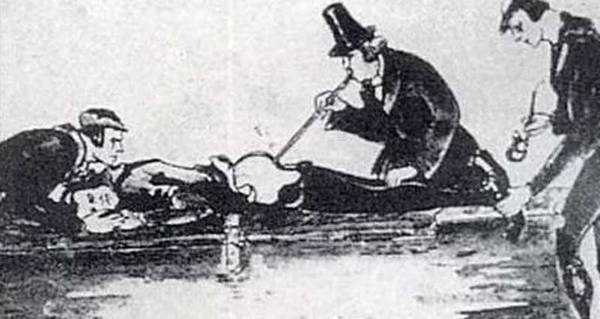
बालक - यही तो मैं भी जानना चहता हूँ ।
नारद - तुम्हारे जनक कौन हैं?
बालक - यही तो मैं भी जानना चाहता हूँ ।

तब नारद ने आँखें बन्द कर ध्यान लगाया ।


तत्पश्चात आश्चर्यचकित हो कर बालक को बताया कि 'हे बालक! तुम महान दानी महर्षि दधीचि के पुत्र हो । तुम्हारे पिता की अस्थियों का वज्रास्त्र बनाकर ही देवताओं ने असुरों पर विजय पायी थी।तुम्हारे पिता की मृत्यु मात्र 31 वर्ष की वय में ही हो गयी थी'।

बालक - मेरे पिता की अकाल मृत्यु का क्या कारण था?
नारद - तुम्हारे पिता पर शनिदेव की महादशा थी।
बालक - मेरे उपर आयी विपत्ति का कारण क्या था?
नारद - शनिदेव की महादशा।
इतना बताकर देवर्षि नारद ने पीपल के पत्तों और गोदों को खाकर बड़े हुए उस बालक का नाम पिप्पलाद रखा और उसे दीक्षित किया।
This is a pretty valiant attempt to defend the "Feminist Glaciology" article, which says conventional wisdom is wrong, and this is a solid piece of scholarship. I'll beg to differ, because I think Jeffery, here, is confusing scholarship with "saying things that seem right".


The article is, at heart, deeply weird, even essentialist. Here, for example, is the claim that proposing climate engineering is a "man" thing. Also a "man" thing: attempting to get distance from a topic, approaching it in a disinterested fashion.


Also a "man" thing—physical courage. (I guess, not quite: physical courage "co-constitutes" masculinist glaciology along with nationalism and colonialism.)


There's criticism of a New York Times article that talks about glaciology adventures, which makes a similar point.


At the heart of this chunk is the claim that glaciology excludes women because of a narrative of scientific objectivity and physical adventure. This is a strong claim! It's not enough to say, hey, sure, sounds good. Is it true?